Appliances & Heat
Coal Shovel
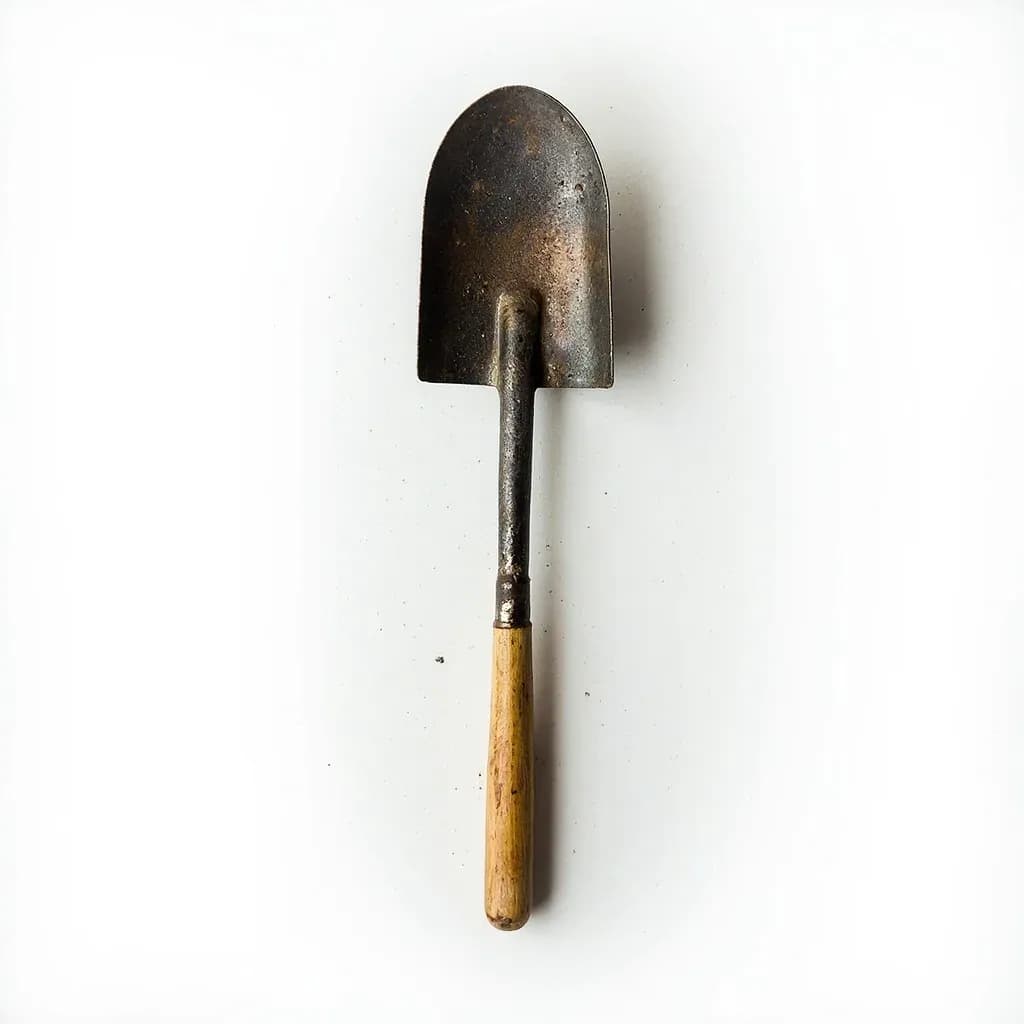
A small metal shovel for moving, spreading and arranging hot coals in a fire or oven.
A coal shovel is a short-handled steel shovel used to scoop, distribute and bank live coals when cooking over fire. It is essential for managing heat zones in wood ovens, grills and Dutch-oven coal cooking. The long handle and heat-resistant build let the cook position embers precisely without burns.
A coal shovel is the cook's hand inside a live fire. It is a short-handled, forged-steel scoop — typically 6 to 10 inches long and 4 to 6 inches wide across the blade — built to push, lift, and arrange burning fuel in a wood-fired oven, charcoal grill, smoker, or open hearth. The blade is flat or slightly cupped with a turned-up back edge so a load of embers rides without spilling, and the handle is short enough to be controlled with one hand at arm's length, usually wooden on domestic models and wrought iron or riveted steel on heavy forge-style versions.
In a serious fire-cooking setup, the shovel is what makes the fire responsive. Where a gas burner is turned with a knob, a wood or charcoal fire is shaped with the shovel: coals are raked into a hot zone for searing, banked against a wall for slow roasting, or pushed aside to clear a cool landing spot for a pizza peel. It is the cold-side partner of the oven peel — the peel moves food, the shovel moves the fire — and a competent fire cook reaches for it as often as for a spatula.
Although most modern backyard grills ship with a flimsy bent-metal ash tool, a proper blacksmith-style coal shovel is heavier, flatter, and far more controllable. It is part of the traditional hearth set (shovel, tongs, poker, and brush) that has lived next to cooking fires since the medieval period and is still standard equipment in pizzerie, asado restaurants, and barbecue smokehouses around the world.
Alternatives
Types & varieties
Longer handle, often more decorative; designed for fireplaces but used in some wood-fired ovens
Deeper, cupped blade suited to scooping loose coal or ash rather than spreading embers
Short-handled, flat blade with raised sides; sized to fit an ash pan or ash drawer of a stove
Wide, flat blade on a short handle for clearing ash from the floor of a wood-fired pizza oven
Long-handled, narrow blade used in South American grilling to move logs and coals on open fires
Heavy-duty small shovel originally for blacksmiths; occasionally repurposed for large grills and smokers
Working the fire with a shovel
The shovel is used more like a chef's spatula than a construction tool: short, deliberate strokes, with the blade kept low and flat against the floor of the oven or firebox. Pushing embers rather than digging under them keeps ash from being thrown up onto the food and avoids striking the firebrick, which is brittle and will chip or spall if caught at the edge of the blade.
- Build a coal bed: rake lit coals into an even layer about 2–3 inches deep for steady grilling heat.
- Create zones: pile coals to one side for direct, push them opposite for indirect, or arrange a horseshoe around a drip pan for roasting.
- Refresh the fire: add unlit lump or splits at the edge of the bed so they ignite from radiant heat rather than smothering the active coals.
- Bank for slow cook: push spent coals against the oven wall and dust them with a thin layer of ash to hold overnight heat.
- Clear the deck: sweep ash off the oven floor or cooking grate before launching dough or resetting a grill.
Care and storage
A coal shovel sees ash, moisture, and high heat in quick succession, and that combination is what destroys cheap tools. A few minutes of care after each cook extends the life of the blade for years.
- Brush the blade clean while still warm (not red-hot) to lift ash before it hydrates and turns corrosive.
- Wipe dry immediately; never set a hot shovel on a cold stone floor where thermal shock can warp the steel.
- Coat the blade lightly with food-safe mineral oil or flaxseed oil between uses to slow rust.
- Hang it on a wall hook near the oven so it is always within reach of a gloved hand.
- Keep wooden-handled models out of driving rain; even a brief soak can swell and split the handle at the rivet.
Common uses
Tips & pitfalls
- Hang the shovel on a hook near the oven or grill so it is within reach while wearing heat-resistant gloves.
- Use a dedicated ash shovel for ash and a separate tool for live coals — ash hides hot embers that can scorch a wooden handle or contaminate food.
- Wet wood or fresh ash is the enemy: store the shovel indoors and dry it after exposure to keep the steel from pitting.
- File down mushroomed blade edges that develop from striking firebrick; a clean edge slides under embers more easily and is less likely to nick the cook's arm.
- To bank a fire for slow cooking, pile coals against the oven wall with the shovel, then cover with a thin layer of ash to hold heat overnight.
- Do not use a shovel that has touched chemical firelighters or lighter fluid for moving coals under delicate items like bread dough or pastry — the residues volatilize and flavor the food.
- Do not plunge a glowing-hot shovel into cold water; the thermal shock will warp the blade and crack any wooden handle instantly.
- Avoid improvising with a kitchen spatula, metal dustpan, or garden trowel: they are too flexible, too tall-walled, or too short to move coals safely.
Good to know
- Type
- Hand tool / hearth utensil
- Primary material
- Forged iron or carbon steel blade, often with a wooden or wrought-iron handle
- Typical blade size
- Approximately 6–10 in (15–25 cm) long, 4–6 in (10–15 cm) wide
- Overall length
- Short-handled models ~14–18 in (35–45 cm); hearth/long-handled versions up to ~30 in (75 cm)
- Weight
- Roughly 0.7–1.5 kg (1.5–3.5 lb) for a standard short-handled coal shovel
- Heat tolerance
- Blade tolerates direct contact with embers and ash; wooden handles do not
- Origin
- Evolved from blacksmithing and hearth tools used since the medieval period; standard in European kitchens through the 19th century
- Related hearth set
- Usually sold with tongs, poker, and brush as a 'fire tool set' or 'hearth set'
- Modern culinary context
- Used in wood-fired ovens, charcoal grills, smokers, and Argentine/parrilla-style grills
- Cleaning
- Brush off ash; oil the blade lightly to prevent rust; never submerge a hot shovel
Also called
ember shovel · ash shovel
Related

Stovetop
The everyday burners where most cooking actually happens

Oven
Enclosed dry heat for roasting, baking, and braising

Grill
Live-fire or gas grates for char, smoke, and high heat

Smoker
Low, slow heat and wood smoke for barbecue and brisket

Air Fryer
Countertop convection that crisps with little or no oil

Slow Cooker
Set-and-forget low heat for stews, beans, and braises

Pressure Cooker
Sealed steam pressure that cooks tough food in a fraction of the time

Rice Cooker
Foolproof, perfectly steamed rice every single time