Prep Tools
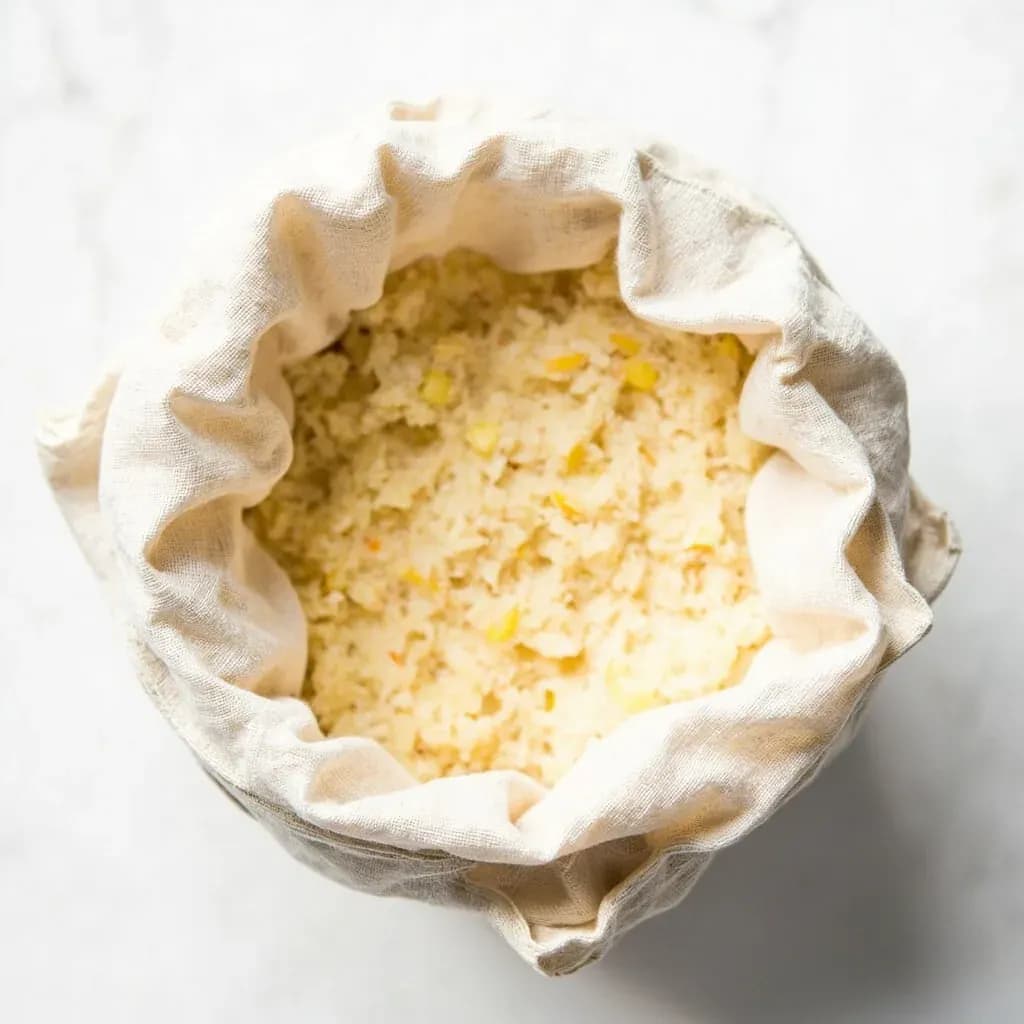
Coconut Milk Strainer Cloth
A fine cloth for squeezing grated coconut to extract fresh coconut milk and cream.
A coconut milk strainer is a piece of fine, tightly woven cloth (often cheesecloth or muslin) used to wring grated coconut soaked in warm water. The cook gathers the cloth around the pulp and twists hard to press out rich coconut milk and cream while trapping the fibrous shreds. The first cold press yields thick cream; later presses give thinner milk.
A coconut milk strainer cloth is the dedicated tool for separating fresh coconut milk — called santan, thengapal, or gata — from the wet grated coconut meat that produces it. Its job is precise: the weave must be tight enough to hold back fine gratings while remaining flexible and strong enough to survive the vigorous hand-squeezing that releases the milk. In South Indian, Sri Lankan, Filipino, Indonesian, Malaysian, and Thai home cooking, where fresh coconut milk is still the everyday norm rather than the exception, this cloth is as essential as a sieve or a mortar.
Although canned coconut milk has displaced fresh in most Western kitchens, a strainer cloth earns its place wherever fresh extraction matters — in tropical home cooking, in restaurants pressing their own santan for curries and kueh, and in any kitchen making plant milks from almond, cashew, or oat. The two-stage extraction the cloth enables (a gentle first press for thick, spoonable cream, then a firmer re-press of the damp pulp for thinner milk for curries and soups) is something canned milk cannot replicate, because milk pressed minutes earlier from fresh coconut is markedly brighter in flavor and aroma.
Material choice genuinely changes the outcome. Loosely woven cheesecloth sheds lint and bursts under pressure; tight-weave unbleached muslin is the traditional workhorse; fine nylon mesh bags are the modern, tear-resistant upgrade. A cloth chosen with the right weave and handled with care will outlast dozens of batches.
Alternatives
Types & varieties
Western standby; the finest grade is required because looser weaves let coconut pulp escape. Often layered two or three sheets for strength and to prevent blowouts.
Traditional in South Asian home cooking; tighter, stronger, and more durable than standard cheesecloth, and the preferred choice when the cloth will be squeezed repeatedly.
Modern, bag-shaped, seam-stitched strainer; very efficient and tear-resistant. The contemporary default for both coconut and plant-milk work in many kitchens.
Acceptable substitute in a pinch; weave varies widely, so test with a small squeeze before committing a full batch.
Thin, unbleached cotton square used in Malay, Indonesian, Thai, and Filipino home cooking; functionally identical to muslin, sold under local names.
The two-stage extraction
A coconut milk strainer cloth is the means to a process, not just a single press. Understanding the two stages is what turns a soggy mess of pulp and milky water into two distinct products with different uses.
- First press (thick milk): grated mature coconut is combined with a small amount of warm water — just enough to cover — and rested 10–15 minutes. The cloth gathers the wet gratings; a gentle, controlled squeeze releases a rich, spoonable cream used in desserts such as Thai kueh, Filipino maja blanca, and Indian payasam.
- Second press (thin milk): the same pulp is re-soaked in a larger volume of warm water and squeezed more firmly to yield a thinner, more abundant milk suited to curries, laksa, ginataan, and soups where the coconut flavor should infuse without weighing down the sauce.
- Reserving the two separately — rather than combining them — is what lets a cook adjust richness dish by dish, and is the reason fresh coconut milk is layered and complex in a way canned milk rarely is.
Choosing the right cloth
Material matters more than most cooks expect. A cloth that is too loose bleeds pulp into the milk; a cloth that is too stiff won't gather cleanly around the wet gratings.
- Muslin vs. cheesecloth: muslin is denser and stronger, holds a gathered bundle without tearing, and is unbleached. Cheesecloth is cheaper and easier to find but needs doubling and is more likely to shred under a firm squeeze.
- Nylon mesh bags: fastest draining, easiest to clean, and essentially indestructible in normal use — but only buy bags labeled food-grade; cheap paint-strainer bags are not food-safe.
- Avoid: synthetic dishcloths (they shed lint), loosely woven tea towels (too open a weave), and bleached cheesecloth in direct contact with very hot pulp (can leave a faint chemical taste).
Common uses
Tips & pitfalls
- Always wet and wring out the cloth or bag before adding coconut — a damp weave catches fine particles far better than a dry one, and pre-wetting also reduces absorption of milk into the fibers.
- Squeeze in stages: a gentle initial press releases the thick cream first, then firmer pressure yields the thinner second-press milk. Trying to get everything at once forces pulp through the weave.
- Never twist the cloth with the knot pulled hard against a hard rim or your own wrist — concentrated force tears the seam. Instead, roll the bundle between the palms of both hands and squeeze as you roll.
- Rinse the cloth under cold running water the moment you finish; coconut milk fats turn rancid quickly and become impossible to fully wash out once they set into dry cotton.
- Use at least two layers of cheesecloth if that is all you have on hand; a single layer bursts easily and lets fine pulp escape into the milk.
- Save the squeezed pulp (ampas) — it toasts beautifully for serundeng and coconut macaroons, and folds into ladoo, bread, or rice dishes as a flavor carrier.
- Wash cotton cloths with mild soap only; strong detergents leave residue that can flavor the next batch and shorten the cloth's life.
- Store laundered and bone-dry cloths loosely folded in a dry drawer — never sealed in plastic when even slightly damp, or mildew will follow.
Good to know
- Purpose
- Strains and squeezes grated coconut meat (with added water) to separate fresh coconut milk or cream from the fibrous solids (santan vs. ampas).
- Common materials
- Unbleached cotton muslin, fine-grade cheesecloth (often doubled or tripled), or food-grade fine nylon mesh (the modern 'nut milk bag').
- Typical sizes
- Square cloths 30–60 cm (12–24 in) on a side; bag-style strainers roughly 20–30 cm tall by 15–25 cm wide.
- Weave/density
- Fine plain or gauze weave, tight enough to retain fine coconut gratings; coarse-weave kitchen towels let too much pulp through.
- Yield context
- One mature coconut (~400 g meat) plus 1–2 cups warm water typically yields 1.5–2 cups thick first-press milk and a further 1–1.5 cups thin milk from re-squeezing the pulp.
- Reusability
- Cotton and muslin cloths are reusable for many batches; nylon nut-milk bags tolerate machine washing. Always rinse immediately and fully air-dry to prevent rancidity.
- Food safety note
- Fresh coconut milk is highly perishable — the strainer cloth must be impeccably clean, and a wet cloth should never be left crumpled overnight.
- Cost range
- Cheesecloth and muslin are inexpensive by the metre; a dedicated nut-milk bag is a modest upgrade that lasts much longer under heavy squeezing.
Also called
Coconut Milk Cloth · Muslin Strainer · Nut Milk Bag
Related

Peeler
Swift blade for stripping skin off fruit and vegetables

Grater
Sharp-toothed surface for shredding cheese and vegetables

Microplane
Ultra-fine rasp for citrus zest, garlic, and hard cheese

Mixing Bowl
All-purpose bowl for combining, whisking, and tossing

Whisk
Looped wires that beat air into eggs, cream, and sauces

Spatula
Flat blade for flipping, lifting, and scraping

Slotted Spoon
Pierced spoon that lifts solids and drains the liquid behind

Wooden Spoon
Gentle, heat-friendly spoon for stirring anything