Appliances & Heat
Coffee Grinder
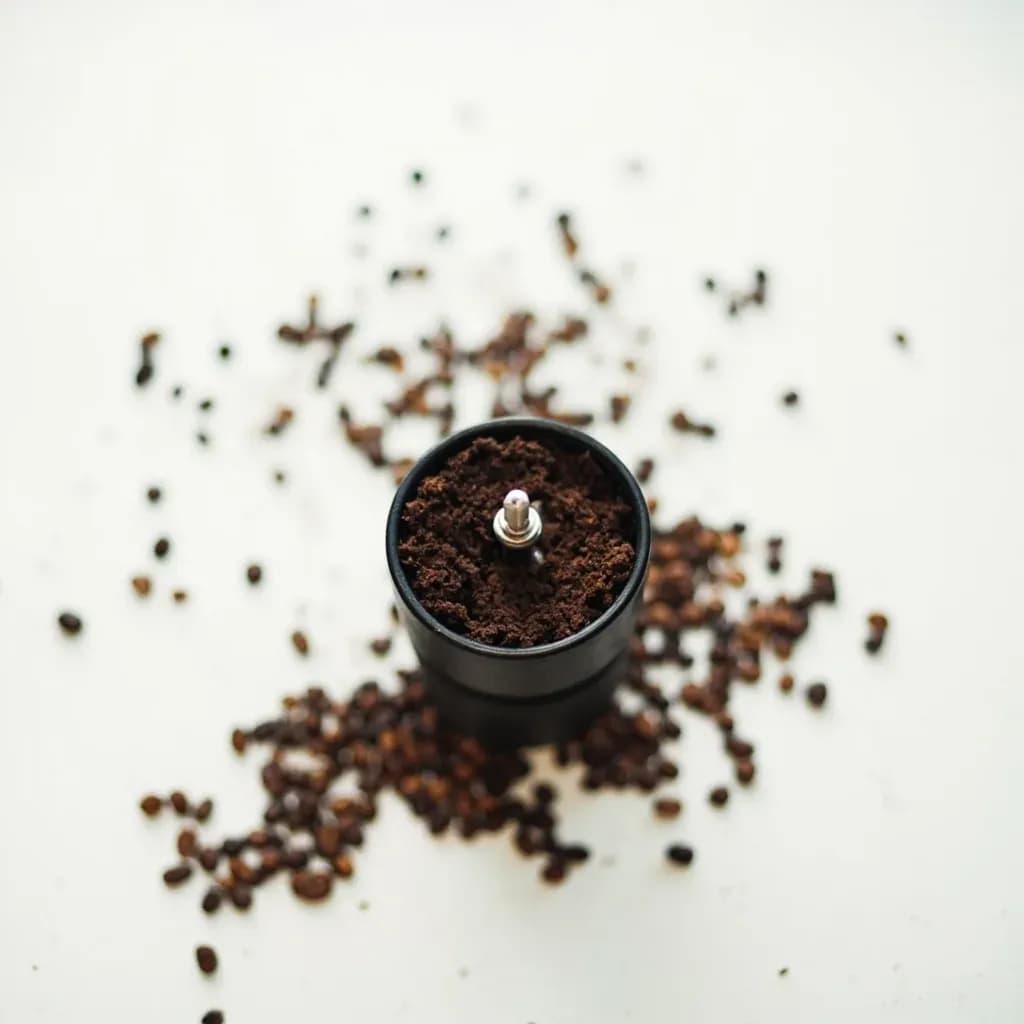
An electric or manual mill that grinds roasted coffee beans (and often whole spices) to a chosen coarseness.
A coffee grinder reduces whole roasted beans to grounds, with blade models chopping and burr models crushing for a more even grind. Cooks reach for it just before brewing for maximum freshness, and many keep a second one to grind whole spices like cumin, coriander, and peppercorns. Burr grinders give consistent particle size that matters for espresso and pour-over; blade grinders are cheaper but produce uneven dust and chunks.
A coffee grinder is a tool for breaking roasted beans into particles of a controlled size, and that size is the single most important variable in coffee extraction. Whether it is a buzzing countertop blade grinder or a quiet hand-cranked burr mill, the function is the same: turn whole beans into ground coffee whose surface area matches the brew method. Finer particles expose more surface to water, extracting faster; coarser particles expose less, extracting more slowly. Get the size wrong and the same beans taste sour and thin, or bitter and hollow, no matter how good the roaster was.
Beyond coffee, the same machines handle whole spices and small hard seeds with surprising versatility, which is why a good grinder earns its counter space in kitchens that may not even drink coffee. The choice that matters most is not brand or power but mechanism: blade grinders chop with a spinning propeller and produce a chaotic mix of dust and chunks, while burr grinders crush beans between two abrasive surfaces set a fixed distance apart and produce particles clustered tightly around a chosen size. That difference — uniform particles versus a wide spread — is what separates an inexpensive blade grinder from a serious burr mill, and why a burr grinder is essentially required for espresso or pour-over.
For cooking, think of a coffee grinder as a precision mill for anything dry, brittle, and aromatic. The same particle-size logic that drives extraction in coffee applies to a cumin seed cracked for a curry paste or a coriander seed shattered for a brine: more surface, more flavor, faster. Used with that in mind, it becomes a daily tool rather than a single-purpose appliance.
Alternatives
Types & varieties
Spinning propeller-style blade in a small canister; inexpensive and ubiquitous, but chops rather than grinds and yields a wide particle spread. Adequate for casual drip coffee and quick spice work, unsuitable for espresso or pour-over.
Cone-shaped burr rotates inside a ring burr. Produces a bimodal particle distribution favored for espresso and drip. Generally cooler-running and quieter than flat burrs of similar capacity.
Two parallel flat discs facing each other. Yields a very tight particle distribution and bright, clear cups; the standard in many cafés and high-end home espresso setups.
Hand-cranked burr grinder, typically with ceramic or steel conical burrs. Portable, silent, and slow, but capable of espresso-grade consistency at the high end. Favored by travelers, campers, and pour-over purists.
A burr grinder — usually conical or flat — with fine micro-adjustment, dosing for roughly 18–22 g, and either timed or gravimetric dosing. Built for repeatable shot-to-shot extraction.
Grinds fresh into the portafilter, filter, or cup on each shot. Reduces staling between grinding and brewing; standard in modern cafés and high-end home setups.
Commercial-style electric burr grinder with a chamber that dispenses measured doses of pre-ground coffee, usually into a portafilter. Mostly found in older espresso bars.
Small dedicated blade unit (sometimes a small burr) sold for spices and dry grinding. Useful for keeping coffee oils out of aromatics and vice versa.
Matching Grind to Brew Method
Grind size is a dial, not a label. The general rule: the shorter the brew time, the finer the grind, because finer particles must surrender their flavor in seconds; the longer the brew time, the coarser the grind, because coarse particles need minutes of contact to extract properly. A pour-over that drains in under a minute and a French press that steeps for four minutes use the same beans at very different sizes, and getting that wrong is the most common reason home coffee disappoints.
- Turkish: powdered-sugar fine, almost talc; often achieved only on the finest settings of a quality burr grinder or in a dedicated Turkish mill
- Espresso: fine, like fine sand; pulls in 25–35 seconds under standard pressure
- Moka pot: fine-medium, between espresso and drip — a touch coarser than espresso
- Drip and pour-over (V60, Chemex, Kalita): medium, like coarse sand; aim for a 2:30–3:30 brew time
- AeroPress: medium to medium-fine, adjustable by steep time rather than locked to a single size
- French press: coarse, like kosher salt; steeps four minutes without over-extracting
- Cold brew: very coarse, like peppercorns; long immersion (12–24 hours) needs a particle that won't turn the cup bitter and cloudy
Beyond Coffee: Spices and Dry Goods
A burr grinder is a precision mill, not a single-purpose appliance. Whole spices release far more aroma when cracked seconds before they hit the pan, and the same uniform particle control that makes espresso work makes a freshly ground garam masala, a cumin-coriander paste, or a Sichuan peppercorn dust pour evenly into a brine. Keep coffee oils and spice oils apart whenever you can: a dedicated grinder (or at least a swappable burr set) for spices is worth the small extra cost because coffee residue clings stubbornly to burrs and will haunt any cardamom or cumin that follows.
- Peppercorns, cumin, coriander, cardamom, star anise: grind to taste, finer for pastes, coarser for finishing
- Small hard seeds — fennel, mustard, flax — for baking, condiments, and pickling brines
- Dried chilies, dried herbs, and dried garlic for rubs, curry bases, and chili pastes
- Short pulses on nuts, oats, or dried bread for crusts, toppings, and coarse crumbs
- Garam masala, curry powder, dry rub blends: build in the grinder, then pulse once to homogenize
Common uses
Tips & pitfalls
- Grind immediately before brewing. Surface area exposed to oxygen jumps dramatically the moment beans are broken, and aromatic compounds decay within minutes — pre-ground coffee is essentially stale coffee.
- Match grind size to contact time: finer for short brews (espresso, Turkish), coarser for long immersion (French press, cold brew). When in doubt, adjust grind before changing dose, ratio, or beans.
- If you brew more than a couple of cups a day, a burr grinder is the single biggest quality upgrade you can make. Blade grinders cannot match the particle uniformity needed for espresso or pour-over, and that is a physics problem, not snobbery.
- Clean burrs and the grounds chute regularly. Rancid coffee oils and old grounds are the main cause of stale flavors, and they build up faster than most people realize. Empty the hopper, brush the burrs, wipe accessible surfaces, and use grinder-specific cleaning pellets if buildup is heavy.
- Dedicate a grinder (or at least a removable burr set) to spices. Coffee oils are nearly impossible to fully remove and will flavor cumin, cardamom, and other aromatics with a ghost of yesterday's cup.
- Pulse a blade grinder in short bursts of 5–10 seconds and shake the canister between pulses so the coarse pieces fall back into the cutting zone. It does not fix the chaotic particle spread, but it noticeably reduces the worst of it.
- Do not run a blade grinder continuously for more than about 15 seconds. Extended spinning heats the fines and can scorch them, leaving a bitter, burnt note that has nothing to do with the roaster.
- To cut static in a chute grinder, spritz the beans with a tiny amount of water (the Ross Droplet Technique) or drop a single drop into the hopper. Grounds will pour cleanly into the portafilter or filter and clumping largely disappears.
- For espresso, dial grind by taste and shot time rather than by a printed setting. A shot that pulls in 18 seconds and tastes sour means grind finer; one that pulls in 40 seconds and tastes bitter means grind coarser. The grinder is the steering wheel of espresso.
- If your pour-over drains in under a minute, or your French press feels gritty and bitter, the grind is too fine for that method. Adjust before assuming the coffee itself is the problem.
- Replace burrs when shots pull noticeably faster than they used to, or when fines begin clumping and clogging the chute. Steel burrs can last through several thousand pounds of coffee; ceramic burrs stay sharp longer but can chip if the grinder is dropped.
Good to know
- Primary Types
- Blade grinders (spinning propeller-style blade chops beans) and burr grinders (two abrasive surfaces crush beans to a uniform size)
- Burr Geometry
- Conical (cone inside a ring) and flat/plate (two parallel discs) are the two main designs
- Burr Materials
- Hardened stainless steel and ceramic are most common; steel lasts longer under heavy use, ceramic runs cooler and resists corrosion but can chip if the grinder is dropped
- Drive
- Manual hand-crank or electric; cheap electric models use AC motors, mid- and high-end units use DC motors, often with gear reduction for slower, cooler burr rotation
- Grind Range
- Adjustable from Turkish (powdered-sugar fine) through espresso, moka, drip, pour-over, French press, to cold-brew coarse
- Particle Uniformity
- Burr grinders cluster particles around a target size; blade grinders produce a wide spread from dust to chunks, which extracts unevenly
- Heat Generation
- High-RPM blade grinders and high-RPM flat burrs can warm grounds noticeably; low-RPM conical burrs are favored to limit heat-driven aroma loss
- Use Beyond Coffee
- Whole spices (peppercorns, cumin, coriander, cardamom, star anise), small seeds (fennel, flax, mustard), dried chilies, and short pulses on nuts, oats, or breadcrumbs
Also called
Coffee/Spice Grinder · Electric Coffee Grinder (Kávédaráló) · Manual Coffee Grinder · Electric Spice/Coffee Grinder · Electric Spice Grinder · Spice Grinder
Related

Stovetop
The everyday burners where most cooking actually happens

Oven
Enclosed dry heat for roasting, baking, and braising

Grill
Live-fire or gas grates for char, smoke, and high heat

Smoker
Low, slow heat and wood smoke for barbecue and brisket

Air Fryer
Countertop convection that crisps with little or no oil

Slow Cooker
Set-and-forget low heat for stews, beans, and braises

Pressure Cooker
Sealed steam pressure that cooks tough food in a fraction of the time

Rice Cooker
Foolproof, perfectly steamed rice every single time