Appliances & Heat
Crushed Ice Machine
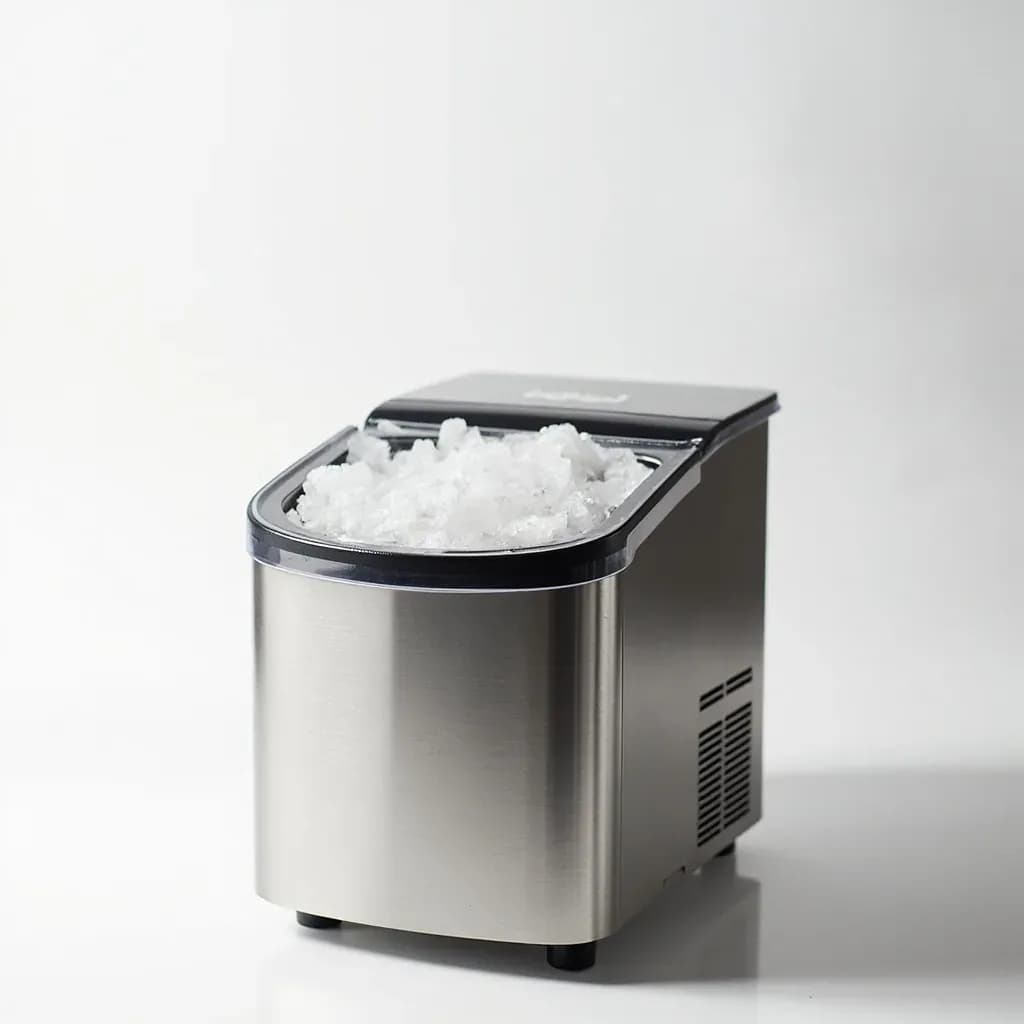
An appliance that produces soft, crushed or nugget ice for drinks and chilled displays.
A crushed ice machine makes fine, flaky, or pellet-style ice rather than solid cubes. The soft texture chills drinks fast, packs around seafood and produce displays, and is favored in cocktail bars for juleps and frozen-style cocktails. Commercial units produce ice continuously and store it in an insulated bin, while home models crush cubes on demand.
A crushed ice machine is, in practical terms, any appliance that delivers ice in pieces smaller than a standard cube—either by making cubes and mechanically breaking them, or by freezing water directly into soft, irregular fragments. The distinction matters more than the name on the box. Mechanically crushed cubes give sharp, hard shards that chill a drink aggressively. Nugget, flake, and shaved-ice machines produce a softer, more absorbent product that mingles with liquid rather than melting from the outside in, and that texture has come to define American sodas, juleps, and iced coffee.
The machines themselves range from a hand-cranked crusher clamped to a bar to a self-contained undercounter unit that plumbs in and produces several hundred pounds a day. What they share is a refrigerated surface—whether a flat evaporator plate, a chilled cylinder, or a set of extrusion holes—combined with a scraper, blade, or auger that breaks the ice loose and drops it into an insulated bin. The behavior of the ice in service is what matters most to a cook: crushed and pebble ice cools and dilutes faster than cubes, so it is the standard for any drink that benefits from rapid chill and a frosted edge, and for any food that should be presented on a cold, dry-looking bed.
For most home kitchens, the realistic decision is between a portable countertop cube-and-crush unit paired with a separate electric crusher, or a dedicated nugget machine such as the GE Profile Opal. True pebble or "Sonic-style" ice cannot be replicated by crushing cubes; the chewy, opaque texture comes only from an extruder, and that single fact shapes what is worth buying.
Alternatives
Types & varieties
Small, portable unit that makes bullet or crescent cubes and has a setting to crush them in the bin; popular for home bars and small kitchens.
Motor-driven hopper that feeds bagged cubes between metal blades or rollers; common in bars and cafés that buy ice in bulk.
Extrudes partially frozen ice through small holes to create soft, opaque pellets—the so-called 'Sonic ice.' Chewy, absorbent, and favored for sodas, iced coffee, and bourbon highballs.
Produces thin, flat, soft flakes by scraping a refrigerated cylinder; ideal for seafood displays, salad bars, and food transport.
Head-only unit that sits on a separate bin; available in cube, flake, and nugget versions; used in restaurants and bars with high volume.
Compact commercial unit built into a bar or under a counter, often combined with a drain pump and a small storage bin.
Hand-cranked or lever-press device; still used in tiki bars and craft cocktail programs for a fast, hands-on crush on demand.
Crushed, Nugget, and Flake: How They Behave
These three ice types look similar in a glass but behave very differently, and choosing the wrong one for the wrong job is the most common mistake home cooks make. The production method is what gives each its character.
- Crushed (from cubes): sharp, hard shards with high surface area. Chills and dilutes very quickly. Best for shaken cocktails, juleps, and ice baths around ice cream; too aggressive for a drink meant to be sipped slowly.
- Nugget or pebble: soft, opaque, slightly wet pellets extruded under pressure. Chewy to eat and highly absorbent; takes on the flavor of the drink without flooding it. The standard for American sodas, sweet tea, and iced coffee; also good in bourbon and whiskey highballs where you want chill and a flavorful chew.
- Flake: thin, dry, flat pieces that pack into a moldable bed. Holds cold on a platter without pooling water, which is why it is the professional choice for raw-bar displays, sushi, and buffet service. Less useful in a drink.
Common uses
Tips & pitfalls
- Use filtered or low-mineral water to slow scale buildup and keep ice free of off-flavors.
- If the machine plumbs in, install an inline sediment and carbon filter and replace it on schedule; mineral deposits are the most common cause of failure.
- Drain and wipe the bin weekly, and run a sanitizing cycle with diluted bleach or a manufacturer-recommended sanitizer monthly—biofilm develops quickly in warm bins.
- Never scoop ice with bare hands; keep the included scoop in a clean holder outside the bin to slow bacterial growth.
- Let a freshly made batch rest 5–10 minutes in the bin before scooping—ice straight off the evaporator is colder and clumps together.
- Match ice type to the drink: large cubes for spirit-forward stirred drinks, cubes for classics, crushed or pebble for shaken drinks, juleps, and highballs that benefit from fast chill and some dilution.
- Expect a 20–30% drop in output in hot or poorly ventilated spaces; keep intake vents clear and avoid placing the unit next to ovens, dishwashers, or direct sun.
- For cocktail service, chill the glass and ingredients first—crushed ice dilutes faster than cubes, and a pre-chilled base keeps the drink in balance.
- Run a flush cycle after long downtime (vacations, off-season) to clear stale water from lines and reservoir.
- If you must store a unit, fully defrost, dry the interior, and leave the lid open to prevent mold and odors.
Good to know
- Definition
- An appliance that produces soft, irregular pieces of ice, either by freezing water directly into small fragments (flake and nugget machines) or by mechanically breaking larger cubes through metal blades or crushing plates.
- Ice forms produced
- Crushed, nugget (chewable pebble), flake, shaved, and, in some combo machines, full cubes and crescents.
- Typical home output
- Countertop units produce roughly 20–50 lb (9–23 kg) of ice per day; a full batch of bullet or crescent cubes is usually ready in 7–15 minutes.
- Typical commercial output
- Modular and undercounter commercial machines commonly range from 100 to 1,500+ lb (45–680+ kg) per day.
- Water source
- Most home units use a manual-fill reservoir of 1.5–3.5 L; commercial and higher-end home machines plumb directly to a water line and often include a drain pump.
- Maintenance
- Sanitize lines and bin every 1–3 months; descale with citric acid or a manufacturer solution every 1–2 months in hard-water areas; replace inlet filters on plumbed units annually.
- Cost range
- Portable crusher home units $70–$250; nugget home machines (e.g., Opal) $400–$600; small commercial undercounters $1,500–$4,000; modular commercial heads $3,000–$10,000+.
- Origin of the nugget machine
- The automatic nugget-ice machine was developed in the 1980s and is widely associated in the U.S. with Sonic Drive-In, which popularized the soft, chewable texture.
Also called
nugget ice maker · ice crusher · flake ice machine
Related

Stovetop
The everyday burners where most cooking actually happens

Oven
Enclosed dry heat for roasting, baking, and braising

Grill
Live-fire or gas grates for char, smoke, and high heat

Smoker
Low, slow heat and wood smoke for barbecue and brisket

Air Fryer
Countertop convection that crisps with little or no oil

Slow Cooker
Set-and-forget low heat for stews, beans, and braises

Pressure Cooker
Sealed steam pressure that cooks tough food in a fraction of the time

Rice Cooker
Foolproof, perfectly steamed rice every single time