Appliances & Heat
Deck Oven
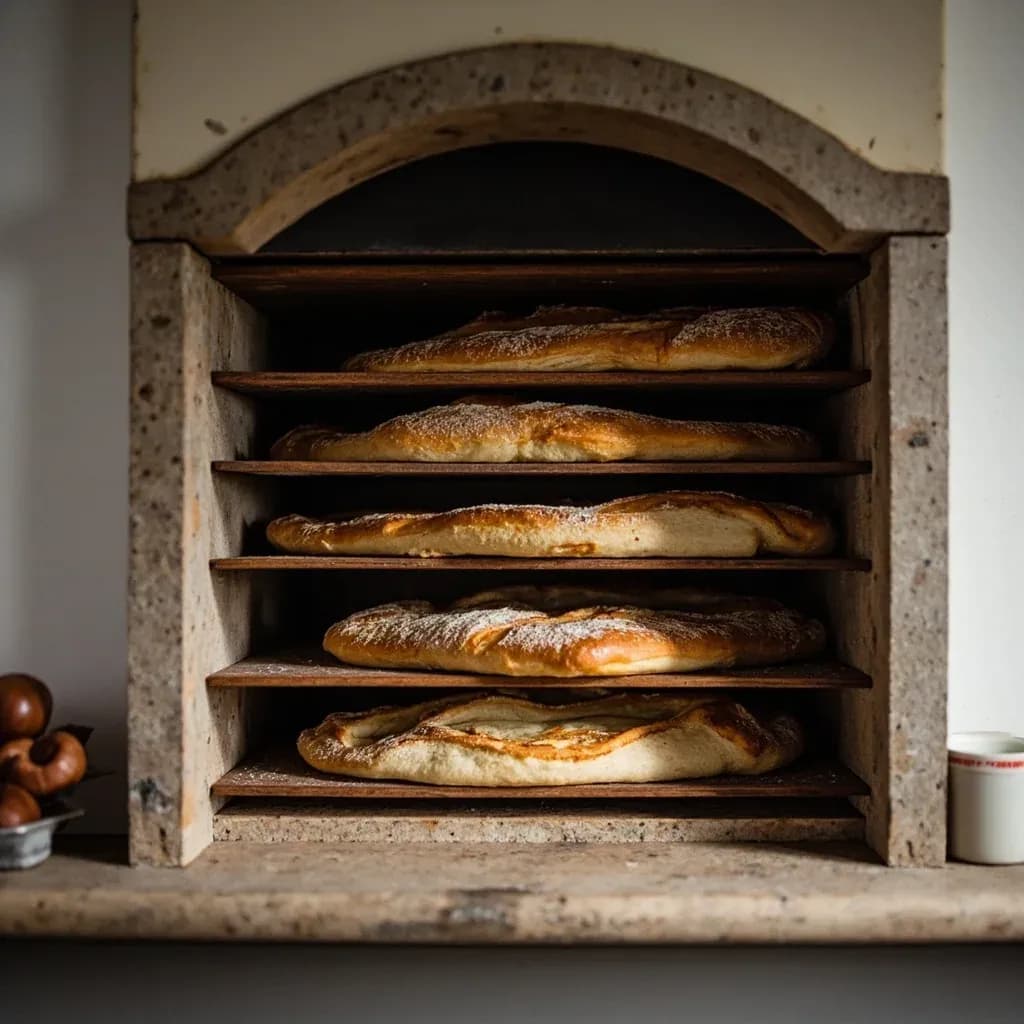
A bakery oven with stone or steel decks where bread and pizza bake directly on the hot floor.
A deck oven has one or more horizontal baking chambers, or decks, with a heated stone or steel hearth on which loaves and pizzas are baked directly. The thermal mass of the deck gives strong bottom heat and oven spring, while many models inject steam for crackly bread crusts. Gas or electric versions are a staple of professional bakeries and pizzerias.
A deck oven is a static commercial oven built around one defining feature: a thick stone or steel floor (the deck) that the baker loads by hand with a peel. Radiant heat from burners or elements above the chamber and conducted heat rising from the deck below meet the product from both sides, which is what gives bakery loaves an open, crisp base and pizza its leopard-spotted underside. It is the workhorse of artisan bakeries and serious pizzerias, sitting between the high-volume uniformity of a rack oven and the single-chamber drama of a traditional hearth or wood-fired oven. If you have ever eaten a slice with a properly blistered bottom or a sourdough boule with a crust you could hear across the room, it almost certainly came out of a deck oven.
What makes a deck oven behave the way it does is thermal mass. A single chamber can hold several hundred pounds of stone or steel, and the oven needs 90 to 120 minutes of preheating from cold before the deck is actually ready to bake on. That mass is also why the chambers are short (typically 5 to 9 inches of headroom), and why loading is done with a long-handled peel rather than a sheet pan — a flat metal tray on a hot stone robs the product of direct contact and defeats the whole point. Most deck ovens also accept a steam injection line, essential for crusty breads but irrelevant for pizza.
The trade-off for that bottom heat is inflexibility. A deck oven is a batch tool, not a conveyor: every door opening drops chamber temperature by 50 to 100°F, and the deck recovers slowly, so production is planned in tight, sequential loads. Tall items are out. Tall cakes, vol-au-vents, and full-sized puff pastry simply will not fit. Within those limits, though, a deck oven does things no other commercial oven can match at its price, and understanding how to work with its recovery, its steam, and its hot spots is the difference between a good bake and a great one.
Alternatives
Types & varieties
One chamber; the entry point for small pizzerias and bakeries
Two stacked chambers, usually independently controlled; the most common configuration in artisan shops
Three stacked chambers for high-volume production; common in wholesale bakeries
Refractory stone or cordierite slab that stores and radiates heat into the bottom of the loaf; the classic bakery choice
Thicker steel plate with faster recovery and higher top-end temperatures; favored in pizzerias that run very hot
Heated by gas burners above and below the deck; the standard for both pizzerias and artisan bakeries
Heated by elements above and below; used where gas service is unavailable, but recovers more slowly between loads
A rotating stone deck inside a fixed chamber that evens out hot spots, at the cost of some direct bottom contact
Taller chamber, lower BTU, steam injection, and a hearth deck suited to loaves and viennoiserie
Short chamber, high BTU per square foot, built for 60-second to 4-minute pizza bakes
Heat management and deck layout
Every deck oven has a personality — a hot side, a cool side, and a recovery curve that gets longer as the shift wears on. The first job in any new oven is to map it.
- Place an independent thermocouple or oven thermometer on each deck at the start of service; built-in gauges on deck ovens are routinely off by 25°F or more.
- Run a test bake (a sliced loaf or a plain dough ball) on a weekday before service to see where the hot and cool zones sit; mark them on the deck with chalk when the oven is cool.
- Use the top deck of a multi-deck oven for delicate items that need gentler bottom heat (croissants, focaccia) and the bottom deck for products that need a strong, crisp base (thin-crust pizza, hearth loaves).
- Rotate pans front-to-back and swap between decks during a long bake to even out color and rise.
Steam and timing
Steam is the other half of what a deck oven does well, and it is the part that home bakers most often get wrong. The first ten to fifteen minutes of a crusty bread bake need a wet chamber; the rest of the bake needs a dry one.
- Inject steam at the moment the loaves go in, then vent the damper or open the door briefly at the halfway point to dry the crust and set color.
- Skip steam entirely for pizza, focaccia dressed with oil, and most viennoiserie in their final phase — a wet chamber over a hot stone softens the bottom crust and prevents proper browning.
- Plan bakes in tight batches. Every door opening drops the chamber 50–100°F, and the deck will not recover in time for a second load if the first one was heavy.
Care of the deck
The stone or steel plate is the oven's most valuable component and the easiest to ruin.
- Scrape burnt residue with a stone brush or bench scraper while the deck is still warm; never pour water on a hot stone, as thermal shock will crack it.
- Leave the deck seasoned. A thin layer of carbonized flour and oil actually improves heat transfer and is normal — do not try to scrub it back to factory white.
- Replace the deck, not the oven, if a stone cracks badly. Cordierite and refractory stone are sold as standard replacement parts for most commercial models.
Common uses
Tips & pitfalls
- Preheat a stone deck for at least 90 minutes — thermal mass is the entire point, and a cold deck gives pale, gummy bottoms.
- Load and unload with a long-handled peel dusted with semolina or cornmeal; a flat sheet pan on the stone kills bottom heat transfer and can warp.
- Avoid opening the door during oven spring; the temperature drop deflates the crumb before the crust has set.
- Do not try tall items such as vol-au-vents, stacked puff pastry, or tall layer cakes — the low ceiling is the trade-off for the radiant top heat.
- Calibrate the thermostat against an independent thermocouple; built-in gauges on deck ovens are routinely inaccurate by 25°F or more.
- Clean the stone with a dry brush or scraper only — never wet it, never soap it, and never subject it to thermal shock.
- Plan production as a sequence of single loads rather than continuous turning; the deck's slow recovery is the bottleneck, not the baker's speed.
Good to know
- Type
- Static (non-convection) commercial oven with one to three stacked horizontal baking chambers
- Heat source
- Gas (most common) or electric; radiant heat from above, conducted heat from the deck below
- Deck material
- Refractory stone, cordierite, or steel plate — several hundred pounds per chamber
- Temperature ranges
- 425–500°F (220–260°C) for bread; 600–750°F+ (315–400°C) for pizza
- Chamber height
- Low — typically 5 to 9 inches (13–23 cm); not designed for tall items
- Preheating time
- 90 to 120 minutes from cold to working temperature; longer for stone decks
- Loading method
- Hand-loaded with a baker's peel; no rotating rack
- Steam capability
- Most models accept a steam injection line for crusty breads
Also called
Gas Deck Oven · Electric Deck Oven · Hearth Oven
Related

Stovetop
The everyday burners where most cooking actually happens

Oven
Enclosed dry heat for roasting, baking, and braising

Grill
Live-fire or gas grates for char, smoke, and high heat

Smoker
Low, slow heat and wood smoke for barbecue and brisket

Air Fryer
Countertop convection that crisps with little or no oil

Slow Cooker
Set-and-forget low heat for stews, beans, and braises

Pressure Cooker
Sealed steam pressure that cooks tough food in a fraction of the time

Rice Cooker
Foolproof, perfectly steamed rice every single time