Appliances & Heat
Distribution Tool (WDT)
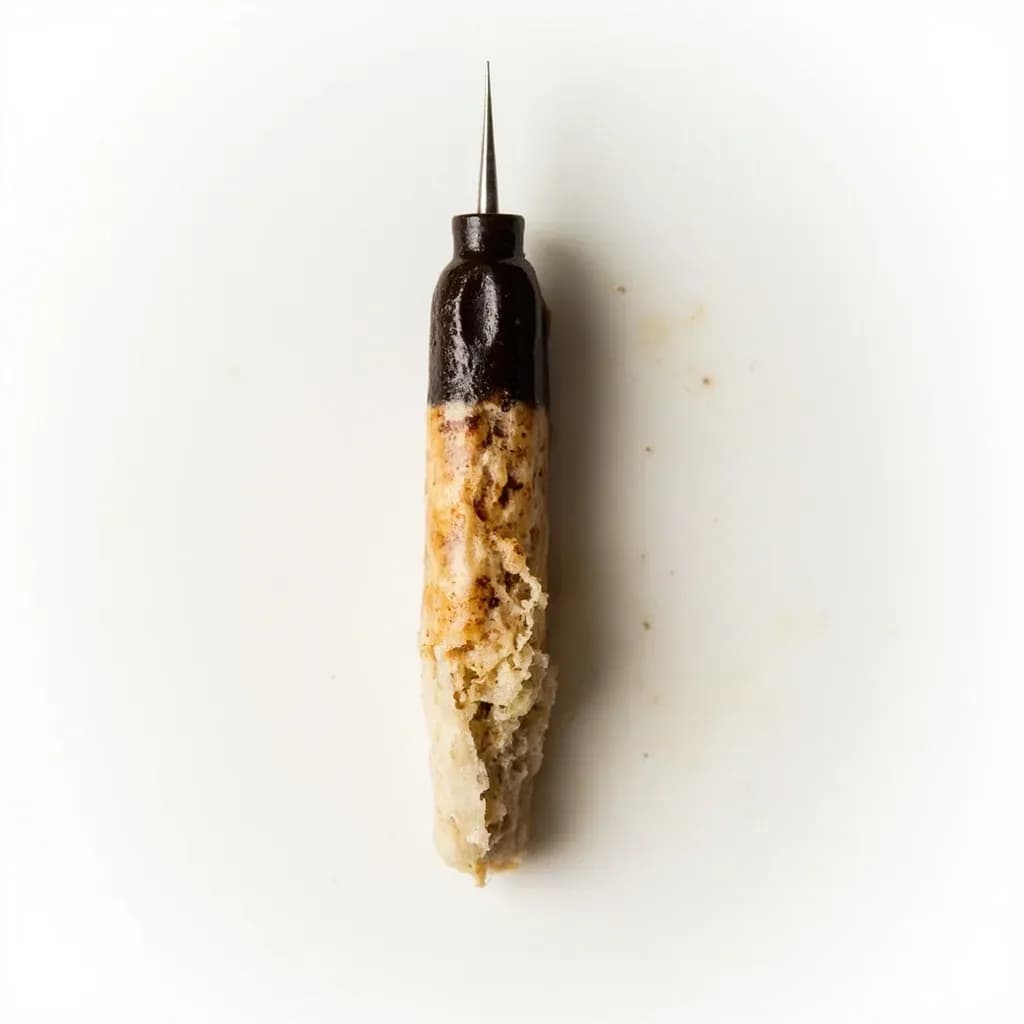
A cluster of fine needles that breaks up and evens espresso grounds in the portafilter.
A WDT (Weiss Distribution Technique) tool has several thin needles used to stir and fluff the dose of coffee grounds in an espresso portafilter before tamping. It breaks up clumps and distributes the grounds evenly so water flows uniformly through the puck during extraction. Even distribution prevents channeling, giving a more balanced, consistent shot.
The Weiss Distribution Technique tool is one of the simplest implements in modern espresso prep, yet it addresses one of the most stubborn variables in pulling a good shot: an uneven coffee bed. When grounds are dosed into a portafilter, they tend to clump, mound in the center, and stratify into dense spots and airy patches. Water forced through that uneven bed finds the path of least resistance and channels through the loose areas, leaving dense spots under-extracted and the loose areas over-extracted — the familiar sour-then-bitter signature of a channeled shot. A WDT (a small handle fitted with a cluster of fine needles, typically repurposed acupuncture needles) gently stirs the grounds to break up clumps and level the bed before tamping.
The tool's effectiveness comes from how little it does. Each needle is thin enough (0.30–0.35 mm) to slip between particles without compressing them, and a cluster of six to eight needles agitates the entire bed with a single circular pass. The technique, named for John Weiss, an American home barista who described it on CoffeeGeek and other enthusiast forums around 2005, has since become standard in specialty cafés and home espresso bars alongside the dosing funnel and distribution tamper.
Because the WDT only stirs and does not compress, it pairs naturally with a calibrated or distribution tamper that does the compaction work. Most baristas use both: WDT for leveling and clump-breaking, tamper for final compression. The payoff is a more uniform puck, more repeatable extraction, and a noticeably cleaner cup — particularly with light roasts and single origins, where fines are stickier and clumps are harder to break.
Alternatives
Types & varieties
The most common configuration; balances thorough distribution with easy movement through dense grounds.
Finer distribution and faster stirring; favored for light-roast single origins with stubborn clumps.
A lighter touch suited to darker roasts or for baristas who follow the WDT with a distribution tool or leveling screen.
A 58 mm funnel combined with a fixed needle cluster; dosing and distribution happen in a single guided motion and the mess stays contained.
Holder accepts swappable or magnetic needle bases so the user can change density or replace bent needles without buying a new tool.
Handmade versions in stabilized burl, exotic hardwoods, or resin; popular as gifts and as café counter pieces.
Insert 6–7 needles into a wine cork or wooden dowel; the original John Weiss build and still the cheapest path to a working tool.
Choosing the right configuration
There is no single correct WDT — needle count and thickness should be matched to the coffee and grinder you use most often.
- 5–6 needles for darker roasts and traditional espresso blends: clumps break up easily and the lighter touch preserves grind integrity.
- 7–8 needles for light roasts and modern single origins: more agitation is needed to dismantle the sticky, electrostatic fines these coffees produce.
- 9–10 needles for very dense, fine grinds (turbo shots, very light Nordic roasts); use a gentle hand so you do not pulverize the bed.
- 0.30 mm is the everyday sweet spot; step up to 0.35 mm for very dense or oily grinds, and stay at or above 0.30 mm for most setups.
- Stainless steel handles stay cool and clean; aluminum and brass feel balanced in the hand; stabilized wood is purely aesthetic and demands more care around moisture.
- Always keep a spare set of needles — they bend with use, and a single bent tip will drag a furrow through the puck.
Where the WDT sits in the workflow
The WDT is one stage of a modern puck-prep sequence rather than a replacement for tamping.
- Grind directly into the portafilter (or dose from a hopper) and set the basket on a dosing funnel if you have one.
- Stir with the WDT from the outside of the basket inward in a slow circle or figure eight until no clumps remain and the surface looks even.
- Tap the portafilter two or three times laterally against the bench to settle the bed; this step is essential for a flat, even tamp.
- Tamp level with a calibrated or distribution tamper set to the basket depth.
- Optional final pass with a distribution screen or leveling tool for users chasing maximum consistency.
Common uses
Tips & pitfalls
- Hold the tool above the bed and let the needles sift through the grounds under their own weight; pressing or tamping with the needles compacts the lower layer and creates the channeling the WDT is meant to prevent.
- Stir in a circular or figure-eight pattern from the outside in, then brush the top of the cluster lightly across the surface to level it.
- Tap the portafilter two or three times laterally after distribution; skipping this leaves a fluffy, uneven puck that the tamper cannot fully correct.
- Match needle count to roast: 5–6 needles for darker, looser grounds; 7–8 (or more) for light roasts and dense single origins where fines clump aggressively.
- Replace any bent needle immediately — a single crooked tip will drag a furrow through the puck and reintroduce the very problem you are trying to solve.
- If fines keep migrating to the bottom of the basket, your needles are too thin or your stirring is too aggressive; step up to 0.30–0.35 mm and lighten the touch.
- Wipe the needles between shots and deep-clean them weekly; trapped oils and fines reintroduce clumps and stale flavors to the next pull.
- Pair the WDT with a calibrated or distribution tamper — the WDT levels and breaks clumps, the tamper compresses; neither replaces the other.
Good to know
- Full name
- Weiss Distribution Technique tool (WDT)
- Inventor
- John Weiss, American home barista
- Year introduced
- Circa 2005, popularized on CoffeeGeek and other enthusiast forums
- Typical needle count
- 6 to 8 needles, most commonly 7
- Needle diameter
- 0.30–0.35 mm, similar to acupuncture needles
- Needle material
- Stainless steel (often repurposed acupuncture needles)
- Common handle materials
- Aluminum, stainless steel, brass, acrylic, or stabilized wood
- Handle diameter
- Roughly 15–20 mm at the grip, sized to clear a 58 mm portafilter basket
- Compatible baskets
- Designed for the 58 mm espresso portafilter standard; smaller versions exist for 54 mm baskets
- Primary function
- Disentangles clumps and evenly distributes ground coffee in the basket before tamping
- Approximate cost
- About $20–$150 for handmade and boutique versions; a DIY build from a cork costs a few dollars
- Durability note
- Needles bend with use; replacement needle sets are sold separately
Also called
WDT tool · coffee distribution tool · needle distributor
Related

Stovetop
The everyday burners where most cooking actually happens

Oven
Enclosed dry heat for roasting, baking, and braising

Grill
Live-fire or gas grates for char, smoke, and high heat

Smoker
Low, slow heat and wood smoke for barbecue and brisket

Air Fryer
Countertop convection that crisps with little or no oil

Slow Cooker
Set-and-forget low heat for stews, beans, and braises

Pressure Cooker
Sealed steam pressure that cooks tough food in a fraction of the time

Rice Cooker
Foolproof, perfectly steamed rice every single time