Appliances & Heat
Electric Hot Plate
A portable electric heating element that acts as a standalone burner for a single pot or pan.
An electric hot plate is a compact, plug-in cooking surface with one or two resistive heating elements, used where a built-in stove is unavailable. Cooks set a pot directly on the element and turn a dial to heat it for boiling, frying, or simmering. It is popular in dorm rooms, small flats, and as supplementary burner space, though it heats and responds more slowly than gas.
An electric hot plate is a self-contained countertop burner that turns electrical current into cooking heat through a resistance element — a coiled nichrome wire, a sealed cast-iron disk, a ceramic-glass radiant surface, or, in the induction version, an oscillating magnetic field. There is no flame and no combustion, which makes the device unusually forgiving indoors: no fumes, no venting requirements beyond common-sense clearance, and no fuel canister to refill. For a cook, the practical takeaway is that an electric plate gives you a burner almost anywhere there is a grounded outlet, which is exactly why the category has been a fixture of dorm rooms, studio apartments, catering setups, and improvised kitchens for decades.
How a hot plate behaves in the hand depends almost entirely on its element type. Exposed coil models glow red within a couple of minutes and cool fast when you turn the knob down, but they heat unevenly and the drip pans underneath are a chore to clean. Sealed solid-disk and ceramic-glass plates take longer to come up to temperature yet hold a steady, even simmer and wipe clean with a damp cloth. Portable induction cooktops sit at the top of the responsiveness scale — water boils in roughly half the time of a coil, and dialing heat back is nearly instantaneous — but they will only heat ferromagnetic cookware, so a stray aluminum or copper pan simply stays cold. Knowing which of these you are cooking on matters more than the brand on the front, because each type has a different rhythm.
In a serious kitchen, a hot plate is rarely a primary tool. It earns its keep as a second burner during a busy service, a temporary range when the main stove is out of commission, or a precise low-heat source for tasks like tempering chocolate or holding a sauce at serving temperature. In a small or improvised setup, it may be the only heat source you have, which makes understanding its limits — electrical load, recovery time, residual heat after shutoff — just as important as knowing how to drive it.
Alternatives
Types & varieties
Exposed nichrome spiral over a drip pan; the budget option, heats in minutes, but heat is uneven and the drip pan is fiddly to clean.
Sealed cast-iron hot plate; smoother cooking surface, even simmer, retains heat long after the knob is off, slower to respond to adjustments.
Glass-ceramic surface over a radiant element; wipes clean, more even heat than coil, moderate price, and looks at home in a temporary setup.
Electromagnetic field heats only the pan itself; fastest response and best efficiency of any hot-plate type, but limited to magnetic cookware.
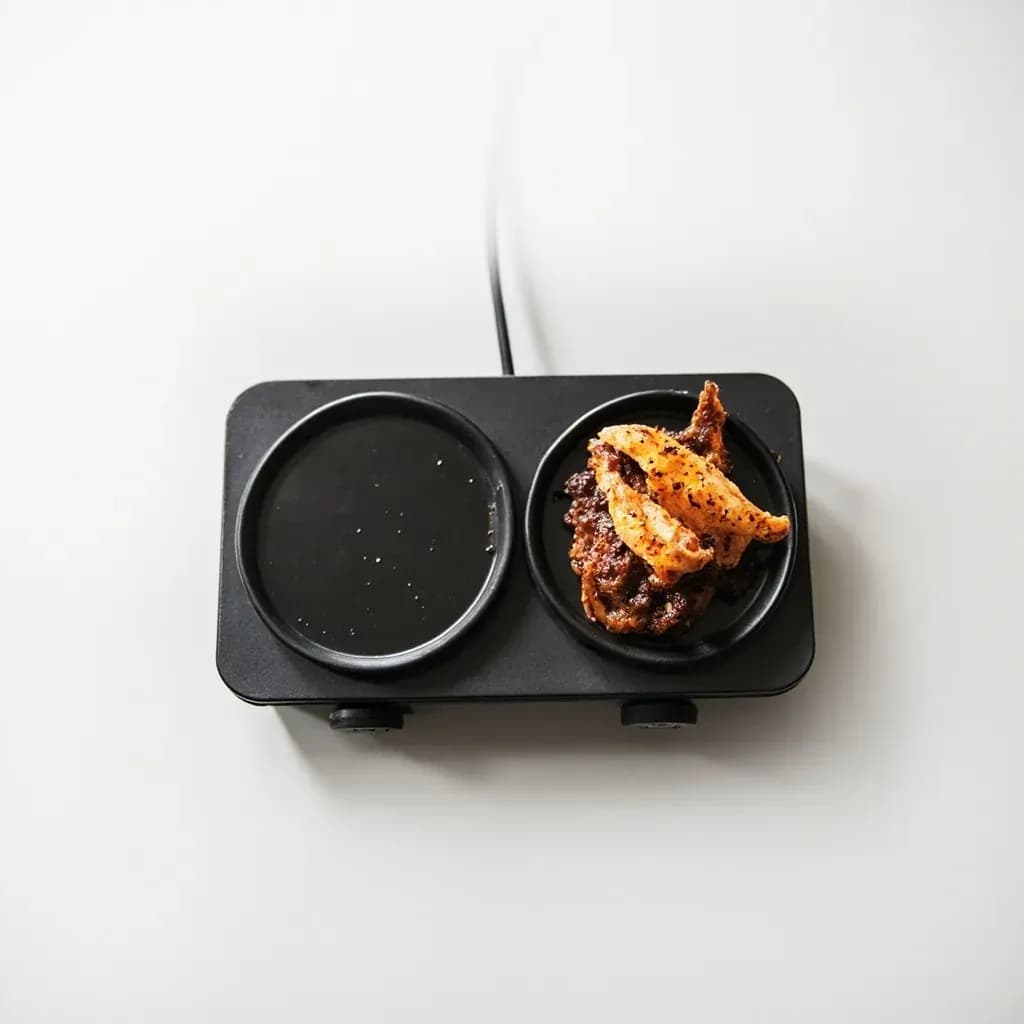
Two heating zones in one rectangular housing; a common stopgap when you need a temporary two-pot range in a studio or office kitchenette.
Higher-wattage, 208–240 V units often with sealed or French-top configurations; used in catering, prep kitchens, and light cooking lines where a full range is overkill.
Choosing the right element type
The single most useful decision is which element you are cooking on, because each behaves like a slightly different stove.
- Coil is cheap and fast to heat but cooks unevenly — best for boiling water or reheating, less suited to delicate simmering.
- Solid cast-iron disks hold a steady medium-low heat and forgive distracted cooking, but respond slowly to knob changes; finish cooking on residual heat by turning off a minute or two early.
- Ceramic-glass gives a middle path: even heat, easy cleanup, and a cooking surface that tolerates a sliding pan better than a coil drip pan.
- Portable induction is the precision instrument of the category — water boils in roughly half the time of a coil, and dialing back heat is nearly instant — but only ferromagnetic pans will work. Test with a refrigerator magnet before you buy or cook.
Electrical and safety considerations
Hot plates draw serious current for their size, and the difference between a safe setup and a tripped breaker usually comes down to how the unit is wired.
- Plug directly into a wall outlet rated for the wattage — never a light-duty extension cord or a power strip shared with other appliances.
- Confirm voltage before using a unit abroad; a 240 V commercial plate on a 120 V household circuit will underperform dramatically, and a 120 V coil on European mains will burn out.
- Place the plate on a heat-resistant surface and never leave it unattended on high — there is no flame to cue you to a dry pot.
- Allow solid-disk and ceramic units to cool for 20 minutes or more before storing; they hold heat far longer than a coil element.
Common uses
Tips & pitfalls
- Match pot diameter to the burner — an oversized pan on a small element wastes energy and takes forever to heat; a small pan on a large element scorches the food in a ring.
- Turn off solid-disk and ceramic plates a minute or two before the food is done; the retained heat will finish the job without overcooking.
- Lift pans rather than sliding them, especially on coil elements — sliding grinds spills into the drip pan and can scratch ceramic surfaces.
- Plug straight into a wall outlet, not an extension cord or shared power strip; a 1,500 W plate can overload a light-duty cord and trip a breaker or start a fire.
- On induction, test cookware with a magnet before you start — if the magnet does not grab the pan firmly, the burner will not heat it, no matter how long you wait.
- Clean sealed disks and ceramic tops only when cool, using a paste of baking soda and water; abrasive pads and sprays will scratch the surface and ruin the even heat.
- Place a trivet or heat-safe pad under the unit — the feet can mark or scorch butcher block, lacquered counters, and wooden tables.
- Never leave a hot plate unattended on high; with no visible flame, an empty or dry pot can go from simmering to smoking to scorched in minutes.
Good to know
- Power source
- Standard AC mains: 120 V in North America, 220–240 V elsewhere; commercial units often run on dedicated 208–240 V circuits
- Typical wattage
- 1,000–1,800 W per burner on consumer models; 2,000–3,500 W on commercial/heavy-duty units
- Heat-up time
- Coil elements glow in 2–4 minutes; sealed cast-iron or ceramic disks need 5–8 minutes to reach cooking temperature
- Temperature control
- Knob with infinite switch or thermostat, typically 5–7 detent settings; induction models offer finer-grained digital control
- Surface temperature
- Roughly 150 °F (low) to 700 °F+ (high) at the element, varying with setting and element type
- Cookware compatibility
- Flat-bottomed metal pots and pans on coil, solid disk, and ceramic models; magnetic (ferrous) cookware required for induction
- Configurations
- Single-burner units and double-burner housings roughly 18–22 in wide; flat or recessed elements
- Safety profile
- No open flame, no combustion gases; most models include an indicator light, and some offer auto-shutoff
Also called
Electric Hotplate · Portable Electric Burner · Two-Plate Electric Stove · Electric Heating Element
Related

Stovetop
The everyday burners where most cooking actually happens

Oven
Enclosed dry heat for roasting, baking, and braising

Grill
Live-fire or gas grates for char, smoke, and high heat

Smoker
Low, slow heat and wood smoke for barbecue and brisket

Air Fryer
Countertop convection that crisps with little or no oil

Slow Cooker
Set-and-forget low heat for stews, beans, and braises

Pressure Cooker
Sealed steam pressure that cooks tough food in a fraction of the time

Rice Cooker
Foolproof, perfectly steamed rice every single time