Appliances & Heat
Electric Range
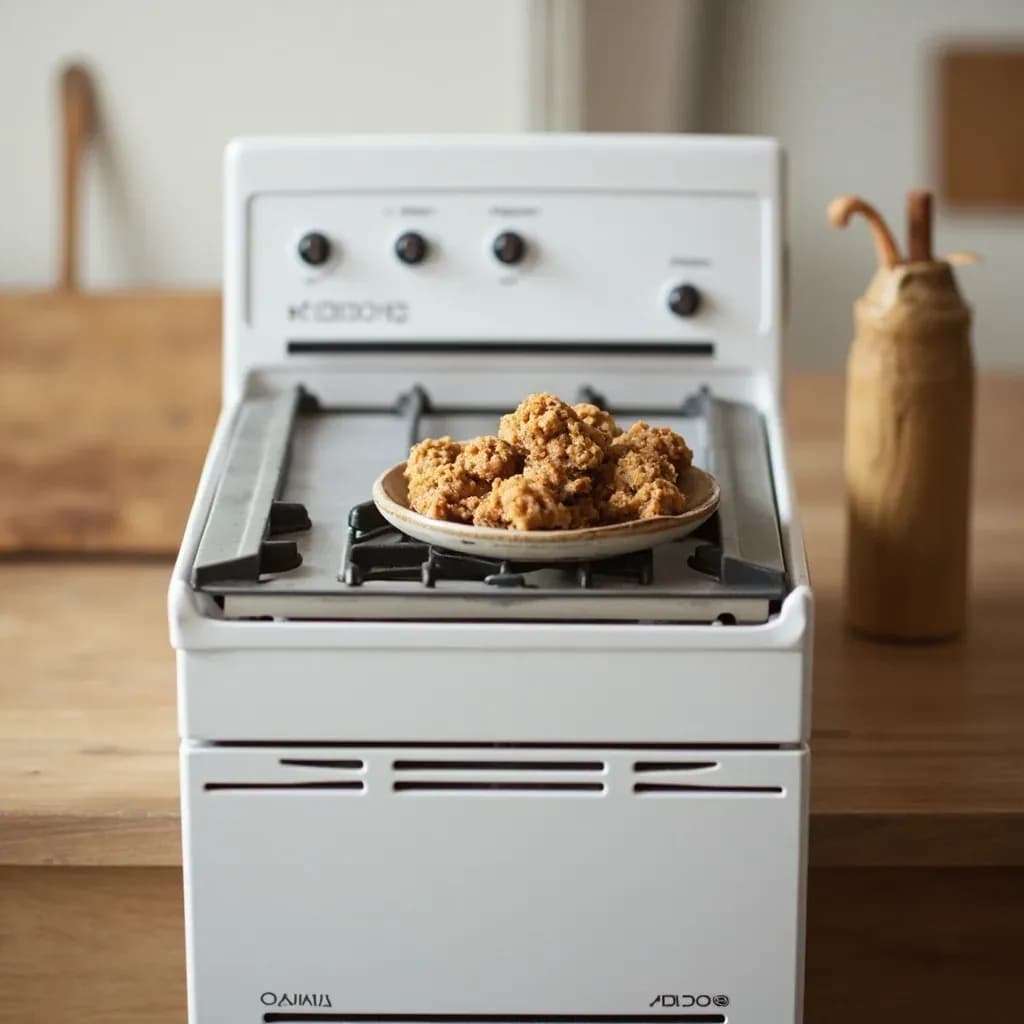
A freestanding stove with electric heating elements on top and an electric oven below.
An electric range combines an electric cooktop, either coil elements or a smooth ceramic surface, with an electric oven in one freestanding appliance. It needs no gas line, heats clean and steady, and is common where electricity is the primary fuel. Coil elements and the oven respond more slowly than gas but hold a set temperature reliably for baking.
An electric range is a single appliance that combines a stovetop and an oven, both powered by electricity through a dedicated 240-volt circuit in North American homes. The cooktop and oven are independent — a cook can simmer sauce on a back burner while roasting vegetables at 400 °F — but they share controls, a single cavity, and the same set of constraints. Electric ranges became widespread in U.S. homes after rural electrification in the 1930s, and have since evolved into three distinct cooktop technologies: exposed coils, smooth glass-ceramic radiant, and induction. Of the three, induction is the only one that heats the pan itself rather than the surface beneath it, which is why serious cooks have largely come to prefer it for temperature-sensitive work like caramel, pan sauces, and shallow-fried eggs.
The single biggest behavioral difference among electric ranges is how quickly the cooktop responds. Coil and radiant elements must first heat a metal coil or glass-ceramic surface, which then transfers heat to the pan — this lag shows up as overshoot when you turn the knob down, and slow recovery when you crank it up after adding cold food. Induction sidesteps the surface entirely: an oscillating magnetic field excites the iron in a ferromagnetic pan, generating heat in the pan walls and base. The result is near-gas responsiveness, water that boils in roughly half the time of a coil element, and a cooktop that stays cool enough to wipe clean moments after the pan comes off. The trade-off is compatibility — only magnetic cookware will heat on an induction surface.
Oven performance varies more by feature set than by power source. A basic range has a bottom bake element and a top broil element; a true-convection or European-convection range adds a third heating element wrapped around a fan at the back wall, which circulates hot air evenly and typically lets you drop the recipe temperature by about 25 °F. Almost every electric oven runs 10 to 25 °F off its set point out of the factory, which is why a hanging oven thermometer belongs in every baker's drawer before the first serious cake goes in.
Alternatives
Types & varieties
Exposed metal coils seated in drip bowls; cheapest, slowest to respond, tolerates rough cookware, and the individual plug-in elements are easy to swap out.
Halogen or ribbon elements hidden under a flat glass-ceramic surface; easier to wipe clean than coils, slower response than gas, and the surface scratches visibly.
Electromagnetic coils under glass; fastest, most controllable, and most energy-efficient of the three — but only works with magnetic pans.
Full-width body with finished sides and a backguard; fits between counters or stands alone in an island.
No backguard, sides flush with cabinetry; built-in look with no gap for crumbs, but requires a custom countertop cutout.
Cooktop and oven in a single unit that drops into a base-cabinet surround with no finished sides or backguard; common in older or modular kitchens.
Smaller upper oven paired with a full-size lower — lets you run two temperatures at once, e.g., a roast and a sheet of vegetables.
Adds a rear fan and ring element to the bake and broil elements; evens out browning and typically lets you drop bake temperature by about 25 °F.
Choosing a cooktop technology
The cooktop family matters far more than the brand badge. Coil elements are forgiving — warped pans still make contact, the drip bowls catch spills, and a $20 replacement element can be swapped in minutes. Smooth-top radiant ranges are easier to clean and look sleeker, but they punish rough use: dragging a cast-iron skillet across the glass leaves silver scratches that no cleaner will hide. Induction is the gold standard for control and efficiency; it boils a liter of water in roughly three to four minutes, drops to a true simmer almost instantly, and the surface itself never gets hot enough to burn spilled food. The cost of induction is the cookware: any pan a magnet does not stick to simply will not heat. A magnet stuck to the fridge is the easiest test in the world.
- Pick coil if budget and durability matter more than speed and looks.
- Pick smooth-top radiant if you want a flat surface and do most of your cooking in clad stainless or aluminum.
- Pick induction if you want gas-like control, fast boils, the easiest cleanup, and you already own (or are willing to buy) magnetic pans.
Oven performance and the case for a hanging thermometer
Most electric ovens, including high-end models, ship from the factory running 10 to 25 °F off their set point, and the deviation is not always in the same direction. A hanging oven thermometer clipped to the center rack is the only way to know what your oven is actually doing. Once you have one, set the oven to 350 °F, let it preheat for 20 minutes, and read the thermometer through the door window. Adjust the calibration through the oven's settings menu (most modern ranges allow roughly ±25 °F of offset), or simply remember the offset and adapt recipes mentally.
- Center rack, at least 1" of clearance on all sides, is the universal position for even baking.
- True convection lets you drop temperature by about 25 °F versus a conventional bake; many cooks also see cook times shorten by roughly 25 percent, depending on the food.
- Preheat until the indicator tone sounds, then wait another 5–10 minutes; the thermostat typically trips before the cavity has fully equalized.
- Hot spots are real: rotate sheet pans front-to-back at the halfway mark when baking cookies or roasting vegetables on a single rack.
Cookware compatibility at a glance
The cooktop decides which pans will work, and the rules are stricter than most owners expect. On a smooth-top radiant, the pan must have a flat bottom — warped cast iron and thin stamped-steel pans make poor contact and heat unevenly. On induction, the rule is magnetic: cast iron, enameled cast iron, and most clad stainless work; bare aluminum, copper, and glass do not, unless they have a bonded ferromagnetic plate in the base. Glass-ceramic surfaces are also vulnerable to scratching, so lift pans rather than slide them, and never use the cooktop as a counter for grocery bags or the cast-iron griddle you forgot to put away.
- Match pan diameter to element size: a 6" saucepan on a 9" radiant element wastes heat and lengthens time to boil.
- Test induction compatibility with a refrigerator magnet — if it does not grab the pan base, the pan will not heat.
- Flat-bottomed clad stainless or hard-anodized aluminum is the best all-around choice for smooth-top radiant and induction alike.
- Avoid stoneware, rough-bottomed cast iron, and pans with decorative brass rims on glass-ceramic — they scratch and can crack the surface.
Care, cleaning, and the self-clean cycle
Smooth-top radiant and induction ranges both want a dedicated ceramic-glass cleaner and a non-scratch pad; oven cleaner, abrasives, ammonia, and SOS-type pads will etch the glass. Sugar-based spills (jam, caramel, tomato sauce) should be wiped off while the surface is still warm but not hot — once sugar cools and hardens on glass, it can actually pit the surface and require a razor scraper to remove. Coil ranges are lower-maintenance but not no-maintenance: drip bowls under the coils collect grease, and a neglected bowl is a common starting point for a stovetop grease fire. The pyrolytic self-clean cycle locks the oven at around 880 °F for two to four hours, burning residue to ash; it works well but generates smoke, odors, and significant heat, so run it with the kitchen ventilated and never line the oven floor with foil, which can fuse to the porcelain and damage the bake element.
- On smooth-top surfaces, use a plastic razor scraper held nearly flat to push cooked-on spills off the glass.
- Wipe the cooktop after every use with a few drops of ceramic cleaner on a microfiber cloth — once a week is not often enough.
- During a self-clean cycle, remove the racks, turn on the range hood, and open a window; pyrolysis is essentially a controlled grease fire inside the oven.
- If the kitchen is small or poorly ventilated, the lower-temperature steam/aqua clean cycle is a quieter, less odorous alternative for light soil.
Common uses
Tips & pitfalls
- Match pan diameter to element size — a 6" pot on a 9" radiant element wastes heat and slows time to boil; using a 12" pan on a 6" element concentrates heat in the center and can scorch the handle.
- On glass-ceramic tops, lift pots rather than slide them; dragging cast iron or rough-bottomed pans across the surface leaves permanent silver scratches.
- Clean sugar-based spills off a smooth-top while still warm (not hot) — once sugar cools and hardens, it can pit or even crack the glass and requires a razor scraper to remove.
- Use a dedicated ceramic-glass cleaner and a non-scratch pad; oven cleaner, abrasives, ammonia, and SOS-type pads will etch the surface of a smooth-top.
- Calibrate your oven with a hanging oven thermometer before relying on it for baking; many ranges ship 10–25 °F off set point, and the offset is rarely zero.
- Resist using the self-clean cycle on an oven caked with heavy grease in a poorly ventilated kitchen — pyrolysis at ~880 °F generates real smoke and odor, and steam/aqua clean is the better choice for light soil.
- Never line the oven floor with foil on a self-cleaning range; the foil can fuse to the porcelain and reflect heat back into the bake element, shortening its life.
- Induction users: keep a fridge magnet by the stove so you can test a stray pan in two seconds before putting it on a burner that will silently do nothing.
- Coil burners: clean the drip bowls under the coils regularly — grease fires almost always start there, not on the burner itself.
- Use the broiler with the door closed on most electric ranges; check the manual, since door position changes how the element cycles and how smoke vents.
Good to know
- Power supply (US/Canada)
- 240-volt dedicated circuit; full-size ranges typically draw 40–50 amps
- Cooktop elements (US)
- Four standard; a fifth warming or simmer zone is optional
- Cooktop element sizes
- Standard 6", 8", and 9"; dual- and triple-ring elements expand from 6" up to 12"
- Oven cavity (US standard)
- Roughly 5.0–6.4 cu ft in a freestanding 30" range
- Oven heat sources
- Bake (bottom) and broil (top) elements; true convection adds a rear fan-and-ring element
- Self-cleaning method
- Pyrolytic lock at roughly 880 °F / 470 °C, or low-temperature steam/aqua clean on newer models
- Common safety lock
- Control lock / child lock on most post-2000 models
- Induction principle
- Electromagnetic field excites ferrous cookware directly; the glass surface itself stays relatively cool
- Induction commercial debut (US)
- First consumer cooktops marketed in the late 1970s to early 1980s
- Cookware compatibility (smooth/radiant)
- Any flat-bottomed pan; works best with clad aluminum or steel
- Cookware compatibility (induction)
- Magnetic (ferrous) base only — cast iron, enameled steel, most stainless; aluminum, copper, and glass need an induction-bonded plate
- First patented electric range
- William Hadaway, U.S. patent, 1896
Also called
Electric Coil Range · Electric Stove
Related

Stovetop
The everyday burners where most cooking actually happens

Oven
Enclosed dry heat for roasting, baking, and braising

Grill
Live-fire or gas grates for char, smoke, and high heat

Smoker
Low, slow heat and wood smoke for barbecue and brisket

Air Fryer
Countertop convection that crisps with little or no oil

Slow Cooker
Set-and-forget low heat for stews, beans, and braises

Pressure Cooker
Sealed steam pressure that cooks tough food in a fraction of the time

Rice Cooker
Foolproof, perfectly steamed rice every single time