Appliances & Heat
Electric Soy Grinder
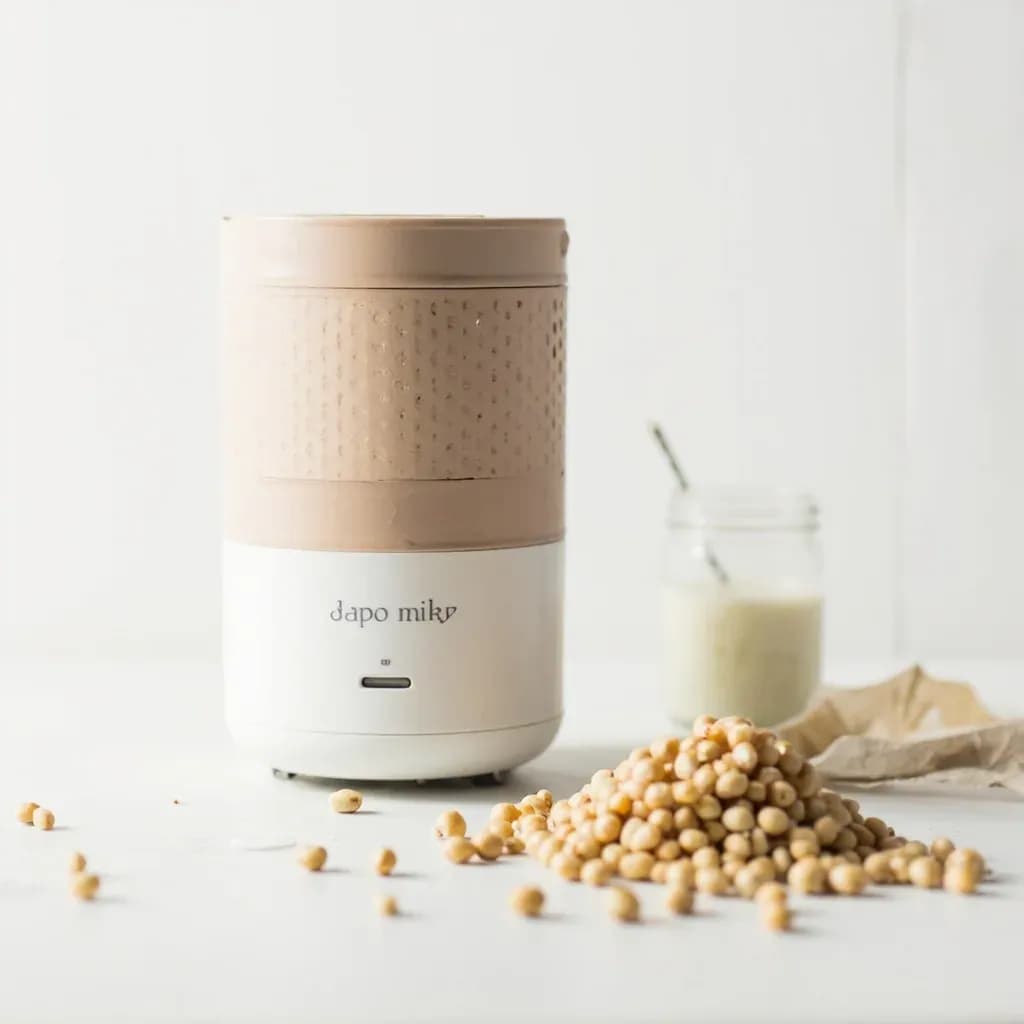
A motorized grinder that mills soaked soybeans into slurry for soy milk and tofu.
An electric soy grinder mills soaked soybeans with water into a fine slurry that is then strained and cooked into soy milk, the base for tofu. Many all-in-one machines grind, heat, and separate the okara pulp automatically. Home and small-shop tofu makers use it to skip the laborious hand-grinding and produce consistent batches.
An electric soy grinder is a single-purpose machine built around one stubborn job: turning dried soybeans into a fine, hot slurry. At its core is a high-RPM multi-blade impeller (typically 20,000–35,000 rpm) that pulverizes soaked beans against a screen or slotted base, paired in most home models with a heating element that brings the slurry to a simmer during the same cycle. That combination is what separates a soy grinder from a blender: a blender will make a slurry, but it won't cook it, and a food processor leaves you with a coarse purée that strains into gritty milk.
The reason cooks buy one rather than improvise is control. You choose the bean (yellow, black, or a heritage variety), the ratio (drinkable milk runs 1 part soaked beans to 8–12 parts water; tofu bases want 1:5–1:6), and whether to strain out the pulp. Fresh-ground soy milk has a sweetness and a soft, dense body that shelf-stable cartons rarely match, and for tofu makers the grind is the foundation of texture — coarse for a rustic, open crumb; very fine for the silken set used in Japanese kinugoshi.
Two practical realities shape every recipe built around one. First, raw soy milk contains compounds — notably trypsin inhibitors and lectins — that a full rolling boil deactivates; any grinder-only workflow must finish with a deliberate boil of at least five minutes, and combo machines must reach a true simmer. Second, every cycle produces okara, the fibrous pulp left after straining, at roughly 1.0–1.2× the weight of the dry beans you started with. It's highly perishable but genuinely useful, and the cook who plans for it gets two ingredients from one machine instead of one and a bag of trash.
Alternatives
Types & varieties
All-in-one home appliance that mills beans and heats the slurry in the same vessel; the most common consumer format (Joyoung, Midea, Supor, SoyaJoy, SoyQuick).
Pure grinding function with no heating element; the user boils the slurry separately. Often larger capacity and favored for tofu production because it lets the cook control temperature precisely.
Counter- or floor-top 5–20 L+ stainless units used in Asian breakfast shops, dim sum kitchens, and Buddhist vegetarian restaurants; higher wattage and continuous-duty motors.
Vitamix, Blendtec, and similar ≥1,000 W blenders with a tamper are widely used as substitutes; they make very fine slurry but do not cook, so a separate boil is mandatory.
Electric conical-stone wet mills produce a smoother, whiter, lower-foam slurry; still preferred in craft tofu shops in Japan and China because the slower cut generates less heat and aeration.
A heavy-duty immersion blender used directly in the cooking pot; cheaper but the grind is coarser and the splashing makes it a messy option.
Milling or grinding attachments for stand mixers are used in some home setups; inconsistent for fine soy slurry and not recommended for serious tofu work.
The raw-milk safety rule
Soy milk straight out of a grinder-only machine is not safe to drink as is. Dried soybeans contain trypsin inhibitors and lectins that a full rolling boil of at least five minutes deactivates; skimping on this step has been the cause of documented outbreaks of foodborne illness, particularly in institutional kitchens where soy milk was held warm rather than brought to a boil. Combo machines handle this automatically as long as the cycle reaches a true simmer and the lid stays closed, but it's worth confirming by watching the first cycle to see vigorous steam and a rolling surface. If you use a grinder-only setup or a high-speed blender, strain, then bring the milk to a hard boil in a non-reactive pot, hold five minutes, and only then cool or proceed to coagulation.
Matching the grind to the curd
For tofu, the grind is the first decision that shapes the final texture, before you even pick a coagulant. A coarser slurry — one pass through a consumer machine, or a deliberately short cycle — gives a more rustic set with visible structure, the right choice for Chinese-style firm tofu that will be pan-fried or simmered. A very fine slurry — a stone-mill, or two passes through a high-RPM machine — gives a denser, whiter, more uniform curd that holds together for silken styles like Japanese kinugoshi. Commercial tofu makers typically double-grind for premium products, accepting the slight loss of yield that comes with a finer cut.
- Coarse grind → rustic, open crumb; ideal for pan-fried and stewed tofu
- Fine grind → uniform, dense curd; ideal for silken and yuba work
- Stone-mill → lower foam, whiter color, gentler on delicate beans
- Two-pass blend → premium silk texture at the cost of some yield
Working with okara
Okara is the wet pulp left in the strainer after you've pulled the milk. It weighs roughly the same as the dry beans you started with, so a 1-cup (~190 g) batch produces about 190 g of okara. It is around 25% protein by dry weight and high in fiber, with a mild, beany flavor that disappears into both sweet and savory applications. The catch is perishability: okara ferments and turns sour within a day at room temperature and within two to three days refrigerated, so the practical move is to use it immediately, refrigerate it the same hour you strain it, or freeze it flat in freezer bags in portions of 100–200 g.
- Pancakes and waffles: substitute 1:1 for some of the flour
- Vegetable patties and veggie burgers: bind with okara in place of breadcrumbs
- Steamed breads and mantou: replace 10–20% of the flour for a softer crumb
- Soup thickener: whisk into broths the way you would use a roux
Common uses
Tips & pitfalls
- Soak soybeans in cool water for 8–12 hours; drain and rinse before grinding. Longer soaks yield smoother milk, but discard any soak water that smells sour or develops a foamy surface.
- Never fill past the marked maximum line — usually about 80% of capacity — or the slurry will scorch on the heating plate, foam over the rim, or stall the motor.
- For drinkable soy milk, strain the hot slurry through a nut-milk bag or 2–3 layers of cheesecloth; for silken tofu, use the unstrained, very fine milk.
- Rinse the interior and run the self-clean cycle — or blend hot water with a splash of vinegar or baking soda — immediately after each use. Dried soy residue ferments and smells within hours, and that smell is the single most common complaint about these machines.
- For tofu, cool the hot milk to 70–80 °C (160–175 °F) before adding coagulant; hotter and the curds turn rubbery, cooler and the yield drops noticeably.
- If your unit lacks a heating element, bring the strained milk to a full rolling boil in a non-reactive pot and hold five minutes — raw soy milk must be boiled to deactivate trypsin inhibitors before drinking or coagulating.
- If the machine shuts off mid-cycle, unplug it and let it cool for at least 20 minutes before restarting; the overheat cutoff on cheaper units trips easily and almost always resets cleanly.
- Don't add sugar, salt, oil, or flavorings before grinding — they scorch on the heating plate and leave a film that's tedious to scrub. Season after the cycle completes.
Good to know
- Also called
- Soy milk machine, soybean milk maker, soymilk maker
- Function
- High-RPM grinding of soaked (or, in some programs, dry) soybeans into slurry, with most home models heating the slurry in the same cycle
- Typical capacity
- 1.0–1.8 L for home units; 5–20 L for commercial
- Power draw
- Roughly 800–1,500 W combined motor and heating element
- Cycle time
- 15–25 minutes for a full grind-and-heat cycle
- Common programs
- Wet beans, dry beans, congee, nut milk, smoothie, self-clean, delay-start
- Approx. price range
- US$80–$300 consumer; US$300–$1,500 prosumer or commercial
- Bean yield
- About 1 cup dried soybeans (~190 g) yields roughly 1.5–2 L soy milk, or 350–500 g firm tofu
Also called
Automatic Soy Milk Machine · Soy Milk Maker · Soybean Grinder
Related

Stovetop
The everyday burners where most cooking actually happens

Oven
Enclosed dry heat for roasting, baking, and braising

Grill
Live-fire or gas grates for char, smoke, and high heat

Smoker
Low, slow heat and wood smoke for barbecue and brisket

Air Fryer
Countertop convection that crisps with little or no oil

Slow Cooker
Set-and-forget low heat for stews, beans, and braises

Pressure Cooker
Sealed steam pressure that cooks tough food in a fraction of the time

Rice Cooker
Foolproof, perfectly steamed rice every single time