Appliances & Heat
Fire Poker
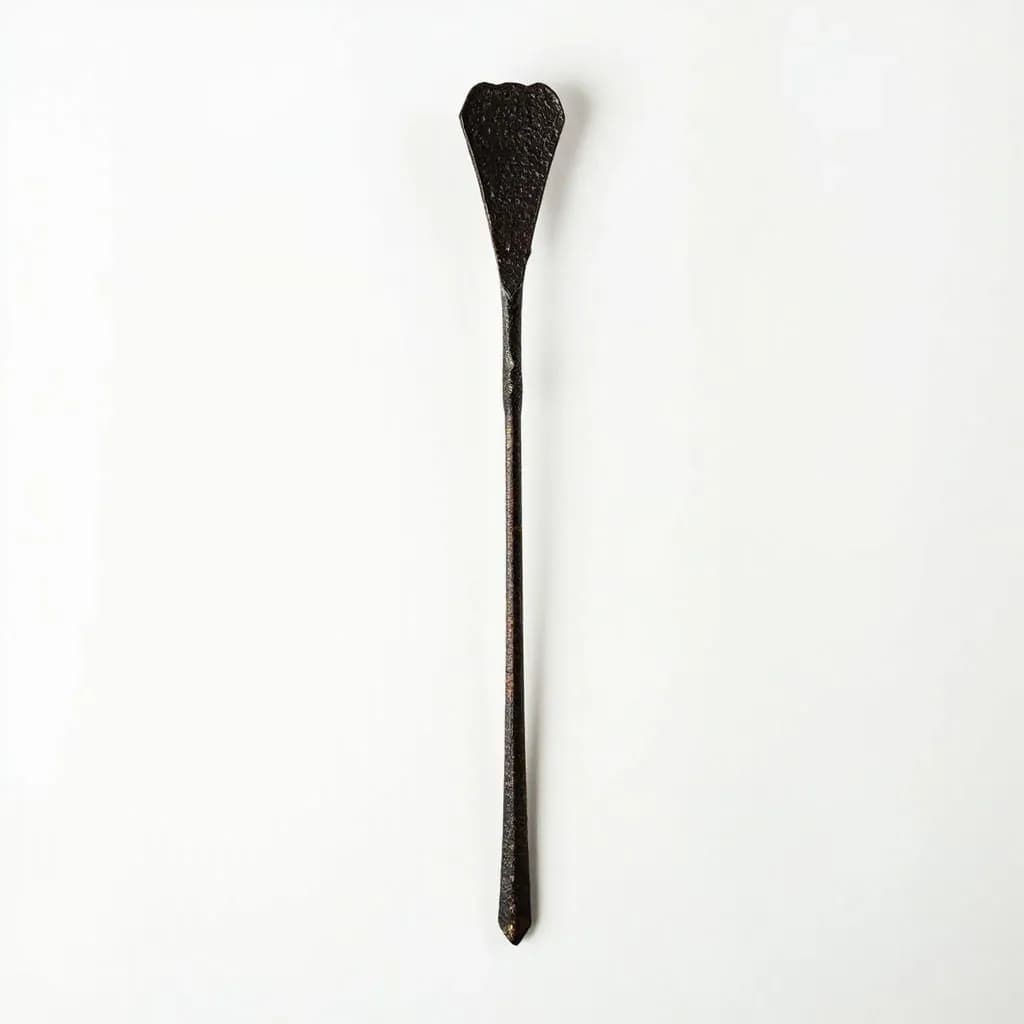
A long iron rod for stoking, arranging, and adjusting burning wood and coals.
A fire poker is a long iron or steel rod, sometimes hooked at the tip, used to stoke and rearrange burning wood and coals. In live-fire cooking it adjusts the bed of embers, raks coals beneath a grill, and moves logs to control heat and flame. The length keeps the cook's hands safely away from the fire while tending it.
A fire poker is the cook's primary tool for managing a live fire without getting burned. In wood-fired ovens, charcoal grills, smokers, and open hearths, the poker is what lets a cook reach into a bed of glowing coals and rearrange logs, spread embers, and break up caked ash from a safe distance. It looks like a simple iron rod, but the right poker — correct length, tip shape, and weight — is what separates a controlled cooking fire from a chaotic one.
In practice, the poker is used repeatedly during a single cook: dragging embers across a pizza oven floor to recover top heat between bakes, pushing coals to one side of a charcoal grill to set up a two-zone fire, or breaking apart a log that is choking on its own ash. The tool has no food-contact role at all — its sole job is to manipulate fuel, coals, and airflow so the fire does what the cook wants. Pokers are rated for direct flame and tolerate well over 1,000 °F, but steel conducts that heat straight up the shaft, so a heat-resistant glove is effectively part of the tool in any serious setup.
Alternatives
Types & varieties
Simple pointed rod — the classic shape for stabbing and shifting individual logs.
Bent end forms a flat hook used to drag logs toward you without leaning into the heat zone.
Sharp tip for breaking caked ash off coals and piercing stubborn charred chunks.
Multi-pronged head for spreading embers evenly across an oven floor or grill grate.
Poker, shovel, and brush mounted together on a stand; the poker end is usually tapered or hooked.
Short poker with a small flattened scoop on one end for moving ash and small coals.
Extra-long (36–48 in.) shaft designed for masonry pizza and bread ovens.
Compact dual-purpose poker-shovel sold with most ceramic and charcoal grills.
Poker technique in a wood-fired oven
A wood-fired oven is where the poker earns its place. A pizza cook will reach for it several times during a single bake to recover temperature, move the flame, and reset the floor. The sequence below is what a seasoned pizzaiolo does between pies in a Neapolitan-style oven.
- Build the fire to one side or against the back wall and let it run 45–60 minutes until the dome turns white-hot — the floor should read around 800–900 °F for Neapolitan pizza.
- After the first bake, use a hook-end poker to drag a wave of embers from the side across the center of the floor; this restores radiant heat under the next pie.
- Use a toothed rake end to spread coals evenly; use the point only to break up clinkered chunks, never to stab a white-hot coal in full flame.
- Sweep ash off the cooking floor with a small brass or iron shovel between bakes — leave the coal bed, remove only the loose ash.
- At the end of service, push remaining coals back against the rear wall and let them die down; do not douse a cooking fire unless you are finished for the day.
Choosing the right poker
Match the tool to the fire. A short hearth poker that works fine beside a fireplace will not reach the back of a 36-inch pizza dome, and an oversized deep-oven poker is clumsy on a kettle grill. Think about depth, tip, and material before buying.
- Length: for a 24–32 in. deep oven, a 36 in. poker is the minimum; for a 36–48 in. dome, choose 40–48 in.
- Tip: a hook is the safest general-purpose shape; a point is best for breaking caked ash; a toothed rake is for spreading embers.
- Material: stainless steel resists humidity and rusts less when stored near a grill; carbon steel and wrought iron are tougher and traditional but need an oil wipe after cleaning.
- Weight: heavier pokers move logs with less effort but tire the wrist faster during long pizza service — 1 kg is a good all-around target.
Common uses
Tips & pitfalls
- Choose length to match the depth of your fire — too-short pokers are the most common cause of singed forearms in deep ovens.
- A hooked tip is safer than a point when rearranging logs, because you can pull flaming pieces toward you rather than push them deeper into the fire.
- Let a fire build a thin gray ash layer on coals before breaking it; disturbing white-hot coals in full flame sends sparks and sudden flare-ups.
- In a wood-fired oven, build the fire to the side or back and use the poker to drag embers forward and across the dome floor for even top-heat baking.
- Use a flat or toothed end to redistribute coals for two-zone grilling instead of chasing individual briquettes with the point.
- Hang or stand the poker between bakes — never lay it across an open oven mouth where it can roll off and burn someone.
- Wear a long-cuff heat-resistant glove when working near a sustained live fire, even with a long poker — radiant heat travels further than expected.
- Keep the tip free of thick rust, which can flake into food; wipe the steel with a thin coat of food-safe oil after cleaning.
- Don't use the poker to test coal readiness; watch the ash color instead — thin gray ash over glowing red means the coal is hot.
Good to know
- Definition
- A long, rigid metal rod used to push, pull, and rearrange burning wood, embers, and coals in wood-fired ovens, charcoal grills, smokers, fireplaces, and open-hearth cooking setups.
- Primary materials
- Wrought iron, carbon steel, or stainless steel; handles may be bare steel, leather-wrapped, or wood-fitted.
- Typical length (cooking use)
- 24–40 in. (60–100 cm); short grill pokers 16–20 in.; deep-oven pokers 36–48 in.
- Shaft stock
- Round or square bar, commonly 1/4–1/2 in. (6–12 mm) in cross-section.
- Heat tolerance
- Rated for direct flame contact; steel shafts handle 1,000 °F (540 °C) and above continuously.
- Weight
- Roughly 0.5–1.5 kg (1–3 lb), depending on length and stock thickness.
- Other names
- Fire iron, stoker, hearth poker, coal rake (when toothed), oven rake, ember tool.
- Safety note
- Handle stays hot; always use with a long-cuff heat-resistant glove in deep ovens or long-burning fires.
Also called
Long Iron Removal Rod · Sienni Rod · Fire Iron · Coal Rake
Related

Stovetop
The everyday burners where most cooking actually happens

Oven
Enclosed dry heat for roasting, baking, and braising

Grill
Live-fire or gas grates for char, smoke, and high heat

Smoker
Low, slow heat and wood smoke for barbecue and brisket

Air Fryer
Countertop convection that crisps with little or no oil

Slow Cooker
Set-and-forget low heat for stews, beans, and braises

Pressure Cooker
Sealed steam pressure that cooks tough food in a fraction of the time

Rice Cooker
Foolproof, perfectly steamed rice every single time