Prep Tools
Frying / Deep-Fry Thermometer
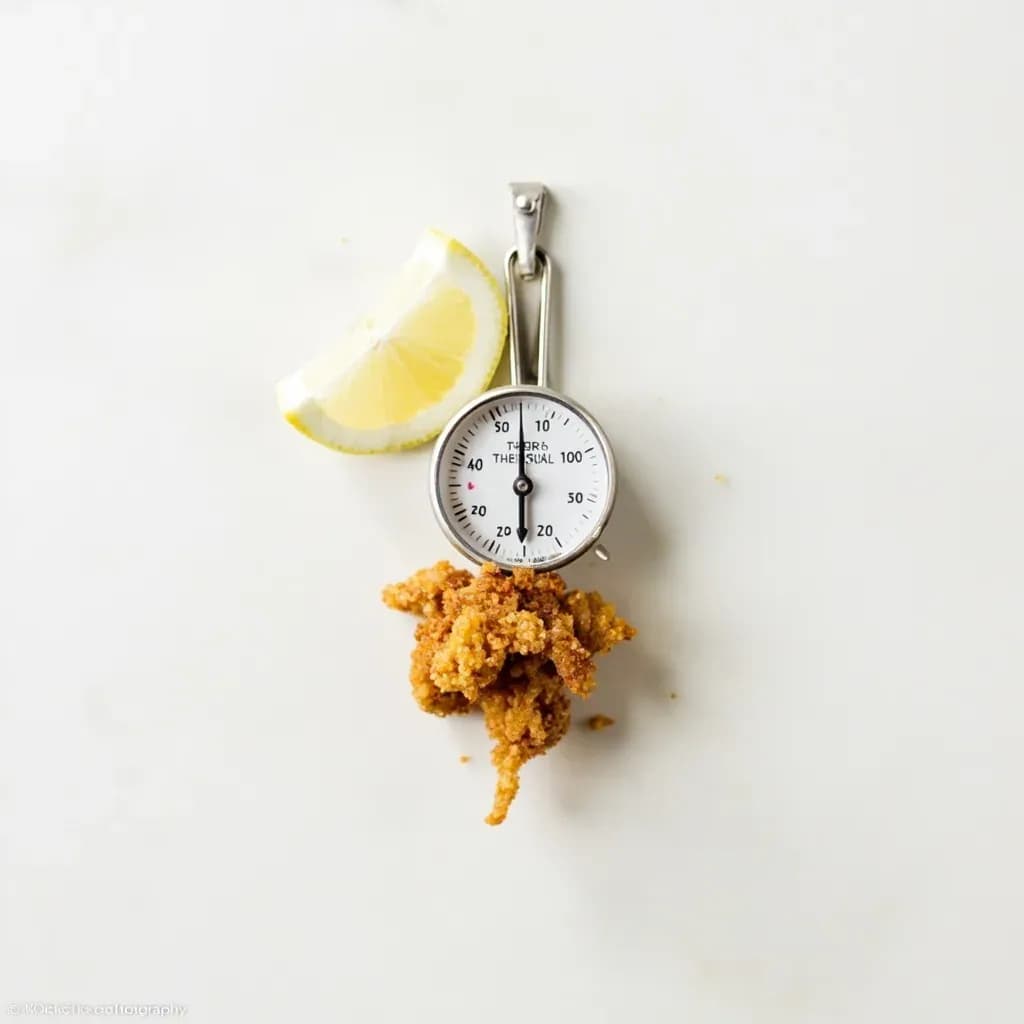
A high-range thermometer that clips to the pot to monitor hot oil for frying.
A frying thermometer is a long-stemmed, high-temperature gauge that clips to the side of a pot to track the temperature of frying oil. Holding oil in the correct range, typically 325 to 375 degrees Fahrenheit, ensures food crisps without burning or absorbing grease. The clip and probe guard keep the sensor off the pot bottom for an accurate reading of the oil itself.
A frying or deep-fry thermometer is a high-temperature probe designed to clip onto the side of a pot and read oil from roughly 100°F up to 400°F or beyond — well above the range of an ordinary meat thermometer. The reason it matters is that oil temperature is hard to judge by eye: the shimmer test, which signals oil is roughly 325–350°F, varies with pot size, burner output, and oil volume, and gives you no warning before oil crosses the line from hot to dangerously overheated. A reliable thermometer turns deep-frying from guesswork into a controlled process, telling you precisely when to drop food and when oil has broken down and should be discarded.
The probe works on the same principle as any cooking thermometer — a sensor at the tip transmits heat to a dial or digital display — but it is built to survive sustained contact with oil at temperatures that would ruin an instant-read meat thermometer, which typically maxes out around 200°F. Stainless-steel stems of 5 to 12 inches let the tip sit in the middle of the oil column, well away from the pot bottom and the heating element, where hot spots can run 20–50°F hotter than the rest of the oil. Whether you choose an analog dial or a digital probe, the goal is the same: a continuous, accurate reading of the oil around your food, not the pan beneath it.
Alternatives
Types & varieties
No batteries; dial face with colored zones; durable and inexpensive; slower to respond than digital.
Fast, precise reading; backlit display; some have alarms for target temperature; battery-dependent.
Same 100–400°F range and clip-style design with markings for candy stages (soft-ball, hard-crack, etc.).
Measures surface temperature from a distance; reads only the top layer of oil, not depth; useful as a secondary check but not a true replacement for an in-oil probe.
Stainless probe connected by heat-resistant cable to an external display; keeps electronics away from the heat; useful for long fries or candy batches.
Clip rotates and slides so the dial or display can be read at a comfortable angle regardless of pot depth.
5"–6" stem for small saucepans; check the max-temperature rating before buying, since pocket models sometimes top out below 400°F.
12" stem for large fryers and stockpots; often NSF-certified; protective sheath included.
Probe placement and hot spots
Where the tip sits in the pot matters as much as which thermometer you buy. Oil directly above a gas flame or electric coil runs noticeably hotter than oil at the edge of the pot, and the metal of the pot bottom conducts heat faster than oil carries it, so a probe resting on the bottom will read high and mislead you into thinking the oil is hotter than it really is. Aim for the middle of the oil column, at least an inch or two above the bottom and an inch away from the side walls, where convection currents give a more representative reading.
- Suspend the tip 1–2 inches above the pot bottom to avoid contact with hot metal.
- Keep the probe at least an inch away from the side walls, which conduct heat from the burner.
- On a gas stove, position the pot so the probe tip sits between the flame rings rather than directly above one.
- Stir the oil briefly before reading to even out hot spots, then let it settle for 10–15 seconds before trusting the number.
Calibration and care
A thermometer is only as good as its calibration. Check it twice a year, or any time you suspect a reading, against two reference points: an ice bath (32°F / 0°C) and boiling water (212°F / 100°C at sea level, less at altitude). Analog dial units usually have a small calibration nut under the dial; digital units are factory-calibrated but can be verified the same way and replaced if they drift more than a couple of degrees.
- For an ice bath, stir a slurry of crushed ice and water and insert the probe without letting it touch the container walls.
- For a boiling check, simmer water and read at a gentle, steady boil — a rolling boil can superheat near the probe.
- At 5,000 ft elevation, subtract roughly 9°F from the boiling-point reference (water boils near 203°F).
- Wipe the stem with a damp cloth and mild soap; never submerge the head of an analog or non-waterproof digital unit.
- Replace the battery of a digital unit at the start of frying season — a weak cell skews readings low and is a common cause of mysteriously soggy food.
Common uses
Tips & pitfalls
- Don't let the probe touch the bottom or sides of the pot — it will read pan temperature, not oil temperature, and run hot.
- Calibrate before first use and periodically afterward: ice bath should read 32°F (0°C); boiling water should read 212°F (100°C) at sea level, less at altitude.
- Expect oil temperature to drop 25–75°F when cold food is added; wait for it to climb back to target before adding the next batch.
- Match the thermometer to the job: most instant-read meat thermometers max out around 200°F and either give a wrong reading or are damaged in hot oil — use one rated to at least 400°F.
- Heat oil to the upper end of the recommended range before adding food — the drop on immersion is built into most recipes.
- Reused oil darkens and its smoke point drops — use the thermometer to confirm you're staying well below the smoke point, and discard oil that smokes below its rated temperature.
- If the oil is smoking, smells acrid, or the thermometer climbs past 400°F without food in it, kill the heat and ventilate; the oil has likely broken down.
- For most deep-frying, target 325–375°F (163–190°C); lower for thick or battered items, higher for thin or already-cooked items.
Good to know
- Temperature range
- Typically 100–400°F (40–200°C); some models extend to 450°F (230°C)
- Stem length
- Commonly 5", 6", 8", or 12"; longer stems fit stockpots and Dutch ovens
- Sensor type
- Bimetal coil (analog) or thermistor/thermocouple (digital)
- Read time
- Analog: 15–30 seconds; digital: 3–8 seconds
- Calibration
- Ice bath (32°F / 0°C) and boiling water (212°F / 100°C, adjusted for altitude)
- Clip
- Adjustable stainless-steel pan clip; some rotate for angle viewing
- Power (digital)
- Typically one AAA or coin-cell battery; auto-shutoff common
- Commercial certification
- NSF-certified models are required in many professional kitchens
Also called
fry-thermometer · Deep-Fry Thermometer · Candy Thermometer · Oil Thermometer
Related

Peeler
Swift blade for stripping skin off fruit and vegetables

Grater
Sharp-toothed surface for shredding cheese and vegetables

Microplane
Ultra-fine rasp for citrus zest, garlic, and hard cheese

Mixing Bowl
All-purpose bowl for combining, whisking, and tossing

Whisk
Looped wires that beat air into eggs, cream, and sauces

Spatula
Flat blade for flipping, lifting, and scraping

Slotted Spoon
Pierced spoon that lifts solids and drains the liquid behind

Wooden Spoon
Gentle, heat-friendly spoon for stirring anything