Appliances & Heat
Gas Stove
Cooktop that burns gas to produce a visible, instantly adjustable open flame.
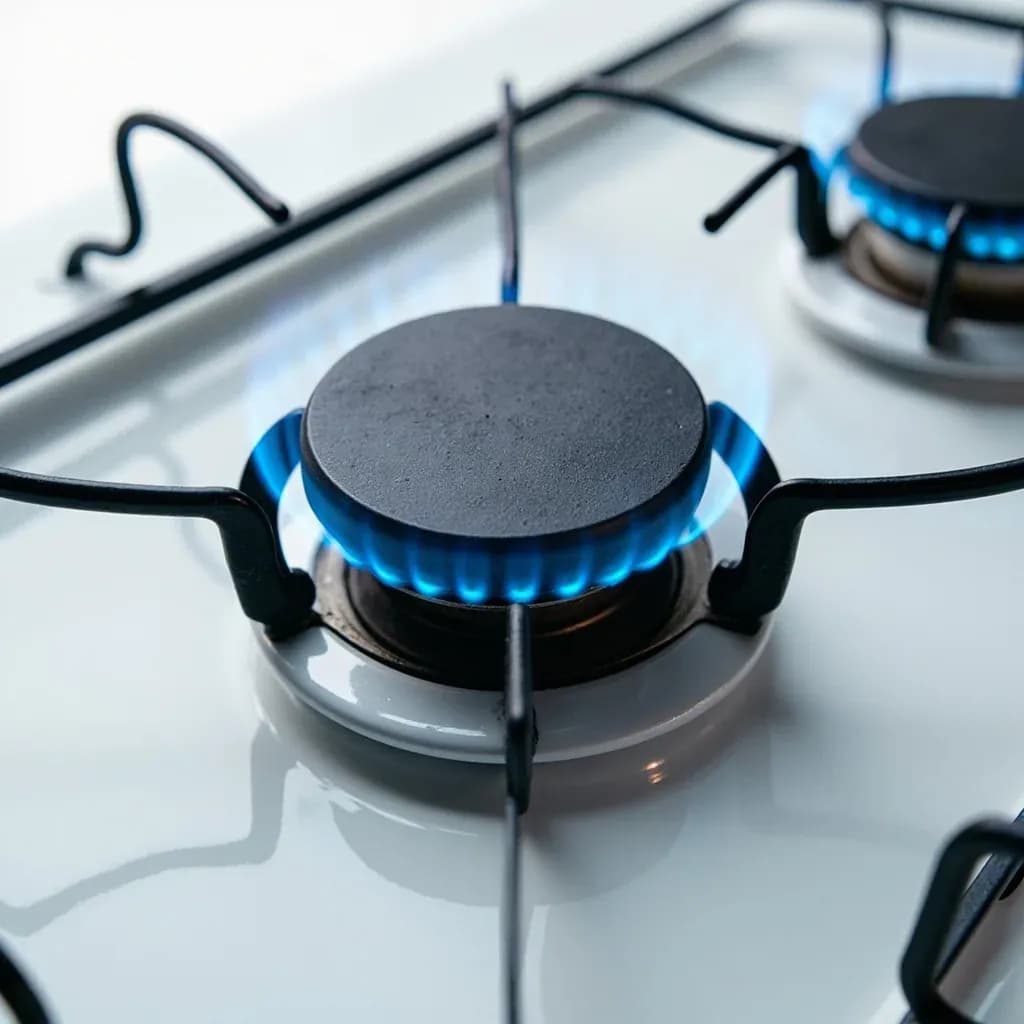
A gas stove burns natural gas, propane or bottled LPG at open burners, giving cooks an immediate, visible flame that responds instantly to control adjustments. Its responsiveness and high peak heat make it a favorite for searing, wok cooking and flame-charring. Forms range from built-in ranges to portable single-burner butane and propane units used worldwide.
Natural gas or propane feeds a set of burner heads on a gas range, where it burns as a steady flame directly beneath the cookware. What sets gas apart from other domestic cooktops is what that flame lets the cook do: glance down, see exactly how much heat is hitting the pan, and turn the knob a fraction to nudge the temperature up or down with no warm-up lag. No induction or radiant-electric cooktop offers that kind of immediate, eyes-on feedback, which is why gas remains standard in most professional kitchens and a top choice among home cooks who do serious wok work, high-heat searing, or flame-finishing.
Gas is fuel-flexible within limits. Most homes in North America run on natural gas (methane delivered by pipeline); rural homes, many RVs, and regions without gas mains use bottled propane (LP). The two fuels require different burner orifices to burn cleanly, and a stove converted improperly will produce a sooty yellow flame, smell of unburned gas, and waste fuel. Modern units need only 120-volt electricity for the electronic ignition, oven controls, and lights — the burners themselves run on gas, and most models can still be lit with a match during a power outage. Mechanically, gas stoves range from simple residential sealed burners with cast-iron grates to exposed commercial open burners delivering up to 30,000 BTU per head, and the design of the burner head has at least as much impact on cooking performance as any number printed on the spec sheet.
Like any combustion appliance, a gas range produces carbon monoxide, nitrogen dioxide, and water vapor that must be vented. Building codes require a range hood exhausting to the outside — typically 100 to 150 CFM for a residential cooktop, more for a commercial rangetop — and a recirculating charcoal filter hood does not remove combustion byproducts. Used with proper ventilation, however, a gas stove handles searing, stir-frying, simmering, flambéing, and charring with a combination of high peak heat, visual control, and open-flame access that no flat-top radiant electric or induction cooktop fully replicates, and it works with every kind of cookware, including round-bottom woks seated on a wok ring in a way induction cannot match as naturally.
Alternatives
Types & varieties
Burner base sealed to the cooktop with a removable cap; spills stay on the surface, cleanup is easier; slightly slower response than open burners.
Exposed burner head with a removable cap; the standard in restaurants for high heat output and instant visual adjustment; harder to keep clean.
Full unit with finished sides and a backsplash; the most common and least expensive form factor.
Single unit with oven below, designed to sit flush with surrounding cabinetry for a built-in look.
Cooktop built into the countertop with no oven below; standard in pro-style kitchens; pairs with a separate wall oven.
Inner and outer flame rings with independent control; high-end models can sear at 20,000 BTU and true-simmer around 500 BTU on a single head.
Patented by Thermador; eight-pointed flame pattern with a raised cap for more even heat distribution under the pan.
Dedicated 15,000–25,000 BTU burner, often with a shaped grate to cradle a round-bottom wok.
Low-BTU burner (typically 5,000 BTU max) for delicate work; quality units reach ~500–600 BTU true simmer.
Premium construction found on La Cornue, certain Bertazzoni, and other high-end ranges; brass resists corrosion and conducts heat evenly.
Reading the flame
The flame is a gas stove's diagnostic instrument as well as its heat source, and a quick glance tells you most of what you need to know about whether the burner is tuned correctly. A healthy flame burns crisp and blue, with a faint inner cone of brighter blue at each port; the tips just barely lick the bottom of the pan. A yellow or orange flame is incomplete combustion: fuel is leaving the burner without burning fully, depositing soot on your pans and producing higher levels of carbon monoxide. The usual culprits are clogged burner ports, a misadjusted air shutter, or — most often after a fuel conversion — an orifice sized for the wrong gas. Address the issue before you keep cooking on it.
- Blue flame with sharp inner cones = complete combustion, properly tuned.
- Yellow or orange flame = incomplete combustion; clean the burner ports with a needle, then check the air shutter and orifice size.
- Flame that lifts off the burner ports (a floating or lifting flame) signals too much air or too much gas pressure; call a service technician.
- A flame that roars loudly or smells of rotten eggs (added mercaptan) suggests a gas leak; shut off the supply and ventilate immediately.
BTU ratings in practice
BTU numbers are a starting point, not a verdict. A 15,000-BTU burner with a tight, well-designed flame pattern can outperform a 20,000-BTU burner with a wide, lazy flame that mostly heats air around the pan. What matters more is flame-to-pan contact, the proportion of the pan base the burner actually covers, and how quickly the burner cycles down to a true simmer without cycling off. High-end dual-stacked burners are designed to deliver both ends of that range on a single burner head: 20,000 BTU for a hard sear, then a turn of the knob down to 500 BTU for a custard.
- Match pan size to burner: a flame that climbs the sides of the pan is wasted fuel and overheats handles and rivets.
- For searing and stir-frying, prioritize flame intensity and pan contact over raw BTU; a 12,000-BTU burner under a 10-inch skillet outperforms a 20,000-BTU burner under a 14-inch skillet.
- For simmering, look for a unit that holds a low flame without cycling on and off; flame-sensing reignition helps prevent the temperature yo-yo that breaks sauces.
- Cast-iron or carbon-steel pans respond most quickly to flame changes on gas because they are typically thinner and have moderate thermal conductivity; thick clad stainless works well but lags a beat behind knob turns.
Common uses
Tips & pitfalls
- Light a match or igniter before turning the knob if ignition is sluggish — never lean your face over a burner you're lighting.
- When converting a stove between natural gas and propane, change the orifices as specified by the manufacturer; mismatched orifices cause yellow flame, soot, and burner damage.
- Keep burner ports clear: soak caps in hot soapy water and clear ports with a needle or stiff brush to restore proper flame and heat output.
- Use the smallest burner that fully covers the pan base to minimize wasted heat and combustion byproducts.
- For maximum wok heat, preheat the wok over the flame until it just starts to smoke before adding oil — never preheat a nonstick pan empty.
- Install a properly sized vent hood exhausting to the outside; recirculating charcoal filters do not remove carbon monoxide or nitrogen dioxide.
- A yellow or orange flame is a warning sign of incomplete combustion: clean the burner, adjust the air shutter, or call a service technician before continued use.
- Use a flame tamer or diffuser disk when cooking with low, wide pans like paella pans or crepe pans to spread the heat evenly across the cooking surface.
Good to know
- Invented
- Patented by British engineer James Sharp in 1826; earlier gas cooking demonstrations by Frenchman Philippe Lebon around 1800
- Fuel
- Natural gas (methane, supplied by utility) or propane/LP (bottled); the two require different burner orifices
- Residential BTU range
- Approximately 5,000–12,000 BTU per burner; quality units can hold a true simmer around 500–600 BTU
- Commercial BTU range
- 15,000–30,000+ BTU per burner; wok burners commonly 18,000–25,000 BTU
- Standard sizes
- 30-inch width is most common in U.S. homes; 36-inch and 48-inch are standard pro-style widths
- Burner count
- Four to six sealed or open burners on a residential range; four to eight on a commercial rangetop
- Ignition
- Electronic spark ignition dominant since the 1990s; flame-sensing reignition standard on newer units; many models can be lit by match during a power outage
- Power
- 120 V electricity required only for ignition, oven controls, and lights — the burners run on gas
- Ventilation
- ASHRAE recommends 100–150 CFM hood for residential cooktops exhausting outside; recirculating hoods do not remove CO or NO₂
- Flame color
- Blue flame indicates complete combustion; yellow or orange flame signals incomplete combustion from dirty burners, blocked ports, or wrong orifice size
Also called
Gas Stove (Gaaz) · Bottled-Gas Burner · LPG Gas Stove · Propane Gas Stove · Portable Butane Burner · butane burner · LPG cylinder burner · gas cooker · single-burner gas ring · portable gas burner · Sterno fuel stand · propane tank
Related

Stovetop
The everyday burners where most cooking actually happens

Oven
Enclosed dry heat for roasting, baking, and braising

Grill
Live-fire or gas grates for char, smoke, and high heat

Smoker
Low, slow heat and wood smoke for barbecue and brisket

Air Fryer
Countertop convection that crisps with little or no oil

Slow Cooker
Set-and-forget low heat for stews, beans, and braises

Pressure Cooker
Sealed steam pressure that cooks tough food in a fraction of the time

Rice Cooker
Foolproof, perfectly steamed rice every single time