Appliances & Heat
Tabletop Griddle / Grill Plate (Teppan)
A flat heated metal plate for cooking at the table, from teppanyaki to Korean barbecue.
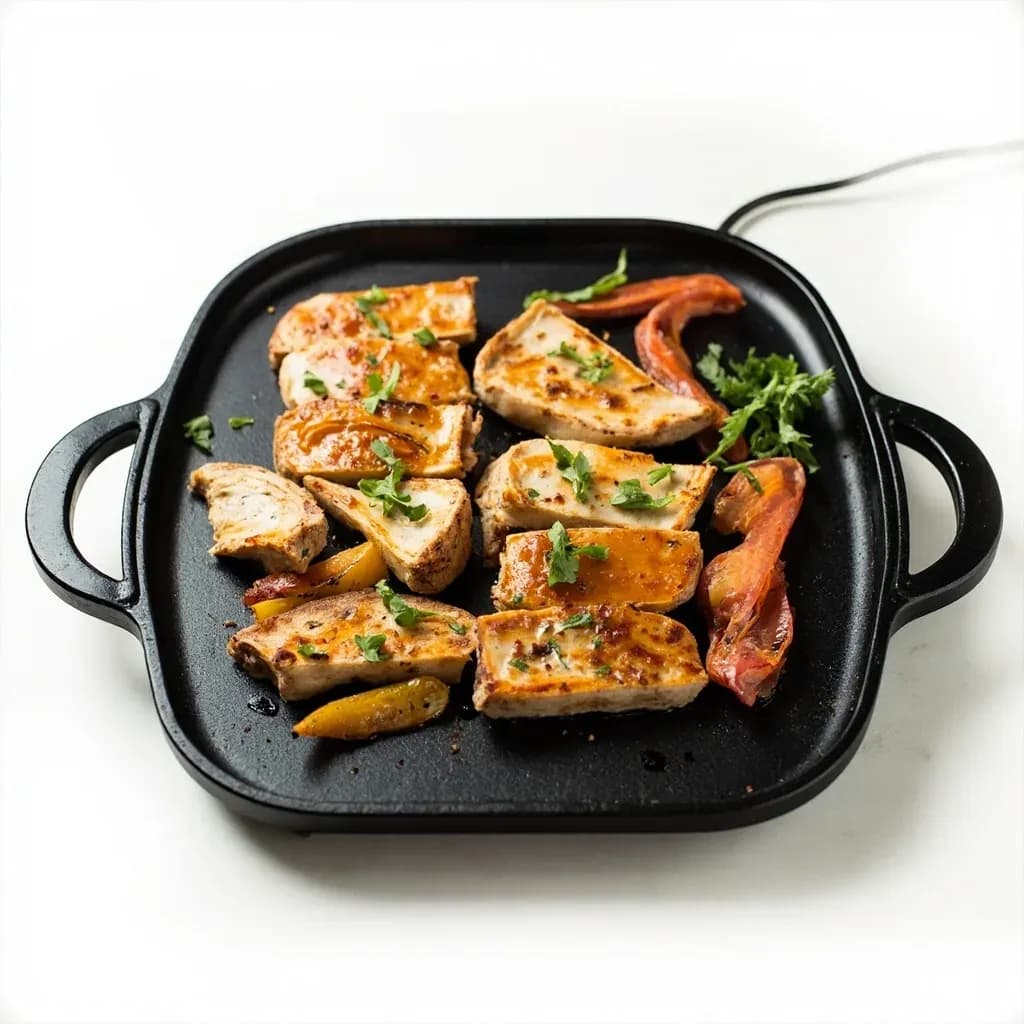
A tabletop griddle is a portable flat or ridged metal plate heated by gas or electricity so diners can cook food where they sit. The flat teppan surface sears meats, seafood, and vegetables in Japanese cooking, while ridged or domed plates suit Korean barbecue and grilled dishes. Its even, broad surface makes it ideal for interactive, cook-as-you-go meals.
A tabletop griddle — the Japanese teppan (鉄板, literally "iron plate") being the archetype — is a flat heated surface meant to live at or near the table, turning cooking into part of the meal. Unlike a stovetop pan, it offers a wide rectangular cooking surface that lets guests or a single cook sear, warm, and assemble food side by side. The format underpins teppanyaki service in Japan and tabletop Korean barbecue (gogi-gui), and it has crossed into Western kitchens as a convenient indoor grilling surface for everything from smash burgers to pancakes.
Performance is governed less by wattage than by plate material. Cast iron and carbon steel hold tremendous heat and reward a properly developed seasoning; thin aluminum with a non-stick coating heats in minutes but caps out at moderate temperatures. Most home units are electric with a thermostat — essentially a plate bolted to a heating element — while serious teppanyaki restaurants run gas. The defining practical difference between a flat plate and an open grate is fat management: a teppan renders fat into a thin shimmering film that crisps proteins evenly, while a grate lets fat drip away and leaves char marks. For cold months, small kitchens, or any cook who wants cooking-as-entertainment, the tabletop griddle fills a niche no pan or grill quite can.
Alternatives
Types & varieties
Thick, heavy, retains heat best; develops a natural patina; the traditional choice for serious teppanyaki
Lighter than cast iron, heats faster, also requires seasoning; favored in professional kitchens
Plug-in unit with thermostat and drip tray, often with a removable plate; the most common home format
Tabletop or freestanding, fueled by butane canister or propane; hotter sear with no cord
Sloped surface with a central trough for fat, egg, or doenjang/cheese; charcoal, gas, or electric
Small open charcoal or gas brazier with a rectangular cast iron grate — not a flat plate, but commonly grouped with tabletop grilling
Smooth glass-ceramic induction cooktop topped with a flat cast iron or steel plate; precise temperature control
Spanish/French thick steel plate over gas; heavier than a Japanese teppan, classic for seafood and vegetables
Plate Material Defines the Cook
If you are choosing a tabletop griddle, material matters more than brand. Cast iron and carbon steel store enormous heat, so the plate barely flinches when cold food lands on it — the reason a teppanyaki chef can sear a dozen scallops in quick succession without losing crust. They also reward, and require, seasoning: a thin polymerized layer of oil that becomes naturally non-stick over time. Aluminum with a non-stick or ceramic coating heats in minutes and forgives inattention, but caps at moderate temperatures and the coating will eventually degrade. Stainless steel is the middle ground — durable and dishwasher-safe, but a poor conductor unless clad over aluminum or copper.
Teppan vs. Open Grate
The practical difference between a flat plate and a grate comes down to fat and crust. A flat plate renders fat into a thin, shimmering film that bastes the food, producing an even, lacy Maillard crust across the entire contact surface — ideal for smash burgers, scallops, and thinly sliced beef. A grate leaves grill marks and channels fat away, which is preferable for thick, fatty cuts where you want smoky char without stewing. Many cooks who entertain keep both: the teppan for the table-side show, the grate for weekend grilling.
Common uses
Tips & pitfalls
- Preheat the plate fully before adding food: a drop of water should skitter and evaporate in 1–2 seconds; cold food on an underheated plate sticks and steams
- Oil the food, not the plate, when using cast iron or carbon steel; oiling the surface causes burnt polymer buildup and stickiness
- Pat proteins dry and season just before they hit the plate; surface moisture prevents browning
- Do not overcrowd: leave space between items so steam can escape and crust can form
- Use metal spatulas only on cast iron, carbon steel, or stainless; reserve wood or silicone for non-stick coatings
- On non-stick electric units, stay at or below medium heat; high temperatures degrade the coating and can release fumes
- Clean while warm but not scorching: scrape residue with a bench scraper, wipe with a cloth, then re-oil lightly if cast iron
- Stabilize the unit on a heat-resistant trivet or board; wood tabletops can scorch under a long preheat
Good to know
- Etymology
- Teppan (鉄板) means 'iron plate'; teppanyaki combines teppan with yaki (grilled/fried)
- Origin of tabletop service
- Counter-style teppanyaki is credited to Misono in Kobe in the mid-1940s; Benihana popularized the format in New York from 1964
- Korean counterpart
- Korean tabletop barbecue (gogi-gui) traditionally uses a domed or sloped grate with a central trough for broth, doenjang, or fat drainage
- Primary materials
- Cast iron (traditional), carbon steel, stainless steel, and aluminum with non-stick or ceramic coating
- Home electric power
- Most tabletop electric units draw 1,200–1,800 watts on a standard outlet
- Surface temperature
- Home electric griddles typically regulate 200–450°F (95–230°C); gas or charcoal units exceed 500°F (260°C)
- Heat-up time
- Cast iron and carbon steel need 5–10 minutes of preheat; thin non-stick aluminum reaches cooking temperature in 2–3 minutes
- Key accessory
- Removable drip tray or grease cup beneath or beside the plate; some models include a hood, extractor fan, or splash guard
Also called
tabletop griddle · teppan · bulpan · tabletop-grill-plate · hot plate · grill plate
Related

Stovetop
The everyday burners where most cooking actually happens

Oven
Enclosed dry heat for roasting, baking, and braising

Grill
Live-fire or gas grates for char, smoke, and high heat

Smoker
Low, slow heat and wood smoke for barbecue and brisket

Air Fryer
Countertop convection that crisps with little or no oil

Slow Cooker
Set-and-forget low heat for stews, beans, and braises

Pressure Cooker
Sealed steam pressure that cooks tough food in a fraction of the time

Rice Cooker
Foolproof, perfectly steamed rice every single time