Appliances & Heat
Heat Lamp
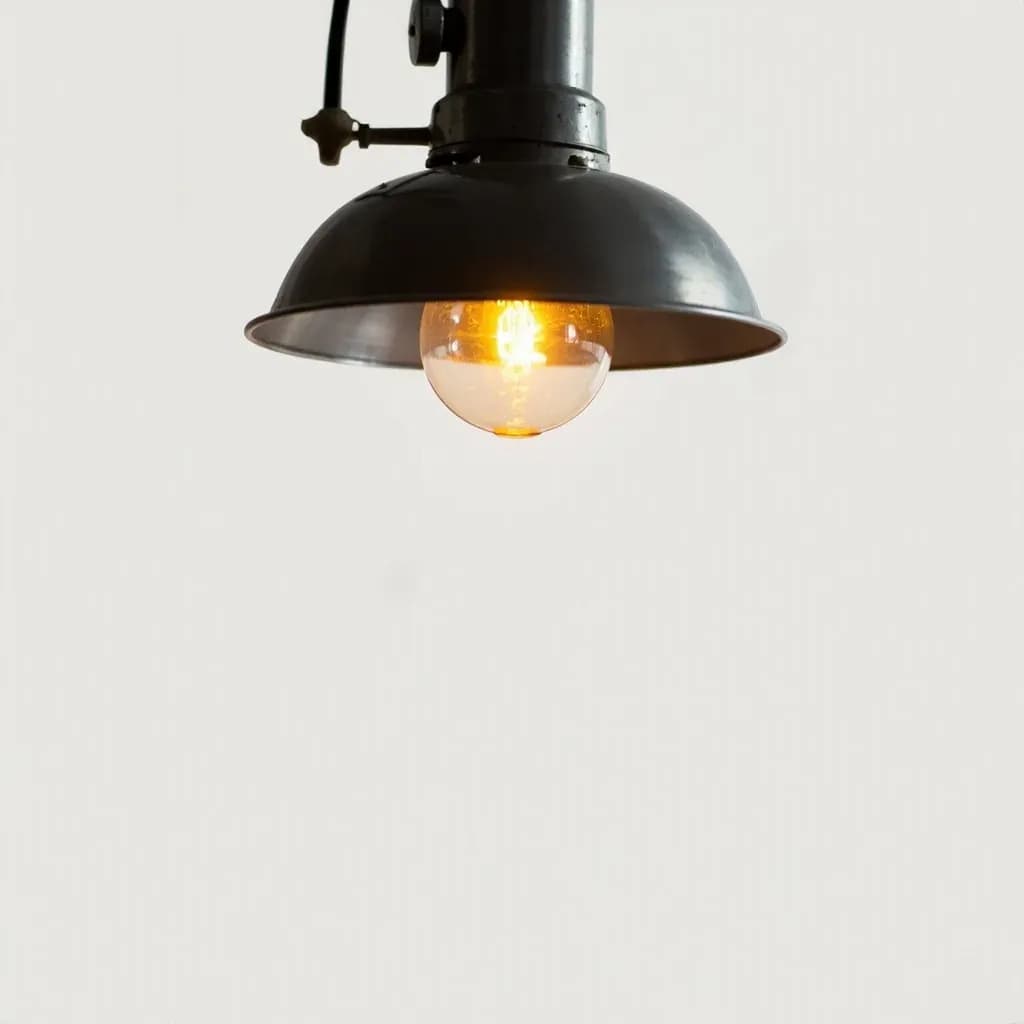
An overhead infrared lamp that keeps plated and held food hot before it is served.
A heat lamp uses an infrared bulb to radiate gentle warmth onto food, holding it at serving temperature without further cooking. It is standard on restaurant pass lines and carving stations to keep finished plates and roasts hot between the kitchen and the table. Because it heats from above, it preserves crispness better than a covered warming tray.
A heat lamp is an overhead infrared heat source used in professional kitchens to keep plated food hot during the short window between cooking and service. The fixture typically holds one or a row of R40 reflector bulbs (commonly 250 W) suspended 45–60 cm above the food, with a polished aluminum shade directing radiant energy straight down. Because infrared warms whatever it strikes rather than heating the surrounding air, the top of a plate heats quickly while the underside stays cool — which is why plates are warmed in a separate plate warmer and the lamp is used only to bridge the gap from pass to table.
The lamp earns its place on the line because it preserves textures that holding cabinets destroy. A fry, a schnitzel, or a piece of tempura stays audibly crisp under infrared radiation, while the same item in a humid cabinet softens within minutes as trapped steam wrecks the crust. It also forgives plating: a small stream of jus, a knob of herb butter, or a slick of finishing oil stays fluid and glossy for the few minutes it takes a server to deliver the dish. The trade-off is uneven, shallow heat — fine for a 4-minute hold, punishing for a 20-minute one.
The reddish glow most people picture is deliberate. Red-coated bulbs cut visible light to a warm, dim spectrum that disguises the surface drying, oxidation, and slight dullness any held food develops. Buffets that switch to clear white bulbs often look noticeably less appetizing even when the food is perfectly safe and at temperature. On a working pass, that optical softening is a feature, not a flaw to engineer away.
Alternatives
Types & varieties
Single-bulb hanging fixture over the pass; the classic line-cook lamp.
Tall weighted stand with an articulated head; portable, used for carving stations and buffets.
Attaches to a shelf, hood edge, or sneeze guard; good for small or temporary setups.
Row of 2–6 bulbs in a long housing; common above pass-throughs and buffet sneeze guards.
Built into a soffit or ceiling above the pass for a flush, professional look.
Brighter whiter light and faster heat-up than incandescent; shorter bulb life and higher cost.
Workhorse option; longer warm-up, very forgiving heat, cheapest to replace.
Filters visible light to a warm red glow that masks the slightly tired look of held food.
Why the bulbs are red
Red-coated heat lamp bulbs do not run hotter or cooler than clear ones; they simply filter the visible light down to a narrow warm-red band. In a dim pass lit by red bulbs, a slice of roast beef, a piece of grilled fish, or a pan of roasted vegetables still reads as itself in color and gloss, while the surface drying and slight oxidation that any held food develops becomes hard to see. The effect is psychological and optical, not thermal, which is why customer-facing stations (carving boards, dessert displays) often use clear bulbs where the food should look natural, and the back-of-house pass almost always runs red.
- Red bulbs disguise surface dulling and oxidation on held proteins and vegetables.
- Clear or white bulbs are preferred where guests can see the food and freshness cues matter.
- Switching a buffet from red to white often makes the same food look noticeably less appetizing, even at correct temperature.
- The coating does not significantly change infrared output, only visible light.
Heat lamp vs. holding cabinet
A heat lamp and a holding cabinet solve overlapping but distinct problems. The lamp is best for short holds (under 10–15 minutes) of foods whose texture is fragile — fried items, seared proteins, anything where a crust or sear should survive. A holding cabinet uses gentle, even convection heat and is better for longer holds of moist foods (braised meats, steamed vegetables, rice) where drying out is the bigger risk. Most modern kitchens use both: the cabinet for the long pull of family-style service or banquet prep, the lamp for the final sprint from pass to guest.
- Heat lamp: top-down radiant heat, seconds to warm, dries exposed surfaces, best for short holds of fried or seared food.
- Holding cabinet: gentle even convection for longer holds of moist food — the lamp's complement, not its replacement.
Common uses
Tips & pitfalls
- Aim for a plate surface temperature around 60–70 °C (140–160 °F); above that, proteins weep and fried coatings go from crisp to leathery.
- Mount the lamp so the bulb face sits 45–60 cm above the plate — closer scorches, farther does nothing useful.
- Pre-warm the fixture for 5–10 minutes before the first ticket; a cold lamp does not recover quickly when plates start stacking.
- Use red bulbs at the pass where the dim light disguises surface drying, and clear bulbs in customer-facing displays where the food should look natural.
- Replace bulbs as they dim rather than when they burn out — output drops long before the filament fails, and an aging bulb quietly ruins plates.
- Do not use a heat lamp to bring cold food up to temperature or to re-pasteurize; it is a holding tool, not a cooking or safety tool.
- Keep the reflective shade clean — dust and grease film cut radiant output significantly.
- Give the lamp a dedicated electrical circuit; a 250 W bulb sharing a line with other kitchen gear is a nuisance-trip risk.
- Rotate stock and pull anything held longer than 20–30 minutes (less for fried foods); what comes off the lamp after that is rarely what went on.
Good to know
- Type
- Overhead infrared heat source
- Common bulb wattage
- 250 W (175 W and 375 W also sold)
- Standard voltage
- 120 V in North America; 220–240 V elsewhere
- Bulb shape
- R40 or BR40 reflector flood, screw-base (E26/E27)
- Heat mechanism
- Infrared radiation, not convection or contact
- Recommended clearance
- 45–60 cm (18–24 in) above the food surface
- Holding temperature
- Roughly 60–70 °C (140–160 °F) on plate tops
- Bulb color
- Red (most common) or clear/white
Also called
Warming Lamp · Food Heat Lamp · Infrared Heat Lamp
Related

Stovetop
The everyday burners where most cooking actually happens

Oven
Enclosed dry heat for roasting, baking, and braising

Grill
Live-fire or gas grates for char, smoke, and high heat

Smoker
Low, slow heat and wood smoke for barbecue and brisket

Air Fryer
Countertop convection that crisps with little or no oil

Slow Cooker
Set-and-forget low heat for stews, beans, and braises

Pressure Cooker
Sealed steam pressure that cooks tough food in a fraction of the time

Rice Cooker
Foolproof, perfectly steamed rice every single time