Appliances & Heat
Hot Water Dispenser
An electric reservoir that holds water at a set temperature for instant tea, coffee, and quick cooking.
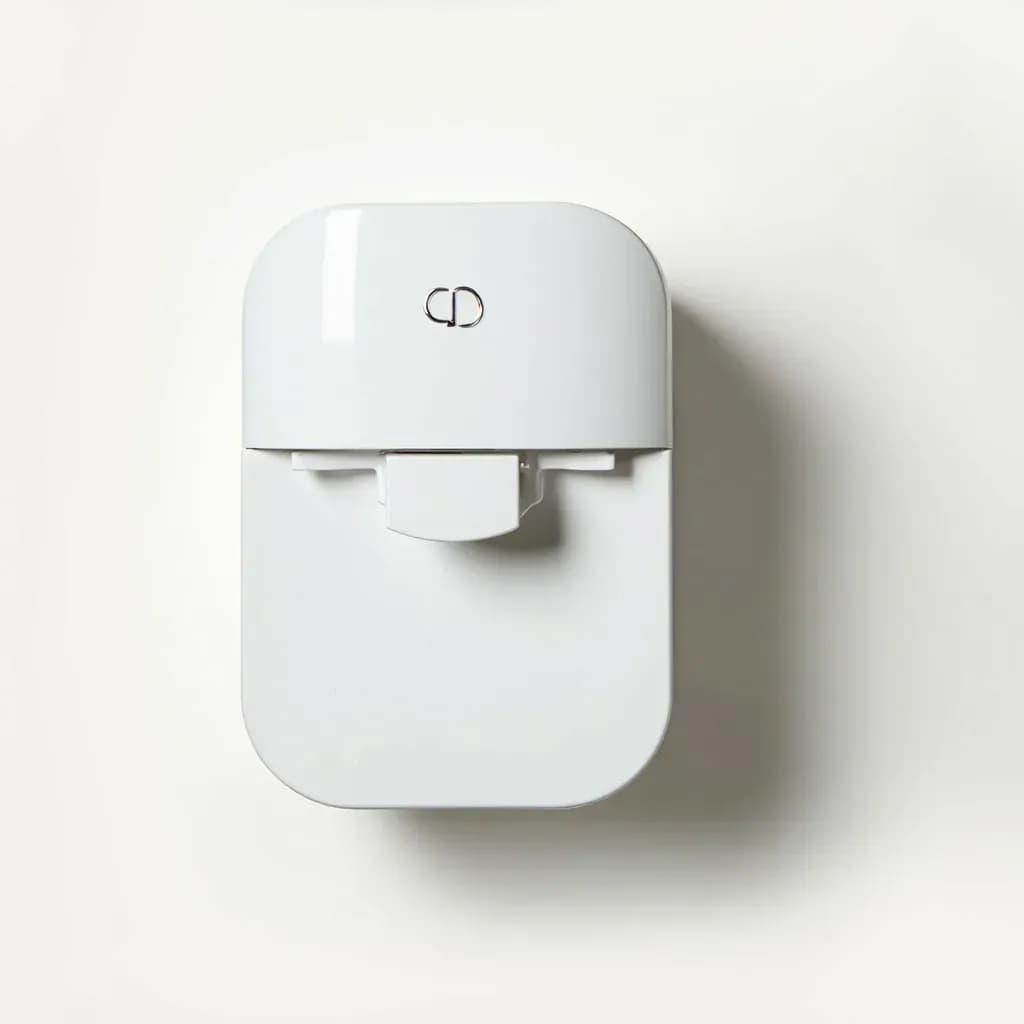
A hot water dispenser is an electric appliance that boils water and keeps it at a chosen temperature on standby, ready to pour on demand. It is used for tea, instant coffee, and rapidly hydrating noodles or stocks without waiting for a kettle. Common in homes and offices, many models offer several preset temperatures and a keep-warm function.
A hot water dispenser is essentially an electric reservoir that holds a set volume of water at a chosen temperature, ready to pour on demand. Unlike a kettle — which heats from cold and then cools — a dispenser keeps a working quantity hot (or at a precise lower temperature) for hours at a stretch, cycling its heating element only as the thermostat demands. The result is water at, say, 80 °C for green tea, available the instant you want it, with no waiting, no thermometer, and no half-cooling on the counter.
That ready-to-pour precision is the whole point. Serious tea drinkers know that green teas turn grassy and bitter at a full boil, while black teas need that near-roiling heat to open up; a multi-preset dispenser removes the guesswork. Coffee drinkers appreciate the same consistency for pour-over, where even a few degrees of swing measurably changes extraction. The trade-off is limescale: any unit fed hard tap water accumulates a chalky crust on the heating element and inner walls, which slows re-boil, wastes energy, and slowly taints the water. A monthly descale is non-negotiable if you want the unit to last and the water to taste clean.
Capacity shapes how you use it. Countertop electric pots — the Japanese-style denki potto — typically hold 2.5–5 L and are refilled once a day; plumbed-in dispensers draw from the mains and deliver effectively unlimited near-boiling water from a dedicated tap. Both quietly outperform a kettle for anyone who makes more than two hot drinks a day, and they earn their place in a serious kitchen for reasons that have nothing to do with novelty.
Alternatives
Types & varieties
Free-standing reservoir with electric pump; 2.5–5 L; multiple temperature settings and keep-warm function; the most common household type.
Under-sink tank connected to a dedicated tap on the countertop; delivers near-boiling water on demand; 2.5–7.5 L tank; needs a power outlet under the sink.
A mixer tap with a small built-in heater, or a tap paired with an under-sink tank; dispenses ~100 °C water alongside mains hot and cold.
Large stainless catering unit (8–40 L) for events, buffets, and tea service; single near-boil temperature; manual or push-bar tap.
Simpler Western models, 3–4 L, holding one near-boiling temperature; push-button or lever dispense.
Compact 0.5–1.5 L thermos-shaped units for desk or dorm use; boil-dry protection and a single push dispense.
Choosing between countertop and plumbed-in
The decision comes down to volume, installation tolerance, and how many people share the kitchen. A countertop pot is plug-and-play, easy to relocate, and cheap to replace; it suits households of one to four who refill once a day. A plumbed-in unit trades a small under-sink tank, a dedicated power socket, and a hole drilled for a tap for the convenience of effectively unlimited near-boiling water on demand — useful for large families, serious tea ceremonies, or anyone who regularly fills pasta pots, blanching baths, and multiple teapots in a single session. For a one- or two-person household making two cups of coffee a day, a good countertop kettle with a temperature knob often does the same job at a fraction of the cost.
- Pick a countertop pot if you drink 2–6 cups a day and don't want a plumber.
- Pick a plumbed-in unit if you routinely need more than 5 L of near-boiling water at once, or if you want to free up counter space.
- Single-temperature dispensers are fine for black-tea-and-instant-coffee households; multi-preset models pay for themselves the first time you brew a sencha.
Descaling and water quality
Limescale is the single thing that kills a hot water dispenser early. Calcium carbonate precipitates onto the heating element and the inner walls, insulating them so re-boil times stretch from two minutes to eight, and flakes drift into your cup with an off, chalky taste. In hard-water areas — anything above ~120 ppm — descale monthly; in soft-water areas, every two to three months is usually enough. Citric acid (1–2 tbsp per litre, boiled through and left for 30 minutes) is the gentlest and leaves no taint; a 1:1 white-vinegar boil-through works too but needs two plain-water cycles afterwards.
- Use filtered or soft water if you can — it cuts scale build-up dramatically and keeps tea and coffee tasting clean.
- Refill rather than reboil where possible: reboiling drives off dissolved oxygen and gives flat-tasting water, which matters most for green tea and pour-over coffee.
- If the pump sputters, the air vent or internal pipework is usually scaled — run a descaling cycle before assuming the pump has failed.
- Wipe the drip tray daily and clean the inner lid weekly; biofilm builds up in the moist, dark lid well.
Temperature presets and what they're for
Multi-preset models give you somewhere between three and five set points, and matching them to the leaf or grind is the single biggest upgrade in cup quality you can make. The numbers below are good defaults; adjust by taste and by the specific tea — a delicate gyokuro wants 50–60 °C, a roasted hojicha is happier at 90 °C. Actual dispensed temperatures can run a few degrees off the indicated preset, so a probe thermometer is worth keeping on hand for anything temperature-sensitive (formula, yeast, fine green teas).
- 60 °C (140 °F) — brewing delicate gyokuro and other shaded green teas; warming milk or water for enriched doughs (cool to 38–43 °C / 100–110 °F before adding yeast, which is killed above ~50 °C); topping up cold-brew concentrate.
- 70 °C (158 °F) — most white teas, genmaicha, baby's first bottle (check the actual dispensed temperature with a thermometer; many 'hot' presets run higher than 70 °C).
- 80 °C (176 °F) — Japanese and Chinese green teas (sencha, bancha, dragonwell).
- 90 °C (194 °F) — oolong, roasted hojicha, French press coffee, herbal infusions like chamomile and rooibos, sheng (raw) pu-erh.
- 98 °C (208 °F) — black tea, ripe (shou) pu-erh, pour-over and drip coffee, instant noodles, blanching vegetables, loosening jar seals.
Common uses
Tips & pitfalls
- Descale monthly in hard-water areas using citric acid (1–2 tbsp per litre) or a 1:1 white-vinegar boil-through; a 2–3 mm chalky crust noticeably slows heating and gives the water a metallic taste.
- Match the preset to the leaf: green teas 70–80 °C, white 75–85 °C, oolong 85–95 °C, black and pu-erh near 98 °C. Boiling water scorches green tea and makes it bitter.
- Don't fill above the max line — water expands as it heats, and the boil-dry sensor is the last line of defence, not the first.
- Keep the lid closed between pours; the keep-warm thermostat cycles far less, the unit stays noticeably quieter, and the water holds temperature more accurately.
- For baby formula, check the actual dispensed temperature with a thermometer for the first week; the 'hot' preset on many units is well above the 70 °C minimum that paediatric guidelines recommend for powdered formula.
- Use the dispenser to pre-warm teapots, sake cups, and small serving vessels — pouring a little hot water in, swirling, and discarding raises the porcelain to a temperature that prevents the first pour from cooling too quickly.
- Near-boiling water poured directly onto weeds in paving cracks and onto stubborn jar labels is a useful kitchen-adjacent trick the dispenser handles better than a kettle (no tipping, controlled flow).
- If the unit starts to taste plasticky on a brand-new model, run two full boil-and-discard cycles with plain water before the first real use; the off-note is usually manufacturing residue, not the dispenser itself.
Good to know
- Also called
- Electric water boiler, electric pot (Japanese: denki potto 電気ポット, or yuwakuki 湯沸器), instant hot water dispenser
- Typical countertop capacity
- 2.5–5 L; commercial urns hold 8–40 L
- Power draw
- 700–1500 W to heat; ~30–100 W to hold temperature
- Common temperature presets
- 60 / 70 / 80 / 90 / 98 °C (140 / 158 / 176 / 194 / 208 °F); single-setting units hold ~95–98 °C
- Interior material
- Stainless steel, sometimes with a non-stick coating on budget models; some Japanese units use carbon-coated steel
- Re-boil time
- 2–5 minutes from keep-warm to a full boil on a typical 3 L unit
- Cold-to-full heating time
- Roughly 10–20 minutes for a 3 L model, depending on wattage
- Origin
- Electric keep-warm pots became standard in Japanese homes in the 1980s; under-sink instant hot dispensers (InSinkErator-style) spread in the U.S. in the 1990s
Also called
Hot Water Tower · Water Dispenser · Water Boiler · Zojirushi
Related

Stovetop
The everyday burners where most cooking actually happens

Oven
Enclosed dry heat for roasting, baking, and braising

Grill
Live-fire or gas grates for char, smoke, and high heat

Smoker
Low, slow heat and wood smoke for barbecue and brisket

Air Fryer
Countertop convection that crisps with little or no oil

Slow Cooker
Set-and-forget low heat for stews, beans, and braises

Pressure Cooker
Sealed steam pressure that cooks tough food in a fraction of the time

Rice Cooker
Foolproof, perfectly steamed rice every single time