Appliances & Heat
Ice Machine
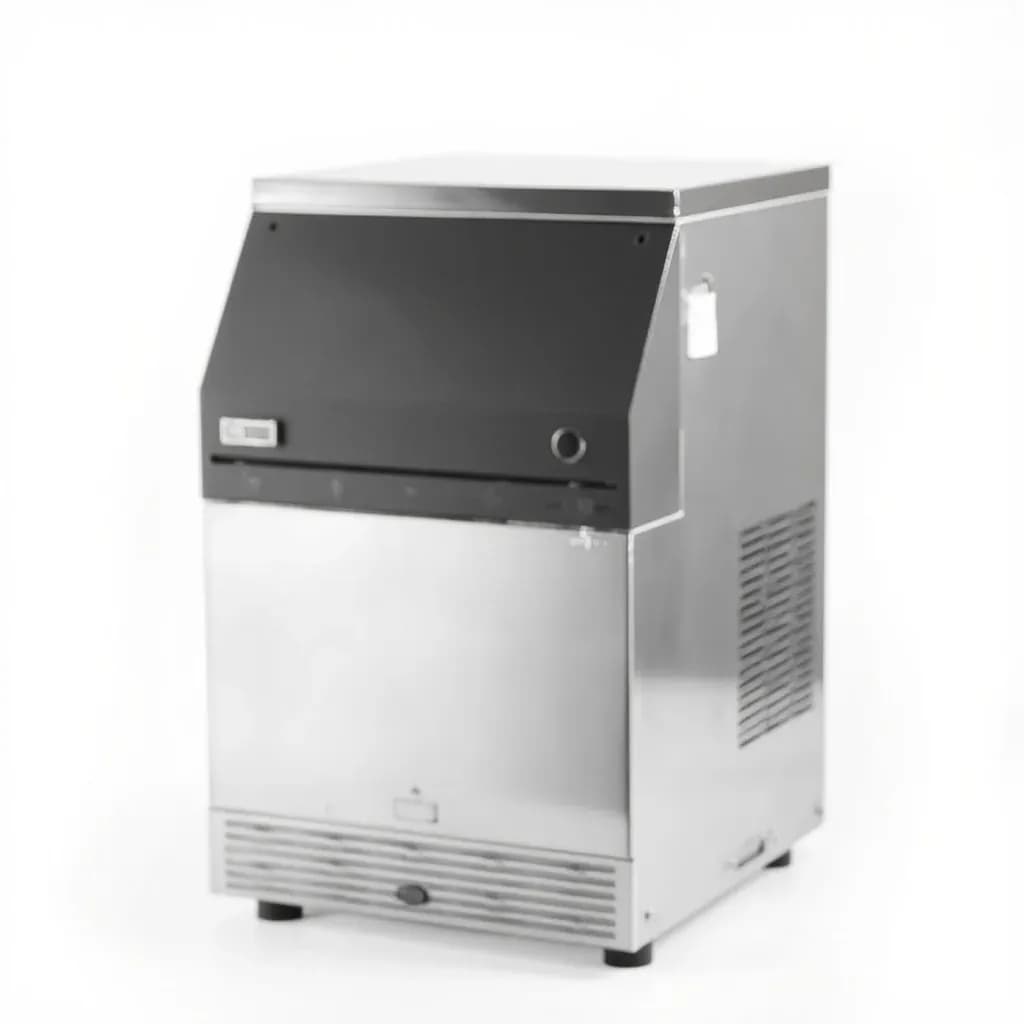
A plumbed appliance that automatically produces and stores cubed, nugget, or flaked ice.
An ice machine continuously freezes water into cubes, nuggets, or flakes and drops them into a built-in storage bin. Bars, restaurants, and busy kitchens rely on it for a steady supply of ice for drinks, ice baths, and food display. Models are categorized by the ice shape they make and by daily output capacity.
An ice machine is a plumbed refrigeration appliance dedicated to freezing water into uniform ice and storing it in an insulated bin, freeing a cook or bartender from the unpredictability of freezer trays and bagged ice. Unlike the small icemaker tucked into a home refrigerator, a standalone unit produces tens to thousands of pounds of ice per day and can be specified to deliver a particular shape—hard clear cubes, chewy nuggets, or soft flakes—each suited to a different task in the kitchen or bar. The two practical families are residential undercounter and freezer-mount units (typically 20–85 lb per day) and commercial modular or self-contained machines (100 lb to well over 1,000 lb per day) sized to the demands of a service program.
What separates a serious machine from a toy is consistency: a steady harvest every 15–30 minutes once the evaporator is cold, clear ice with no off-odors, and a bin large enough to ride out a dinner rush without being scooped dry. Water quality is the single biggest variable the cook controls—hard water lays down scale on the evaporator plate, dulls ice clarity, and slowly chokes output—so most production units are fed through sediment and carbon filters, or a reverse-osmosis step in very hard or chlorinated supplies. Maintenance is also non-negotiable: sanitize the bin and scoop every few months, descale the evaporator annually, and discard the first harvest after any service or filter change.
Alternatives
Types & varieties
Hard, clear, slow-melting block-style cube (~1 in³); the workhorse for bars, drink service, and ice-water baths.
Smaller cube with more surface area; cools drinks faster and fits blended cocktails and narrow dispensers.
Clear, large octagonal or rhomboid cube with a hollow center; favored for craft cocktails and whiskey service where melt rate matters.
Chewable compressed flake with high surface area; used for sodas, blended drinks, and patient hydration in healthcare.
Thin, soft, moldable flakes; the standard for seafood display, salad bars, and cold buffets.
Curved half-moon cube that resists splashing in open-top dispensers; common in hotel and workplace ice machines.
Hollow cylinder produced by portable countertop units; melts unevenly and is generally considered lower quality.
Commercial configuration where the ice-making mechanism sits on top of a separate storage bin; sized for high-volume service.
Combined maker and bin in one undercounter cabinet; the standard home-bar and small-kitchen format.
Sizing and ice-type selection
Choosing the right machine is really two decisions stacked on top of each other: how much ice you need, and what shape it should be. The shape dictates the machine—clear gourmet cubes require a different evaporator than nugget or flake—so it pays to decide the use case before shopping. The rules of thumb below give a working framework.
- Full-service restaurants: plan on roughly 1.5–2 lb of ice per diner per day across food and bar service.
- Banquet, bar-heavy, or self-beverage programs: size to 3–5 lb per cover, since guests serve themselves and demand spikes at predictable moments.
- Home kitchens and bars: a 50–80 lb/day undercounter with a 25–40 lb bin comfortably serves a dinner party of 8–12; smaller units run empty mid-evening.
- Ice type: choose clear full or gourmet cubes for spirit-forward drinks; half-cubes or nugget for carbonated, blended, and high-volume soda service; flake for seafood and buffet display; crescent for open-top dispensers in hotels and offices.
- Water quality beats machine quality for clarity—filtered or RO feed water will outshine a premium machine fed straight from a hard supply.
Common uses
Tips & pitfalls
- Plumb through a dedicated cold-water line with a shutoff valve; saddle valves are not code-compliant for commercial installs and clog easily.
- Install an in-line sediment and carbon filter (or reverse-osmosis in hard-water areas) to slow scale on the evaporator plate and improve ice clarity and taste.
- Allow at least 6 in. of clearance around air-cooled condensers; restricted airflow is the most common cause of slow production and high head pressure.
- Pull the bin and sanitize the scoop, baffles, and interior every 3–6 months—slime and biofilm in the bin are the usual source of off-flavor and odor complaints.
- Descale the evaporator with a manufacturer-approved ice-machine cleaner; never use bleach inside the freezing circuit, and never use vinegar on aluminum evaporators.
- Discard the first harvest after installation, filter changes, or a long idle period; new lines carry flux, solder residue, and metal fines that flavor ice.
- Keep the bin lid and door closed; ice absorbs ambient odors—garlic, fish, cleaning fumes—faster than most cooks realize.
- Match ice type to the drink or task: large clear cubes for spirits and whiskey service, half-cubes or nugget for carbonated and blended drinks, flake only for display and food holding.
Good to know
- Two broad classes
- Residential undercounter/countertop/freezer-mount units (20–85 lb/day) and commercial modular or self-contained units (100–1,500+ lb/day).
- Power
- Residential units run on standard 115V/60Hz; commercial machines range from 115V (small units) to 208–230V for higher-capacity machines.
- Plumbing
- Requires a dedicated cold-water supply line and a drain (gravity or pump-assisted); saddle valves are not code-compliant for commercial installs.
- Cycle time
- Roughly 15–30 minutes per harvest batch once the evaporator is pre-chilled; judge production only after a full warm-up cycle.
- Water quality
- Hard water causes scale on the evaporator plate and reduces output; in-line sediment/carbon or reverse-osmosis filtration is standard in commercial service.
- Condenser types
- Air-cooled (most common, needs 6 in. clearance), water-cooled (efficient in hot kitchens), or remote-cooled.
- Maintenance interval
- Sanitize bin, baffles, and scoop every 3–6 months; descale evaporator annually in hard-water areas; replace water filter per manufacturer (often every 6 months).
- Certification
- Commercial units sold for food service are typically certified to NSF/ANSI 12 for automatic ice making equipment.
Also called
ice maker · ice machine · commercial ice maker
Related

Stovetop
The everyday burners where most cooking actually happens

Oven
Enclosed dry heat for roasting, baking, and braising

Grill
Live-fire or gas grates for char, smoke, and high heat

Smoker
Low, slow heat and wood smoke for barbecue and brisket

Air Fryer
Countertop convection that crisps with little or no oil

Slow Cooker
Set-and-forget low heat for stews, beans, and braises

Pressure Cooker
Sealed steam pressure that cooks tough food in a fraction of the time

Rice Cooker
Foolproof, perfectly steamed rice every single time