Appliances & Heat
Kerosene Stove
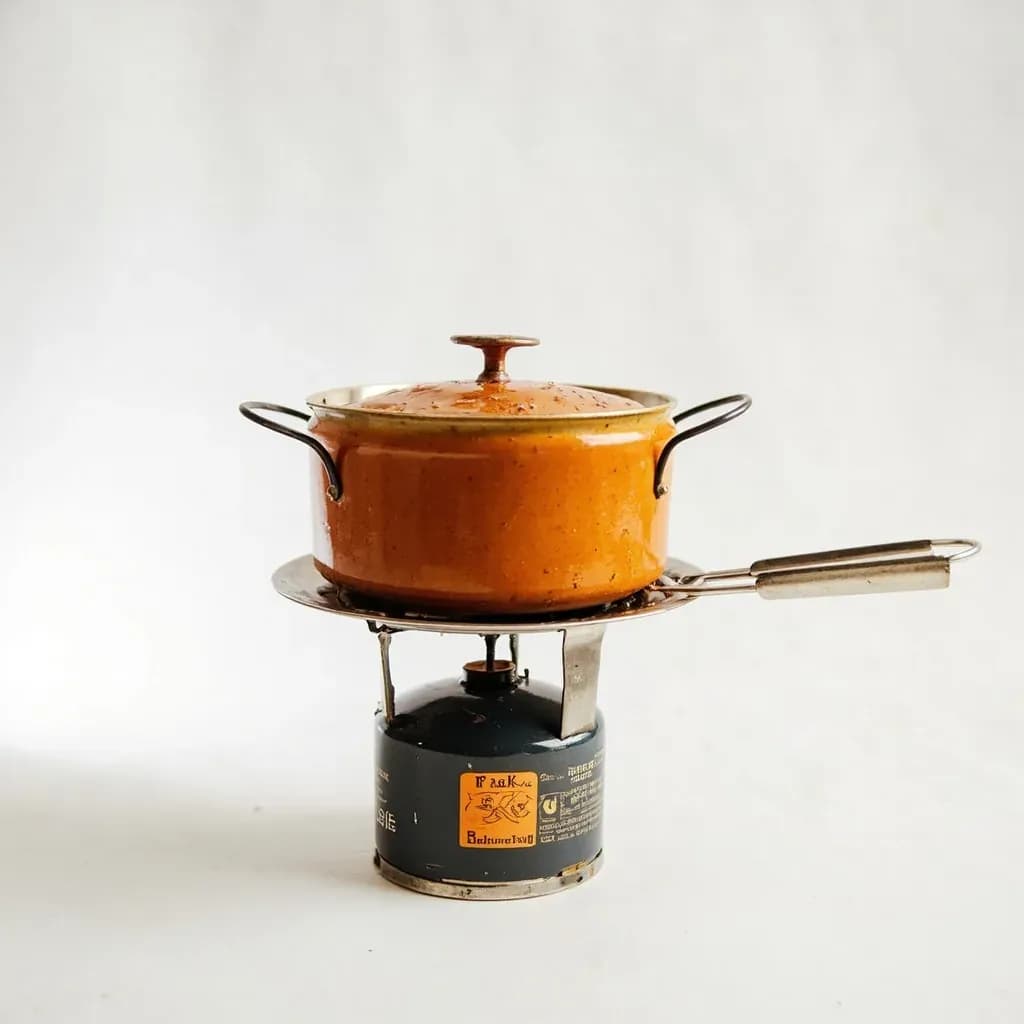
Portable stove that burns kerosene or paraffin to heat a pot via a wick or pressure burner.
A kerosene stove burns liquid paraffin fuel, drawn up by wicks or pressurized into a vaporizing burner, to produce a hot flame for cooking. Common where electricity and piped gas are unreliable, it is portable and runs on inexpensive, widely available fuel. Wick models are simple and quiet, while pressure models burn hotter and cleaner.
A kerosene stove is a self-contained cooking burner that vaporizes kerosene (called paraffin in much of the world) and burns it either through a wick or through a pressurized jet-and-vaporizer system. Unlike a gas range, it carries its own liquid fuel in an integrated tank, which makes it independent of grid electricity, gas lines, and refillable canisters — a meaningful advantage anywhere those resources are unreliable, expensive, or unavailable. A cook who understands one can produce slow, steady heat for a long simmer, or a fierce blue flame hot enough to sear a steak, depending on the design.
The three families that matter in practice are the wick stove, the pressure stove, and the radiant/mantle stove. A wick stove is simple and almost silent: a fiber wick draws fuel by capillary action into a flame ring, giving moderate, relatively clean heat that is ideal for simmering, holding a pot warm, or the tabletop grills and hot pots of East and Southeast Asia. A pressure stove preheats the kerosene in a vaporizing loop until it flashes to vapor, then burns it as a hot blue jet — more involved to operate (you pump it up and prime the vaporizer), but close to twice the heat output, which is why it is the standard for winter camping, expeditions, and emergency stockpiles. The Aladdin-style radiant stove sits between them, burning through a glowing mantle for even, controllable heat and dominating the Japanese household market.
Kerosene is also one of the cheapest liquid fuels to run for sustained cooking and is far more cold-tolerant than butane canisters, which lose pressure below freezing. The trade-offs are real and worth respecting: kerosene combustion produces carbon monoxide, so unvented models must be used outdoors or in a space with serious ventilation; the fuel itself is flammable and must be stored and handled with care; and a pressure stove takes more technique to light and maintain than turning a gas knob. Treat it as a working cook's tool, not a relic — in much of the world it is still the default off-grid cooking heat, and it deserves a place in any serious emergency plan.
Alternatives
Types & varieties
Flat or round fiberglass/cotton wick draws fuel by capillary action. Quiet, low heat, relatively clean flame, excellent for simmering and for the long, slow tabletop cooking of South and Southeast Asia.
Hand-pumped tank forces kerosene through a preheated vaporizer and out a precision jet as a hot, nearly soot-free blue flame. Higher power and faster cooking; iconic examples are Primus, Optimus, Svea, and the MSR XGK. Requires priming and pumping to start.
Burns kerosene through a porous mantle that glows, with a secondary blue-flame ring beneath the pot. Steady, even, very controllable heat. Dominates the Japanese household market under brands like Aladdin, Corona, and Toyotomi; also sold as portable cooking stoves and combined heater-cookers.
Compact wick or radiant stove designed for the table — yakiniku, nabe, sukiyaki, takoyaki, oden, udon pots. Low profile, often with a removable griddle or pot stand.
Modern pressure stoves (MSR XGK, MSR WhisperLite International, Primus OmniFuel) that burn white gas, kerosene, diesel, or even jet fuel by swapping the jet. The workhorse of mountaineering and remote base camps.
Choosing between wick, pressure, and radiant
Match the stove to the cooking you actually do. A wick stove is the right answer for a long, gentle simmer, for holding a stew warm while you serve, and for tabletop Asian cooking where a fierce flame is a problem rather than a feature. A pressure stove is the right answer when you need to bring a big pot of water to a boil in cold weather, sear meat, or cook for a group far from any infrastructure. The radiant/mantle stove is the right answer when you want gas-stove-like controllability from a liquid fuel — it is the closest a kerosene burner gets to the feel of a domestic range, which is exactly why it has stayed popular in Japanese kitchens for a century.
- Wick: cheap, quiet, simple — best for simmering, tabletop cooking, and regions where fuel cost matters more than speed.
- Pressure: hot, fast, more involved — best for cold weather, high altitude, large volumes, and emergency prep.
- Radiant (Aladdin-type): even and controllable — best as a household primary or secondary stove when gas is unavailable.
Fuel handling and storage
Kerosene is forgiving in storage but unforgiving in contamination. Keep it in a clearly labeled, opaque metal or colored HDPE container, away from heat and ignition sources, and never in a vessel that once held gasoline — residual vapor will make a wick stove flare and a pressure stove run rough. Buy clean, water-white kerosene from a reputable supplier; yellow or off-color fuel is a sign of contamination and will smoke, soot, and clog jets. Kerosene itself is shelf-stable for years if kept clean and dry, which is part of why it is favored for emergency caches.
- Use only clear kerosene; substitute fuels can flare, soot badly, or swell seals.
- Store in opaque, labeled containers; water in the fuel causes sputtering and flame-out.
- Refill only when the stove is fully cool and away from any flame — spilled kerosene on a hot burner ignites instantly.
Common uses
Tips & pitfalls
- Use only clean, water-clear kerosene; never gasoline, diesel, paint thinner, or white-gas substitutes — wrong fuel will flare, soot, or damage seals.
- Operate in a well-ventilated area; unvented kerosene combustion produces carbon monoxide, which is why these stoves are not safe for indoor cooking.
- On a pressure stove, prime the vaporizer with a small amount of denatured alcohol or a preheating paste before the first light — without it the flame will not establish cleanly and the stove will sputter and soot.
- Pump the pressure tank only while the burner is off and the pump is cool; pumping a lit stove can push fuel through the jet and flare the burner.
- Match the jet to the fuel on multi-fuel stoves: dedicated kerosene jets are larger in diameter than white-gas jets; running kerosene through a white-gas jet starves the flame and fouls the vaporizer.
- Replace wicks when they stiffen, char at the top, or fail to climb fuel evenly — burner height and flame character depend directly on wick condition.
- Clean the jet and vaporizer periodically with a needle or fine wire; carbon buildup chokes pressure stoves and turns the flame yellow and sooty.
- Keep a fire extinguisher or a snug metal lid at hand — kerosene flares dramatically if the tank is overfilled or the stove is knocked over while lit.
Good to know
- Fuel
- Clean, water-clear kerosene (paraffin); never gasoline, diesel, or paint thinner
- Origin
- Practical kerosene stoves appeared in the 1880s in Europe; the first commercial pressure-kerosene stove, the Primus, was made in Stockholm in 1892
- Heat output
- Wick stoves roughly 1.5–2 kW; pressure stoves 2–3.5 kW; radiant/mantle stoves comparable to wick but more even
- Burn time
- About 1–3 hours per fill at high flame on a portable pressure stove; 8–12+ hours on low for a wick model
- Tank capacity
- 0.5–1.5 L for portable camp units; up to 4–5 L for larger household or Asian domestic models
- Burner types
- Wick (non-pressure), pressure (vaporizing jet), and radiant/blue-flame (mantle)
- Ventilation
- Required — unvented kerosene combustion produces carbon monoxide and is unsafe indoors for cooking
- Maintenance
- Wick replacement on wick models; jet and vaporizer cleaning plus pump-cup leather replacement on pressure models
Also called
Paraffin Stove · paraffin stove · wick stove
Related

Stovetop
The everyday burners where most cooking actually happens

Oven
Enclosed dry heat for roasting, baking, and braising

Grill
Live-fire or gas grates for char, smoke, and high heat

Smoker
Low, slow heat and wood smoke for barbecue and brisket

Air Fryer
Countertop convection that crisps with little or no oil

Slow Cooker
Set-and-forget low heat for stews, beans, and braises

Pressure Cooker
Sealed steam pressure that cooks tough food in a fraction of the time

Rice Cooker
Foolproof, perfectly steamed rice every single time