Appliances & Heat
Masa Dough Mixer
A heavy-duty mixer that blends masa harina or fresh nixtamal into smooth tortilla and tamale dough.
A masa mixer is a robust machine that kneads ground nixtamalized corn or masa harina with water and fat into pliable dough. Tortillerias and tamale makers use it to produce consistent masa in large batches for tortillas, tamales, and gorditas. Its strong action hydrates the corn evenly so the dough presses and cooks without cracking.
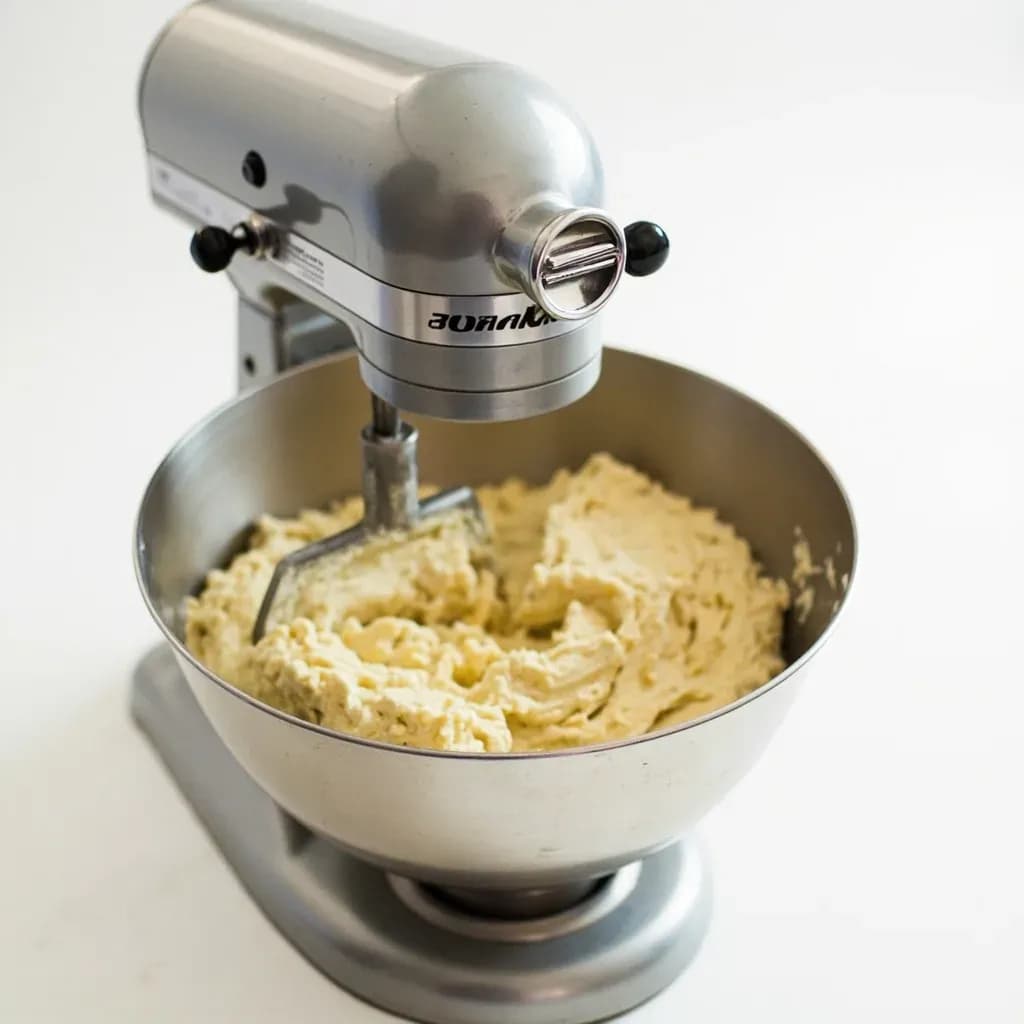
A masa dough mixer is a heavy-duty, low-RPM stand mixer purpose-built for one demanding job: hydrating nixtamalized corn into a smooth, pressable dough without beating air into it. Visually it resembles a commercial stand mixer — bowl, paddle, gear-driven motor — but the paddle turns at roughly 40–60 RPM, a fraction of the speed a typical home stand mixer uses for cake batter. That slowness is the whole point. Nixtamal masa is dense, sticky, and unforgiving; whipped air creates dry edges and a gummy surface that cracks the moment it meets a tortilla press.
The tool exists because hand-mixing masa on a metate, while ideal in flavor and texture, is laborious and inconsistent at scale. A masa mixer mimics the gentle, folding action of the metate paddle, pushing and turning the dough rather than slicing through it. The result is a homogenous, plastic dough — soft as modeling clay, slightly tacky, springing back lightly when pressed — that releases cleanly from a tortilla press. Most machines accept both fresh nixtamal (after grinding through a molino) and rehydrated masa harina, and the same bowl folds in lard, broth, and salt for tamale masa.
The line between home and commercial units is real. Countertop 5–8 qt machines handle 2–5 lb batches for a household cook or small restaurant; floor-model 20–80+ qt commercial mixers from makers like Hobart, Globe, Vollrath, and Robot Coupe run 20–60 lb batches multiple times a day in tortillerías and taquerías. The mechanics are the same; the scale, the gearing, and the duty cycle are not.
Alternatives
Types & varieties
Smaller 5–8 qt units aimed at home cooks; less powerful but offer the same low-RPM action that protects masa from over-aeration.
Floor or bench units in 20–80+ qt capacities; gear-driven, made by brands such as Hobart, Globe, Vollrath, and Robot Coupe; used in tortillerías, taquerías, and Mexican restaurants.
Head pivots back for bowl access; familiar stand-mixer silhouette, common in home and light-commercial units.
Bowl rises into a fixed paddle; favored in heavy commercial service because it handles very dense, stiff doughs without straining the gears.
Planetary action sweeps the bowl; direct-drive (a single rotating bar with fixed scrapers) is common on larger commercial masa mixers and moves heavy dough more efficiently.
Some Mexican-made units combine a masa mixer with a feeder that extrudes dough directly into a tortilla press, eliminating the bowl-and-scoop step.
Why Speed Matters
Nixtamalized corn starch behaves differently from wheat flour. When agitated vigorously, the surface starches hydrate too quickly and migrate outward, forming a tacky skin that traps air pockets inside the dough. The result on the press: a tortilla that cracks at the rim, leaves residue on the platens, and puffs unevenly when cooked. A masa mixer's paddle turns slowly enough to fold the dough rather than whip it, allowing water to distribute evenly without aerating the mass. This is also why recipes calling for a stand mixer almost always specify the flat beater at the lowest speed — and warn against the whisk, which is essentially an air pump in this context. The low-RPM paddle is not a marketing detail; it is the mechanical reason the tool exists.
Reading the Dough
The mixer stops when the dough looks right, not when a timer goes off. Properly hydrated masa forms a single mass that pulls away from the bowl sides, holds together when squeezed, and has a soft sheen but no wet gloss. The plastic-bag press test is the cook's most reliable instrument: a golf-ball piece flattened between two sheets of plastic should release without sticking and finish with smooth, unbroken edges.
Common uses
Tips & pitfalls
- Add water in stages — masa absorbs unevenly and continues to stiffen during resting, so what feels slightly wet at the bowl often firms up correctly in 15 minutes.
- Do not overmix: prolonged agitation draws out surface starches and produces a gummy, sticky dough that will not press cleanly. Stop the moment the dough comes together as a single mass.
- Use cool or cold water to slow hydration, especially in hot kitchens where masa can turn gummy before you finish mixing.
- Rest the dough 15–30 minutes, tightly covered, before pressing. This is the most commonly skipped step and the single most common cause of cracking tortillas.
- Add salt and fat (manteca, lard, or oil) only after the initial masa-and-water mix has rested — adding them early inhibits proper hydration of the starches.
- A standard 5–6 qt home stand mixer can stand in for small batches, but use the flat beater at the lowest speed and never the whisk; stop the moment the dough comes together.
- Scrape the bowl and paddle immediately after use. Dried masa is rock-hard, and old residue sours the next batch and can seed a fermentation off-flavor.
- If the dough balls feel heavy or sandy, the nixtamal was likely undercooked — no amount of mixing will fix this; re-grind or re-hydrate with warm water and patience.
- For tamale masa, beat in fat and broth in stages over 10–15 minutes. The final texture should be light, spreadable, and hold a soft peak when the paddle lifts — closer to cake batter than tortilla dough.
Good to know
- Type
- Heavy-duty stand mixer with low-RPM, high-torque paddle action
- Operating Speed
- Roughly 40–60 RPM — significantly slower than a standard home stand mixer
- Typical Capacity (Home)
- 5–8 quarts / 5–7.5 liters
- Typical Capacity (Commercial)
- 20–80+ quarts / 19–75+ liters
- Drive (Commercial)
- Gear-driven, 1–3 HP motor
- Paddle Style
- Broad, heavy flat beater or thick hook — never a wire whip
- Typical Hydration (Masa Harina)
- Roughly 1.4–1.6 parts water to 1 part masa harina by weight, adjusted to feel
- Doneness Test
- Press a small ball between two sheets of plastic — it should not crack at the edges and should release cleanly
Also called
masa mixer · masa dough machine · tamale dough mixer
Related

Stovetop
The everyday burners where most cooking actually happens

Oven
Enclosed dry heat for roasting, baking, and braising

Grill
Live-fire or gas grates for char, smoke, and high heat

Smoker
Low, slow heat and wood smoke for barbecue and brisket

Air Fryer
Countertop convection that crisps with little or no oil

Slow Cooker
Set-and-forget low heat for stews, beans, and braises

Pressure Cooker
Sealed steam pressure that cooks tough food in a fraction of the time

Rice Cooker
Foolproof, perfectly steamed rice every single time