Appliances & Heat
Batch Pasteurizer
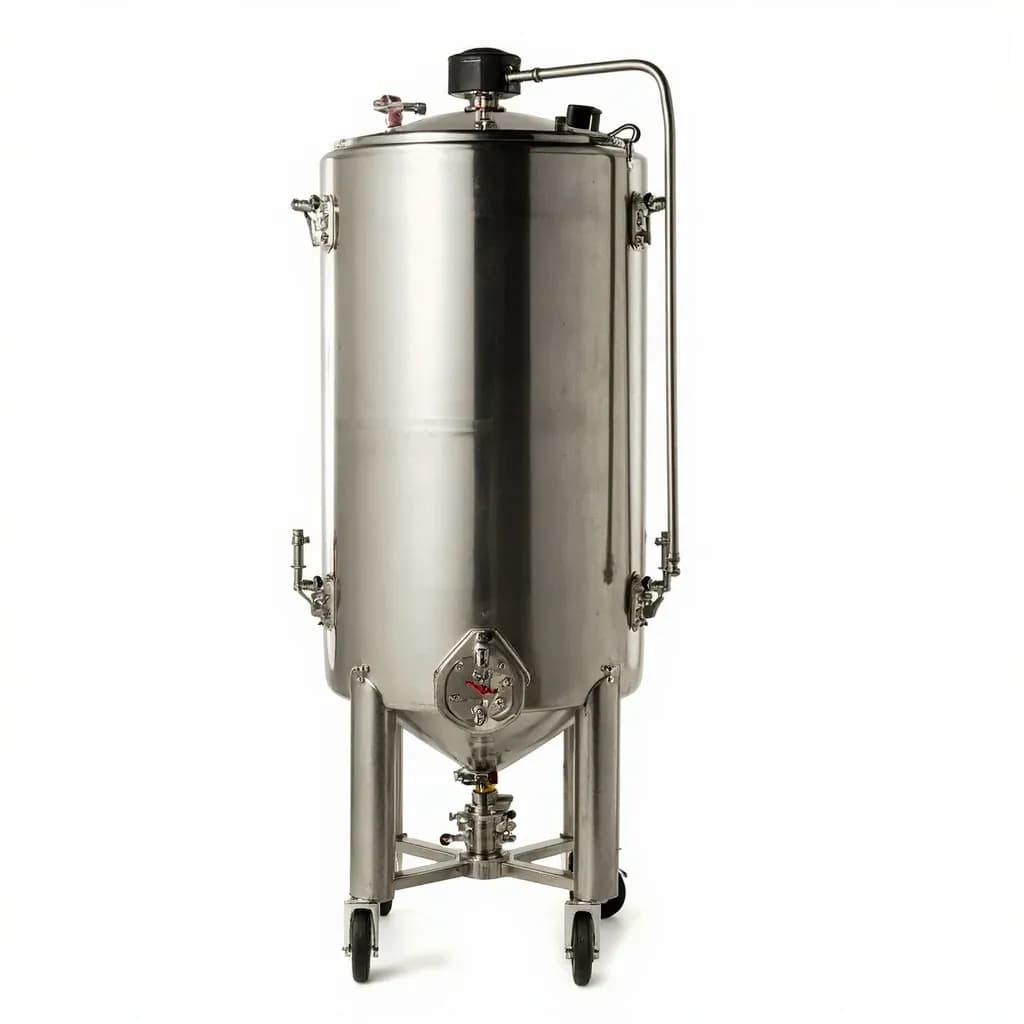
Jacketed heated vat that holds milk at a set temperature to kill pathogens before cheesemaking.
A batch pasteurizer is a temperature-controlled, jacketed vat that heats a load of milk to a target temperature and holds it there long enough to destroy harmful bacteria, then cools it. It is the standard tool for small dairies and cheesemakers using the vat (or low-temperature, long-time) method. Precise hold time and temperature matter, so the vat usually has a stirrer and an accurate thermometer.
A batch pasteurizer is the workhorse of the cheesemaker and small dairy — a jacketed, double-walled stainless-steel vat that heats milk gently and evenly to a legal kill temperature, holds it for a set time, then cools it rapidly. Unlike industrial HTST or UHT systems that flash-heat milk in seconds, a batch pasteurizer gives the maker direct, hands-on control over a single vat at a time, which is why it remains the standard in farmstead, microdairy, and teaching kitchens around the world. The jacket — the space between the inner and outer walls — circulates hot water (or low-pressure steam in commercial units) so the milk heats from the wall inward, with no flame or element in contact with the milk.
The legal baseline in most jurisdictions is 145°F (63°C) for 30 minutes, set by the US FDA Pasteurized Milk Ordinance and EU Regulation 853/2004. A calibrated probe, not the jacket thermometer, must confirm that the milk itself — not the heating water — reaches and holds temperature for the full thirty minutes. After the hold, milk must be cooled rapidly to below 50°F (10°C) to suppress thermophilic bacteria that can re-grow in the danger zone. A well-run 5–10 gallon batch takes roughly 45–75 minutes from fridge-cold milk to chilled, pasteurized milk ready for cheesemaking, yogurt, or cultured cream.
For the cook, the practical truth of pasteurization is that it is a trade, not a freebie. The heat kills pathogens and most of the native microflora (which is why a starter culture is almost always added back), and it slightly denatures whey proteins and reduces soluble calcium, so cheesemaking recipes commonly call for calcium chloride to restore a clean curd set. A batch pasteurizer handles that transformation slowly and visibly, letting the maker watch the milk — and intervene — at every step.
Alternatives
Types & varieties
Commercial standard; boiler steam in the jacket delivers fast, even heating and tight temperature control.
The microdairy and farmstead favorite; electric elements heat the water jacket, no boiler required.
2–7 gal units for home and small cheesemakers, single-phase electric, with built-in controller and often an integrated cooling jacket.
30–500 gal units with CIP (clean-in-place) loops, recording thermometer, and sanitary piping built to FDA PMO spec.
Older style heated by flame under the kettle; now rare because of scorching risk on the inner wall.
Immersion-heater style vessel for raw-milk households; uses the same 145°F/30 min standard but is not cheesemaking-specific.
How it differs from HTST and UHT
Batch pasteurization is the slow, deliberate end of the spectrum. The two other common methods look similar on paper — both aim to kill pathogens — but they treat milk very differently and are not interchangeable in a recipe.
- HTST (High-Temperature Short-Time) heats milk to 161°F (72°C) for at least 15 seconds as it flows through a continuous plate or tubular heat exchanger; it is the workhorse of fluid-milk bottling and is faster, but it is a continuous system, not a vat a cook can stand over.
- UHT (Ultra-High Temperature) hits roughly 280°F (138°C) for 2 seconds and packages the milk in a sterile environment, giving shelf-stable cartons that do not need refrigeration; the heat is severe enough to noticeably change flavor and protein behavior, so it is rarely used as a cheesemaking base.
- Batch pasteurization preserves more of the milk's original character than UHT and is far easier to regulate, clean, and run at small scale than HTST — which is why cheesemakers, yogurt makers, and farmstead dairies have stuck with it for more than a century.
- For home cooks without a dedicated vat, a sous-vide circulator in a stockpot can hit the same 145°F/30 min profile on a 1–3 gallon batch; the result is texturally similar, though no immersion circulator is FDA-recognized as a pasteurizer for commercial sale.
Choosing a batch pasteurizer
Three engineering features separate a useful vat from a frustrating one. Focus on these and the rest is capacity and budget.
- Jacket uniformity: even water or steam flow around the inner wall is what prevents cold spots; a single-coil electric jacket on a small unit is fine, but look for a design that circulates the heating medium, not just heats it in one place.
- Validated temperature recording: for any commercial or farmstead sale, US inspectors want a chart recorder or electronic log tied to a calibrated probe in the milk — a jacket gauge alone does not satisfy the PMO. Even at home, a separate calibrated thermistor gives you a truer reading than a built-in wall thermometer.
- Sanitary finish: smooth, electropolished welds, sanitary (tri-clamp) fittings, and a bottom outlet valve you can fully disassemble make cleaning dramatically easier; rough welds and threaded fittings are biofilm magnets.
Common uses
Tips & pitfalls
- Verify the milk itself reaches 145°F with a calibrated probe, not the jacket gauge — cold spots tend to form at the surface (where milk loses heat to the air) and in any poorly mixed zones, and the jacket water is always a few degrees ahead of the milk.
- Run the agitator continuously through heat-up and hold; without it, dead zones can be 5–10°F off target, which is the difference between legal pasteurization and a flagged batch.
- Do not fill above the manufacturer's line. Headspace is needed for the agitator to work, for foaming, and so the probe sits fully in the milk.
- Cool fast after the 30-minute hold — an ice-water bath or a chilled-water jacket should take 10 gallons from 145°F to under 50°F in roughly 30–40 minutes; slow cooling lets thermophilic bacteria re-grow and can ruin both flavor and safety.
- Pre-warm milk from fridge temperature in stages rather than pouring cold milk into a hot jacket; a steep temperature gradient against the inner wall can scorch a milk film on the metal and slow heat-up.
- Sanitize the vat, outlet valve, agitator shaft, and lid seals before every batch; biofilms form quickly on rough welds, scratched surfaces, and pitted gaskets.
- Use only food-grade silicone or EPDM gaskets and replace them when they harden or pit — old gaskets are a common source of contamination failures.
- Common mistake: starting the 30-minute clock when the jacket is up to temperature. The clock starts only when the entire batch of milk is at or above 145°F; holding for less is unsafe and, for sale, illegal.
- Common mistake: treating pasteurization as a flavor-neutral step. It kills most native cultures and reduces soluble calcium, so cheesemaking recipes almost always need a starter culture and often a small dose of calcium chloride to set a clean curd.
Good to know
- Standard hold
- 145°F (63°C) for 30 minutes (FDA PMO and EU Reg. 853/2004)
- Construction
- Double-walled (jacketed) 304 or 316 stainless steel
- Capacity range
- 2–7 gal for home/microdairy; 30–500+ gal for commercial
- Heating medium
- Hot water circulated in the jacket, or low-pressure steam in commercial units
- Cooling requirement
- Rapid cool to below 50°F (10°C) within about 1 hour of hold completion
- Time per batch
- Roughly 45–75 minutes for a 5–10 gal load, including heat-up, hold, and cool-down
- Yield impact
- Minimal volume loss; roughly 5–10% denaturation of native whey proteins
- Regulation (US)
- FDA Grade A Pasteurized Milk Ordinance (PMO) governs time, temperature, and recorder requirements
Also called
Milk Pasteurizer · Vat Pasteurizer
Related

Stovetop
The everyday burners where most cooking actually happens

Oven
Enclosed dry heat for roasting, baking, and braising

Grill
Live-fire or gas grates for char, smoke, and high heat

Smoker
Low, slow heat and wood smoke for barbecue and brisket

Air Fryer
Countertop convection that crisps with little or no oil

Slow Cooker
Set-and-forget low heat for stews, beans, and braises

Pressure Cooker
Sealed steam pressure that cooks tough food in a fraction of the time

Rice Cooker
Foolproof, perfectly steamed rice every single time