Appliances & Heat
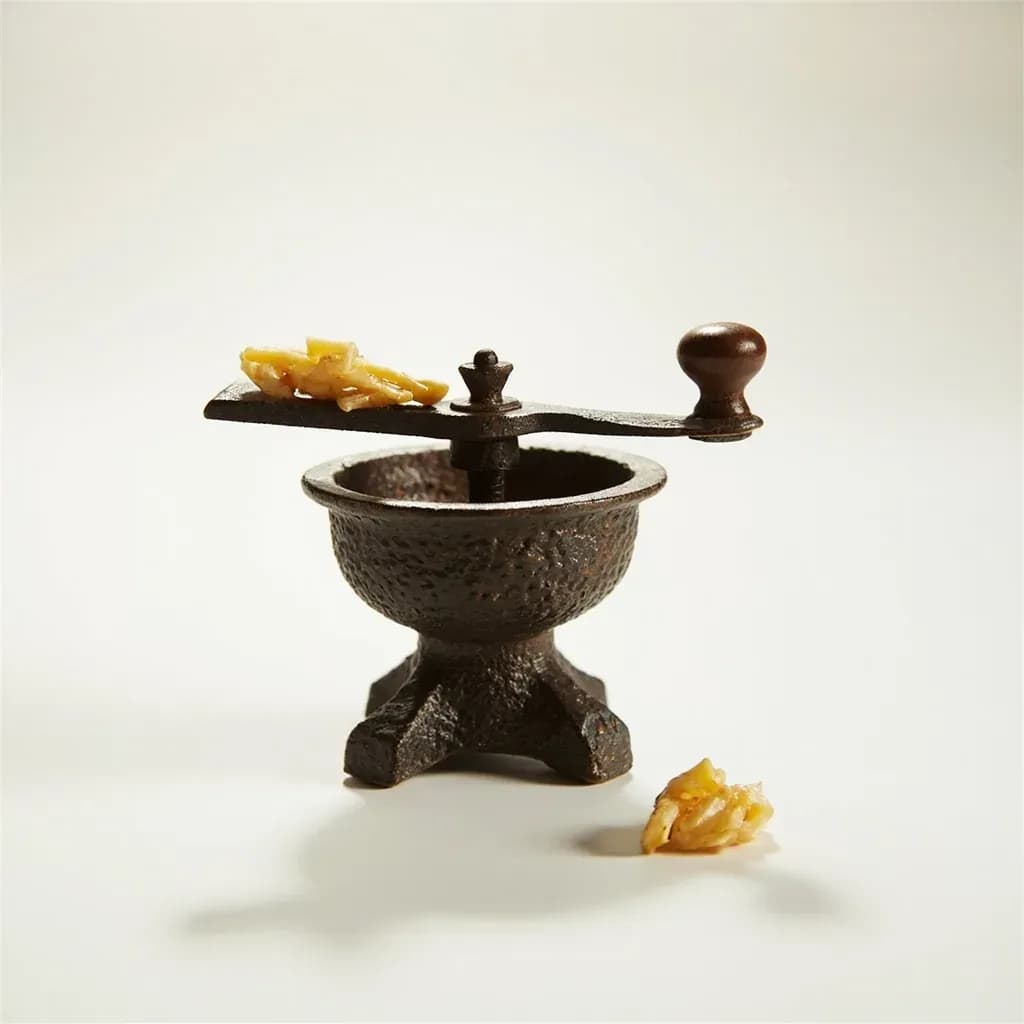
Hand Corn Mill
A clamp-on or motorized burr mill that grinds nixtamalized corn into masa and grinds grains and spices.
A molino is a grinding mill, hand-cranked or motorized, that crushes ingredients between adjustable burrs or plates. In Latin American kitchens it turns nixtamalized corn into masa for tortillas and tamales, and it also grinds dried corn, grains, spices, and tomatoes. Tightening the burrs yields a finer grind, and the clamp-on hand version mounts to a table edge for leverage.
The hand corn mill — el molino, or molino de mano — is a clamp-on, hand-cranked burr mill designed to grind nixtamalized corn into the soft, pliable masa that becomes tortillas, tamales, pupusas, and sopes. Its working parts are two metal discs studded with raised, sharpened teeth rather than the smooth stone burrs of a flour mill; the corn is forced between the plates while still damp from cooking, and emerges from a front spout as a coarse, wet paste that can be adjusted to a finer grind with a central bolt. The form is a specific tool with a specific job: it is a wet mill, built for corn that has already been cooked with cal (calcium hydroxide), not for raw kernels or dry grain. For cooks in Mexico, Central America, and the U.S. Southwest, a molino bolted to a wooden board is the difference between store-bought masa and tortillas ground that morning.
The molino is the metalwork-era descendant of the stone metate y metlapil and shares the metate's logic — break down already-softened corn through abrasion — but is dramatically faster and easier on the arms. A crank-driven Victoria- or Vasconia-style mill grinds roughly a pound of nixtamal in a few minutes of steady cranking, so 1 to 3 pounds of fresh masa in a single session is realistic before the operator needs a break. The resulting masa is noticeably more uniform than hand-ground metate masa and slightly lighter in texture; a metate masa is denser and more rustic, while molino masa presses into thinner, more pliable tortillas, and swapping one for the other in a recipe usually means adjusting hydration and resting time. Most home cooks find the molino the right balance of effort and quality; tortillerías move up to motorized or commercial versions of the same tool.
Alternatives
Types & varieties
The classic cast-iron model with a hopper, hand crank, and front-discharge tray. The most common form in Mexican and Central American home kitchens; Victoria is Colombian but is the de facto standard across the region.
Cast iron is heavier, more durable, and more common in traditional mills; aluminum-bodied mills are lighter and cheaper but the housings wear faster.
Tin plating was the original finish; many modern mills use aluminum or bare cast grinding surfaces. Sharpness of the raised teeth matters more than plate material for performance.
Electric tabletop versions for restaurants and frequent home grinders; same burr geometry but driven by a small motor.
Bigger motor-driven mills used in tortillerías; same working principle, greater throughput.
A similar hand-cranked burr mill widely sold across Latin America; designed for nixtamal but in practice also used for soaked grains, hard cheeses, and chocolate, and generally produces a coarser grind than a dedicated nixtamal mill.
Why nixtamalization comes first
A molino cannot turn dried field corn into masa. The corn has to be cooked with cal — calcium hydroxide, sold in Latin markets as cal — until the hulls slip off and the kernels are tender all the way through, anywhere from about 20 minutes to over an hour depending on the variety and age of the corn. That alkaline step is what frees the starches, softens the pericarp, and gives masa its characteristic flavor and aroma. Running untreated dried corn through a molino will jam the burrs, produce a sandy, inedible paste, and can chip the teeth. If you want masa, the rule is simple: nixtamalize first, then grind.
Setting up the mill
The clamp is not decorative. A hand-crank molino under load produces real torque, and an unsecured mill will walk across the counter, throw nixtamal, and potentially injure the operator. Bolt or screw it to a thick hardwood board (a chunk of 2x12 or a heavy cutting board) before the first turn of the crank.
- Mount on a 1½- to 2-inch-thick board so the clamp has meat to bite into.
- Place the board on a non-slip surface — a damp towel under the board helps.
- Stand or sit so your dominant hand drives the crank in a comfortable arc; you will be turning for several minutes.
- Keep a bowl and a wooden spatula ready at the front spout to catch and guide the masa.
Adjusting the grind
Most hand mills have a central bolt or wing nut that moves the burrs closer together or farther apart. Coarser settings work for tamales and pupusas, which need a heartier masa; finer settings produce the silkier dough for thin, pliable tortillas. Always start a touch open and tighten after the first handful tells you where the grind is landing.
Common uses
Tips & pitfalls
- Add a small splash of water — or the leftover cooking liquid, atole — to the nixtamal before grinding so the masa moves smoothly through the burrs and stays pliable.
- Aim for a final masa that holds together when pressed but is not gummy. If it cracks at the edges, it is too dry; add water a tablespoon at a time and re-pass.
- Tighten the central adjustment bolt gradually as you grind the first batch — chasing fineness too early stalls the handle and is the most common reason for a frustrating first run.
- Use the included wooden pusher (tapa) or a wooden pestle in the hopper. Never push nixtamal down with a metal utensil, which can dent the burr teeth or slip and injure your hand.
- Feed the nixtamal in small handfuls and keep the crank moving at a steady, moderate pace. Forcing too much corn at once is the most common reason a mill stalls.
- Disassemble and clean the hopper, burrs, and discharge tray immediately after grinding. Dried masa caked in the burrs is the single most common cause of poor performance and is hard to remove once set.
- Dry the mill thoroughly and rub a thin film of vegetable oil on the cast iron surfaces before storing to prevent rust — paying particular attention to any uncoated iron on the clamp screw and body. Wipe the burr faces well before the next use.
- Reserve the mill for nixtamal. Using it heavily for dry spices, coffee, or hard grains dulls the raised teeth quickly and leaves flavors in the burrs that will show up in your next batch of masa.
Good to know
- Also known as
- molino de maíz, molino manual para nixtamal, molino de mano, hand corn grinder
- Origin
- Mesoamerica; modern hand-crank designs descend from late 19th- and early 20th-century Latin American metalworking, replacing the pre-Columbian stone metate for many home cooks
- Primary material
- Cast iron body with tin- or aluminum-plated grinding plates; wooden crank handle
- Mounting
- Clamp-on; the mill is bolted or screwed to a sturdy board or counter before use
- Power source
- Hand-cranked; electric tabletop versions exist for higher-volume kitchens
- Required input
- Nixtamal — corn that has been cooked with cal (calcium hydroxide) until soft, then drained
- Output
- Smooth, pliable masa (dough) suitable for tortillas, sopes, tamales, pupusas, and gorditas
- Capacity
- Hand models process roughly 1–3 lb of nixtamal at a time before the operator needs a rest
- Cleaning
- Must be washed and dried immediately after use; moist masa hardens inside the burrs and cast iron will rust if stored wet
Also called
Hand Corn Mill (Molino de Mano) · Hand Corn Grinder (Molino de Maíz) · Corn Grinder · Motorized Grain Mill (Moulin) · Motorized Grain Mill · Corn/Pepper Grinding Mill · Grinding Mill · Electric Spice/Tomato Grinder · Electric Grinder
Related

Stovetop
The everyday burners where most cooking actually happens

Oven
Enclosed dry heat for roasting, baking, and braising

Grill
Live-fire or gas grates for char, smoke, and high heat

Smoker
Low, slow heat and wood smoke for barbecue and brisket

Air Fryer
Countertop convection that crisps with little or no oil

Slow Cooker
Set-and-forget low heat for stews, beans, and braises

Pressure Cooker
Sealed steam pressure that cooks tough food in a fraction of the time

Rice Cooker
Foolproof, perfectly steamed rice every single time