Appliances & Heat
Oven Rack / Grill Rack
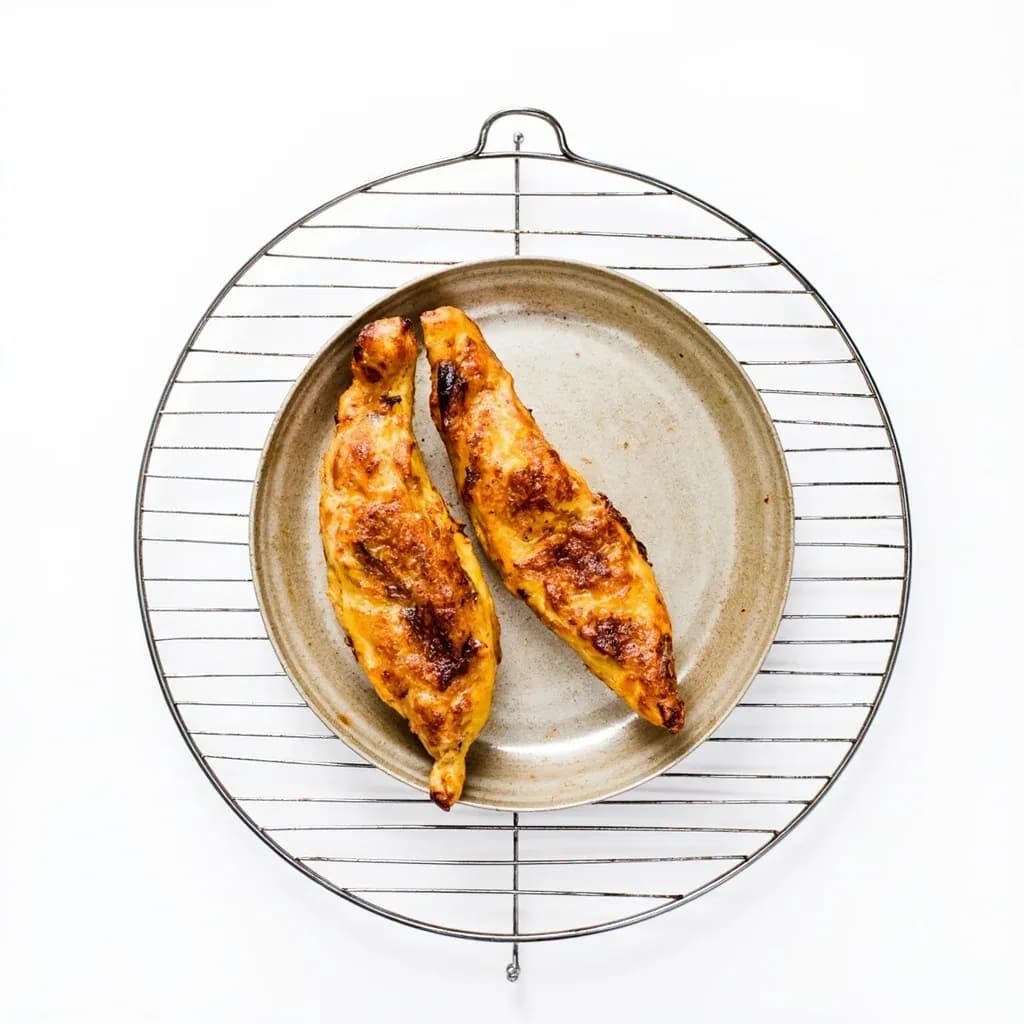
A removable metal grid that holds pans and food at set heights inside an oven, grill, or smoker.
An oven rack is a wire shelf, usually chrome-plated steel, that slides into channels inside an oven to support pans, sheets, or food directly. Cooks adjust its height to control how close food sits to the heating element, raising it for broiling or lowering it for gentle baking. The same style of rack works as a grill or smoker grate, letting air and heat circulate fully around the food.
An oven rack is the removable metal grid that defines the cooking zone inside an oven, grill, or smoker. In an oven it is a platform — a frame of parallel steel wires or rods welded to cross-supports that slides into numbered slots along the cavity walls. In a grill or smoker the same basic idea becomes the cooking surface itself: heat comes from below and the food sits directly on the bars. The rack is the unsung control knob of dry-heat cooking; the slot you choose sets the distance between food and heat source, which governs browning, top-versus-bottom cooking, and how air moves around the pan.
Position matters as much as temperature. The upper third of an oven is where radiant heat from the broiler and roof concentrates, so it browns and crisps. The lower third is where the floor radiates stored heat back up, useful for pizza, bread, and anything you want to crisp from the bottom. The middle is the most even zone, the default for most roasting and baking. On a grill, grate height above the burners or coals trades searing power for control, and the mass and material of the grate determines how much heat the bars can hold and deliver on contact.
Most home oven racks are chrome-plated steel — light and inexpensive but vulnerable to corrosion and to the extreme heat of a self-clean cycle. Higher-end ranges ship with heavier stainless or porcelain-enameled racks; grills use heavier cast iron or stainless grates that retain heat and sear better. Beyond material, design differences — pull-out glides, half-width inserts, hinged grates — exist to make working around high heat more manageable: pull-outs keep hands out of the cavity, half racks add a second cooking level, and hinged grill grates open access to the burners or coals below.
Alternatives
Types & varieties
The most common type: a chrome-plated steel grid that slides on side ledges. Fits a half-sheet pan with room to spare.
Built on roller-bearing glides; pulls out toward you so you can stir, baste, or check doneness without reaching into a hot oven. Often sold as an optional upgrade on mid- and high-end ranges.
A shorter rack that fills one half of an oven at a different height, letting you cook two items at two levels simultaneously. Common in wall ovens.
Retrofit ball-bearing slides that clip onto existing oven rails, giving a pull-out platform to a standard oven.
Coated for easier cleaning and corrosion resistance; common in European-style ovens and self-cleaning models.
More durable and warp-resistant than chrome plating; used in many pro ranges and higher-end home ovens.
Heavy, retains heat, gives strong sear marks. Standard on charcoal and many gas grills. Can be seasoned like a skillet.
Cast iron with a porcelain-enamel coating for rust resistance and easier cleanup; used on many gas grills.
Common on mid- and high-end gas grills; less heat retention than cast iron but very durable and rust-resistant.
Budget-friendly option on entry-level gas grills; thinner and prone to rust if the plating chips.
Lifts from the center on gas grills to expose the burner or charcoal for refueling and ash clearing.
A smaller secondary rack mounted higher in a grill or oven, used to keep finished food warm without overcooking.
Often multiple round or rectangular grates at several levels inside an offset or vertical smoker for indirect, low-and-slow cooking.
One side ribbed for grill marks, the other flat for griddling pancakes, eggs, or smash burgers; usually cast iron.
Choosing the right rack position
The numbered slots on the side walls of an oven are not decorative — each one changes the dominant mode of heat transfer. The top slot puts food close to the broiler, where infrared from the upper element browns fast. The bottom slot sits over the floor of the oven, which is where the lower element's heat accumulates, and is the right call for pizza on a stone or a loaf of bread that needs an aggressive bottom spring. The middle slot balances top and bottom radiation, which is why most recipes assume it. When in doubt, default to center and adjust one slot at a time for the next bake.
Material and mass in grill grates
On a grill, the grate is the cooking surface, so its material matters far more than it does in an oven. Cast iron holds a lot of heat, so when a steak hits the bars the grate's stored energy transfers into the food and produces the dark, defined sear marks a barbecue cook is after. The cost is weight, slower preheat, and a tendency to rust if left wet. Stainless steel grates heat up faster and shrug off weather, but give a softer sear because they don't hold as much thermal mass. Porcelain-coated cast iron splits the difference: it sears like bare cast iron, cleans easily, but chips if scraped with metal tools and will rust at the chip.
Care and lifespan
Chrome-plated oven racks are the consumable of the category. They are cheap to replace, but a few habits extend their life: keep them out of the self-clean cycle, don't soak them in harsh caustic cleaners, and avoid putting them in a dishwasher where detergent and heat strip the plating. Stainless racks tolerate all of that. Grill grates want the opposite treatment — they should be cleaned while hot with a stiff wire brush, then lightly oiled once cool to keep rust at bay. A warped rack can usually be flipped to correct a slight bow, but a badly twisted one is a safety hazard and should be replaced.
Common uses
Tips & pitfalls
- Use the middle rack for most roasting and baking — it is the most even heat zone in most ovens.
- Move up to the top third for broiling and browning cheese; move down to the bottom third for crisp-bottomed pizzas, flatbreads, and bread.
- When baking on two racks, stagger the pans front-to-back rather than stacking them directly above one another so air can flow; rotate pans top-to-bottom and front-to-back halfway through.
- Never line an oven rack with aluminum foil across the bars — it blocks airflow and can reflect heat back onto the bottom element. Use a sheet pan or foil sling beneath the food instead.
- Remove chrome oven racks before running a self-clean cycle; sustained 800–900 °F temperatures will oxidize the chrome and turn it a dull blue-gray.
- Let a hot rack cool before putting it in water — thermal shock can warp the bars or crack welds.
- For grills: preheat the grate for 10–15 minutes and oil the food (not the grates with heavy oil, which flares) to prevent sticking; clean grates while still hot with a stiff wire brush.
- Pull the rack out before sliding a heavy Dutch oven or roast in — the front stop keeps the rack from falling but is not meant to take the full load of a loaded pot lowered from above.
Good to know
- Also called
- Cooking grate, oven shelf, oven grid, wire rack, grilling grid
- Common materials
- Chrome-plated steel, nickel-plated steel, stainless steel, cast iron, porcelain-enameled steel or cast iron
- Standard home oven rack size
- Roughly 22–25 in (56–64 cm) wide × 16–20 in (40–50 cm) deep; 30 in wide in commercial ovens
- Rack positions
- Most home ovens have 5–7 numbered slots counted from the bottom; some have continuous side rails for sliding
- Heat tolerance
- Rated to oven interior temps of 500–550 °F (260–290 °C); self-clean cycles reach 800–900 °F
- Self-cleaning warning
- Chrome-plated racks should be removed before a pyrolytic cycle; the high heat oxidizes the chrome and leaves a dull blue-gray finish
- Dishwasher safe?
- Chrome racks are generally not dishwasher safe; stainless and porcelain-enameled versions usually are
- Compatible with
- Sheet pans, roasting pans, broiler pans, wire cooling racks, pizza stones, baking steels, Dutch ovens, V-racks
Also called
oven-rack · grill rack · oven shelf · cooling grid
Related

Stovetop
The everyday burners where most cooking actually happens

Oven
Enclosed dry heat for roasting, baking, and braising

Grill
Live-fire or gas grates for char, smoke, and high heat

Smoker
Low, slow heat and wood smoke for barbecue and brisket

Air Fryer
Countertop convection that crisps with little or no oil

Slow Cooker
Set-and-forget low heat for stews, beans, and braises

Pressure Cooker
Sealed steam pressure that cooks tough food in a fraction of the time

Rice Cooker
Foolproof, perfectly steamed rice every single time