Appliances & Heat
Planetary Stand Mixer
A countertop mixer whose attachment orbits the bowl to knead dough, whip cream, and beat batters.
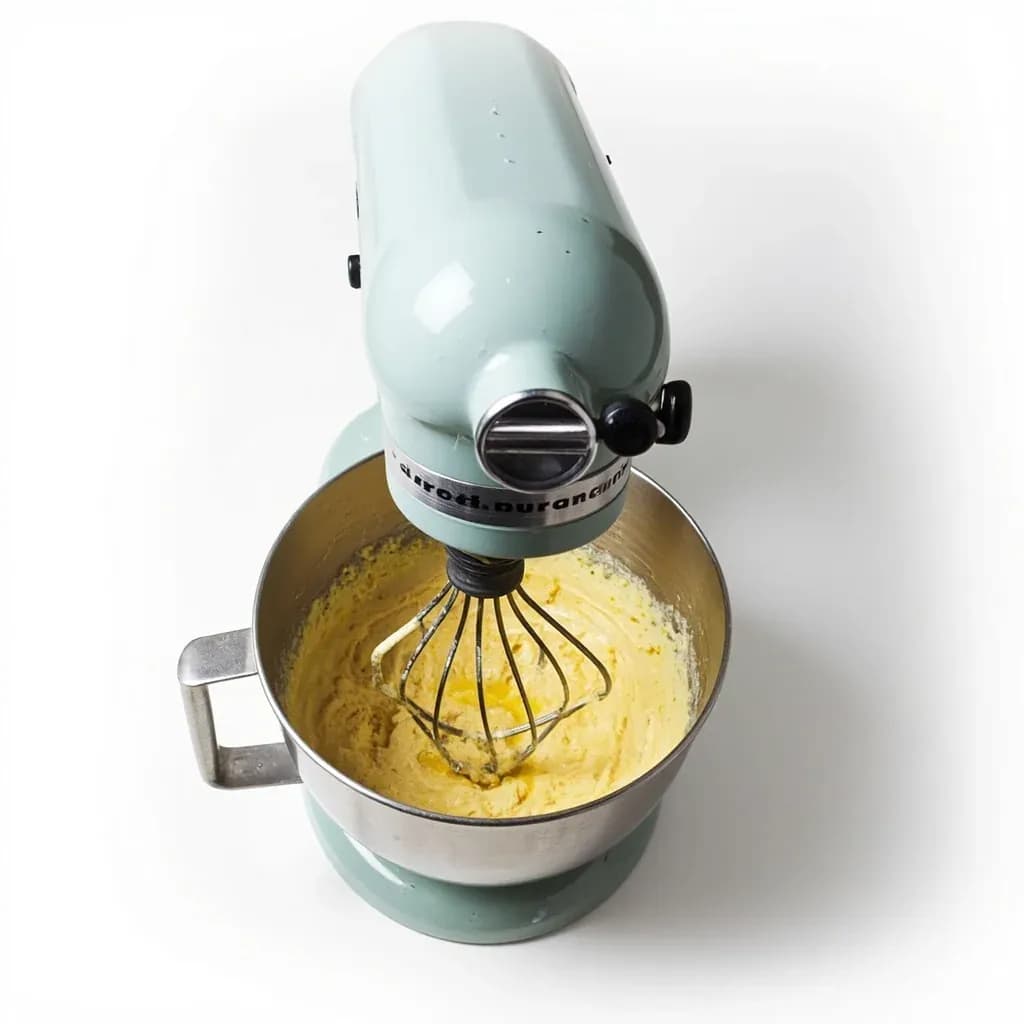
A planetary stand mixer is an electric appliance whose beater spins on its own axis while orbiting the bowl, like a planet, so it reaches every part of the mixture. With interchangeable hooks, paddles, and whisks it kneads bread dough, creams butter and sugar, whips egg whites, and beats batters hands-free. The motorized power and consistent action make it a workhorse for baking and large-batch work.
A planetary stand mixer is a freestanding electric mixer built around a single defining mechanical idea: the beater turns on its own axis while simultaneously traveling in a circle around the inside of a stationary bowl. This "planetary" motion — so named because it mimics planets orbiting the sun — sweeps the attachment through nearly every point in the bowl, which is why a planetary mixer can cream butter, whip cream, and knead dough with nothing more than a swap of attachments. Compared with a hand mixer, the planetary action is far more thorough and frees the cook from constant scraping. For a serious home baker, it is the single most-used piece of electric equipment in the kitchen.
The form arrived in American kitchens through the Hobart Manufacturing Company, which introduced the Model K "Kitchen Aid" in 1919 after engineer Herbert Johnson designed it for industrial bakeries. That heritage shows in how planetary mixers are built: a heavy motor driving a worm-gear transmission that turns the beater shaft, all mounted in a cast-metal body meant to sit on a counter, not be lifted out of a drawer. Two head configurations dominate — the tilt-head, which hinges back to expose the bowl, and the bowl-lift, where a lever raises the bowl into a fixed head. Both ship with three standard tools: a flat beater for general mixing and creaming, a wire whip for aeration, and a dough hook for kneading.
The mark of a good planetary mixer is not wattage but torque and gear-train quality, plus a bowl that fits the work. Compact 3–3.5 quart models suit small-batch cooking; the classic 4.5–5 quart size handles almost every family recipe; 6–8 quart pros take on double batches and serious bread. Beyond the basics, most brands offer powered attachments that turn the mixer into a pasta roller, meat grinder, ice cream churn, or grain mill — and once you buy into one brand's hub, you tend to stay there, because attachments are almost never cross-compatible.
Alternatives
Types & varieties
Head hinges back to expose the bowl; most common in compact and mid-size home models; convenient for adding ingredients but slightly less stable under heavy loads.
A handle raises the bowl into a fixed head; sturdier construction, preferred for bread dough and larger capacities.
Smaller footprint, lighter motor; suited to small-batch baking, whipping, and single loaves — not ideal for stiff doughs.
The classic home size; covers most family baking needs including cookies, cakes, and small bread batches.
Larger bowls and stronger motors; handles double batches, multiple loaves, and bigger meringue volumes.
The dominant home product family, with tiers differing in bowl size, motor power, and head design.
Iconic 5-quart bowl-lift long favored by American home bakers; the professional-grade predecessor to the KitchenAid Pro line.
Floor or bench models from Hobart, Globe, Electrolux, and Univex; used in restaurants, pizzerias, and bakeries; largest units run on three-phase power.
The Three Standard Attachments and When to Use Each
Every home planetary mixer ships with the same trio, and learning which one to reach for is half the skill of using one.
- Flat beater (paddle) — the workhorse. Use it for creaming butter and sugar, mixing cake batter, combining meatloaf, mashing cooked potatoes, and any task where you want thorough blending without maximum air. It pushes ingredients against the bowl wall and folds them back in.
- Wire whip (whisk) — strictly for aeration. Use it for whipping cream, beating egg whites, and making light, fluffy frostings like Swiss or Italian meringue buttercream. Its many thin wires trap air; they do not move heavy mixtures effectively.
- Dough hook — almost always the spiral or C-shaped type on home planetary mixers. Reserve it for kneaded doughs: enriched breads like brioche and challah, pizza dough, and soft sandwich loaves. Do not use it for cake batter (overworks gluten) or for whipping (does not aerate).
Limits and When Not to Reach for It
A planetary mixer is versatile, but it is not the right tool for every job, and forcing it into the wrong role is how motors burn out.
- Stiff, low-hydration doughs (baguette, ciabatta, sourdough) develop gluten better in a spiral mixer or by hand. The planetary's dough hook aggressively works these doughs, builds friction heat, and can over-oxidize the crumb.
- Very small tasks — two egg whites, a half cup of cream, a single patty of butter — are faster to do by hand than to set up the machine for.
- Triple or larger batches of cookies or cake should be mixed in two separate batches; a 5-quart bowl is not designed for three pounds of dough at once, and the beater will simply ride on top.
- Whipping cream past stiff peaks passes quickly into butter. If you are not standing near the mixer, set a timer and check at one-minute intervals.
Common uses
Tips & pitfalls
- Lock the bowl and head before turning the mixer on — an unlocked bowl can walk across the counter at speed 10 and throw ingredients across the kitchen.
- Start on speed 1 or 2 when adding flour; jumping straight to medium sends a fine cloud of dry ingredients into the air.
- Never exceed the manufacturer's stated flour weight for bread dough — a stalled motor and burned worm gear is the most common planetary mixer failure.
- Scrape the bowl down with a spatula at least once during mixing; the planetary action leaves a small untouched band at the very bottom of the bowl.
- Bring butter to 60–65 °F (16–18 °C) before creaming — cold butter aerates poorly, and overly soft butter won't hold air pockets.
- Bowl-lift models handle stiff doughs more reliably; tilt-heads can rock under heavy load.
- Hand-wash the flat beater and dough hook even if they are dishwasher-safe; the coating eventually wears and exposed steel will rust at the edges.
- Never immerse the mixer head or motor housing in water; wipe with a damp cloth only — the gearbox and electrical components live inside.
- Coat the wire whip lightly with nonstick spray or dip it in water before whipping very small volumes of egg white so the whites cling to the wires instead of sliding down.
Good to know
- Mixing Action
- Planetary: the attachment rotates on its own axis while orbiting the bowl's center, sweeping through nearly the entire bowl interior with each complete revolution.
- Origin
- Commercialized in the U.S. by Hobart in 1919 as the Kitchen Aid Model K, engineered by Herbert Johnson and adapted from industrial bakery equipment.
- Typical Home Bowl
- 3–8 quarts for home models (typical 4.5–6 qt); commercial planetary mixers run 10–30+ quarts.
- Head Designs
- Tilt-head (head hinges back for bowl access) and bowl-lift (a lever raises the bowl into a fixed head); bowl-lift is generally sturdier for heavy doughs.
- Body Material
- Die-cast zinc or aluminum on premium models; ABS plastic on entry-level units.
- Bowl Material
- Stainless steel is standard; some models offer glass or ceramic bowls, occasionally with protective coatings.
- Standard Attachments
- Flat beater (paddle), wire whip (whisk), and spiral or C-shaped dough hook — almost all home planetary mixers ship with these three.
- Motor Power
- Roughly 250–1,300 watts on home units; gear-train torque matters more than wattage for heavy loads.
- Recommended Dough Load
- Roughly 1–2 loaves per batch (about 500 g–1.5 kg flour); overloading is the most common cause of motor and gear failure.
- Speed Range
- Most have 10 speeds; American recipes traditionally reference 2 (low/stir), 4 (mix/cream), 6 (beat), 8 (fast), 10 (whip).
Also called
stand mixer · planetary mixer · dough mixer
Related

Stovetop
The everyday burners where most cooking actually happens

Oven
Enclosed dry heat for roasting, baking, and braising

Grill
Live-fire or gas grates for char, smoke, and high heat

Smoker
Low, slow heat and wood smoke for barbecue and brisket

Air Fryer
Countertop convection that crisps with little or no oil

Slow Cooker
Set-and-forget low heat for stews, beans, and braises

Pressure Cooker
Sealed steam pressure that cooks tough food in a fraction of the time

Rice Cooker
Foolproof, perfectly steamed rice every single time