Appliances & Heat
Refrigerator
An insulated cold-storage appliance that keeps food fresh and safe at low temperatures.
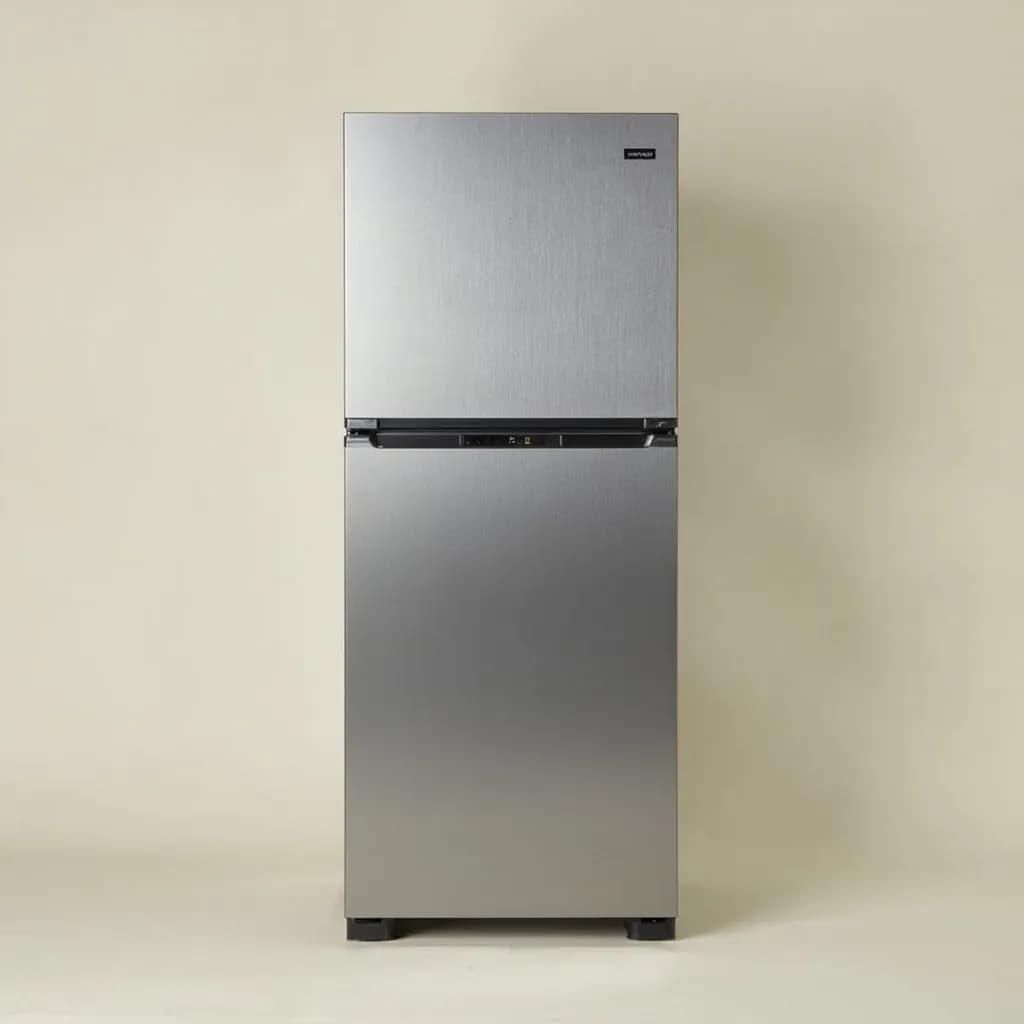
A refrigerator is a large insulated appliance that holds food at cold but above-freezing temperatures to slow spoilage and bacterial growth. It is fundamental to every kitchen for storing perishables, chilling doughs and desserts, marinating, and resting prepared dishes. Most models pair a fridge compartment with a freezer and offer adjustable shelving and humidity-controlled crisper drawers.
The refrigerator is a temperature-controlled environment rather than a single uniform box. It uses a vapor-compression cycle to pull heat out of an insulated cabinet, holding the fresh-food compartment at roughly 35–38°F (1.7–3.3°C) and a separate freezer at 0°F (−18°C). That split identity — chilled holding on one side, deep freeze on the other — is the reason the appliance became the foundation of modern home cooking: it made raw-meat safety, leftover storage, and chilled desserts (pastry cream, icebox cake, ice cream) routine rather than special-occasion projects.
For a cook, the practical reality is that a refrigerator is not one temperature. Cold air sinks and pools along the back wall and bottom shelf, while the door shelves swing several degrees warmer every time the unit is opened. Produce drawers, ice makers, and butter compartments each create their own microclimate. Treating the appliance as three or four overlapping zones — fresh-food body, high-humidity crisper, low-humidity crisper, door — is what separates a fridge that keeps food alive from one that wilts greens and turns berries to mush.
The single most useful habit a serious cook can develop is putting an inexpensive thermometer in the fresh-food compartment and learning its hot and cold spots. Most home units drift with the seasons as door seals age and ambient room temperature changes, and the difference between the back wall and the door can exceed 5°F. Knowing where that is turns vague rules of thumb ("store meat on the bottom shelf") into confident practice.
Alternatives
Types & varieties
Classic, least expensive layout; freezer above the fresh-food compartment and the narrowest doors for tight kitchens.
Fresh food at eye level and a pull-out freezer drawer below; favored by cooks who reach into the fridge far more than the freezer.
Freezer and fridge columns flank each other; narrower doors fit galley kitchens but shelves are tight for sheet pans and large platters.
Two fresh-food doors over a freezer drawer; wide interior shelves, the dominant premium layout in U.S. kitchens.
Cabinet-deep (≈24–25 in) so the front aligns with countertops; sacrifices 4–6 cu ft of capacity.
1.7–4.5 cu ft units for dorms, offices, and beverage coolers; weak temperature stability and a marginal freezer compartment at best.
Temperature-stable 45–65°F range with UV-resistant glass and vibration dampening; useful for short-term storage of cooking wines as well as drinking.
Drawer or cabinet unit that can switch between refrigeration and freezing modes; useful for entertaining or seasonal overflow.
Wi-Fi sensors, interior cameras, and inventory tracking; mainstream since the mid-2010s. Useful features for cooks include temperature alerts and door-open logs.
Flush-mounted with cabinetry; wider exterior allows full cabinet-depth capacity inside, the standard in European kitchens.
Reading the internal climate
Almost every storage failure in a home fridge comes from ignoring where the cold actually is. Three rules cover most situations:
- Back wall and bottom shelf are the coldest spots — store raw meat, poultry, and fish here in a rimmed container so drips cannot reach produce or leftovers.
- Middle shelves are the most stable zone; this is where dairy, eggs, and cooked foods belong.
- Door shelves swing 3–5°F warmer than the interior and should be reserved for condiments, citrus, and items with their own preservatives (mustard, ketchup, soy sauce).
Ethylene and the two crispers
Most produce drawers offer high- and low-humidity settings, and the right choice depends on whether the contents give off ethylene gas. Mixing the two categories is the most common reason greens wilt while fruit ripens too fast.
- High-humidity drawer: lettuce, spinach, herbs, carrots, broccoli — anything that wilts in dry air. Line with a dry paper towel and the humidity setting will do the rest.
- Low-humidity drawer: apples, pears, berries, grapes, stone fruit — anything that molds in damp air.
- Ethylene producers (apples, bananas, avocados, pears) should be kept away from ethylene-sensitive items (lettuce, herbs, berries) even within the fridge.
Common uses
Tips & pitfalls
- Put a thermometer in the fresh-food compartment and check it seasonally; door seals drift and ambient room temperature shifts through the year, and the dial on the wall is rarely accurate.
- Store raw meat, poultry, and fish on the lowest shelf in a rimmed container so juices cannot drip onto produce or ready-to-eat food — this is the single most important food-safety habit in the kitchen.
- Cool hot foods to about 70°F (no more than 2 hours total out of refrigeration per USDA) before refrigerating; an ice-water bath in the sink cuts cooling time dramatically and protects the rest of the fridge from a temperature spike.
- Do not pack the fridge tightly — cold air needs to circulate around the food. Aim for roughly 75% full; a very empty fridge is also inefficient because the food itself provides thermal mass that helps the unit recover its temperature after the door is opened.
- Use the door for condiments and items with natural preservatives (mustard, ketchup, citrus, butter in a covered dish). It is the warmest, most fluctuating zone and will shorten the life of milk and eggs.
- Do not refrigerate tomatoes, whole melons, fresh bread, or unpeeled garlic — texture and flavor degrade. Honey crystallizes in the fridge and should be stored at room temperature.
- Label leftovers with date and contents; the USDA guideline is 3–4 days for most cooked foods at or below 40°F, after which they should be frozen or discarded.
- Wipe door gaskets monthly with a mild detergent and check for tears or sticky spots — a compromised gasket is the most common cause of slow temperature creep and rising energy bills.
Good to know
- Fresh-food target temperature
- 35–38°F (1.7–3.3°C) for everyday storage.
- Freezer target temperature
- 0°F (−18°C); the USDA safety floor for frozen food.
- USDA safety ceiling
- Refrigerator must hold at or below 40°F (4°C); above that, bacterial growth accelerates rapidly.
- Internal temperature zones
- Back wall and bottom shelf are coldest; door shelves are warmest and fluctuate most with opening.
- Crisper humidity settings
- High for leafy greens and herbs; low for berries, grapes, and stone fruit, which mold in humid air.
- Standard household capacity
- 18–25 cu ft in modern U.S. kitchens; counter-depth and European models run 10–15 cu ft.
- Typical annual energy use
- Roughly 400–800 kWh/year for a standard ENERGY STAR unit, depending on size and age.
- Invented
- First practical vapor-compression cycle patented by Carl von Linde in 1879; Fred W. Wolf's Domelre (1913) is generally credited as the first electric refrigerator designed for household kitchens; the first mass-market home unit, the General Electric Monitor-Top, was released in 1927.
Also called
Frigorifer · Fridge
Related

Stovetop
The everyday burners where most cooking actually happens

Oven
Enclosed dry heat for roasting, baking, and braising

Grill
Live-fire or gas grates for char, smoke, and high heat

Smoker
Low, slow heat and wood smoke for barbecue and brisket

Air Fryer
Countertop convection that crisps with little or no oil

Slow Cooker
Set-and-forget low heat for stews, beans, and braises

Pressure Cooker
Sealed steam pressure that cooks tough food in a fraction of the time

Rice Cooker
Foolproof, perfectly steamed rice every single time