Appliances & Heat
Rib Rack
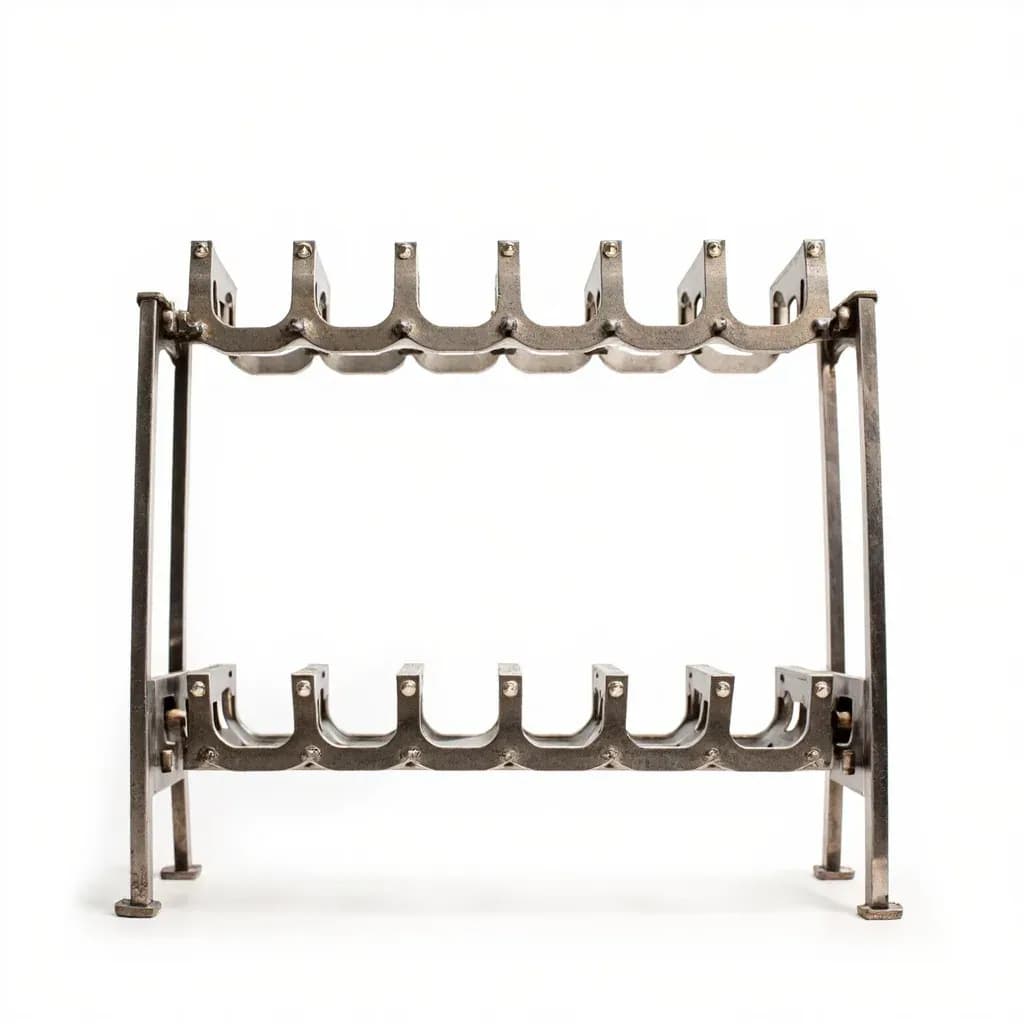
A standing metal rack that holds racks of ribs upright to grill or roast more at once.
A rib rack is a slotted metal frame that holds several slabs of ribs vertically on edge, packing more meat into a grill, smoker, or oven than laying them flat. Cooking upright exposes more surface to heat and smoke for even browning and bark formation while saving space. Barbecue cooks rely on it for long low-and-slow sessions of pork or beef ribs.
A rib rack is a vertical metal frame that turns one grill grate into a multi-rack cooking station. Instead of laying racks of ribs flat, you stand each one on edge in narrow slots so the bones run vertically and the meat faces outward. Smoke, heat, and dry air can then circulate around every surface, which is exactly the environment ribs need to render fat, build bark, and take on clean smoke flavor.
The practical benefit is capacity. A standard backyard kettle grill, kamado, or home oven typically has room for only two to three racks of spare ribs laid flat before they start crowding and steaming each other. Slot them into a rib rack and you can cook three to six racks at once without packing the grate. The upright orientation also keeps ribs from sitting in their own drippings, which is the difference between a glossy, well-barked crust and a flabby exterior.
Beyond sheer capacity, the rack works as a heat and smoke management tool. Set it over the indirect-heat zone of your grill and you have a compact vertical chamber where ribs cook surrounded by circulating heat and smoke, with the closed lid reflecting radiant heat back down. Match the rack's footprint to your cooking grate, choose stainless over chrome for long-term durability, and the rib rack becomes one of the most useful accessories for anyone who smokes ribs more than once a season.
Alternatives
Types & varieties
Open chrome or stainless wire frame with 3–5 vertical slots; the most common and affordable style.
Larger frames that hold 6–7 racks; suited to big grills, drum smokers, and kamado cookers.
Slots angled so meat faces slightly inward or outward to manage heat exposure and drippings.
Smaller-diameter circular base designed to fit the round cooking grate of kamado grills like the Big Green Egg.
Side handles or a top handle for easier lifting in and out of a hot grill.
Coated versions for easier release of sticky glazes and simpler cleanup.
Choosing the Right Rack
Match the rack to your cooker before you buy. A rib rack that is too tall will sit too close to the lid and burn the top racks; one that is too wide will not fit between the side handles of a kettle grill.
- Pick stainless steel over chrome-plated wire if you cook in salty or acidic environments, or if you tend to leave accessories outdoors — stainless resists rust far longer.
- Measure your cooking grate's usable width and the clearance between the grate and the lid, then choose a rack that leaves at least an inch of headroom.
- For kamado cookers, choose a round-based rack sized to sit on the circular grate rather than a square one that wastes the corners.
- Side or top handles are worth the small premium; moving a fully loaded rack with tongs alone is awkward and unsafe.
- Coated or non-stick versions release sticky glazes cleanly, but the coating can wear off after a season of high-heat use — budget for replacement if you cook weekly.
Loading and Cooking
How you load the rack matters as much as which rack you buy. A few minutes of setup prevents burned bottom racks and uneven bark.
- Slide ribs into slots with the meatiest side facing the heat source you want to brown, and the bone side facing cooler air if you want a slower render.
- Leave a half-inch gap between adjacent racks so smoke can move between them; tight packing steams the meat.
- Apply glaze only in the final 20–30 minutes so sugars do not burn against the exposed wire slots.
Common uses
Tips & pitfalls
- Place the rack over indirect heat (not directly over coals or a lit burner) so the lower racks do not scorch before the upper ones are done.
- Rotate the entire rack 180° halfway through cooking if your grill has a hot spot; rib racks tend to cook the bottom slots faster than the top.
- Do not overfill — leave at least a little air space between racks so smoke and heat circulate evenly.
- Oil the slots lightly before loading to keep ribs from sticking, especially when you plan to apply a sticky barbecue glaze late in the cook.
- Always preheat the rack with the grill; a cold wire rack placed over high heat can warp.
- Use long tongs and heat-resistant gloves — the rack and the ribs get extremely hot and are awkward to lift.
- Hand-wash and dry promptly; chrome-plated wire can rust if left wet or stored near salt-heavy marinades.
- On very long cooks (4+ hours), tent the top with foil if the uppermost racks begin to brown too quickly.
Good to know
- Type
- Vertical cooking rack / standing holder
- Primary use
- Holding racks of ribs upright on a grill, smoker, or in an oven so multiple racks cook at once
- Typical capacity
- 3 to 6 full racks of ribs, depending on model
- Common materials
- Chrome-plated steel wire or stainless steel
- Orientation
- Ribs sit on edge (bone-side vertical) in slots that keep the racks separated and upright
- Heat sources
- Charcoal grills, gas grills, smokers, kamado cookers, and standard ovens
- Approximate dimensions
- Roughly 9–11 inches tall and wide; fits most full-size grills
- Also called
- Rib holder, rib standing rack, vertical rib rack
Also called
Rib Roasting Rack · BBQ Rib Rack
Related

Stovetop
The everyday burners where most cooking actually happens

Oven
Enclosed dry heat for roasting, baking, and braising

Grill
Live-fire or gas grates for char, smoke, and high heat

Smoker
Low, slow heat and wood smoke for barbecue and brisket

Air Fryer
Countertop convection that crisps with little or no oil

Slow Cooker
Set-and-forget low heat for stews, beans, and braises

Pressure Cooker
Sealed steam pressure that cooks tough food in a fraction of the time

Rice Cooker
Foolproof, perfectly steamed rice every single time