Appliances & Heat
Satay Grill Trough (Pemanggang Sate)
A long narrow charcoal trough built to grill rows of satay skewers at once.
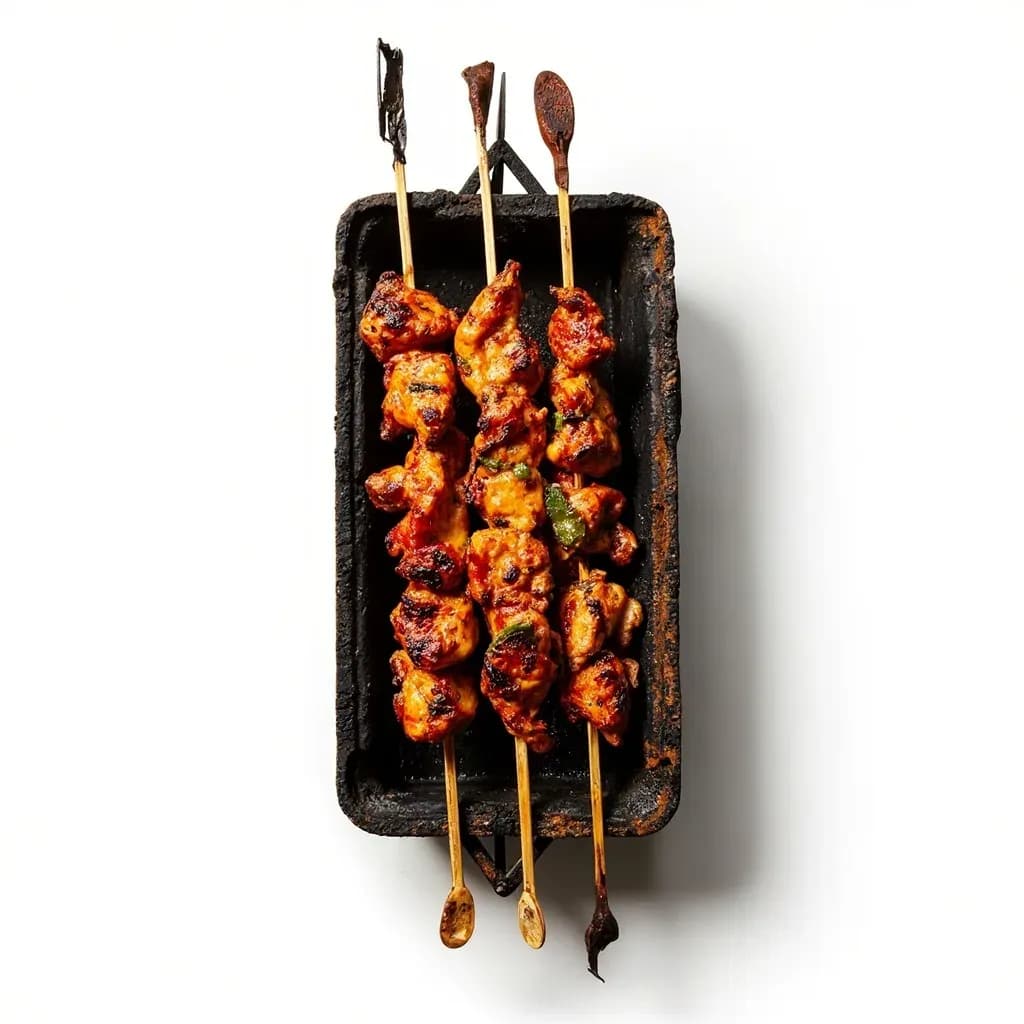
A satay grill trough, or pemanggang sate, is a long, slim charcoal grill sized so bamboo skewers rest across its edges with the meat directly over the coals. The narrow channel concentrates heat under the satay and keeps the exposed skewer ends from burning, while many skewers cook side by side. Street vendors across Indonesia and Malaysia fan the coals and baste the skewers as they char.
The pemanggang sate — literally "satay roaster" — is the dedicated charcoal trough that has grilled Indonesian satay since the food-vendor stalls of Java and Madura made the dish a national institution. It is not a barbecue in the Western sense: there is no lid, no cooking grate, and no hood. Instead it is an open, elongated box, typically 60–120 cm long and only 12–20 cm wide, with a deep bed of coconut-shell or hardwood charcoal burning in the bottom and a row of bamboo skewers laid across the long rims so the meat hangs in the hot air just above the coals.
That suspension is the defining design choice. By laying skewers across the edges rather than on a flat grate, the cook exposes a large surface area of meat to radiant heat while letting fat and marinade drip straight down into the ash bed instead of flaring up under a grid. The narrow trough concentrates heat around a single dense row of skewers, so a vendor can turn out 30–80 sticks in a few minutes with one hand on a small hand fan (kipas) and the other on the meat. The trough also acts as a drip pan, channeling rendered fat away from the live coals so the fire stays clean and the cook stays in control.
The result is the flavor signature of authentic Indonesian satay: a fast, smoky sear at 200–260 °C that chars a kecap manis glaze without overcooking the interior. Almost any narrow charcoal brazier or mangal can stand in at home, but the throughput, airflow, and ergonomics of a real trough are what a Madurese sate vendor considers non-negotiable.
Alternatives
Types & varieties
Traditional Javanese and Madurese form; thick walls retain heat and impart a faint earthy note. Fragile in transit but prized for flavor.
Modern commercial version found in Indonesian restaurants and night markets; durable, easy to clean, and unaffected by kecap manis drippings.
Permanent warung and pasar malam installation, often 1–2 m long and sometimes divided into multiple fuel bays for continuous service.
Adds an upper grate above the coal bed; used for thicker cuts like sate Padang-style beef that need both radiant heat and a finishing sear.
Related Balinese variant — a flat clay or metal trough used to press minced, spiced meat onto lemongrass skewers before grilling them over coals.
Small aluminum trough sold for home use; holds 8–15 skewers and mimics the shop version for a backyard or balcony.
Running a satay trough
A satay vendor treats the trough less like a grill and more like a continuous production line. The fuel is lit 30–40 minutes before service so the charcoal is fully ashed over with no flame — direct flame blackens the outside of kecap-manis-glazed meat before the inside cooks. Skewers are soaked in water for at least 20 minutes (some vendors soak them for hours) so the bamboo does not scorch and splinter. The cook lays the skewers across the long rims, meat facing down and slightly overhanging the edge so air circulates on every side, then turns each stick only once or twice. A small hand fan (kipas) — usually folded cardboard or palm leaf — keeps a steady draft on the coals; the cook reads the heat by the color of the ash and adjusts the fan rather than the fuel. Drippings fall into the trough's well, where they smoke against the hot coals and perfume the meat without causing flare-ups.
- Light charcoal 30–40 minutes ahead; cook only when the surface is grey-white and there is no visible flame.
- Soak bamboo skewers in water for 20 minutes minimum — dry skewers scorch, splinter, and can ignite at the tips.
- Lay skewers close together but not touching; the dense row shades the meat from flare-ups and keeps the cooked pieces warm while later skewers finish.
- Brush kecap manis or oil on in the final 30–60 seconds; sugary marinades scorch fast over open charcoal.
- Keep a kipas (hand fan) for airflow control — more reliable than blowing and far more precise than adjusting vents.
- Shovel ash and drippings between batches; accumulated fat causes bitter, acrid smoke that clings to the next round of meat.
Choosing charcoal and adapting the setup
The fuel matters as much as the trough. Indonesian vendors overwhelmingly burn coconut-shell charcoal (arang batok) or hardwood from mango, rambutan, or jackfruit trees because the smoke is clean and faintly sweet; commercial briquettes contain binders that release chemical odors and should be avoided for satay. Some stalls toss lemongrass stems, lime leaves, or coconut husks onto the coals for aroma, but never soft resinous woods like pine. At home, a tabletop satay tray or a narrow kettle-style charcoal grill can stand in for a real trough; the trick is to remove the cooking grate and lay the soaked skewers directly across the firebox rims so the meat hangs in the rising heat rather than sitting on a grid.
Common uses
Tips & pitfalls
- Use natural hardwood or coconut-shell charcoal — briquettes and instant-light cubes release chemical odors that cling to the meat and ruin the clean, smoky flavor satay is known for.
- Soak bamboo skewers in water for at least 20 minutes; dry skewers scorch at the tips, splinter, and can actually catch fire over open coals.
- Wait until coals are fully ashed over before laying any skewers; visible flame will blacken the outside before the inside cooks and will scorch any kecap manis in seconds.
- Lay skewers close together but not touching — the dense row shades the meat from flare-ups and keeps earlier skewers warm while later ones finish, which is how a vendor keeps a long line moving.
- Position skewers so the meat hangs over the long edge of the trough, suspended above the coals rather than resting on a flat grate; the exposed sides get the characteristic sear and drippings fall cleanly into the ash bed.
- Brush kecap manis or oil only in the final minute of cooking; sugary glazes burn almost instantly over live charcoal and turn bitter.
- Use a small hand fan to control airflow rather than blowing — steady, even stoking is far easier to read than gusts from your mouth.
- Turn each skewer only once or twice; constant turning dries the surface, loosens the meat from the stick, and prevents the char from forming.
Good to know
- Origin
- Indonesia, with the long-trough form most associated with Javanese and Madurese street vendors
- Indonesian name
- Pemanggang sate; also called tungku sate
- Shape and dimensions
- Long, narrow open trough, typically 60–120 cm long, 12–20 cm wide, 15–25 cm deep
- Capacity
- A single commercial trough holds 30–80 bamboo skewers laid side by side across the rim
- Heat source position
- Coals sit in the bottom of the trough; skewers rest across the long edges so meat hangs above, not on, the fire
- Primary fuel
- Natural charcoal, traditionally from coconut shell, hardwood, or mango wood
- Common materials
- Terracotta or fired clay, galvanized or stainless steel, or purpose-built brick masonry
- Cooking temperature
- Surface heat around 200–260 °C once coals are ashed over; typical cook 2–4 minutes per side for thinly sliced chicken, beef, or goat
Also called
Pemanggang Sate · Satay Grill · Skewer Grill
Related

Stovetop
The everyday burners where most cooking actually happens

Oven
Enclosed dry heat for roasting, baking, and braising

Grill
Live-fire or gas grates for char, smoke, and high heat

Smoker
Low, slow heat and wood smoke for barbecue and brisket

Air Fryer
Countertop convection that crisps with little or no oil

Slow Cooker
Set-and-forget low heat for stews, beans, and braises

Pressure Cooker
Sealed steam pressure that cooks tough food in a fraction of the time

Rice Cooker
Foolproof, perfectly steamed rice every single time