Appliances & Heat
Shaved Ice Machine
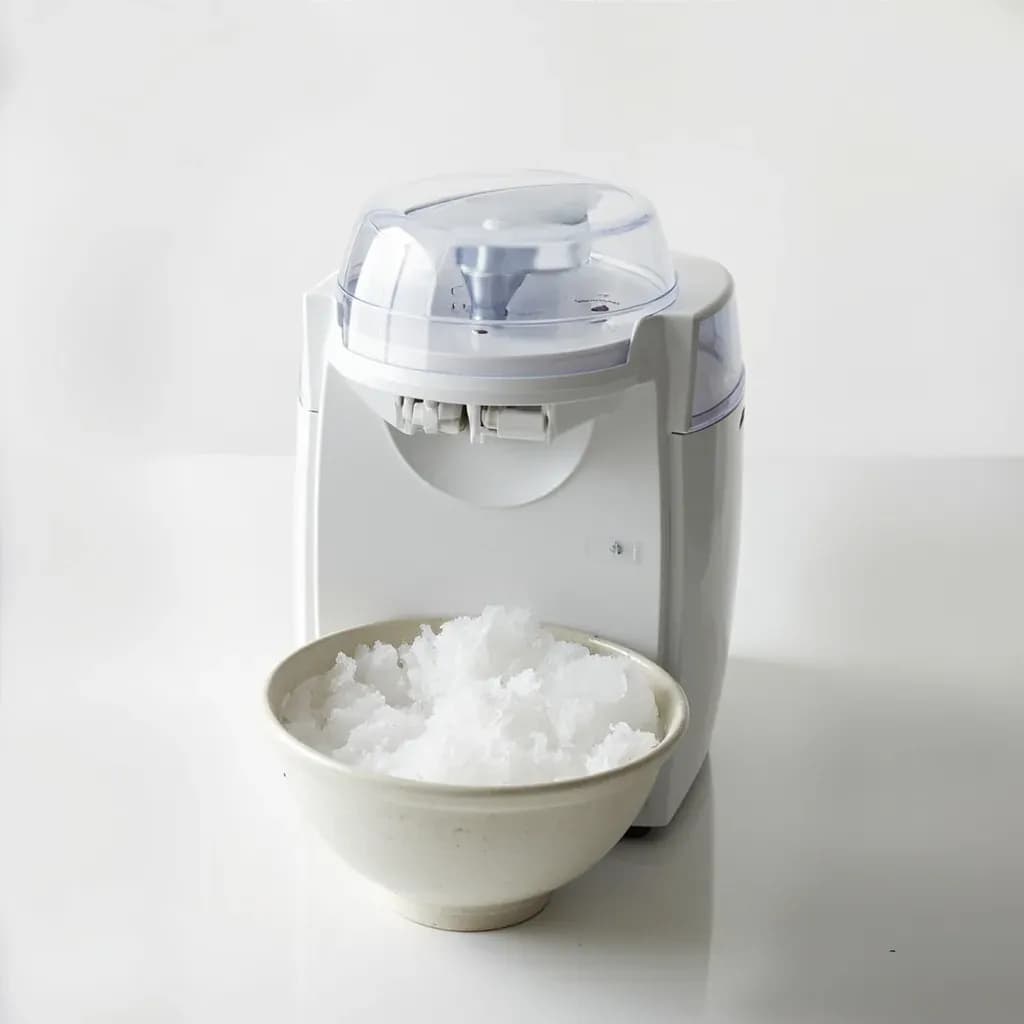
A machine that shaves blocks or cubes of ice into fluffy snow for desserts like kakigori and halo-halo.
A shaved ice machine spins a blade against a block or cubes of ice to produce light, fluffy snow rather than coarse crushed chips. It is the heart of frozen desserts like Japanese kakigori, Filipino halo-halo, Korean bingsu and snow cones, which are then dressed with syrups, fruit and milk. Adjusting the blade depth controls how fine and powdery the ice becomes.
A shaved ice machine turns a block or chunk of ice into fine, dry flakes — closer to fresh snow than to crushed ice. A motor (or hand crank) drives the ice across a sharp stationary blade, peeling off thin sheets that fracture into a powdery mound. The defining trait is texture: the flakes are porous and light, so flavored syrup soaks in rather than pooling at the bottom of the bowl, and the ice dissolves on the tongue almost instantly. That snow-like quality is what separates kakigōri, bingsu, and halo-halo from a snow cone.
Hand-shaving ice for desserts goes back to Japan's Heian period, when courtiers scraped frozen stream water with a knife. The electric machine arrived in the 1930s, and the design has barely changed since: a sharp blade and a way to push ice across it. Modern countertop home units accept cubes or small blocks; Japanese and Taiwanese shops use dedicated block-ice shavers (Hatsuyuki, Swan, Hoshizaki) that turn a 6–7 pound block into a perfect mound in seconds. Countertop electrics run 100–200 watts and cost $30 to $80; commercial block shavers run 200–400 watts and range from $300 to well over $1,500.
The machine matters because the dessert depends on it. A blender, food processor, or Lewis bag with a mallet cannot replicate shaved ice: they crush rather than shave, producing wet, granular ice that dilutes rather than absorbs. Within the category, the single biggest variable is not the machine itself but the ice you feed it. Dense, bubble-free blocks produce noticeably finer, drier flakes than ordinary freezer cubes — so the upgrade that transforms results is often a styrofoam cooler and patience, not a more expensive blade.
Alternatives
Types & varieties
Manual lever or knob pushes ice across a blade; no electricity, common at home and on the road, but slower and slightly coarser output.
Small plug-in unit with a hopper for cubes or small blocks; the entry point for most home cooks making kakigōri or snow cones.
Japanese-style machines (Hatsuyuki HC series, Swan, Hoshizaki) designed to shave dense 6–7 lb blocks; produce the finest, driest flake and are the standard in Japanese kissaten and Taiwanese dessert shops.
Specialized commercial block shavers tuned for the powdery texture used under rainbow syrups; usually paired with a multi-flavor service station.
Crushes ice rather than shaving; produces coarse, granular ice and a chewier texture. A different tool, but often sold alongside shavers.
Shaved versus crushed: why the tool matters
True shaved ice is defined by fineness, not just cold. The flake is light enough to float on the palate and porous enough to drink syrup — the syrup is held inside the mound rather than running off into a puddle at the base of the bowl. A blender, food processor, or Lewis bag with a mallet all produce crushed ice, with sharp angular fragments and a chewier mouthfeel. Those work fine for snow cones, granita, and certain cocktails, but for kakigōri, bingsu, and halo-halo the result is wrong: syrup slides off, the texture reads as icy rather than feathery, and the dessert dilutes within a minute. The blade, not the motor, is what does the work — a dull blade on an expensive machine still produces slush.
- Shaved ice is sheared into thin, irregular flakes with a high surface area.
- Crushed ice is fractured into angular chunks that resist syrup absorption.
- A 10–30 second shave produces a single serving; crushed ice packs denser and fills a bowl with far less visual volume than the same weight of fluffy shavings.
The ice is the upgrade
The single biggest improvement you can make is not a more expensive machine but better ice. Ordinary freezer cubes are full of trapped air bubbles and freeze unevenly, which makes them chip and fracture into coarse flakes under the blade. A clear block — frozen slowly, ideally in an insulated container — shaves into a noticeably finer, drier snow. Japanese home cooks traditionally freeze blocks specifically for kakigōri season; commercial shops order or freeze 6–7 lb blocks by the case. Temper the block 5–10 minutes at room temperature before shaving; ice straight out of a deep freeze chips the blade and produces uneven flakes.
- Freeze water in a 1–2 L styrofoam cooler with the lid on, insulated with towels, for 24+ hours.
- Demold by briefly running warm water over the outside of the cooler.
- Cut large blocks to size with a serrated knife; for home units, score and snap.
- Store finished blocks wrapped in plastic in the freezer — they keep indefinitely.
Common uses
Tips & pitfalls
- Use dense, clear block ice — not cloudy freezer cubes — for the driest, finest flakes; freezing water in an insulated styrofoam cooler produces nearly bubble-free blocks.
- Temper the block at room temperature 5–10 minutes before shaving; ice that is too cold shaves unevenly and can chip the blade.
- Sharpen or replace the blade regularly; a dull blade gives coarse, wet slush instead of snow and is the most common cause of bad results.
- Aim the ice straight into a chilled bowl on the catch tray — the fluff collapses within a minute, so serve immediately.
- Pre-chill bowls and syrups so the ice doesn't melt on contact, especially when adding warm toppings like sweet red bean or fresh fruit.
- For home cube-style machines, freeze cubes flat in a single layer for the most consistent feed into the blade.
- Keep the blade housing dry between uses; residual melt refreezes inside and dulls the cutting edge faster than normal wear.
- If you only have a blender, accept that you cannot replicate true shaved ice — blending produces wet granules, not the dry flake that carries syrup correctly.
Good to know
- Origin
- Electric machines developed in Japan in the 1930s; hand-shaved kakigōri dates to the Heian period (11th century).
- Mechanism
- A motor (or hand crank) drives ice across a sharp stationary blade, shaving thin sheets rather than crushing or blending.
- Blade
- Replaceable high-carbon stainless-steel blade; sharpness is the main determinant of flake quality.
- Ice format
- Commercial models take ~6–7 lb blocks; home models accept cubes or small blocks.
- Output texture
- Dry, snow-like flakes that absorb syrup without pooling at the bottom of the bowl.
- Time per serving
- Roughly 10–30 seconds to shave one bowl's worth of ice.
- Storage
- Store dry with the blade covered; pre-cut blocks kept wrapped in the freezer at 0 °F / −18 °C.
- Price range
- ~$30–$80 for home electrics; $300–$1,500+ for commercial Japanese block shavers.
Also called
shave-ice-machine · Snow Ice Machine · Kakigori Machine
Related

Stovetop
The everyday burners where most cooking actually happens

Oven
Enclosed dry heat for roasting, baking, and braising

Grill
Live-fire or gas grates for char, smoke, and high heat

Smoker
Low, slow heat and wood smoke for barbecue and brisket

Air Fryer
Countertop convection that crisps with little or no oil

Slow Cooker
Set-and-forget low heat for stews, beans, and braises

Pressure Cooker
Sealed steam pressure that cooks tough food in a fraction of the time

Rice Cooker
Foolproof, perfectly steamed rice every single time