Appliances & Heat
Smoker Firebox
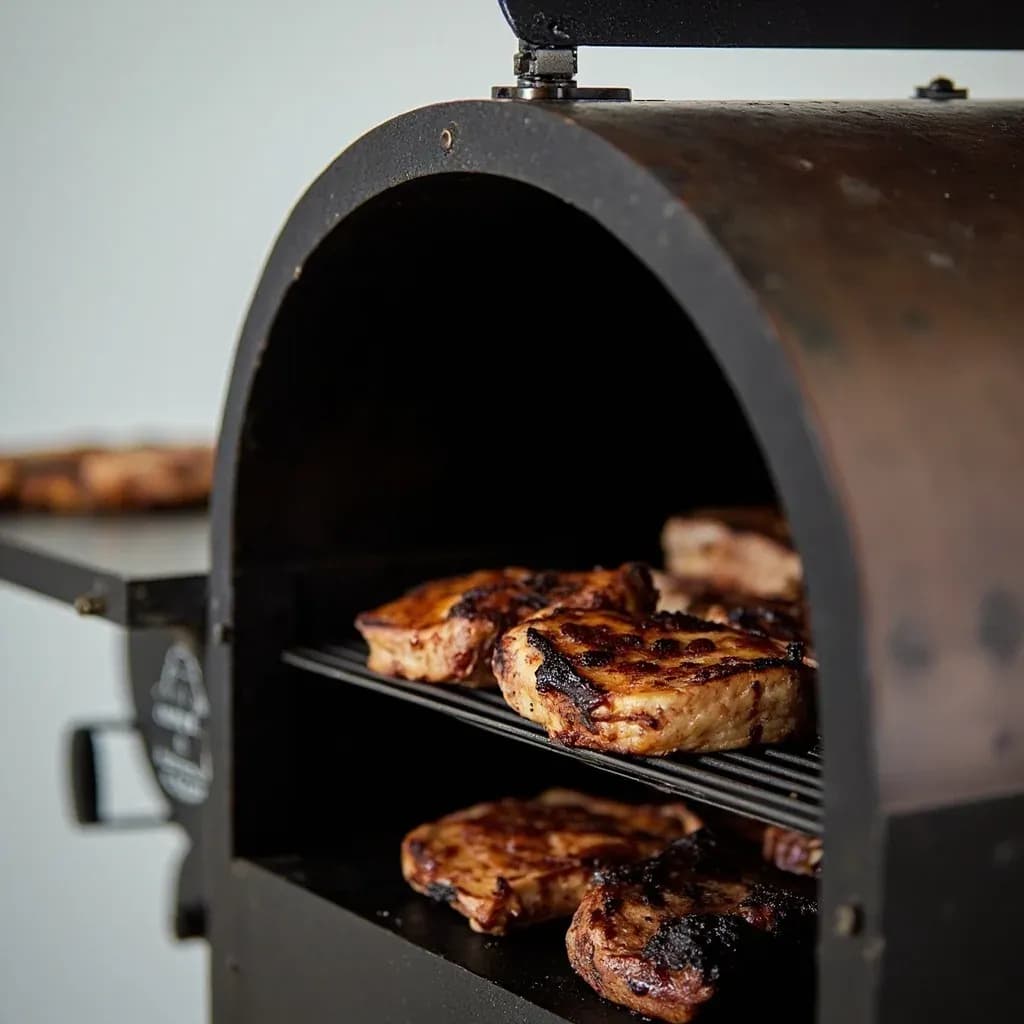
The offset fire chamber of a smoker that burns wood to push smoke and heat into the cook chamber.
A smoker firebox is the separate combustion chamber attached to an offset smoker, where wood or charcoal is burned to generate smoke and indirect heat. Hot smoke draws sideways into the adjoining cook chamber, slowly cooking and flavoring large cuts of meat over many hours. Managing the firebox airflow and fuel is how a pitmaster holds a low, steady barbecue temperature.
The firebox is the heart of an offset or cabinet smoker — the small, attached combustion chamber where hardwood is actually burned. Everything that defines good barbecue lives here: the firebox decides how hot the cook chamber runs, how clean the smoke is, and ultimately how the meat tastes. A well-managed firebox produces a steady, low flame of seasoned wood that turns into thin blue smoke; a poorly managed one smolders, leaks, or chokes, and the food comes out bitter with creosote.
A firebox is governed by three variables the cook controls: fuel, air, and exhaust. Fuel is split hardwood (or charcoal topped with wood chunks), loaded in modest amounts rather than crammed. Air enters through intake dampers on the firebox door. Exhaust exits through a smokestack or damper on the far end of the cook chamber. Adjusting these three is essentially the whole art of pit smoking — every temperature swing, every change in smoke color, every flavor note is a downstream effect of how the firebox is being fed and vented.
Firebox design matters so much because heat and smoke don't distribute evenly from a single point source. The firebox side of the cook chamber runs hot, the far side runs cooler, and airflow patterns create hot spots above the fuel and dead zones near the door. Builders address this with baffle plates (reverse-flow designs), insulated walls, and carefully sized transfer openings between firebox and cook chamber. The cook, in turn, learns to rotate meat, manage draft, and bank fuel toward the back of the firebox to even out the cooking surface.
Alternatives
Types & varieties
Classic Texas-style layout; firebox attached to one side of the cook chamber with a small smoke transfer opening or 'throat'.
Firebox on the same end as the exhaust; a baffle plate forces smoke to travel the length of the chamber, then back under the food before exiting, evening out heat.
Vertical or upright cabinet smokers with a side-mounted firebox, often gas-assisted; common in competition circles.
Found in upright water smokers such as the Weber Smoky Mountain; the fire ring sits in the base below a water pan, concentric rather than offset.
Pellet grills use an electrically auger-fed fire pot — functionally a small firebox — though ignition and feed are automated.
Managing fuel, air, and exhaust
Most pitmaster instincts reduce to three knobs: how much wood is in the box, how much oxygen is feeding it, and how much draft is pulling smoke through the cook chamber. Each adjustment is small, and the cook chamber responds with a delay of a few minutes — change one variable, wait, then check the gauges and the smoke.
- Too hot, too much oxygen: close the intake damper a quarter-turn to restrict airflow and let the fire settle.
- Too cool, dirty smoke: open the intake, then add a single small split of well-seasoned wood to raise firebox temperature.
- Smoke is white and billowing: incomplete combustion — usually fuel is too wet or the firebox is packed; clear ash and re-load with one split at a time.
- Smoke is thin, almost invisible, and blue-tinted: target state for low-and-slow cooking.
- Holding finished meat for service: drop to a bed of well-established coals, close the intake to a 1/4" crack, and the chamber will hold 150–170 °F for hours without adding new fuel.
Where the heat goes
An offset firebox is a point source of heat at one end of the cook chamber, and physics doesn't apologize for that. The firebox side runs noticeably hotter than the far side on a basic rig, and the upper racks run hotter than the lower ones. Reverse-flow designs and well-tuned baffle plates flatten this gradient; on a plain offset, the cook compensates by rotating and shuffling meat every hour or so.
- Bank fuel toward the back of the firebox (away from the cook chamber opening) to reduce direct radiant heat on the nearest meat.
- Rotate meat front-to-back and top-to-bottom at least once during the cook; the firebox side and upper rack always run hotter.
- On windy days, face the firebox into the wind so the draft pulls smoke cleanly through the chamber instead of fighting it.
Common uses
Tips & pitfalls
- Start with a small, hot fire of charcoal or kindling before adding splits; cold-starting with large logs smolders and throws creosote.
- Aim for thin blue smoke — if you see white billows, open the intake damper or close the exhaust slightly to increase draft and burn temperature.
- Add splits one at a time rather than cramming the box; a packed firebox chokes airflow and produces dirty smoke.
- Keep a water pan in the cook chamber; it buffers temperature swings and helps smoke adhere to the meat surface.
- Clear ash before every cook — even a thin layer blocks the intake damper and strangles the fire.
- Use only seasoned hardwoods (oak, hickory, pecan, post oak, fruit woods); avoid pine, cedar, or any resinous softwood that will soot the meat.
- Limit firebox door openings to quick, deliberate ones; every open door floods oxygen and can cause a flare-up or a temperature spike.
- If the firebox runs hotter than the cook chamber, suspect a leak in the firebox-to-chamber throat or a mis-sized exhaust; patch with high-temp silicone and verify damper position.
- For long overnight cooks, pre-load and pre-burn a chimney of charcoal, then top with splits to extend burn time without babysitting.
- Season a new firebox by running 2–3 hours of hardwood at 300 °F with the door cracked to burn off manufacturing oils and paint smell before the first real cook.
Good to know
- Component type
- Offset fire chamber attached to a barbecue smoker; burns wood or charcoal to generate heat and smoke that travel into the main cook chamber.
- Common materials
- Heavy-gauge steel plate, typically 1/8" (budget) to 1/4" or 3/8" (premium); some entry-level models use thinner steel with porcelain enamel coating.
- Fuel
- Split hardwood logs, wood chunks, or charcoal combined with wood; lump charcoal is also used. Gas-assisted units exist but are uncommon.
- Airflow control
- Intake damper(s) on the firebox door and an exhaust damper or smokestack on the cook chamber regulate oxygen and draft.
- Typical firebox volume
- Roughly 1/4 to 1/3 of the total smoker volume; sized to hold enough fuel for 6–14 hours of unattended cooking.
- Operating temperature
- Most low-and-slow cooks run 225–275 °F (107–135 °C); hotter grilling up to 350 °F is possible by opening the firebox damper wider.
- Smoke quality target
- Thin, almost invisible blue smoke; thick white or yellow smoke indicates incomplete combustion and taints food.
- Recommended wood moisture
- Seasoned hardwood below ~20% moisture; wet wood produces acrid white smoke and creosote.
- Ash management
- Most quality fireboxes include a removable ash pan or cleanout door; ash should be cleared every 1–3 cooks to keep intake airflow open.
- Origin
- Offset firebox design rose to prominence in mid-20th-century Texas, evolving from roadside-pit smokers into manufactured rigs.
Also called
Firebox · Offset Smoker Firebox
Related

Stovetop
The everyday burners where most cooking actually happens

Oven
Enclosed dry heat for roasting, baking, and braising

Grill
Live-fire or gas grates for char, smoke, and high heat

Smoker
Low, slow heat and wood smoke for barbecue and brisket

Air Fryer
Countertop convection that crisps with little or no oil

Slow Cooker
Set-and-forget low heat for stews, beans, and braises

Pressure Cooker
Sealed steam pressure that cooks tough food in a fraction of the time

Rice Cooker
Foolproof, perfectly steamed rice every single time