Appliances & Heat
Soy Milk Maker
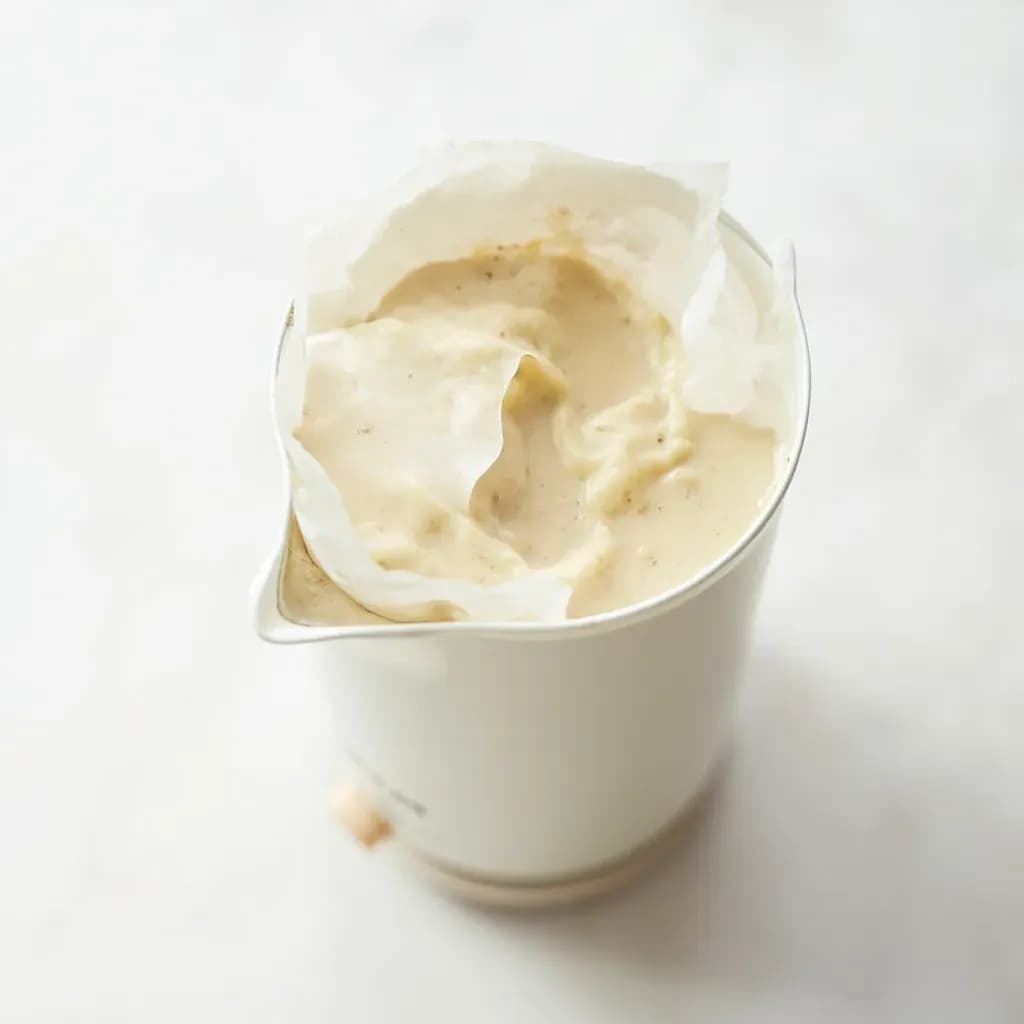
An electric machine that grinds, heats, and cooks soaked soybeans into fresh soy milk.
A soy milk maker is an electric appliance that grinds soaked soybeans, then heats and cooks the slurry into smooth soy milk in one cycle. A built-in mesh or auto-straining function separates the okara pulp from the finished milk. Many models also make other plant milks, congee, or hot soup, giving fresh homemade soy milk without separate blending and boiling.
A soy milk maker is a countertop appliance that consolidates three jobs into a single unattended cycle: grinding soaked soybeans with a bottom-mounted blade, heating the slurry, and bringing it to a controlled boil. That last step is the one that matters most. A true rolling boil is required to drive off the raw, beany off-notes, denature the proteins for better digestibility, and develop the soft, rounded flavor of fresh soy milk. The machine's advantage over a high-speed blender plus a saucepan is timing: it knows when the slurry is hot enough to grind without bogging the blade, when to ramp to a boil, and when to shut off, all without a cook watching the pot.
In practice, a typical cycle runs 18 to 25 minutes from loaded beans and water to finished hot milk, and the grinding phase is loud enough (roughly 75 to 85 dB) to be heard through a closed door. The slurry foams as it approaches the boil, which is why every machine carries a max-fill line and most have an overflow sensor. Capacity is modest, usually 1 to 1.5 L per batch and sized for two to four servings, because the milk expands noticeably during heating and the blade needs clearance to circulate the slurry. Power sits around 800 to 1,500 W, with most of that going to the heating element rather than the motor.
What comes out of the jug is not the same product as the shelf-stable soy milk sold in cartons. Freshly made soy milk is thinner-bodied, faintly beany, and best drunk the same day it is made (or reboiled after refrigeration). It will not keep more than two to three days cold, and it thickens noticeably only when reduced or coagulated into tofu. That softer, more perishable character is also the point: it is the medium from which yuba, douhua, and fresh tofu are made, and as an unprocessed base it carries added sweet, savory, and gingery flavors more cleanly than ultra-pasteurized milk does.
Alternatives
Types & varieties
Single-button operation with a fixed program and no internal strainer; the cheapest and most common style in Chinese kitchens.
Preset cycles for soy milk, rice milk, nut milk, congee, corn juice, and paste, controlled through a touch panel with a delay timer.
Has an internal mesh basket that catches okara during the cycle, yielding a smoother milk straight from the jug.
Produces a fuller-bodied milk with okara suspended in it; the pulp is strained afterward by hand through cheesecloth.
Family-sized jugs with longer preheat and cycle times; worth choosing only if you actually drink more than a liter at a sitting.
A high-powered blender such as a Vitamix plus a stovetop simmer is the common substitute where dedicated machines are hard to find.
Working with the Okara
The wet pulp left after straining soy milk, called okara, is the most distinctive byproduct of the machine and the part most often thrown away. It is high in fiber and protein, with a mild, slightly nutty flavor that takes well to savory cooking. Treat it like a soft vegetable: squeeze out excess liquid, then use it the same day or freeze it in flat packs for later. In the fridge it sours quickly; in the freezer it keeps for two to three months without losing texture.
- Pan-fry seasoned okara into small patties, the way you would a fish cake, until crisp on both sides.
- Fold it into meatball or burger mixtures as a binder and extender; it soaks up flavor and keeps the interior moist.
- Stir it into pancake or waffle batter for a nutty, fiber-rich breakfast.
- Dry it on a sheet pan in a low oven, then pulse and use as a dumpling filling or a rough meal for coating fried foods.
- Whisk it into a quick congee near the end of cooking; it disappears into the rice and adds body.
Choosing a Machine Worth Owning
For a Western cook buying a soy milk maker, the marketing copy is less useful than a short list of physical features. The differences between a good machine and a frustrating one are almost always in the parts you touch and clean, not in the number of preset buttons.
- Stainless steel interior: resists milkstone buildup and survives hard water better than coated aluminum or plastic.
- Removable blade assembly: lets you rinse under the tap instead of trying to scrub around a fixed hub.
- Overflow sensor and temperature probe: these are what prevent a boil-over and what shut the machine off at the right moment.
- A clearly marked max-fill line for both beans and water: load above it once and you will remember to respect it.
- A spare gasket in the box: the silicone lid seal is the part that wears out first and is the usual source of sour smells.
Common uses
Tips & pitfalls
- Always soak dried soybeans fully, ideally 8 to 12 hours at room temperature; under-soaked beans grind unevenly and leave a gritty, raw-tasting milk.
- Use filtered or soft water; hard water can curdle the milk during the boil and leave a chalky mouthfeel no amount of sugar will fix.
- Never exceed the max-fill line; soy milk expands as it heats, and an overloaded jug will foam over the sensor and onto the counter.
- Add a tiny pinch of salt, a few drops of neutral oil, or a drop of commercial anti-foam to suppress the boil-over that foaming causes near the end of the cycle.
- For a smoother pour, strain the finished milk through a fine-mesh bag or several layers of cheesecloth, then return it to the jug and reboil for a thinner, cleaner body.
- Decant the milk into a sealed container the moment the cycle ends and let the jug cool before rinsing; trapped residual heat warps gaskets and dulls the interior over time.
- Run a water-and-baking-soda cleaning cycle weekly to prevent the milkstone film that builds up inside stainless jugs and dulls their finish.
- If the machine smells sour, the temperature sensor or lid seal is usually the culprit, not the jug itself; clean and dry both thoroughly.
- Skip dried beans that have been stored for more than a year; old soybeans turn bitter and beany, and no machine cycle can rescue the off-flavor.
Good to know
- Origin
- Developed and popularized in China; Joyoung (Jiuyang) is credited with pioneering the dedicated home soy milk machine in 1994, and commercial home models became widely available by the late 1990s.
- Core functions
- Grinds soaked beans with a bottom-mounted blade, heats the resulting slurry, and brings it to a controlled boil in one vessel, hands-free.
- Typical capacity
- 1 to 1.5 L per batch on most countertop models, sized for two to four servings; family-size units go to 1.8 to 2 L.
- Standard cycle time
- Roughly 18 to 25 minutes from loaded beans and water to finished hot milk, with a preheat phase before grinding.
- Power
- Commonly 800 to 1,500 W total, with the heating element doing most of the work and the motor drawing 200 to 400 W during grinding.
- Interior material
- Stainless steel inner jug on better models; budget units use coated aluminum or food-grade plastic.
- Bean-to-water ratio
- About 1 part dried soybeans to 8 to 10 parts water by weight (roughly 60 g beans to 800 to 1,000 ml water) for standard creaminess.
- Pre-soak time
- Dried soybeans are typically soaked 8 to 12 hours at room temperature, or about 4 hours in warm water.
- Yield and storage
- About 1 L of finished milk from 60 g of dried beans; keeps 2 to 3 days refrigerated and should be reboiled if held longer than 24 hours.
Also called
豆浆机 · doujiang machine · plant milk maker
Related

Stovetop
The everyday burners where most cooking actually happens

Oven
Enclosed dry heat for roasting, baking, and braising

Grill
Live-fire or gas grates for char, smoke, and high heat

Smoker
Low, slow heat and wood smoke for barbecue and brisket

Air Fryer
Countertop convection that crisps with little or no oil

Slow Cooker
Set-and-forget low heat for stews, beans, and braises

Pressure Cooker
Sealed steam pressure that cooks tough food in a fraction of the time

Rice Cooker
Foolproof, perfectly steamed rice every single time