Appliances & Heat
Steam / Direct-Fire Burner
A heat source that cooks with pressurized steam or direct flame for fast, large-volume cooking.
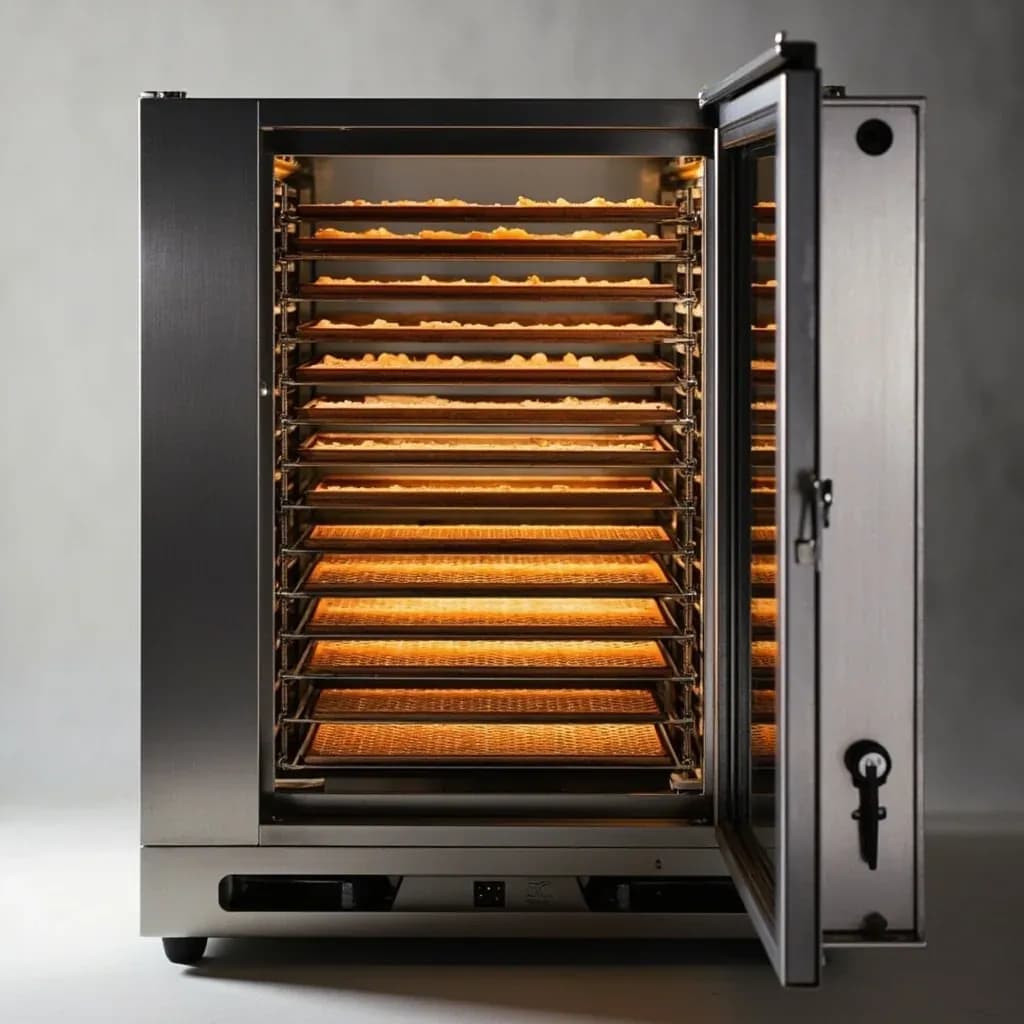
A steam or direct-fire burner is a high-output heat source used in volume cooking, either injecting steam to cook gently and quickly or applying direct flame for fast boiling and searing. Convection steamers in this family cook vegetables, seafood, and grains rapidly while preserving texture and nutrients. They are common in commercial and institutional kitchens that batch-cook.
A steam/direct-fire burner pairs the immediate searing blast of an open gas flame with the even, hands-off heat of pressurized steam, either side by side at one station or integrated into a single unit. In most professional kitchens the two share a footprint: a high-BTU gas ring (often 50,000–250,000 BTU/hr) handles wok work, stockpot boils, and rapid reductions, while a steam coil, steam-jacketed kettle, or live-steam injector at 5–15 PSI handles stocks, sauces, blanching, and delicate finishing. Combining them buys control across very different tasks without swapping equipment mid-service.
Direct fire delivers top-end temperature and wok hei almost instantly, but it is uneven and unforgiving; steam spreads heat gently and predictably across a large vessel but cannot sear a steak or char a pepper. Knowing which side of the station to reach for — and at what pressure or BTU — is what separates a cook who can run a banquet line from one who can only follow a recipe.
These are commercial units. They require a commercial hood and makeup air, a dedicated gas or steam supply, and a working knowledge of pressure relief, combustion tuning, and rapid water recovery.
Alternatives
Types & varieties
High-BTU open-ring or jet burner; flame contacts the wok or pot directly. The workhorse of Cantonese and other high-heat Asian kitchens.
Steam circulates in a sealed jacket around the cooking vessel, providing even, controllable indirect heat. Common in large soup and sauce kettles.
Pairs a gas burner with a steam injector or coil in the same station, allowing a cook to switch between dry high-heat searing and moist-heat finishing without moving.
Forces live steam through a nozzle onto the food surface, used to quickly blanch vegetables, scald proteins, or loosen skins on tomatoes and peaches.
Heavy-duty direct-fire burner sized for tall stockpots, often paired with a steam coil for rapid boil and quick water recovery.
Choosing steam vs. direct-fire for the job
Reach for direct fire when you need fast, aggressive heat transfer: wok stir-fries, quick sears, rapid reductions, blistering chiles, boiling a 40-gallon stockpot back to a rolling boil after adding cold pasta water. Reach for steam when the task rewards even, gentle, hands-off heat: long-simmered stocks, hollandaise held at service, milk-based sauces that scorch easily, gentle vegetable steaming, or loosening tomato and peach skins in a brief live-steam blast. A useful rule of thumb: if the cooking time is short and the heat demand is extreme, direct fire wins; if the cooking time is long and the heat demand is moderate, steam wins. The combination station earns its footprint in a busy kitchen because it lets a single cook jump between those two regimes without losing a beat during service.
Commissioning and routine maintenance
A new burner should be broken in deliberately, not thrown into service mid-rush.
- Purge the gas line fully before first lighting to clear air from the manifold; a partial air-gas mix can flare on ignition.
- Adjust the air shutter on each direct-fire burner until the flame shows a tight, well-defined blue cone with no yellow tip — yellow means fuel-rich, sooty combustion.
- Season a carbon-steel wok on the burner over 20–30 minutes of slow heating before high-heat use; this prevents warping and builds the patina that makes food release cleanly.
- Inspect pressure relief valves and gauges on steam components at the start of every shift; never operate a steam-jacketed kettle without a verified, unchained relief valve.
- Flush steam lines and descale injector nozzles on a published schedule (often monthly in hard-water markets) — mineral buildup chokes flow and ruins temperature control.
- Scrape carbonized drippings from burner rings and grates at end of service; residue lowers efficiency and can re-ignite the next morning.
Common uses
Tips & pitfalls
- Light burners in the manufacturer's sequence and purge gas lines before ignition to prevent flare-ups.
- Tune the air shutter to a clean blue cone; a soft yellow flame wastes fuel, deposits soot on food, and signals incomplete combustion.
- Match pot diameter to burner size — oversized pots waste heat, undersized pots scorch the burner crown and shorten its life.
- Use the lowest effective steam pressure for delicate work; high-pressure steam will overcook green vegetables in seconds.
- Never douse a hot cast-iron grate or burner ring with cold water; thermal shock cracks cast iron and warps steel.
- Confirm hood ventilation is operating at full capture before lighting a high-BTU burner — under-ventilated lines can trip heat sensors or fail inspection.
- Train every line cook on the location of the gas and steam emergency shutoffs before their first shift.
- Common mistake: assuming more BTU is always better. A 250,000-BTU burner will incinerate a small saucepan in seconds; throttle output to the task or use a smaller burner.
Good to know
- Category
- Commercial heat source / cooking appliance
- Primary function
- Generates high heat via direct flame and/or pressurized steam for rapid, large-volume cooking
- Typical power source
- Natural gas or propane (direct-fire) plus a steam supply line or onboard boiler (steam component)
- Heat output
- Direct-fire units commonly 50,000–250,000 BTU/hr; steam components typically 5–15 PSI
- Common materials
- Cast iron burners and grates; stainless steel housing; brass or copper steam fittings
- Setting
- Commercial kitchens — restaurant lines, banquet halls, institutional and central production kitchens
- Skill level
- Intermediate to advanced; requires familiarity with high-BTU equipment and steam handling
- Ventilation
- Requires a commercial exhaust hood and makeup air; in high-steam stations, a separate steam canopy or hood section may be required so vapor does not compromise grease capture
Also called
Convection Steamer · Direct-Fire Burner
Related

Stovetop
The everyday burners where most cooking actually happens

Oven
Enclosed dry heat for roasting, baking, and braising

Grill
Live-fire or gas grates for char, smoke, and high heat

Smoker
Low, slow heat and wood smoke for barbecue and brisket

Air Fryer
Countertop convection that crisps with little or no oil

Slow Cooker
Set-and-forget low heat for stews, beans, and braises

Pressure Cooker
Sealed steam pressure that cooks tough food in a fraction of the time

Rice Cooker
Foolproof, perfectly steamed rice every single time