Appliances & Heat
Steam Wax Extractor
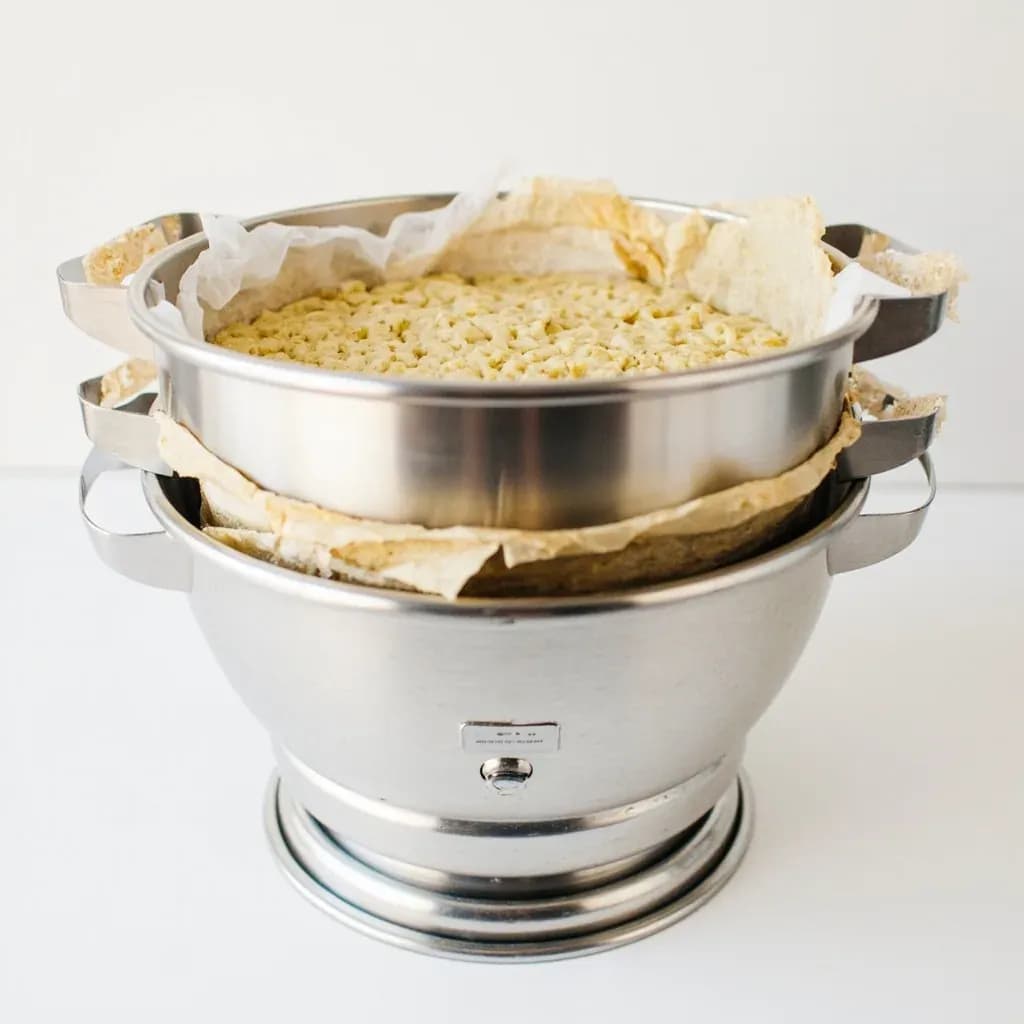
A steam-powered melter that renders beeswax out of old honeycomb for cleaning and reuse.
A steam wax extractor uses steam to melt the wax from spent honeycomb and frames so the beeswax runs off and solidifies for reuse while debris stays behind. Beekeepers use it to recover wax and clean frames after harvest. Because steam stays near boiling, it liquefies the wax thoroughly without scorching it over a direct flame.
A steam wax extractor is a vessel — usually stainless steel, sometimes DIY-built from a stock pot or converted pressure cooker — that uses indirect steam heat to melt beeswax out of old comb, cappings, and damaged frames. Water is heated in a separate reservoir or jacket, and the resulting steam is channeled into a chamber packed with comb. The steam melts the wax (which flows off as a liquid), dissolves residual honey into the water phase, and leaves behind cocoon debris, propolis, and other solids. Because the wax never contacts a flame or hot metal surface directly, it stays pale, clean-tasting, and free of the acrid, burnt note that direct-heat rendering produces.
For most home cooks the tool is irrelevant; for beekeepers, homesteaders, and anyone who makes beeswax wraps, candles, or cheese wax at home, it is the cleanest way to close the loop. The steam process both renders and purifies in a single pass, sparing you the multi-stage filtering and the scorched-smell risk of a double boiler or slow cooker. It also separates wax from honey without emulsion, which is hard to achieve by simmering.
The unit sits at the edge of the kitchen and the workshop. It is not an everyday appliance, but for the audience that needs it, it replaces several messier steps with one quiet, low-risk batch process that takes a couple of hours and yields a block of clean, reusable wax ready for culinary or craft use.
Alternatives
Types & varieties
Small capacity (1–4 frames), often electric or stovetop; designed for backyard beekeepers
Higher-capacity, often gas- or wood-fired for off-grid or apiary use; can process many frames at once
Home-built from modified pressure cookers, stock pots, or water tanks; common among resourceful beekeepers
Some integrated extractors handle both honey extraction and wax rendering in one workflow
How the Steam Process Works
The physics are simple and worth understanding, because it is the gentleness of steam that gives the method its edge. Water in a lower chamber boils at 212°F (100°C) at sea level, producing saturated steam at that same temperature. The steam rises and flows through a perforated tray or basket packed loosely with comb. As it condenses on the cooler comb surfaces, it transfers its latent heat of vaporization directly into the wax, melting it cleanly. The molten wax, being less dense and immiscible with water, drains out through a spout into a collection container, while honey dissolves into the condensate and debris is left behind in the basket.
- The comb never gets hotter than the steam itself, capping out around 212°F — well below the 400°F+ that a pan on a burner can reach.
- Honey is water-soluble, so any residual honey washes into the condensate rather than emulsifying with the wax, which is the usual problem with wet-rendering in a pot.
- Because the wax exits hot but uncontaminated, a single pass through cheesecloth or fine mesh is usually enough to produce a food-grade block.
Sorting Comb for Best Results
Not all comb renders the same. Sorting before you load the extractor is the single biggest determinant of finished wax quality, and it costs nothing but a few minutes at the bench.
- Cappings and fresh, light-colored comb produce the cleanest, palest wax — best for beeswax wraps, candles, and cosmetic balms.
- Old brood comb is darker, lower-yield, and full of cocoon matrix; render it separately and expect to filter twice.
- Burr comb and brace comb from hive inspections are a free, high-quality source and worth collecting in a dedicated jar.
- Discard comb that shows signs of disease or chemical treatment; steam will not sterilize contaminants out of the wax.
Common uses
Tips & pitfalls
- Keep the water reservoir topped up during long runs; never let it boil dry, as scorched wax and a damaged unit follow fast.
- Pack comb loosely in the steam chamber — compressed comb blocks steam flow and can cut yield by half.
- Filter the melted wax through cheesecloth, nylon mesh, or a fine stainless strainer while it is still hot and fluid.
- Cool wax slowly at room temperature for cleaner, more uniform blocks; rapid cooling causes cracking and a chalky surface.
- Pre-sort comb by type so cappings and fresh comb render separately from old brood comb, which needs extra filtering.
- Avoid overheating at all costs; beeswax is flammable and develops an acrid, smoky smell that is impossible to remove once it scorches.
- Do not seal the wax collection chamber airtight — steam and moisture need a vent, or pressure will build dangerously.
- Use soft, clean water in the reservoir when possible to minimize mineral deposits that cloud the finished wax.
Good to know
- Primary use
- Rendering beeswax from old honeycomb using indirect steam heat
- Heat method
- Steam; water is heated in a separate chamber or jacket and routed through the comb
- Power source
- Electric, gas, or wood-fired depending on model and scale
- Construction
- Typically food-grade stainless steel; hobby versions may be enameled steel or repurposed cookware
- Capacity
- Ranges from 1-frame hobby units to large commercial multi-frame systems
- Wax melt point
- Beeswax melts around 145–150°F (62–65°C); steam renders well below scorching temperatures
- Typical batch time
- 1–3 hours depending on load size and heat source
- Yield note
- Old brood comb yields less clean wax than fresh cappings because of accumulated cocoon debris
- Safety advantage
- Indirect steam prevents direct contact between wax and flame, reducing scorch and fire risk
Also called
Wax Melting Tank · Steam Wax Melter · Solar/Steam Wax Extractor
Related

Stovetop
The everyday burners where most cooking actually happens

Oven
Enclosed dry heat for roasting, baking, and braising

Grill
Live-fire or gas grates for char, smoke, and high heat

Smoker
Low, slow heat and wood smoke for barbecue and brisket

Air Fryer
Countertop convection that crisps with little or no oil

Slow Cooker
Set-and-forget low heat for stews, beans, and braises

Pressure Cooker
Sealed steam pressure that cooks tough food in a fraction of the time

Rice Cooker
Foolproof, perfectly steamed rice every single time