Appliances & Heat
Automatic Temperature Controller (Fan)
A probe-driven fan controller that holds a smoker or grill at a set temperature automatically.
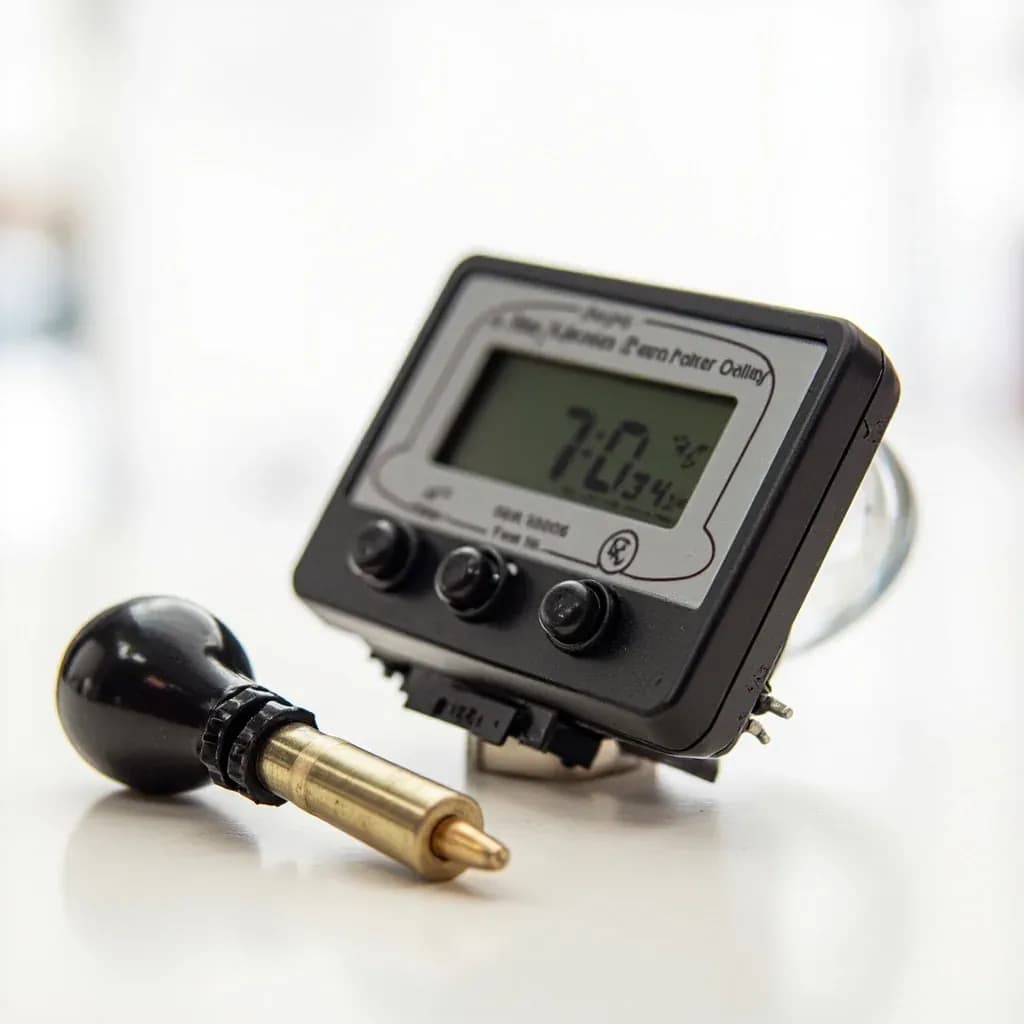
An automatic temperature controller is an electronic device that reads a pit's temperature with a probe and drives a small blower fan to feed exactly enough air to a charcoal or wood fire to hold a target temp. Barbecue cooks clip it onto smokers and kamado grills for long, hands-off cooks like brisket and pork shoulder. Many models log temperatures and send alerts to a phone over Wi-Fi or Bluetooth.
An automatic temperature controller for smokers and grills is a small variable-speed fan, paired with a pit probe and a microcontroller, that holds a charcoal or stick-fired cooker at a chosen set point for hours without anyone touching the vents. The probe reports the cook-chamber temperature to the unit, which speeds the fan up when the pit falls below the target and slows or stops it when the pit climbs above. Because charcoal and wood burn only as fast as oxygen allows, modulating intake air is the cleanest way to throttle a fire — cleaner than choking the exhaust, and far less work than babysitting a bottom damper through a 12-hour brisket.
The payoff goes beyond convenience. A tight temperature window — typically within about ±5 °F once the cooker stabilizes — does real work on the food: it sets up even bark, predictable stall times, and repeatability from one cook to the next. For competition teams and weekend obsessives, that repeatability matters more than the device's cost. For everyone else, the controller unlocks overnight cooks that previously meant an alarm clock at 2 a.m., and turns a basic Weber Kettle into a set-and-forget smoker.
It is worth knowing what an ATC is not. It is not a thermometer or a Bluetooth leave-in probe — those only report temperature. It is also not the integrated brain of a pellet grill, which also drives an auger to feed fuel. A fan-based ATC modulates oxygen only; the cook still chooses the fuel, lights the fire, and decides what to burn for smoke. The device removes the labor of vent adjustment, not the craft of fire.
Alternatives
Types & varieties
Monitors pit temperature only; the simplest and least expensive option, fine for cooks where you watch meat doneness by feel or a separate leave-in probe.
Adds a meat probe with a target temperature and alarm; the standard configuration for unattended overnight cooks of brisket, pork shoulder, and ribs.
Two or more meat probes plus Wi-Fi or Bluetooth for phone alerts, cook logging, and graphs; the most flexible for large cuts or several items at once.
Lower-output fan and a damper-style mount sized to the ceramic cooker's tight airflow; a standard fan will overshoot a kamado.
How the closed loop actually behaves
A fan ATC is a simple PID-style controller with a long time constant. It does not blast air constantly; it pulses the fan at low duty cycle to creep up to set point, then idles or stops to let the fire coast down. Early in a cook you will hear the fan cycling in long bursts as the fire catches and the pit climbs. After an hour or two, the cycles shorten and the pit settles into a narrow band. Two practical consequences follow. First, the cooker needs to be reasonably airtight around the door and lid gasket for the fan to influence it; large leaks let the controller chase its tail. Second, every lid opening dumps heat and ash and forces a recovery surge; a controller rewards a hands-off cook and punishes a peeker.
- Fans modulate intake oxygen only — they do not add heat and cannot overcome a starved fire.
- Overshoot on startup is normal; the algorithm will settle within 30–60 minutes on most cookers.
- Large air leaks at the lid or door will make the controller overwork and overshoot.
Pit probe placement: the single biggest variable
The probe tells the controller what to do, and most controller 'problems' are really probe-placement problems. The tip must hang in open air inside the cook chamber, away from the lid, the walls, the meat surface, and any bones or fat caps. Touching a wall reads the wall temperature, which lags the air; touching meat reads the meat, which the controller will then chase instead of the pit. Mount the probe through a small grommet in the lid or a port near the cooking grate level, and clip the wire so it does not swing into a hot spot.
- Tip should hang 1–2 inches above the cooking grate, in clear airflow.
- Avoid contact with lid, side walls, water pan edges, and food.
- Recheck placement each cook — a shifted probe can swing readings 20–30 °F.
Choosing the right model for your cooker
Match the controller to the cooker, not the other way around. A high-CFM fan on a leaky offset will overshoot relentlessly; a low-CFM kamado unit on an open kettle will underperform. Single-probe units are enough for a kettle or bullet smoker where you primarily want a steady pit. Dual-probe is the sweet spot for most overnight cooks. Wi-Fi and multi-probe are worth it for competition practice, large gatherings, or anyone who wants to monitor from inside the house. Kamado owners should look for a kamado-rated model, since the ceramic cooker's tight chamber punishes overshoot.
- Kettle or bullet → any single- or dual-probe unit works well.
- UDS or offset → dual-probe with meat alarm is the practical minimum.
- Kamado → kamado-specific low-output controller with damper mount.
- Pellet grills already have a built-in controller and do not need an aftermarket ATC.
Common uses
Tips & pitfalls
- Light the fire 20–30 minutes before plugging in the controller; establish a clean-burning coal bed first so the fan has fuel to feed rather than blowing on a cold fire.
- Use a minion, snake, or charcoal-basket method rather than dumping a full chimney of lit coals — the controller manages fire growth, not an initial fireball.
- Leave the exhaust vent mostly open; the controller controls intake, and a choked exhaust will smother the fire and confuse the algorithm into chasing a recovery that never comes.
- Do not open the lid to check on the food — every drop forces a fan surge and can stall the fire with ash; trust the probe and the timer.
- Avoid lighter fluid residue; chemical off-flavors transfer more noticeably when the controller forces long, steady burning at low temps.
- Calibrate the probe in boiling water once a season; a 5 °F drift at cook temperature translates to noticeable timing and texture differences.
- Keep the fan intake clear of ash — a clogged intake starves the fire regardless of how hard the controller tries to compensate.
- For kamados, crack the bottom vent about 1/4 inch open before starting; a fully closed vent gives the fan nothing to modulate.
- Insulate the cooker when conditions are harsh — a water pan, foil wrap, or a welding blanket in winter — so the fan has gentler work to do and fuel lasts longer.
Good to know
- Also called
- ATC, pit fan controller, BBQ temperature controller, draft fan
- First commercial unit
- BBQ Guru, released in the early 2000s
- Operating principle
- Variable-speed fan on the intake modulates oxygen to the fire; pit probe closes the loop
- Typical probe type
- Thermistor on most units; Type K thermocouple on higher-end models
- Temperature range
- 32–475 °F (0–250 °C); designed around low-and-slow 180–300 °F
- Fan airflow
- Roughly 4–10 CFM — gentle, far less than a hair dryer
- Power
- 12 V DC adapter; some accept 12 V battery for portability
- Connectivity
- Wi-Fi and/or Bluetooth on mid- to high-end models, with phone alerts and cook graphs
- Compatible cookers
- Charcoal kettles, bullet/vertical water smokers, offset stick-burners, drum smokers (UDS), kamado-style cookers with adapter, some gas grills
- Price range
- About $60 for a basic single-probe unit to $300+ for multi-probe Wi-Fi models
Also called
BBQ Temperature Controller · Pit Fan Controller · Automatic Draft Controller
Related

Stovetop
The everyday burners where most cooking actually happens

Oven
Enclosed dry heat for roasting, baking, and braising

Grill
Live-fire or gas grates for char, smoke, and high heat

Smoker
Low, slow heat and wood smoke for barbecue and brisket

Air Fryer
Countertop convection that crisps with little or no oil

Slow Cooker
Set-and-forget low heat for stews, beans, and braises

Pressure Cooker
Sealed steam pressure that cooks tough food in a fraction of the time

Rice Cooker
Foolproof, perfectly steamed rice every single time