Appliances & Heat
V-Shaped Grill Grate
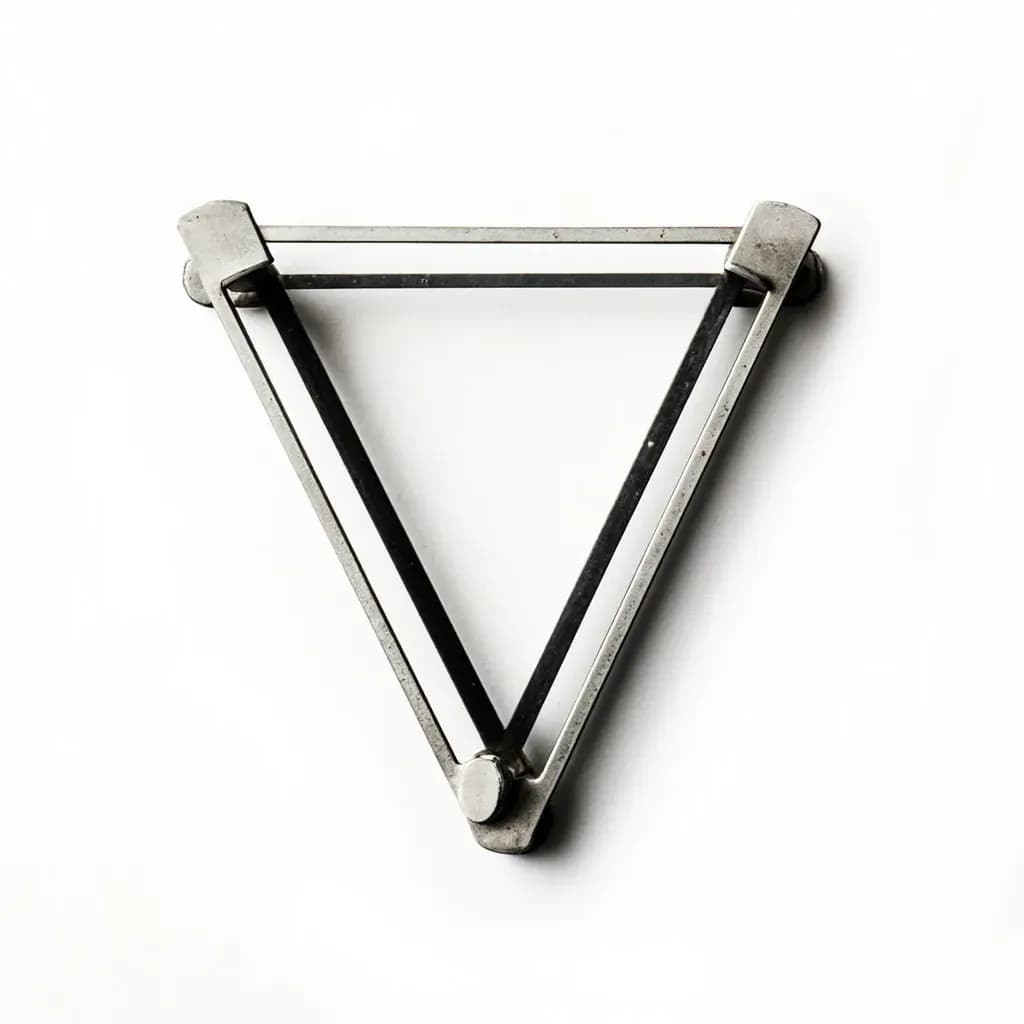
A grill grate with V-shaped channels that sear food and funnel away fat drippings.
A V-shaped grill grate is a cooking grid whose bars are formed into V-channels, used over a grill or barbecue to create defined sear marks while directing fat and juices into the trough below. The channels reduce flare-ups by funneling drippings away from direct flame, then steaming food slightly as juices vaporize. It is favored for steaks and chops where strong grill marks and controlled grease are wanted.
A V-shaped grill grate (or V-grate) is a cooking surface built from raised, angled rails separated by deep channels, rather than the flat bars or expanded metal of a conventional grate. The rails touch the food on a small fraction of its surface, while the valleys between them slope gently toward the front of the grill or a central drip tray. That geometry does two things at once: it concentrates conductive heat where food actually meets metal, and it catches rendered fat before it can fall onto a burner or coal bed and ignite.
The result is a deeper, faster sear with far fewer flare-ups. Because only the peaks contact the food, the same grill running at the same temperature delivers more concentrated browning per square inch than a flat or bar grate, so steaks and chops develop a heavy crust in less time. The channels act as miniature gutters, shepherding drippings sideways and forward instead of letting them vaporize into smoke or flame under the cooking surface.
Most V-grates sold today are modular panels — typically hard-anodized aluminum — that drop on top of an existing grate. Replacement grates cast or welded with the same profile exist for specific grill models, and stainless panels offer higher heat tolerance at a higher price. Hard-anodized aluminum is the dominant material because it conducts heat roughly four times faster than stainless, so the rails recover temperature almost immediately between batches, and the anodized surface builds a seasoned, semi-non-stick patina that bare metal cannot match.
Alternatives
Types & varieties
The most common form; raised rails on a flat panel that sits on top of an existing grate. Builds a non-stick seasoning with use and recovers heat quickly.
Dishwasher-safe with higher heat tolerance and a longer-lasting finish; typically more expensive and slower to recover temperature between batches.
Drop-in grate cast or welded with V-shaped rails, sized to a specific grill model (Weber Genesis, Broil King, Broil-Mate, etc.).
V-rails on one side for searing, flat surface on the reverse for delicate items like fish fillets, eggs, or flatbreads.
Pre-cut sets of interlocking panels sized to a particular grill — Weber Kettle, Big Green Egg, Traeger, and others — covering one section or the entire cooking area.
Smaller folding panels for open-fire grills, pie-iron cookers, and tailgate setups.
How the V-Channel Works
The performance of a V-grate comes down to two design choices: rail height and channel slope. The raised rails (typically 0.25–0.5 in tall) are the only points that touch the food, so the contact area is small but the conductive heat per square inch is high. As the food cooks, rendered fat and juices flow into the valleys between the rails and run downhill toward the front of the grill or a central trough, where they collect in the drip pan instead of vaporizing under the cooking surface. Less vaporized fat means less smoke, fewer flare-ups, and a cleaner-tasting crust.
Rail spacing matters as well. Wider channels (around 1/2 in) drain fast and suit fatty cuts; tighter spacing gives more contact for lean foods but drains more slowly. Performance differences between brands are mostly a function of rail height, channel width, and whether adjoining panels interlock tightly enough to stop drippings from falling straight through onto the burner below.
- Concentrates conductive heat on small contact points for a faster, deeper sear
- Channels slope toward a drip tray so rendered fat leaves the cooking surface
- Tighter rail spacing suits lean foods; wider spacing handles fattier cuts
- Interlocking panels matter — gaps let drippings fall onto the burner and defeat the design
Choosing the Right Material
Hard-anodized aluminum is the default for good reason: it heats fast, recovers quickly between batches, and the anodized surface seasons into a natural non-stick finish that improves with use. It is, however, limited to about 700 °F and is vulnerable to harsh detergents and dishwasher cycles that strip both the anodizing and the seasoning. Stainless steel is tougher — higher heat tolerance, dishwasher-safe, longer service life — but it heats and cools more slowly and costs noticeably more.
For most gas and charcoal grills used at normal searing temperatures, anodized aluminum is the better cooking tool. Stainless earns its premium on high-BTU gas grills running at maximum output, on kamados and kamado-style cookers that hold extreme heat for hours, and in any setting where the grate will see heavy use without careful hand-washing.
- Anodized aluminum: faster heat recovery, better seasoning, lower cost, gentler care
- Stainless steel: higher heat tolerance, dishwasher-safe, slower to recover, longer lifespan
- Raw aluminum grates are rare and not recommended — bare metal can impart off-flavors to acidic foods
- Replace anodized panels once the coating wears through to bare metal
Care, Seasoning, and When to Replace
A V-grate rewards a little routine care. After each cook, scrape the channels with a brass or nylon brush while the grate is still warm, then hand-wash with hot water and a soft brush. Avoid steel wool, sharp scrapers, and dishwashers on anodized panels; they strip the patina that gives the surface its non-stick quality and shorten the life of the coating. Stainless panels are more forgiving and can go in the dishwasher, though a brush is still faster.
Seasoning builds naturally with use: the oils and fats from repeated cooks polymerize on the anodized surface and gradually produce the dark, slick patina that makes fish and eggs release cleanly. If the panel ever starts looking chalky or pale rather than dark and glossy, the anodizing has likely worn through and it is time to replace it — bare aluminum can react with acidic foods like tomatoes, citrus marinades, and wine reductions, leaving a faint metallic taste.
- Brush warm, not hot — extreme heat can warp thin aluminum panels
- Skip the dishwasher and harsh detergents on anodized aluminum
- Dark, glossy patina = well-seasoned; chalky or pale = replace
- Store panels flat to prevent bending the rails
Common uses
Tips & pitfalls
- Preheat the grate for 5–10 minutes with the lid closed; the rails need to be hot to deliver a proper sear.
- Pat food dry and oil the surface of the food rather than the grate — anodized aluminum performs best with a thin seasoned film, not pools of fresh oil.
- Place food across the rails at 90° to a previous turn to lay down a clean cross-hatch sear.
- Use a brass or nylon grill brush only — sharp metal scrapers and steel wool strip the anodizing and the seasoning on aluminum panels.
- Hand-wash anodized panels with hot water and a brush; dishwashers and harsh detergents strip the patina.
- Between batches, mop out the channels with a paper towel or grill mitt if they fill with fat; full troughs will eventually overflow and flare.
- Don't crowd the grate — leave channels partly exposed so drippings keep flowing toward the drip tray.
- On cold or windy days, choose stainless panels if you have them; aluminum loses heat faster when the lid is open.
Good to know
- Type
- Grill grate with raised, angled (V-shaped) rails separated by deep channels
- Primary function
- Concentrates contact heat for searing while routing rendered fat off the cooking surface and away from flames
- Common materials
- Hard-anodized aluminum (most common for inserts); also stainless steel and porcelain-coated steel for OEM grates
- Surface treatment
- Anodizing seals the aluminum against reactivity and develops a semi-non-stick seasoned patina with use
- Heat tolerance
- Hard-anodized aluminum safe to roughly 700 °F / 370 °C; stainless tolerates higher direct grill temperatures
- Flare-up impact
- Channels divert drippings into troughs and toward the front drip tray rather than onto the burner or coals
- Cleaning
- Scrape with a brass or nylon brush while warm; anodized panels should be hand-washed, not dishwashed
- Origin
- Popularized commercially in the U.S. in the late 2000s by GrillGrate; the angled-rail concept echoes earlier Japanese and Argentine-style grates
Also called
V-Grate · Sear Grate
Related

Stovetop
The everyday burners where most cooking actually happens

Oven
Enclosed dry heat for roasting, baking, and braising

Grill
Live-fire or gas grates for char, smoke, and high heat

Smoker
Low, slow heat and wood smoke for barbecue and brisket

Air Fryer
Countertop convection that crisps with little or no oil

Slow Cooker
Set-and-forget low heat for stews, beans, and braises

Pressure Cooker
Sealed steam pressure that cooks tough food in a fraction of the time

Rice Cooker
Foolproof, perfectly steamed rice every single time