Appliances & Heat
Vacuum Infusion Chamber
Sealed chamber that pulls a vacuum to compress, infuse or rapidly marinate food.
A vacuum infusion chamber removes air from a sealed space, causing liquids to be drawn deep into porous foods and air to escape from cell walls. Cooks use it to flash-pickle, intensify the color and flavor of fruits and vegetables, compress watermelon, or quick-infuse spirits. The same chamber-vacuum action also degasses sauces and seals bags with liquid for sous vide.
A vacuum infusion chamber is a sealed vessel, usually a stainless-steel box with a clear polycarbonate lid and a silicone-gasketed rim, connected to an electric pump that evacuates air from the interior. As pressure falls, the gas trapped within the cells and pore spaces of food expands and escapes through the tissue; when the valve is opened and atmospheric pressure returns, that escaped gas is replaced by whatever liquid surrounds the food. The result is a pressure-driven exchange that pushes flavor, brine, alcohol, or syrup deep into ingredients in minutes rather than hours. The physics is the same one food scientists call vacuum impregnation, but the technique was carried into restaurant kitchens by the modernist movement of the late 1990s and 2000s, and it remains one of the few pieces of equipment that produces an effect impossible to replicate by any other means.
What makes the chamber useful is the speed and intensity of flavor transfer. Meats that would take hours in a marinade take 15–45 minutes in a chamber; whole strawberries that cannot be punctured with a needle will absorb port wine in a single pull; a watermelon can be made dense, glossy, and intensely flavored without ever being heated. The chamber also lets cooks work with delicate ingredients that would be destroyed by cooking or aggressive handling. Ferran Adrià's compressed watermelon at El Bulli and Wylie Dufresne's rapid infusions at WD~50 are the canonical examples that made the technique famous, but any cook with a chamber sealer and a rigid container can reproduce the same effect at home.
In practice, a chamber is not a vacuum sealer for storage: the food sits in an open, rigid vessel inside the chamber, never bagged, and the seal bar, if the unit has one, is left off. Most work is done at partial vacuum (15–25 inHg) rather than a full pull, because dropping pressure too far ruptures cell walls and turns fruit to mush. The rate at which the valve is vented matters as much as the strength of the pull itself; release too fast and the liquid boils over, fractures soft items, and splatters the lid. Master those two variables, and the chamber becomes a tool for flavor engineering as much as for cooking.
Alternatives
Types & varieties
Stainless box with lid, gauge, and valve, designed to hold jars or trays rather than seal bags; common in labs and avant-garde kitchens
Standard chamber sealer with the seal bar disabled and food held in a rigid container inside the chamber
Glass or polycarbonate dome with a stopcock, used at the small scale; requires a separate vacuum pump
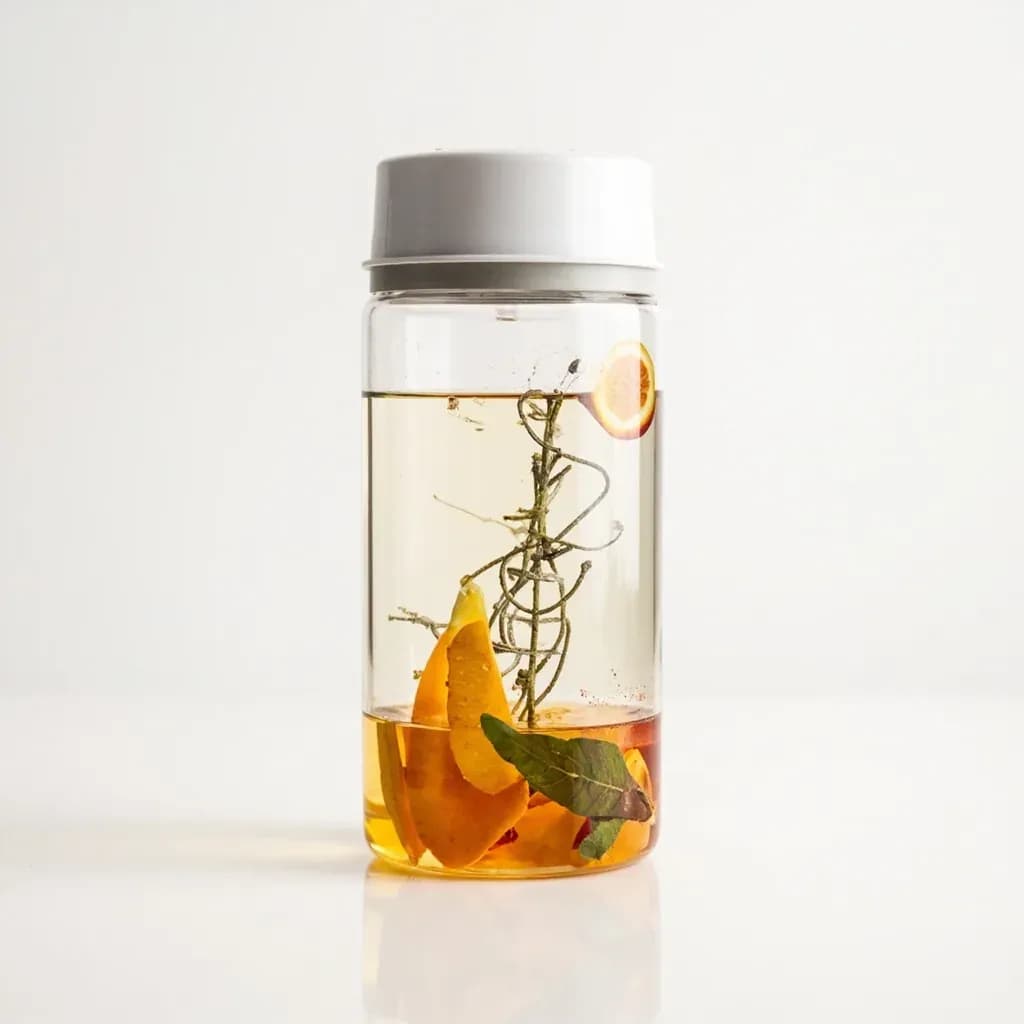
Small plastic dome marketed to home cooks for rapid pickling and infusion inside a regular mason jar
Combined vacuum-and-heat unit for cooking at low temperatures under vacuum; can also perform infusion
Compression vs. Infusion
These two signature uses look similar but call for opposite settings, and confusing them is the single most common reason a chamber job fails.
- Compression — watermelon, cucumber, radish, pineapple, daikon — is done at full or near-full vacuum, often across multiple short cycles, to collapse cell structure, force out internal air, and leave a dense, glossy, intensely flavored product.
- Infusion — fruit in alcohol, meat in marinade, vegetables in pickle brine — is done at partial vacuum (15–25 inHg) with the food submerged in the flavoring liquid; the goal is gentle gas exchange, not structural collapse.
- A pull strong enough to beautifully compress a watermelon will turn strawberries to jam if you are trying to infuse them with port.
- Compression is usually done with the produce sitting in a flavored liquid so the cell structure collapses and flavor is added in one pass; a dry pull collapses the cells but adds no flavor and leaves the produce dense but flat.
Choosing a Vacuum Level
Most chamber units are rated for 29 inHg, but pulling to the maximum is rarely the right answer. Working in zones, rather than at a single setting, is what separates a useful result from a tray of wreckage.
- 15–18 inHg — soft berries, sliced stone fruit, raw fish for quick cures; preserves shape, color, and surface gloss.
- 20–25 inHg — denser produce, mushrooms, tofu, and meat marinades; the workhorse range for most kitchen tasks.
- 25–29 inHg — full compression, hard vegetables (cucumber, radish, carrot), and rehydration of dried mushrooms, tomatoes, or pasta.
- Always start lower than you think you need; you can repeat a pull, but you cannot un-collapse a piece of fruit.
Common uses
Tips & pitfalls
- For liquid infusions, place food in a rigid container (mason jar, polycarbonate box, stainless pan) inside the chamber; open bags will be drawn into the pump and ruined
- Pull to only 15–25 inHg for delicate produce; full vacuum often ruptures cell walls too aggressively and the texture cannot recover
- Hold the vacuum for 30–90 seconds, then release the valve slowly — venting too fast makes the liquid boil, splash, and fracture soft items
- For compression (watermelon, cucumber), use multiple short cycles of about 90 seconds on and 30 seconds off, repeated three or four times, for a more uniform result than a single long pull
- Set a small weight or rack on top of the food to keep it submerged as the pressure returns and air comes back into the chamber
- Do not confuse vacuum infusion with vacuum sealing for storage — the food is not bagged for the fridge, and any used marinade should be discarded for food safety reasons
- Wet the gasket groove and the lid rim before each pull; air leaks are the most common cause of failed infusions
- Score or lightly pierce meat before marinating so the pressure differential has clear pathways into the flesh
- If the chamber smells of the previous cook's aromatics, run a quick empty cycle with a bowl of water and lemon before reuse
Good to know
- Mechanism
- Sealed chamber with a vacuum pump that reduces internal pressure, using the pressure differential to drive liquid into porous food
- Origin in kitchens
- Adopted into professional cooking through the modernist cuisine movement of the late 1990s and 2000s
- Notable early adopters
- Ferran Adrià (El Bulli, Spain) and Wylie Dufresne (WD~50, New York), who popularized compression and rapid infusion
- Typical pull
- Most chamber units reach roughly 29 inHg (about 1–10 mbar absolute), though kitchen work is often done at partial vacuum of 15–25 inHg
- Marination speed
- Reduces hours-long marinades to 15–45 minutes of active chamber time
- Common sizes
- From roughly 1 L countertop chambers up to 40–50 L commercial floor models
- Price range
- Consumer and hobby chambers from about $200; prosumer units $400–1,200; pro-grade commercial models $1,500–4,500 and up
- Related equipment
- Distinct from chamber vacuum sealers used only for bag sealing, from sous-vide circulators, and from chamber cookers (Gastrovac) which combine vacuum with heat
Also called
vacuum chamber · chamber vacuum · vacuum compression chamber
Related

Stovetop
The everyday burners where most cooking actually happens

Oven
Enclosed dry heat for roasting, baking, and braising

Grill
Live-fire or gas grates for char, smoke, and high heat

Smoker
Low, slow heat and wood smoke for barbecue and brisket

Air Fryer
Countertop convection that crisps with little or no oil

Slow Cooker
Set-and-forget low heat for stews, beans, and braises

Pressure Cooker
Sealed steam pressure that cooks tough food in a fraction of the time

Rice Cooker
Foolproof, perfectly steamed rice every single time