Appliances & Heat
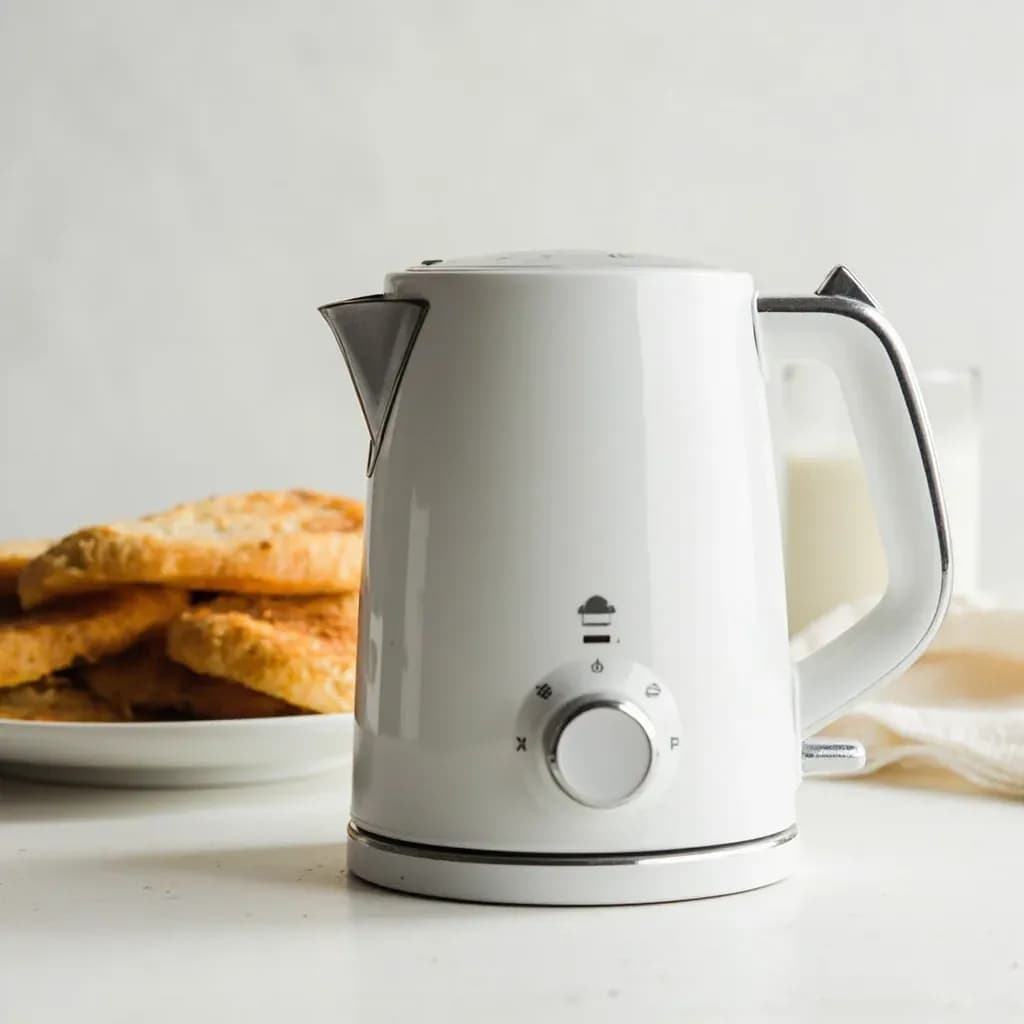
Variable-Temperature Electric Kettle
Electric kettle that heats water to and holds a precise chosen temperature.
A variable-temperature electric kettle lets the user select an exact target temperature and often holds it for a set time. This precision matters for brewing green, white and oolong teas, blooming coffee, and proofing or scalding tasks that suffer from boiling water. It speeds workflow by reaching the right temperature without manual thermometer checks.
A variable-temperature electric kettle is a countertop appliance that heats water to a user-selected target — usually anywhere from about 100°F/40°C up to a full boil — and, on most models, holds that temperature for a set period. Internally, a thermistor or thermocouple monitors water temperature in real time and cycles the concealed heating element to maintain the set point, which is why a kettle set to 200°F will return to 200°F after you top off the carafe. The "variable" part is the meaningful upgrade over a basic boil-only kettle: instead of one outcome (212°F, then cooling), you get the specific temperatures that produce the best extraction from green tea, white tea, pour-over coffee, and delicate baking tasks.
The category grew up alongside the third-wave coffee and specialty tea movements of the 2010s, when brewers realized that water temperature swings of even 10°F measurably change extraction yield and astringency. Green teas steeped at a full boil turn grassy and bitter; pour-over coffee brewed below about 195°F under-extracts and tastes thin. A variable-temperature kettle makes those adjustments a button-press rather than a thermometer-and-stovetop chore, and a gooseneck spout version adds pour control that a stovetop kettle simply cannot match. In a serious home kitchen, the tool earns its counter space not by boiling water faster than a microwave (it often doesn't) but by being repeatable, hands-off, and precisely tuned to whatever is in the cup.
How it behaves in practice matters as much as the spec sheet. Heating from room temperature to a full boil takes roughly 4–6 minutes for a liter on a typical 1500 W US model; reaching 200°F for pour-over is closer to 3–4 minutes. The base is cordless with concealed 360° contacts, so the carafe lifts off cleanly for pouring. Hold modes generally run 20–60 minutes before the kettle clicks off, which is enough time for a multi-pour pour-over or a gongfu tea session but not an all-day keep-warm. Most failures of these kettles are scale-related, not electrical, which is why water quality and descaling are the two habits that determine whether the appliance lasts five years or fifteen.
Alternatives
Types & varieties
Long, curved spout for a slow, controlled pour rate. The standard for pour-over coffee and any application where stream velocity matters, such as gongfu tea.
Vacuum or double-walled body that stays cool to the touch and runs quieter; hold-mode temperatures drift less than single-wall models.
Borosilicate carafe with an internal glow or LED ring to signal heating; beautiful on the counter but shows mineral scale faster than steel.
No electronics — a stainless body tuned for induction cooktops so the cook controls temperature manually. Hario V60 Buono and the older Fellow Stagg are the references.
Bluetooth or Wi-Fi with scheduling, recipe presets, and altitude calibration. Genuinely useful in a café or for remote pre-heating; mostly a luxury at home.
Choosing the right temperature
Most variable kettles are set-and-forget, but the temperatures worth memorizing are narrow enough to fit on a small card taped to the base.
- Green tea: 175–185°F (80–85°C). Above 195°F, catechins turn bitter and the tea flattens.
- White tea and delicate yellow teas: 160–170°F (70–77°C).
- Oolong: 195°F (90°C) for rolled, high-oxidization styles; 200°F (93°C) for roasted.
- Black tea and herbal tisanes: 200–212°F (93–100°C).
- Pour-over coffee: 200–205°F (93–96°C) is the consensus window; cooler water under-extracts, hotter water over-extracts and accentuates bitterness.
- French press and AeroPress: 195–205°F (90–96°C).
- Yeast proofing water: 105–115°F (40–46°C). Above 120°F begins to kill yeast.
Care and longevity
The single biggest threat to a variable-temperature kettle is limescale on the temperature sensor. When scale builds up between the sensor and the water, the kettle misreads the actual temperature and either underboils or runs the element longer than it should. A short descaling routine every month or two of heavy use is the difference between a kettle that lasts a decade and one that dies in three years.
- Descale with a 1:1 white-vinegar-and-water boil, let sit 30 minutes, then rinse twice. Repeat for stubborn buildup.
- For a faster, neutral-tasting descale, use 1–2 tablespoons of citric acid per full kettle of water, boil, and rest 15 minutes.
- Wipe the base contacts and the bottom of the carafe dry before each use to prevent contact corrosion.
- Drain the kettle after every use; standing water encourages biofilm and stale off-flavors, especially in glass models.
- If the kettle starts boiling louder than usual, or auto-shutting off early, the sensor is likely scaled — descale before assuming the unit is failing.
Common uses
Tips & pitfalls
- Use filtered water: minerals and chlorine in tap water scale the heating element and noticeably muddy the taste of tea and coffee.
- Heat directly to the target temperature rather than boiling and waiting to cool — reboiled water has lost dissolved oxygen and tastes flat, especially in green and white teas.
- Don't fill past the "max" line; water expands as it heats and an overfilled kettle will spit from the spout and can trigger a false auto-shutoff.
- Keep the lid fully closed during the heat cycle. Steam escaping past an open lid can fool the steam sensor and cause the kettle to shut off before reaching temperature — a very common underboil complaint.
- For pour-over, pre-wet the paper filter with hot water from the kettle to rinse off papery taste and pre-heat the brewer at the same time.
- If your model lacks a hold function, decant heated water into a vacuum-insulated carafe to preserve temperature through a long pour-over or tea session.
- Check calibration once a year with an instant-read thermometer; sensors drift slightly with age and a 5°F error is enough to flatten a delicate green tea or stall a pour-over extraction.
- Avoid chemical descalers on stainless interiors — they can pit the metal and leave residues that affect flavor; stick with citric acid or white vinegar.
Good to know
- Typical capacity
- 0.5 L to 1.7 L; most household models are 1.0–1.7 L
- Power draw
- 1000–1500 W in the US; up to 2200 W in the UK and EU
- Time to boil 1 L
- Roughly 4–6 minutes from a room-temperature start
- Temperature range
- About 100°F/40°C to 212°F/100°C, usually in 5°F or 1°C increments
- Hold mode
- Maintains target temperature for 20–60 minutes before auto-shutting off
- Common materials
- Stainless steel, borosilicate glass, or BPA-free plastic interior; bases are almost always plastic with metal contacts
- Base type
- Cordless 360° swivel base with concealed electrical contacts and no exposed heating element
- Spout styles
- Standard wide pour or gooseneck (precision pour-over); body construction is separate and may be single-wall or dual-wall insulated
- Origin
- Electric kettles date to the 1890s; variable-temperature models went mainstream in the 2010s
- Notable makers
- Fellow (Stagg EKG), Bonavita, Breville, OXO Brew, Cuisinart PerfecTemp, KitchenAid, plus Hario for stovetop induction
Also called
variable temperature kettle · gooseneck temperature kettle · precision electric kettle
Related

Stovetop
The everyday burners where most cooking actually happens

Oven
Enclosed dry heat for roasting, baking, and braising

Grill
Live-fire or gas grates for char, smoke, and high heat

Smoker
Low, slow heat and wood smoke for barbecue and brisket

Air Fryer
Countertop convection that crisps with little or no oil

Slow Cooker
Set-and-forget low heat for stews, beans, and braises

Pressure Cooker
Sealed steam pressure that cooks tough food in a fraction of the time

Rice Cooker
Foolproof, perfectly steamed rice every single time