Appliances & Heat
Waffle Iron
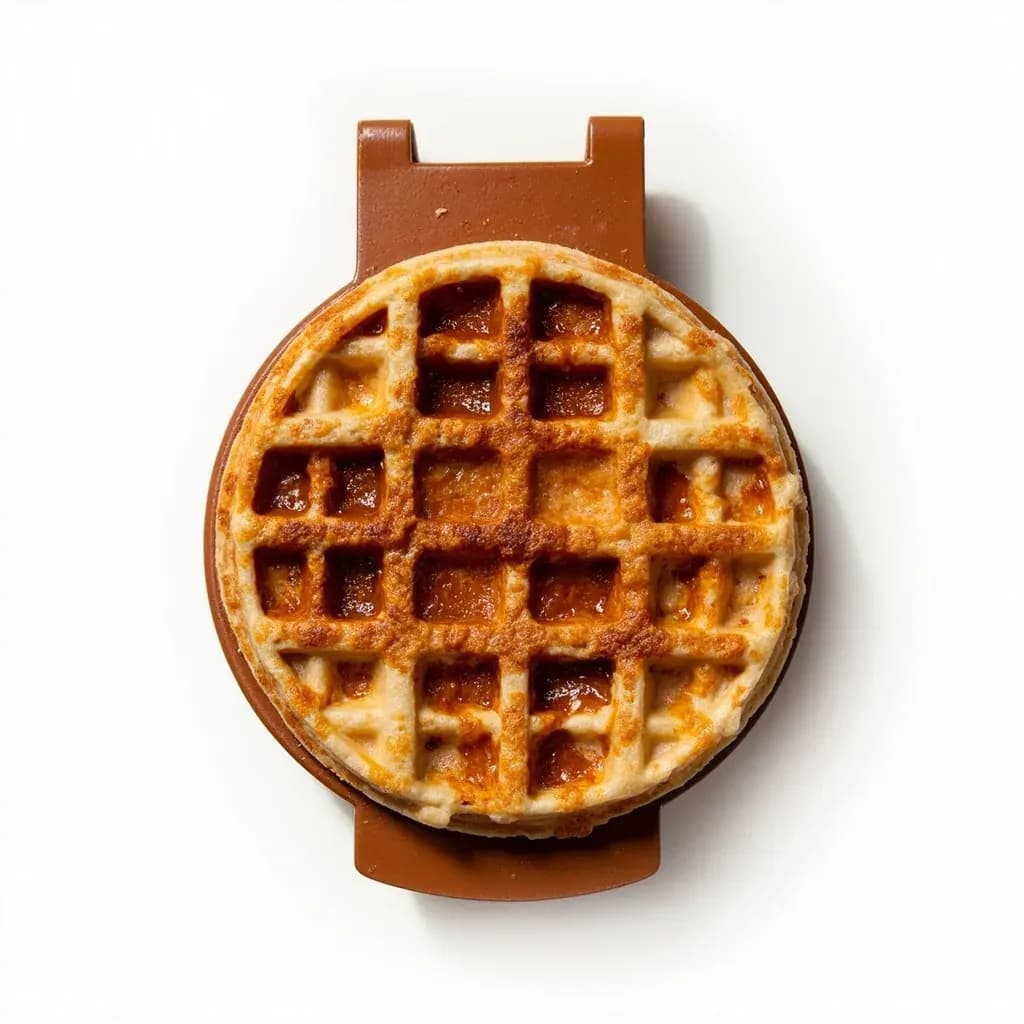
A hinged griddle with patterned plates that cooks batter into crisp gridded waffles.
A waffle iron is a hinged appliance or stovetop tool with two patterned plates that press and cook batter into waffles with the signature deep grid of pockets. The cook pours batter onto the hot lower plate, closes the lid, and the plates cook both sides at once until crisp outside and tender within. The grid pattern both increases the crisp surface area and creates pockets to catch syrup and toppings.
A waffle iron is a hinged, patterned griddle that cooks batter into a crisp, gridded cake. The grid is the whole point: by pressing batter into peaks and valleys, the iron multiplies the surface area exposed to direct heat, driving fast Maillard browning on the raised ridges while leaving deep pockets that trap steam during the cook and later cradle butter, syrup, or savory toppings. A waffle is, in effect, an engineered piece of toast, and the iron is the mold that makes it possible.
Grid depth is the single most important design variable, because it dictates what kind of batter the iron can handle. Shallow plates (about 1 cm / roughly 1/3 inch), like the classic American pattern, suit thinner, lower-leavening batters that set quickly. Deep plates (around 2.5 cm / 1 inch), like the Belgian and Brussels patterns, give a high-leavening yeast or baking-powder batter room to rise, trap steam, and produce a thick, airy interior. A batter that is too wet or too vigorously leavened for a shallow iron will overflow the hinge; a batter that is too thin for a deep iron will produce a hollow shell.
Stovetop cast-iron models predate electric ones by centuries and remain prized for even, steady heat and the faintly nutty flavor of well-seasoned iron. Electric models win on convenience: built-in thermostats, indicator lights that signal when the plates are ready, and interchangeable plates that turn the same appliance into a sandwich press, a panini grill, or a flat griddle. The two specs that matter most when choosing an iron are grid depth (which decides your batter style) and plate material (cast aluminum heats fastest; cast iron holds heat most evenly but is heavier and slower to recover).
Alternatives
Types & varieties
Deep, oversized square pockets (about 1 inch / 2.5 cm); for thick, fluffy waffles made with yeast- or baking-powder-leavened batter
Shallower grids producing thinner, denser waffles with smaller pockets; traditionally 7-inch round plates
Rectangular with deep cells; designed for the lighter, airy Brussels-style batter served dusted with powdered sugar
Smaller, thicker plates with rounded pockets; presses dense, brioche-like dough studded with pearl sugar that caramelizes on contact
Cast iron mold baking five connected heart shapes; the traditional shape for Norwegian Sunday and holiday waffles
Thin, decorative patterned disc; produces the crisp Italian pizzelle cookie, often rolled into a cylinder while still warm
Thin Norwegian iron with a delicate floral pattern; bakes paper-thin waffles that are rolled into cones and filled with whipped cream or fruit
Spherical bubble-shaped cells for the street-food egg puff (gai daan jai); traditionally cast iron over gas, with electric versions now common
Small round Dutch iron producing the thin baked wafers of stroopwafels, which are then split and sandwiched with caramel syrup
Long-handled hinged iron heated directly over a burner; must be preheated on both sides and seasoned like a cast-iron skillet
Mounted on a spindle and rotated 180° after the lid is closed so gravity spreads batter evenly across both plates before flipping back to finish
Choosing and Using the Right Iron for the Job
The waffle iron is unusual among small appliances because the design is bound to a specific cuisine. A Belgian iron with 2.5 cm pockets cannot reproduce the thin, brittle disc of a pizzelle, and a classic American iron cannot give a yeasted Brussels batter room to expand. Match the iron to the waffle, not the other way around.
- Pick grid depth first: deep pockets (Belgian, Brussels, Liège) for high-leavening batters that need room to rise; shallow plates (classic American, pizzelle, krumkake, stroopwafel) for thinner batters that should set quickly.
- Pick plate material second: cast aluminum heats in minutes and is lighter to lift; cast iron holds heat more evenly, gives a slightly more flavorful crust, but is heavier and slower to recover between batches.
- For multi-purpose kitchens, look for an electric model with removable, interchangeable plates — a waffle plate, a flat griddle, and a ribbed grill plate cover most weekend cooking in one footprint.
- Stovetop cast-iron irons reward cooks who already maintain a cast-iron skillet; the seasoning and cleaning routine is the same, and the trade-off in convenience is paid back in crust quality.
Diagnosing Common Problems
Most waffle-iron frustrations come down to temperature, fat, or batter hydration. Before blaming the machine, check these three.
- Sticking: almost always too little fat in the batter, a worn non-stick coating, or the iron not being fully preheated. A properly heated, properly greased plate releases a waffle cleanly; a stuck waffle is almost always one whose crust has not fully set, so it is actually underdone rather than burned.
- Pale, soft waffles: iron not hot enough, batter over-hydrated, or the lid lifted too early so the crust never set. Wait for steady steam to slow before opening.
- Overflow at the hinge: batter overfilled or too vigorously leavened for the grid depth. Pour only to the edge of the outer grid and let the batter rest a few minutes so leavening activates evenly.
- Uneven browning: cold spots in the iron, batter spread unevenly before the lid closed, or — on flip-style irons — failing to rotate promptly after closing.
Common uses
Tips & pitfalls
- Preheat fully before pouring batter: a drop of water should sizzle and evaporate in a second or two. Opening the lid early will tear the waffle along the grid lines and ruin the crust.
- Grease the plates even when they are non-stick, especially with low-fat batters. Brush with melted butter or neutral oil rather than aerosol sprays, which leave a residue that builds up and eventually causes sticking.
- Do not overfill: pour batter only to the edge of the outer grid. Most batters expand as they hit the hot plate, and excess will seep out of the back hinge.
- Lift the finished waffle with a wooden skewer or silicone tongs. Metal utensils will scratch non-stick coatings and shorten the life of the plates.
- For crisper waffles, increase the fat in the batter (butter or oil) and let the batter rest 10–15 minutes so the flour fully hydrates before cooking.
- For flip-style irons, rotate the unit 180° immediately after closing the lid so batter spreads evenly, then rotate back when the steam stops rising.
- Stovetop cast-iron irons need seasoning like a cast-iron skillet: wipe with a thin coat of oil and bake before first use and after each wash.
- Clean while still warm but unplugged, and never submerge the electrical base. Wipe plates with a damp cloth and remove stuck bits by reheating the iron briefly and wiping with a paper towel.
- Avoid metal scouring pads and abrasive cleaners on non-stick plates — they strip the coating and accelerate sticking. If waffles stick consistently, the non-stick is likely worn and the iron is due for replacement (or, for cast iron, a re-seasoning).
- Rest cooked waffles briefly on a wire rack rather than stacking on a plate, so steam escapes and the exterior stays crisp.
Good to know
- First U.S. patent
- Granted to Cornelius Swarthout of Troy, New York, in 1869
- Materials
- Cast aluminum (modern electric), cast iron (traditional stovetop), typically with a non-stick coating on electric plates
- Power source
- Electric (most common today) or direct stovetop heat applied to cast iron (traditional)
- Typical wattage
- 800–1,500 W for household electric models
- Cooking temperature
- Approximately 175–200°C / 350–400°F
- Cook time per waffle
- 3–5 minutes once fully preheated
- Plate grid depth
- Belgian ~2.5 cm (1 in); classic American ~1 cm (about 1/3 in)
- Typical yield
- 1 round or square waffle per batch in home models; commercial units may produce multiple at once
- Modern feature
- Most electric units include an indicator light or audible beep when preheated
- Storage
- Cool, dry storage; cast-iron plates should be lightly oiled before long storage to prevent rust
Also called
Wafelijzer · Waffle Maker · Waffle Press
Related

Stovetop
The everyday burners where most cooking actually happens

Oven
Enclosed dry heat for roasting, baking, and braising

Grill
Live-fire or gas grates for char, smoke, and high heat

Smoker
Low, slow heat and wood smoke for barbecue and brisket

Air Fryer
Countertop convection that crisps with little or no oil

Slow Cooker
Set-and-forget low heat for stews, beans, and braises

Pressure Cooker
Sealed steam pressure that cooks tough food in a fraction of the time

Rice Cooker
Foolproof, perfectly steamed rice every single time