Transform & Preserve
Barrel Aging
Maturing spirits, wine, or vinegar in oak to add flavor and smoothness.
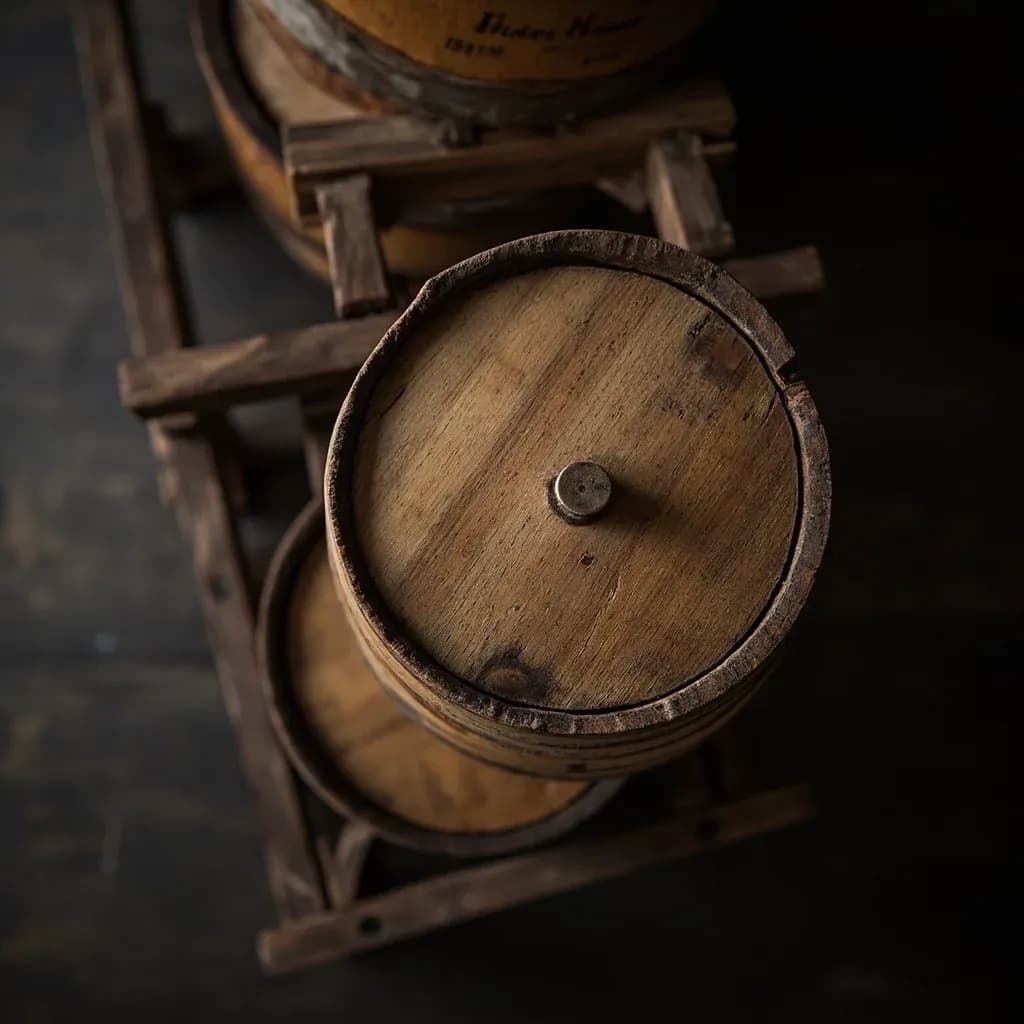
Barrel aging stores liquids such as wine, spirits, beer, or vinegar in wooden casks, usually oak, where slow oxygen exchange and contact with the wood develop color, tannin, and aromas of vanilla, spice, and toast. Time, char level, and barrel size all shape the result. The technique is also used to age sauces and condiments for added complexity.
Barrel aging is the slow marriage of wood and liquid, in which a spirit, wine, beer, vinegar, or sauce rests inside a coopered cask long enough to dissolve flavor compounds from the oak and to breathe through it in tiny, controlled amounts. The wood gives vanillin, lactones, tannins, and smoky by-products; the micro-oxygenation softens harsh edges, deepens color, and knits aromatics together. Neither half works without the other — sealed stainless steel yields extraction without integration, while a permeable surface without enough wood character simply oxidizes.
The species of oak, its grain tightness, and the level of char or toast are the levers that drive the result. American white oak (Quercus alba) is bold, vanilla-heavy, and tightly grained; it is the only wood permitted by U.S. law for straight bourbon. French oak (Q. robur and Q. petraea) is typically looser-grained with a finer, more elegant tannin structure, lending spice, structure, and a more restrained toast character that flatters wine and delicate spirits. Specialty woods — Mizunara, acacia, chestnut, cherry, apple — offer their own aromatic signatures and turn up in finishing casks, traditional vinegars, and small-format experiments.
For the cook, barrel aging is also a question of scale. A 53-gallon bourbon cask and a 2-liter oak cube obey the same chemistry, but surface-area-to-volume changes everything: small barrels and oak chips can deliver a year of cask character in a matter of weeks. Understanding that ratio, and tasting often, is the difference between a sauce with depth and one that tastes like a popsicle stick.
- Difficulty
- Hard
Types & varieties
Tight grain, high vanillin, strong coconut and dill notes; required for straight bourbon. Imparts bold vanilla, caramel, and a sweeter oak signature.
Looser grain in some forests (notably Limousin), finer and more elegant tannin structure, more subtle spice and toast. Standard for premium wine and most Cognac; sourced from Limousin, Tronçais, or Allier forests.
Japanese oak used for premium whisky; porous and difficult to cooper. Contributes sandalwood, incense, and citrus-zest aromatics.
Light, neutral, low-tannin. Used for some white wines and modern experimentation where gentle vanilla is wanted without heavy oak signature.
Traditional in parts of Italy and Portugal for Vin Santo and some spirits. Coarser tannin, slight bitterness, earthy character.
Used in small-format aging for vinegars, hot sauces, and specialty beers. Cherry lends almond and stone-fruit notes; apple adds subtle sweetness.
Second-, third-, or fourth-fill casks deliver progressively less oak influence. Prized in Scotch for subtler maturation over many years.
How to do it
- 1
Select the wood and format
Match oak species and barrel size to the liquid and the time you have. New charred American white oak is required for straight bourbon; French oak flatters wine and delicate spirits; Mizunara and other exotics are reserved for whisky finishing or special projects. For kitchen-scale work, oak chips, cubes, or 1–5 L mini-barrels deliver cask character in days or weeks.
- 2
Prepare the barrel
Inspect coopered barrels for leaks by filling with hot water and rolling. New barrels need no further prep. Used casks should be steam-rinsed or flushed with a small portion of the same liquid you intend to age, then drained — soap contaminates the wood pores and will taint the spirit.
- 3
Fill the barrel
Fill to the bunghole to minimize headspace oxygen. As the wood absorbs liquid and the angel's share evaporates, top up with the same spirit (ullage) every few weeks. Seal with a food-grade silicone or hardwood bung.
- 4
Store under proper conditions
Keep the cask horizontal in a cool, stable space — 55–65 °F (13–18 °C) and 60–75% relative humidity is the textbook range. Avoid sunlight, vibration, and temperature swings, which cycle the staves and shorten barrel life.
- 5
Monitor and taste
Sample every few weeks for spirits, monthly for wine, and every few days for small-format projects. Use a wine thief or long pipette and replace the volume removed with the same liquid. Track color, aroma, tannin, and integration in a notebook or on the barrel head.
- 6
Finish or extend
When the profile is right, rack the liquid off the oak into stainless steel or glass to halt extraction. To continue, transfer to a refreshed barrel, a different cask for a finishing period, or blend multiple casks for a balanced house style.
- 7
Maintain the empty barrel
If not refilled immediately, rinse, sulfur-burn or steam, and store bung-loose in a humid, temperate space to keep the staves swelled. Well-cared-for oak casks can be used 3–5 times or more, with each fill imparting a softer, more nuanced oak profile.
The Chemistry Behind the Magic
Two processes happen in a barrel at once. Extraction pulls water-soluble compounds — vanillin, lactones, tannins, polysaccharides — out of the oak and into the liquid. At the same time, oxygen seeps through the staves and the bung, oxidizing harsh aldehydes, polymerizing tannins into softer chains, and fixing color. Toasting and charring create a toasted layer roughly 2–4 mm thick that is responsible for most of the sweet, smoky, vanilla-lactone character; the deeper the toast, the more caramelization and the more clove and smoke. Char goes further, breaking down lignin into charcoal that filters congeners and contributes a distinct bourbon profile.
- Vanillin dominates the sweet, vanilla-bean note and peaks around medium toast.
- Oak lactones rise with grain tightness — American white oak is naturally richer in them than French.
- Tannins come mainly from the wood's middle lamella; heavy toast partially breaks them down, so a charred bourbon barrel often tastes softer on the palate than an untoasted oak tank.
Small-Format Aging for the Kitchen
A full 53-gallon cask has a relatively small wood surface compared to its liquid volume, while a 1-liter oak cube or a handful of chips exposes far more wood per ounce. That difference in surface-area-to-volume is why a few ounces of chips can oak a sauce in 48 hours while a bourbon waits four years. For the home cook, this means oak chips, cubes, spirals, and 1–5 L mini-barrels can mimic large-cask flavor quickly — provided you taste often and remember that extraction is logarithmic, with most of the flavor arriving in the first third of the contact time.
- Toast chips in a dry skillet or 350 °F oven before steeping to drive off raw-wood astringency and add caramelization.
- Aim for roughly 1 oz (28 g) of oak chips per gallon of liquid as a starting point; adjust by taste after 24 hours.
- Strain and rack off the oak once the desired flavor is reached — extended contact will turn woody, bitter, and drying.
- Mini-barrels need topping up every few days; evaporation through the thin staves is rapid and headspace invites mold.
Common uses
Tips & pitfalls
- Match the wood to the liquid: American oak flatters bold spirits and BBQ sauces; French oak flatters wine and delicate spirits; Mizunara is for whisky finishing and high-end projects.
- Mind the surface-area-to-volume ratio — a small barrel or a handful of chips can produce years of cask character in weeks, so taste every few days rather than guessing.
- Toast level drives flavor more than oak species does: light toast maximizes vanilla and coconut; heavy toast and char push toward caramelization, smoke, and clove.
- Sanitize oak only with the spirit, wine, or water it will hold — never soap or household cleaners, which soak into the grain and ruin the next fill.
- Keep humidity in check: too dry and staves shrink and leak; too humid and the wood swells, choking oxygen exchange and risking surface mold.
- Top up barrels regularly (ullage) with the same liquid to limit headspace oxidation and prevent mold at the air interface.
- Avoid over-oaking — tannins turn green, bitter, and drying well before they turn silky. If a spirit or sauce goes woody, rack it off the oak and dilute or rest in stainless.
- Reuse spent bourbon barrels for stout, hot sauce, maple syrup, or vanilla extract; residual sugars and vanillin still leach out and contribute.
Good to know
- Primary wood species
- Quercus alba (American white oak), Q. robur and Q. petraea (French oak), Q. mongolica (Mizunara); acacia, chestnut, cherry, and apple are also used in specialty applications.
- Standard bourbon barrel
- 53 US gallons (about 200 L), made from new charred American white oak — required by U.S. federal regulation for straight bourbon.
- Common wine barrel sizes
- Bordeaux barrique 225 L; Burgundy pièce 228 L; hogshead 250 L; sherry butt ~480 L; port pipe 500–650 L; demi-muid 600 L.
- Char levels
- Industry convention: #1 ≈15 sec, #2 ≈30 sec, #3 ≈35 sec, #4 (alligator char) ≈55 sec — measured by time over a gas flame.
- Key flavor compounds
- Vanillin (vanilla), cis- and trans-oak lactones (coconut, woody), eugenol (clove), syringaldehyde (smoky sweetness), tannins, and furfural derivatives from toasting.
- Micro-oxygenation
- Oak staves admit a slow, steady flow of oxygen — typically 2–5 mg/L per month in a tight-grain barrel — softening tannins and developing complexity.
- Typical duration
- Bourbon: 2+ years (often 4–12); Scotch: 3+ (often 10–21); Cognac: 2+ (often far longer); wine: 6–24 months; barrel-aged cocktails and sauces: weeks to months.
- Storage
- Barrels are kept at 55–65 °F (13–18 °C) with 60–75% relative humidity, laid horizontal so the staves stay swelled and sealed.
Also called
Oak Aging · cask aging
Dishes that rely on it
Related

Confit
Cook slowly submerged in fat for silky tenderness and keeping

Cure
Draw out moisture with salt and time to preserve and concentrate

Pickle
Steep in acidic brine for bright, tangy, crunchy preservation

Ferment
Let friendly microbes transform food into tangy, complex flavor

Marinate
Soak in a seasoned mix to flavor and tenderize before cooking

Brine
Soak in salt water so meat stays juicy and seasoned throughout

Dehydrate
Slowly dry out moisture to concentrate flavor and extend shelf life

Cold-Smoke
Perfume cured food with smoke without cooking it through