Water & Steam
Blanching Bones
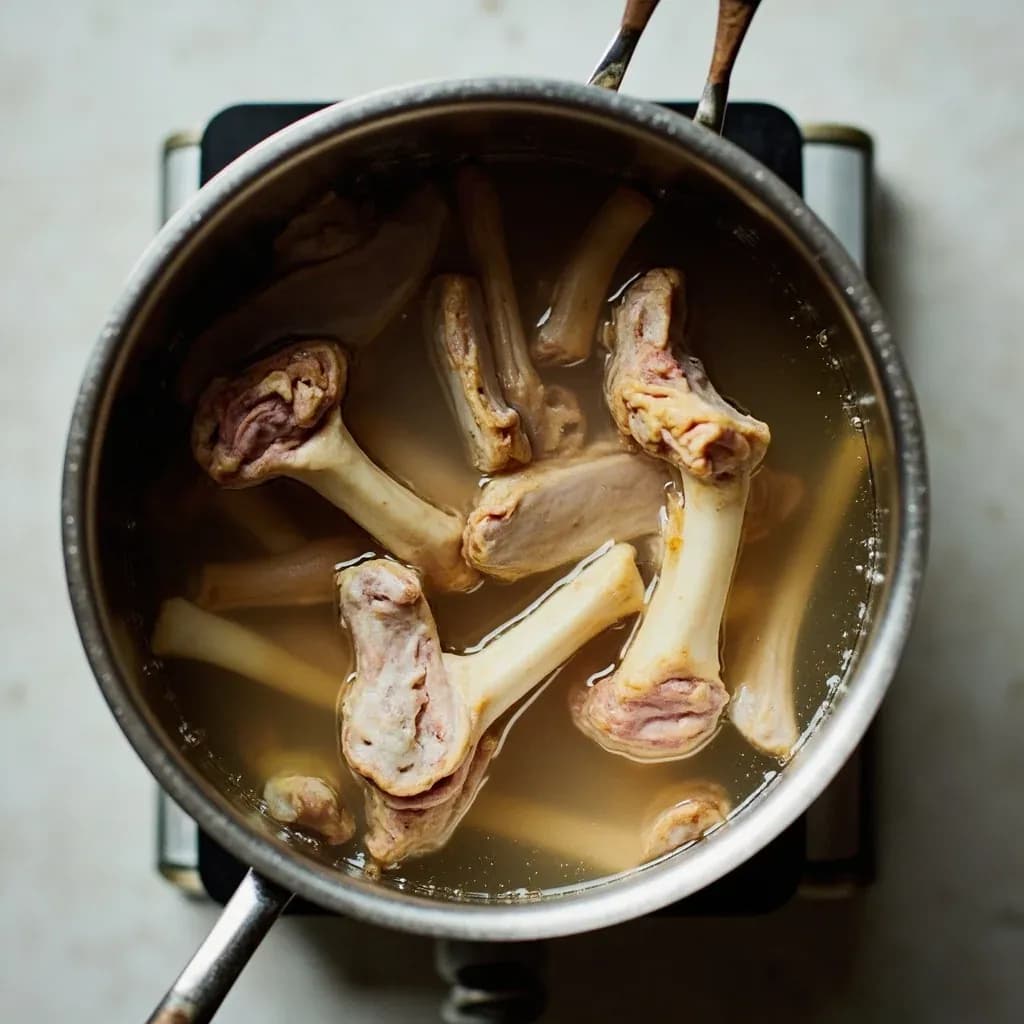
Boiling bones briefly and discarding the water to purge blood and scum for a clear stock.
Blanching bones means covering them with cold water, bringing it to a boil, then draining and rinsing before starting the actual stock. This purges blood, marrow impurities, and the grey scum that would otherwise cloud and muddy the broth. It is the standard first step for clean, clear stocks, especially in Chinese and classical kitchens.
Blanching bones is a brief, aggressive boil performed before the actual stock simmer, with one purpose: to drive out blood, coagulated albumin, and soluble proteins that would otherwise cloud the finished liquid. As cold water heats, red myoglobin and other impurities migrate out of the bone surfaces; once the water hits a full rolling boil, those proteins coagulate into a gray-pink foam that can be drained away with the water. The bones are then rinsed, returned to a clean pot, covered with fresh cold water, and simmered properly to extract collagen and flavor.
The technique is a clarifying step, not a flavor-building one. You accept a small loss of deep, meaty intensity in exchange for a noticeably paler, cleaner-tasting stock — the kind of base you want for a light consommé, a delicate chicken broth, or any sauce where clarity matters. It is also a workflow tool: by front-loading the dirty work into a single short boil, you reduce the skimming burden during the long, gentle simmer that actually builds the stock.
- Difficulty
- Easy
Types & varieties
Shortest treatment at 3–5 minutes; effective for backs, necks, feet, and wings, with feet and necks benefiting most since they carry the most blood.
Longer treatment at 7–10 minutes; essential for knuckle, shank, and rib bones, which carry significant red myoglobin from surrounding muscle tissue.
Strongly recommended; older animals and game carry pronounced, gamier blood notes that a thorough purge helps neutralize.
Uncommon; fish stocks are typically started cold and brought up gently without a separate blanch, since prolonged boiling extracts harsh flavors and breaks down delicate proteins quickly.
A rare second boil-and-rinse pass used in classical recipes for very light, crystal-clear aspic stocks; mostly confined to professional garde-manger and pastry work.
How to do it
- 1
Choose and cut the bones
Use raw bones, ideally cracked or chopped into 2–3 inch pieces so marrow and interior surfaces are exposed. Older or frozen bones are fine; thaw them fully so water penetrates evenly and the boil time is accurate.
- 2
Cover with cold water in a large stockpot
Use a pot large enough that the bones sit loosely with at least 2–3 inches of water above them. Cold water is essential — it lets blood and soluble proteins leach out gradually as the temperature climbs.
- 3
Bring to a full rolling boil over high heat
Skim briefly if foam rises before the boil, but the heavy lifting is done by the boil itself. Do not let the pot settle into a simmer; you want an aggressive, rolling boil from edge to edge.
- 4
Boil for the right time
Poultry: 3–5 minutes. Veal, beef, lamb, and pork: 5–10 minutes. The water will turn gray, foamy, and sometimes cloudy as albumin and myoglobin coagulate and float to the surface.
- 5
Drain immediately in a colander
Tip the pot without delay so the bones do not sit in the dirty water and reabsorb what you just drove out. Shake the colander to shed loose bits and foam clinging to the bones.
- 6
Rinse aggressively under cold running water
Wash each piece while rubbing with your hands or a clean brush to remove clinging scum and coagulated protein. The bones should look clean and pale, not gray or pink — this rinse matters more than most cooks realize.
- 7
Return to a clean pot and start the real stock
Cover the rinsed bones with fresh cold water and bring up slowly. Skim the first foam that rises, then add aromatics such as mirepoix, a bouquet garni, and a few peppercorns once a gentle simmer is established.
The Cold-Start Rule
Every step in blanching depends on starting in cold water. Hot or boiling water sears the outer surface of the bone, coagulating proteins almost instantly and sealing impurities inside where the boil cannot reach them. A cold start gives blood, albumin, and myoglobin time to migrate out of the bone as the temperature rises, so the rolling boil can carry them away in the foam. The same principle applies when you start the real stock after blanching — a gentle, gradual rise is what extracts collagen without emulsifying fat or clouding the liquid.
- Cold water drives impurities out gradually; hot water seals them in.
- The same principle applies when you start the real stock after blanching.
- Frozen bones must be thawed first so water penetrates evenly.
Blanch vs. Skim: The Modern Debate
Some contemporary chefs skip blanching entirely, arguing that an attentive cold-started simmer with aggressive skimming for the first 20–30 minutes produces an equally clear stock without the extra water, fuel, and small flavor loss. In restaurant kitchens producing stock by the gallon, blanching usually wins on practicality: it concentrates all the dirty work into a single short step rather than a long, watchful skim. In a home kitchen with a small batch and a careful eye, the difference can be negligible. The one point no school disputes: never start in hot water.
- Classical kitchens blanch for workflow efficiency as much as for clarity.
- Modern advocates of pure skimming rely on a cold start and constant attention.
- Both approaches aim at the same result; blanching is the more forgiving path.
When Not to Blanch
Blanching is the wrong tool when you want dark color and roasted depth. Brown stocks built on deeply caramelized bones already mask the impurities that blanching is designed to remove, and the additional water and boil would dilute the very flavor you spent time roasting for. Vegetable stocks and most seafood stocks are likewise better started cold and skimmed gently rather than blanched.
- Skip for brown stocks made from roasted beef or veal bones.
- Skip for fish and shellfish stocks built on delicate frames.
- Skip for vegetable stocks, where there is no blood or myoglobin to purge.
Common uses
Tips & pitfalls
- Always start with cold water — plunging bones into already-boiling water seals the surface and traps impurities inside, defeating the whole step.
- Use a large pot with plenty of headroom; crowded bones release unevenly and the dirty water is more likely to splash and carry over.
- Stop at 10 minutes maximum. You are purging, not extracting; a longer boil starts leaching gelatin and flavor you will want in the finished stock.
- Rinse the bones aggressively after draining, rubbing with your hands or a clean brush to knock off gray or pink residue. This single step does most of the clarifying work.
- Return the rinsed bones to a clean pot and start the actual stock cold again, bringing it up slowly so collagen melts gently rather than emulsifying.
- Save the blanching water only if you have a genuine use for a thin, neutral liquid — washing rice, hydrating bread dough, or a vegetable-cooking step. Most kitchens discard it.
- Even after blanching, skim the first 20–30 minutes of the real simmer; a fine foam can still rise and dull clarity.
- Blanch right after the bones are cracked or cut, while the surfaces are still fresh and open, for the cleanest purge.
Good to know
- Primary purpose
- To purge blood, coagulated proteins, and soluble impurities from bones so the finished stock is clear and clean-tasting.
- Typical time
- 3–5 minutes for poultry; 5–10 minutes for beef, veal, lamb, and pork; fish bones are generally not blanched.
- Temperature
- A full rolling boil; the bones are not simmered, and the dirty water is drained off.
- Water-to-bone ratio
- Enough cold water to cover the bones by 2–3 inches (roughly 2.5–3 L per 1 kg of bones).
- Yield effect
- Produces a noticeably clearer finished stock with far less gray foam during the actual simmer.
- Flavor effect
- A small reduction in deep, meaty intensity — the deliberate trade-off for visual and aromatic cleanliness.
- Workflow position
- Always precedes the stock simmer; bones are re-covered with fresh cold water and brought up again for the true cook.
- Origin
- Codified in classical French cuisine (Escoffier and later foundational manuals) and standard in professional kitchens.
Also called
Parboiling Bones
Dishes that rely on it
Related

Boil
Cook in vigorously bubbling liquid at full rolling heat

Simmer
Hold liquid at a gentle shimmer for tender, unhurried cooking

Poach
Cook gently in barely-trembling liquid for silky, tender results

Steam
Cook in rising vapor to keep color, nutrients, and shape intact

Blanch
Plunge briefly in boiling water, then shock cold to lock color

Braise
Sear, then cook slow in a little liquid until fall-apart tender

Stew
Simmer bite-sized pieces fully submerged into a rich, unified pot

Sous-Vide
Seal and cook in precise warm water for edge-to-edge doneness