Heat & Fire
Bruschetta / Fettunta Toasting
Grilling or toasting bread, then rubbing it with garlic and dressing it with oil.
An Italian technique where thick bread slices are charred over a grill or flame until crisp, then rubbed with a raw garlic clove and drizzled with fresh olive oil. Fettunta is the plain oil-and-garlic version, while bruschetta adds toppings like tomato. The hot, rough crust grates the garlic and absorbs the oil, concentrating flavor.
Bruschetta and fettunta are two names for the same peasant technique: a thick slice of rustic bread, toasted hard over live heat, rubbed raw with garlic, and dressed with new olive oil. The name "bruschetta" comes from the Roman/Lazial verb *bruscare*, "to roast over coals," while "fettunta" — Tuscan for "oily slice" — speaks to the bread's final, glistening purpose. Both were originally a way for farmers and oil-press workers to taste the season's first pressing, and the technique remains the most direct way to judge a good olive oil.
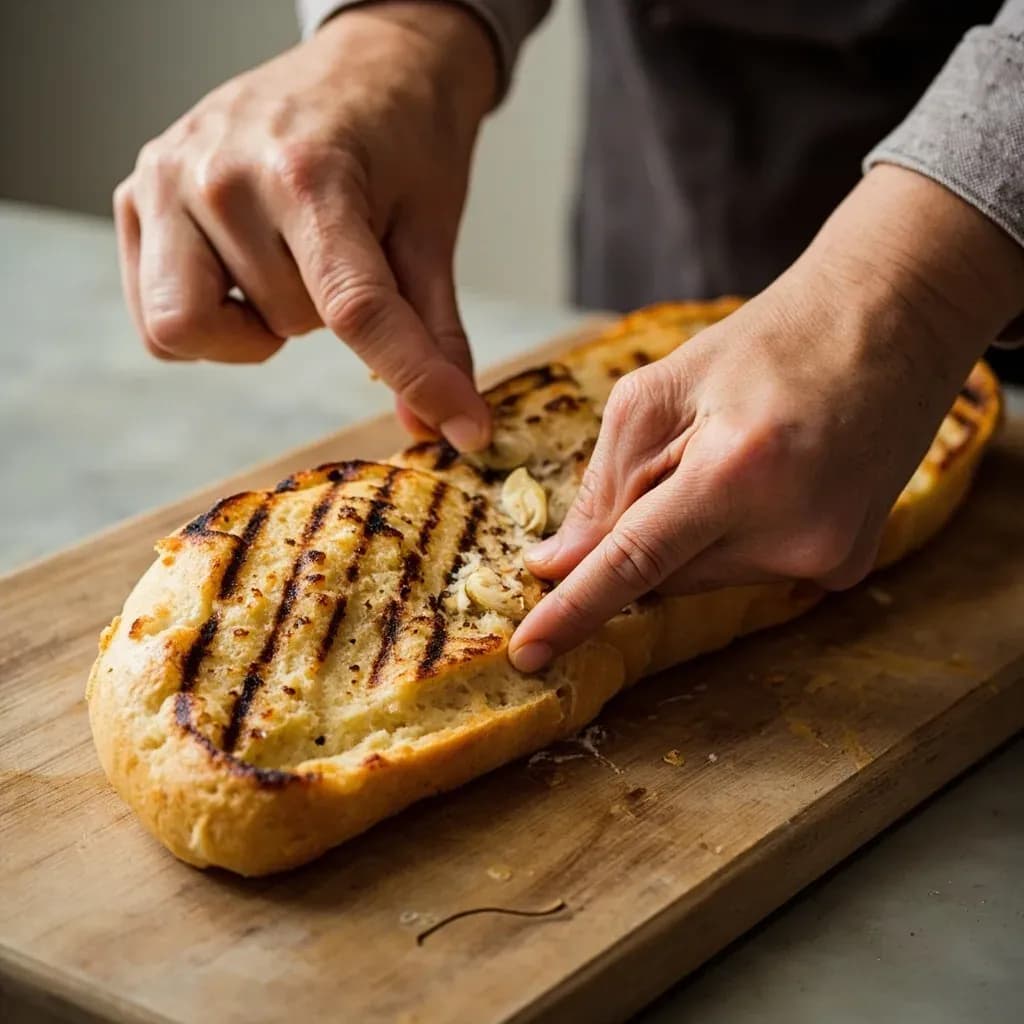
What makes the method a technique rather than a recipe is the garlic rub on the hot toast. A halved clove is pressed, cut-side down, onto the still-sizzling surface; the heat both releases the garlic's juice and lightly grates it into the open crumb, perfuming the oil that follows. The bread must be thick enough (about 1–1.5 cm) and stale enough to take a hard sear without collapsing, and traditionally unsalted Tuscan *pane sciapo* is the benchmark, since salt would compete with the oil and any topping.
The dish is built on contrast: a crackling, charred crust gives way to a chewy, oil-soaked interior that should be eaten within a minute or two of dressing, before the crunch softens. Beyond the bare garlic-and-oil version, the toast becomes a platform for tomatoes, beans, mushrooms, soft cheese, or chicken-liver crostini, but the underlying method — hot fire, raw garlic, good oil, immediate service — never changes.
- Difficulty
- Easy
Types & varieties
Tuscan baseline: toast, garlic, oil, and flaky salt, sometimes finished with a squeeze of lemon
Roman/Lazian classic topped with diced ripe tomato, basil, salt, and oil
Mashed cannellini beans dressed with garlic, sage or rosemary, and oil
Small toasted rounds topped with chicken-liver pâté, standard Tuscan aperitivo fare
Sautéed wild mushrooms with garlic, parsley, and a splash of wine
Hot garlic-rubbed toast topped with soft, mild cheese and a thread of oil
Thin slices of cured pork fat laid on warm garlic toast so the fat softens into the crumb, especially in Umbria and Lazio
How to do it
- 1
Choose and slice the bread
Pick a day-old rustic country loaf — unsalted Tuscan-style is traditional. Cut slices about 1–1.5 cm thick on a slight bias to maximize surface area. Leave the crust on for structural integrity; a soft sandwich loaf will collapse and dry out under the heat.
- 2
Heat the cooking surface
Build a charcoal or wood fire to a bed of glowing embers, or preheat a gas grill, cast-iron grill pan, or oven broiler to high. The surface should be hot enough that the bread chars within a minute or two, not slowly dries and toasts through.
- 3
Toast the bread
Lay the slices on the heat and grill 1–2 minutes per side, until you see dark grill marks, a blistered surface, and a crisp crust while the interior stays slightly chewy. Work in batches without crowding. If the bread is bone-dry, brush the cut side very lightly with water first to prevent flare-ups.
- 4
Rub with raw garlic
While each slice is still hot, take a halved garlic clove, place the cut side against the surface, and rub firmly across the toast, re-gripping the clove as the cooked edge browns. The heat grates the garlic into the bread's pores and releases its juice.
- 5
Dress with oil and salt
Immediately drizzle a generous thread of high-quality extra virgin olive oil over the warm toast so it soaks into the still-porous crumb. Finish with a pinch of flaky sea salt — Maldon or coarse Tuscan salt both work — and, for a pure fettunta, an optional squeeze of lemon.
- 6
Serve at once
Plate and eat within a minute or two of dressing. If you are adding a topping (tomato, beans, mushrooms, cheese), pile it on just before serving so the base keeps its crunch.
The garlic rub: the move that defines the technique
Everything else about bruschetta is adjustable — bread, topping, oil — but the raw-garlic-on-hot-toast rub is what separates the dish from a generic crostini. The mechanics matter: the cut face of a halved clove, pressed firmly and dragged across the surface, both seasons the bread and releases allicin and aromatic oils that bloom into the warm crumb. The toast must still be hot; a cold slice will not take the garlic, and the volatile aromatics that make the dish sing will not develop.
- Hold the clove cut-side down and use firm, even pressure — let the bread's surface do the grating.
- Rotate to a fresh section of the clove as the cooked edge browns; you'll see the surface go from white to translucent.
- For a mellower note, briefly toast the cut face of the clove on the grill first, then rub it on the bread.
- Never substitute minced raw garlic sprinkled on top; it sits on the surface, burns the palate, and skips the integration with the oil.
Bread and oil: the ceiling of the dish
Because the technique reduces each component to its most basic expression, the quality of the bread and oil is the entire ceiling. A sandwich loaf collapses and dries; a dense, sweet baguette feels out of place. A neutral oil produces a polite but forgettable toast; a peppery, just-pressed extra virgin becomes the whole point of the bite.
- Reach for a sturdy, open-crumb country loaf with a thick crust — ciabatta, pane toscano, or a pain de campagne all work.
- Use a day-old loaf if possible; if it's very dry, brush the cut side very lightly with water to prevent flare-ups.
- Finish with an extra virgin olive oil you would happily drink on its own, ideally within a few months of pressing.
Common uses
Tips & pitfalls
- Choose a sturdy, open-crumb rustic loaf; sandwich bread collapses and dries on the grill.
- Get the cooking surface ripping hot before the bread goes on — you want char marks, not slow drying.
- Rub the garlic while the toast is still hot; the heat releases the juice and grates the clove into the crumb.
- Hold the garlic cut-side down with firm, even pressure, and rotate to a fresh edge as the cooked side browns.
- For a milder garlic note, briefly toast the cut face of the clove on the grill before rubbing.
- Don't drown the bread in oil — the goal is a glossy sheen that soaks in while the toast stays crisp.
- Season with flaky salt after the oil so the crystals adhere to the surface.
- Serve within a minute or two of dressing; the crunch collapses quickly once oil hits the crumb.
Good to know
- Origin
- Central Italy, with parallel Tuscan (fettunta) and Roman/Lazial (bruschetta) traditions, documented from the 15th–16th century
- Etymology
- Bruschetta from *bruscare* (to roast over coals); fettunta from Tuscan *fetta unta* (oily slice)
- Primary bread
- Rustic, open-crumb country loaves, traditionally unsalted Tuscan pane sciapo
- Slice thickness
- 1–1.5 cm (about 1/2 inch), on a slight bias for maximum surface area
- Best bread state
- Day-old or slightly stale; fresh soft bread turns gummy on the grill
- Heat source
- Wood or charcoal embers traditionally; a ripping-hot grill, grill pan, or broiler works in modern kitchens
- Defining step
- Raw garlic clove rubbed directly on the hot toast, not pre-chopped or sprinkled
- Finishing fat
- High-quality extra virgin olive oil, drizzled while the bread is still hot enough to absorb it
Also called
fettunta · garlic bread toasting
Related

Sear
Blast the surface hot for a deep-browned, savory crust

Sauté
Cook quickly in a little fat over lively heat, tossing as you go

Stir-Fry
Toss bite-sized pieces over roaring heat for fast, smoky cooking

Pan-Fry
Crisp food in a shallow layer of hot fat, turning once or twice

Deep-Fry
Submerge in hot oil for an all-over crackling crust

Roast
Cook uncovered in dry oven heat for browned edges and tender centers

Bake
Cook with steady, surrounding oven heat — the soul of bread and pastry

Broil
Hit food from directly above with fierce overhead heat