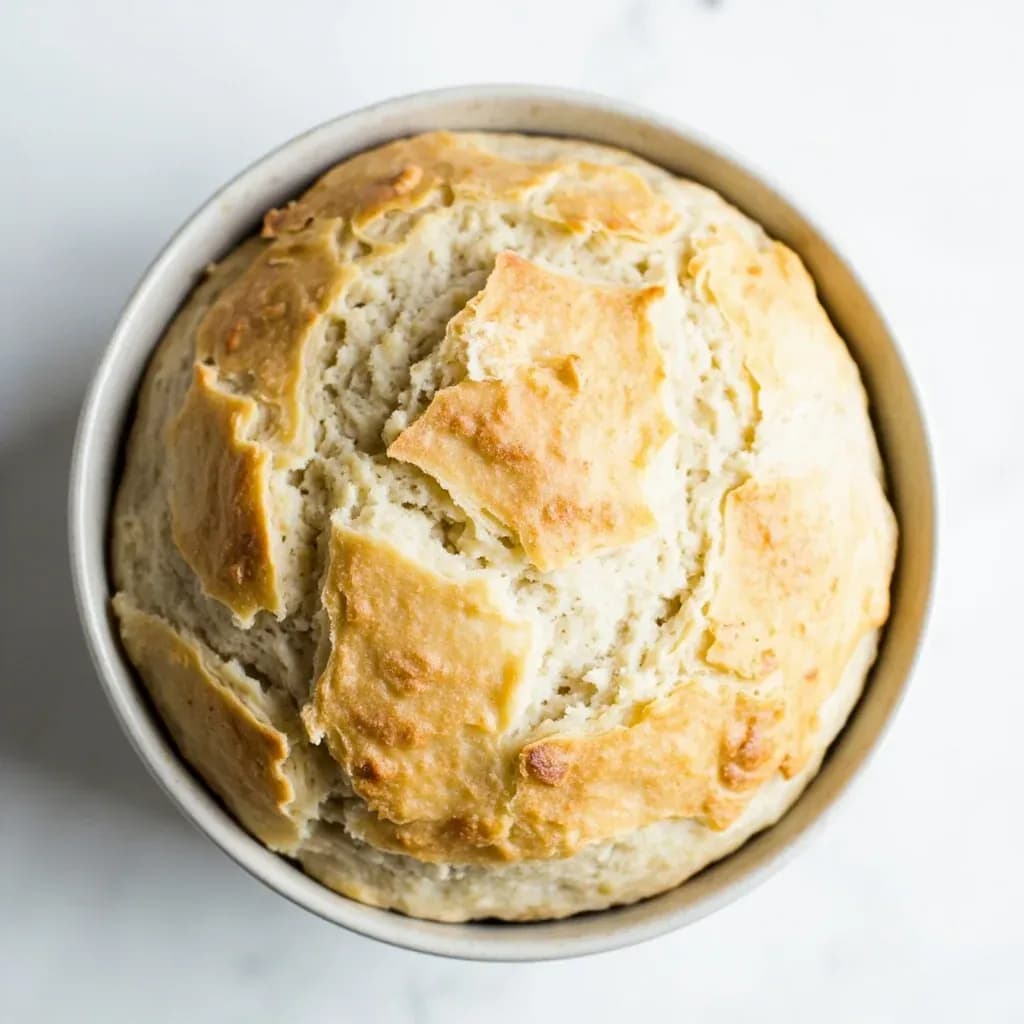
Transform & Preserve
Bulk Fermentation (Pointage)
The first long rise of bread dough as a whole mass before it is divided and shaped.
Bulk fermentation, or pointage, is the initial rise where mixed dough ferments as a single batch before dividing and shaping. During this stage yeast and bacteria produce gas and acids that develop flavor, strength, and structure, often with periodic folds to build gluten. Its length and temperature largely determine the final crumb and taste, especially in sourdough and naturally leavened breads.
Bulk fermentation is the unhurried first rise of bread dough, when the entire mixed mass rests as one before being divided and shaped. In a yeasted dough this is when yeast multiplies, fills the dough with carbon dioxide, and the gluten network, whether set up by kneading or by time and folds, learns to hold that gas. In a sourdough dough the same hours are also where lactobacilli generate the acids and esters that give the bread its flavor, and where enzymes break starches into the sugars that brown the crust and sweeten the crumb.
The French baking term for this stage is pointage, and it is taught as a distinct step from the final proof (apprêt) that comes after shaping. What separates a hand-made loaf from an industrial one is largely what happens here: industrial bread compresses bulk fermentation into minutes and compensates with added dough conditioners and fast yeast; a baker with time lets the dough do structural and aromatic work that no machine can. Whether a dough bulks for one hour or eight, the variable that governs it is dough temperature, not room temperature, not clock time. The same formula bulked at 21 °C versus 27 °C behaves like two different recipes, which is why serious bakers quote dough temperature when they share formulas.
- Difficulty
- Medium
Types & varieties
Standard 24–27 °C / 75–80 °F rise of 1–4 hours; the default for most lean yeasted breads and faster sourdoughs.
Bulk slowed in the refrigerator (3–5 °C) for 12–24 hours, deepening flavor and giving the baker scheduling flexibility.
Longer rise driven by wild yeast and lactobacilli, typically 3–6+ hours, often punctuated with stretch-and-folds.
Shorter, more predictable rise (1–2 hours) using instant or active dry yeast; sometimes skipped entirely in very tight bakery schedules.
An extended rest of just flour and water precedes yeast addition; the bulk phase itself is shorter because enzymatic work is partly done.
How to do it
- 1
Prepare a tracking container
Choose a straight-sided bowl or tub large enough to hold the dough at 2–3× its current volume. Lightly oil only if the dough is enriched or very sticky; lean doughs often release cleanly from ungreased plastic. If you want to read the rise by sight, use a see-through container and mark the starting level with a piece of tape, or spoon a tablespoon of dough into a small jar to use as an aliquot alongside the main mass.
- 2
Transfer and cover
Gather the mixed and developed dough into the container with wet or oiled hands. Smooth the top, press down gently to release any large air pockets, and cover with a lid, a damp towel, or plastic wrap so the surface does not dry into a skin that will crack when you turn the dough out.
- 3
Set the temperature
Place the covered dough where it will hold a steady 24–27 °C / 75–80 °F — a proofing box, an oven with the light on, or a stable corner of the kitchen away from drafts and direct sun. Check with a probe thermometer poked into the dough itself; the reading you want is the dough's, not the room's.
- 4
Build strength with folds (optional)
During the first 1.5–2 hours, perform 2–4 sets of stretch-and-folds or coil folds at 20–30 minute intervals. Wet your hands if the dough sticks, and stop once the dough feels noticeably more elastic and holds its shape between folds; further folding past this point tightens the dough and makes shaping harder.
- 5
Read the dough, not the clock
The bulk is done when the dough has risen roughly 50–75% (or your aliquot has), shows a domed or slightly billowy top, releases bubbles at the sides when gently jiggled, and feels airy rather than dense when prodded. A slow jiggle when the bowl is tapped is a good sign; a flat, slack surface is not.
- 6
Move on, or retard
Proceed to dividing and pre-shaping, or place the covered dough in the refrigerator (3–5 °C) for a cold retard of 12–24 hours. A cold retard deepens flavor, firms the dough for easier shaping, and lets you bake on your own schedule.
- 7
Shape after a cold retard
Pull the dough straight from the fridge when you are ready to bake; cold dough is stiffer and easier to handle, so divide and pre-shape directly without warming it back up. The final proof (apprêt) at room temperature will take care of any chill before the loaves go into the oven.
Reading the dough: how to know bulk is done
Bakers trained in the French school are taught to judge pointage by the dough itself rather than by a timer. Several cues, taken together, signal that the bulk is complete.
- The dough has risen 50–75% in volume, or your aliquot jar has reached the mark you set at the start.
- The top has domed into a soft, pillowy curve rather than remaining flat or sinking back at the edges.
- Large bubbles have escaped along the sides of the container, especially when the bowl is tapped.
- A gentle poke with a floured finger leaves an indentation that slowly fills back in but does not snap shut.
- When you pick up the dough for pre-shaping, it feels airy, extensible, and slightly bouncy — tight, dense, and prone to tearing when stretched points to under-proofing, while slack, collapsed, and foamy signals over-proofing.
Dough temperature as the governing variable
Yeast activity roughly doubles with every 10 °C rise within its working range, so a 2 °C shift in dough temperature can change timing dramatically. This is why bakers record dough temperature (often abbreviated DDT, for desired dough temperature) in their formulas and adjust water or flour temperature to hit a target.
- Warm kitchens (above 27 °C / 80 °F) shorten the bulk and risk over-proofing; cool or retard.
- Cold kitchens (below 22 °C / 72 °F) slow the bulk and may starve yeast of activity; find a warm spot or extend time.
- Cold retarding at 3–5 °C does not stop fermentation, it slows it to a crawl; a 12–24 hour cold bulk is normal.
- Friction from mixing warms dough 5–10 °C above room temperature; account for this when setting up the formula.
Strengthening during the bulk: stretch-and-folds and coil folds
High-hydration doughs that are difficult to knead by hand use the bulk period itself as a strength-building window. A short set of folds every 20–30 minutes gives gluten strands the alignment and tension that kneading would otherwise supply, without deflating the gas already in the dough.
- Wet your hands or lightly oil them so the dough releases cleanly.
- Stretch-and-fold: lift one corner of the dough, stretch it up, and fold it across the center; rotate the bowl and repeat four times.
- Coil fold: lift the dough with both hands, let it hang, then coil it back into the center; gentler on over-proofed or slack doughs.
- Stop folding once the dough resists the stretch and holds its shape between sets — additional folds past this point tighten the dough and fight shaping.
Common uses
Tips & pitfalls
- Track dough temperature with a probe thermometer, not clock time — a 2 °C shift can nearly halve or double the rise.
- Use a straight-sided, see-through container so you can read the actual rise instead of guessing by feel.
- Stop the bulk when the dough feels airy and extensible; under-proofed dough tears when shaped and springs back aggressively.
- Avoid over-proofing: an over-bulked dough collapses when poked, smells sharply of alcohol or acetic acid, and loses gas the moment you turn it out.
- Perform 2–4 sets of stretch-and-folds or coil folds in the first 1.5–2 hours for high-hydration doughs; stop once the dough resists and holds its shape.
- If the kitchen is warm (above 27 °C / 80 °F), shorten the bulk or move the dough somewhere cooler; if cold, give it more time or find a warm spot.
- For overnight schedules, push the bulk into the fridge after 30–60 minutes at room temperature rather than fully bulk-fermenting cold — cold dough ferments too slowly to carry the whole schedule.
- Quote dough temperature (not room temperature) in any formula you share; two bakers with the same room can produce very different loaves.
Good to know
- French term
- Pointage (the first rise of the dough as a whole mass)
- Position in workflow
- Follows mixing and gluten development; precedes dividing, pre-shaping, shaping, and final proof (apprêt)
- Typical dough temperature
- 24–27 °C (75–80 °F) for most yeasted doughs; sourdough often 24–26 °C (75–78 °F)
- Typical duration
- 1–2 hours for active dry or instant yeast doughs; 3–6 hours (sometimes longer) for levain/sourdough
- Expected volume increase
- Roughly 50–75% rise by volume (about 1.5–1.75× the starting size); some bakers push to 2× for a more open crumb
- Governing variable
- Dough temperature (not ambient) controls fermentation speed
- Common tracking method
- Straight-sided container or aliquot jar (a small marked jar of dough kept alongside the main mass)
- Synonyms
- First rise, primary fermentation, première fermentation, first proof
Also called
Pointage · First Rise · Bulk Rise
Dishes that rely on it
Related

Confit
Cook slowly submerged in fat for silky tenderness and keeping

Cure
Draw out moisture with salt and time to preserve and concentrate

Pickle
Steep in acidic brine for bright, tangy, crunchy preservation

Ferment
Let friendly microbes transform food into tangy, complex flavor

Marinate
Soak in a seasoned mix to flavor and tenderize before cooking

Brine
Soak in salt water so meat stays juicy and seasoned throughout

Dehydrate
Slowly dry out moisture to concentrate flavor and extend shelf life

Cold-Smoke
Perfume cured food with smoke without cooking it through