Transform & Preserve
Chaptalization
Adding sugar to unfermented juice or must to raise the final alcohol level after fermentation.
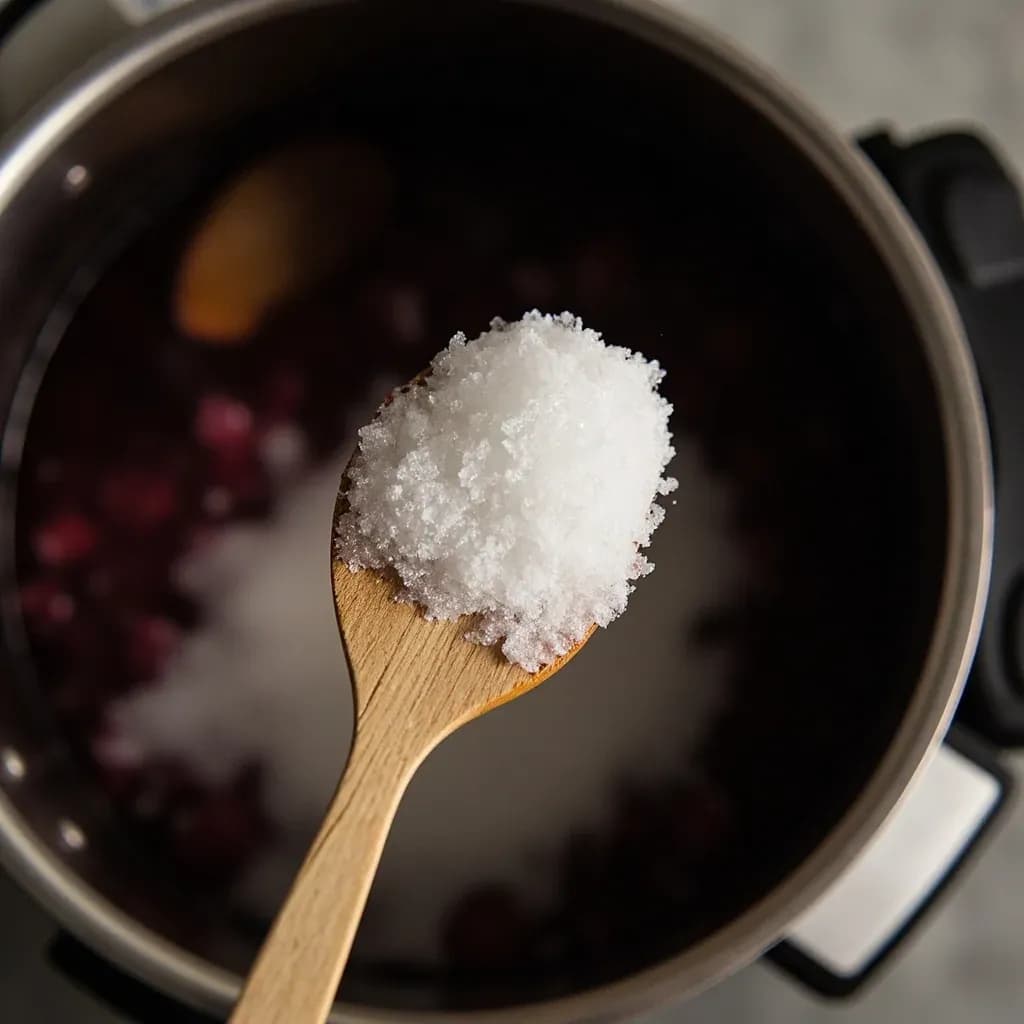
Chaptalization adds sugar to grape must or fruit juice before fermentation so the yeast has more sugar to convert, raising the finished alcohol content. It is used when fruit ripens with insufficient natural sugar, common in cool growing regions. The added sugar ferments out entirely, so it boosts alcohol rather than residual sweetness.
Chaptalization is the cellar practice of adding sugar to grape must before fermentation begins, in order to raise the potential alcohol of the finished wine. The technique is named for Jean-Antoine Chaptal, the French chemist and Napoleonic minister who codified it in 1801, though Dutch and German winemakers were already sweetening their musts in the 17th century. In practical terms, a winemaker measures the natural sugar of the pressed juice, calculates the gap between that reading and the target alcohol level for the style, and dissolves a calculated dose of sugar into the must so the yeast has more substrate to convert into ethanol.
The reason it exists is climate. In cool, marginal vintages — Champagne, the Loire, Alsace, parts of Burgundy, Germany's Mosel, Austria's Wachau — grapes often struggle to accumulate enough sugar to make a balanced, stable wine. Sugar added to the must is fermented away almost completely, leaving behind only the additional ethanol and a slightly fuller body. The technique is permitted across much of the EU under appellation rules, with strict regional caps on how much can be added. It is restricted or banned in warmer New World regions — California, Australia, South Africa, Argentina, and most of Chile — where grapes usually ripen fully without help and regulators see enrichment as a way to mask under-ripe fruit.
Chaptalization is fundamentally about alcohol and balance, not sweetness. Once fermentation is complete, any added sugar is gone, converted by yeast into roughly half its weight in ethanol. Confusing it with back-sweetening (adding sugar to finished wine for residual sweetness) or with Süssreserve (blending in unfermented grape juice) is one of the most common misunderstandings in amateur winemaking. Used judiciously, chaptalization is a tool of vintage consistency; used carelessly, it produces a hot, flabby wine with low acidity and none of the phenolics that ripe grapes bring.
- Difficulty
- Medium
Types & varieties
The classic French method using cane or beet sugar; still the most common form in EU practice and the historical standard since 1801.
Allowed in many appellations as an alternative to cane sugar; adds grape-derived glucose and fructose rather than sucrose, which some producers consider closer to a grape-based enrichment.
Used by some producers who prefer a direct monosaccharide for perceived gentler fermentation kinetics and easier yeast uptake.
How to do it
- 1
Measure the must
Take a representative sample of the pressed juice from the middle of the tank or press. Measure sugar as Brix with a refractometer or as specific gravity/Oechsle with a hydrometer, and titratable acidity by titration or indicator strip. Calculate potential natural alcohol using a Brix-to-ABV table, or as a rough guide use the formula (Brix × 0.55 − 0.5). Do not skip the acidity reading — knowing it tells you whether sugar addition will move the wine toward balance or out of it.
- 2
Determine the addition
Decide the target potential ABV based on the wine style, the grape variety, and any regional legal maximum. Subtract the measured natural potential from the target; the gap, in % ABV, is what chaptalization must supply. Convert that gap to grams of sugar using roughly 16–18 g per liter for each 1% ABV you need to add. Be conservative — extra alcohol without corresponding acid will read as hot and flat.
- 3
Check legal limits
If the wine is under appellation (AOC, DOC, IGP, QbA, etc.), consult the regional enrichment rules before doing anything else. Many cap additions at 1.5–2.5% ABV depending on département and vintage difficulty; some forbid enrichment in declared 'easy' years. In non-regulated or home-winemaking settings, judge by sensory balance — typically aim no higher than 13–13.5% ABV unless the variety and acidity can carry it.
- 4
Make a sugar syrup
Weigh the calculated sugar accurately. In a clean, food-grade vessel, dissolve it into about 10% of the must volume, warming gently if needed — do not exceed 40 °C / 104 °F, or you risk killing the wild or pitched yeast. Stir until the liquid is fully clear; no crystals should remain on the bottom. Adding granulated sugar directly to the main batch can create hyperosmotic pockets that stall fermentation.
- 5
Incorporate into the must
Pour the syrup back into the main fermentation vessel during a punch-down, pump-over, or rack-and-return, distributing it evenly. Stir or punch down thoroughly so the enriched and un-enriched must are fully homogenized — uneven mixing is the most common cause of partial ferments.
- 6
Re-measure and inoculate
Take a second Brix or specific gravity reading to confirm the calculation is correct. Adjust if needed. Pitch selected yeast (or allow native fermentation) once the must is in the right temperature window, and proceed with normal fermentation monitoring.
- 7
Document the addition
Record the date, total volume of must, Brix before and after, grams of sugar added, type of sugar (sucrose, RCGM, or dextrose), and any cellar treatments before or after. In regulated regions, this entry goes into the required cellar register and may be inspected.
What chaptalization does — and what it doesn't
Chaptalization raises the final ethanol level of a wine. It does not add varietal aroma, tannin, color pigment, or the flavor precursors locked in the skins and seeds of ripe grapes. Those come from phenolic ripeness, which only sunlight, hang time, and warm vintage weather can deliver. A chaptalized wine from an under-ripe vintage will still taste green, leafy, and thin in the middle palate — it will simply have more alcohol sitting on top of those flaws. The technique is best understood as a vintage equalizer, not a quality booster. If the fruit is fundamentally sound but came in slightly short of sugar, chaptalization can lift it into balance. If the fruit is rotten, raisined, or physiologically unripe, no amount of added sucrose will rescue the wine.
- It increases alcohol and body, not aroma or phenolics.
- It cannot fix unripe tannin, green flavors, or poor acidity.
- It must happen before fermentation; adding sugar afterward changes sweetness, not alcohol.
- It works best when the underlying fruit is sound but slightly short of sugar.
Regional rules at a glance
Winemakers in regulated appellations must follow enrichment ceilings that vary by region and vintage difficulty. France uses the Mercier tables, which set maximum additions in % ABV by département and year; in difficult vintages the cap rises, in easy ones it shrinks. German Prädikat wines (Kabinett through Trockenbeerenauslese) prohibit chaptalization entirely — those categories are defined by natural must weight. Outside the EU, the picture is almost the opposite: most major New World producers consider enrichment an admission of failure and have banned it outright through appellation or industry rules.
- France, Germany, Austria, northern Italy: permitted, with vintage-dependent caps.
- Champagne: permitted within tight limits to ensure stable effervescence and balance.
- California, Australia, South Africa, Argentina, most of Chile: restricted or banned.
- German Prädikat tier (Kabinett and up): chaptalization is explicitly forbidden.
Common points of confusion
Amateur and professional winemakers alike mix chaptalization up with three other interventions. Back-sweetening adds sugar to finished, stable wine for residual sweetness — it changes sugar, not alcohol. Süssreserve (German tradition) and its French equivalent reserve unfermented grape juice to blend back into finished wine for sweetness without the alcohol hit. Acidification adds tartaric or citric acid to correct high-pH musts and is unrelated to sugar at all. Knowing which lever to pull is the real cellar skill.
- Chaptalization ≠ back-sweetening: one raises alcohol, the other raises sweetness.
- Chaptalization ≠ Süssreserve: one ferments the sugar out, the other preserves it.
- Chaptalization ≠ acidification: the two are independent corrections.
Common uses
Tips & pitfalls
- Always measure must sugar and titratable acidity before deciding on an addition — the goal is balance, not raw alcohol.
- Dissolve the sugar into a small portion of must first; dumping granulated sugar straight into the main batch can stall fermentation by osmotic shock to the yeast.
- Add before fermentation, not after — once yeast has finished, sugar will not become alcohol and will leave unwanted residual sweetness.
- Respect appellation caps. In France the Mercier tables set the legal maximum by region and vintage; exceeding them is a compliance violation, not a quality choice.
- Do not chase ripeness with sugar. Chaptalization cannot supply the varietal aroma, tannin ripeness, or color pigments that only phenolic ripeness delivers.
- In regions where enrichment is banned (California, Australia, South Africa, Argentina, most of Chile), do not treat concentrated grape juice or RCGM as a quiet loophole. The rules distinguish enrichment (sugar added to must) from acidification, which is often permitted — only the former is prohibited.
- A chaptalized wine still needs enough acid to feel balanced; if titratable acidity is already low, consider acidification alongside enrichment rather than after.
- Keep records. Even in unregulated settings, knowing how much sugar went into which lot is the only way to learn from one vintage to the next.
Good to know
- Named after
- Jean-Antoine Chaptal (1756–1832), French chemist and Minister of the Interior under Napoleon, who codified the practice in his 1801 treatise on viticulture.
- Origin
- Codified in France in 1801; the underlying practice of sweetening must was already used by Dutch and German winemakers in the 17th century.
- Primary purpose
- Increase potential alcohol by volume (ABV) in the finished wine without leaving residual sugar.
- Conversion rate
- Roughly 16–18 g of sucrose per liter raises potential alcohol by about 1% ABV; theoretical ethanol yield is ~51 g per 100 g of sugar.
- Sugars used
- Cane or beet sucrose, rectified concentrated grape must (RCGM), or grape-derived dextrose/glucose, depending on appellation rules.
- When applied
- Before or at the very start of alcoholic fermentation, once must composition has been measured.
- Legal status
- Permitted with caps across the EU (France, Germany, Austria, etc.); restricted or banned in California, Australia, South Africa, Argentina, and most of Chile.
- Related but distinct
- Not the same as back-sweetening finished wine, Süssreserve (unfermented juice reserve), or acidification — all of which solve different problems.
Also called
Sugaring the Must
Related

Confit
Cook slowly submerged in fat for silky tenderness and keeping

Cure
Draw out moisture with salt and time to preserve and concentrate

Pickle
Steep in acidic brine for bright, tangy, crunchy preservation

Ferment
Let friendly microbes transform food into tangy, complex flavor

Marinate
Soak in a seasoned mix to flavor and tenderize before cooking

Brine
Soak in salt water so meat stays juicy and seasoned throughout

Dehydrate
Slowly dry out moisture to concentrate flavor and extend shelf life

Cold-Smoke
Perfume cured food with smoke without cooking it through