Transform & Preserve
Continuous Brewing
Maintaining an ongoing ferment by drawing off finished liquid and topping it up.
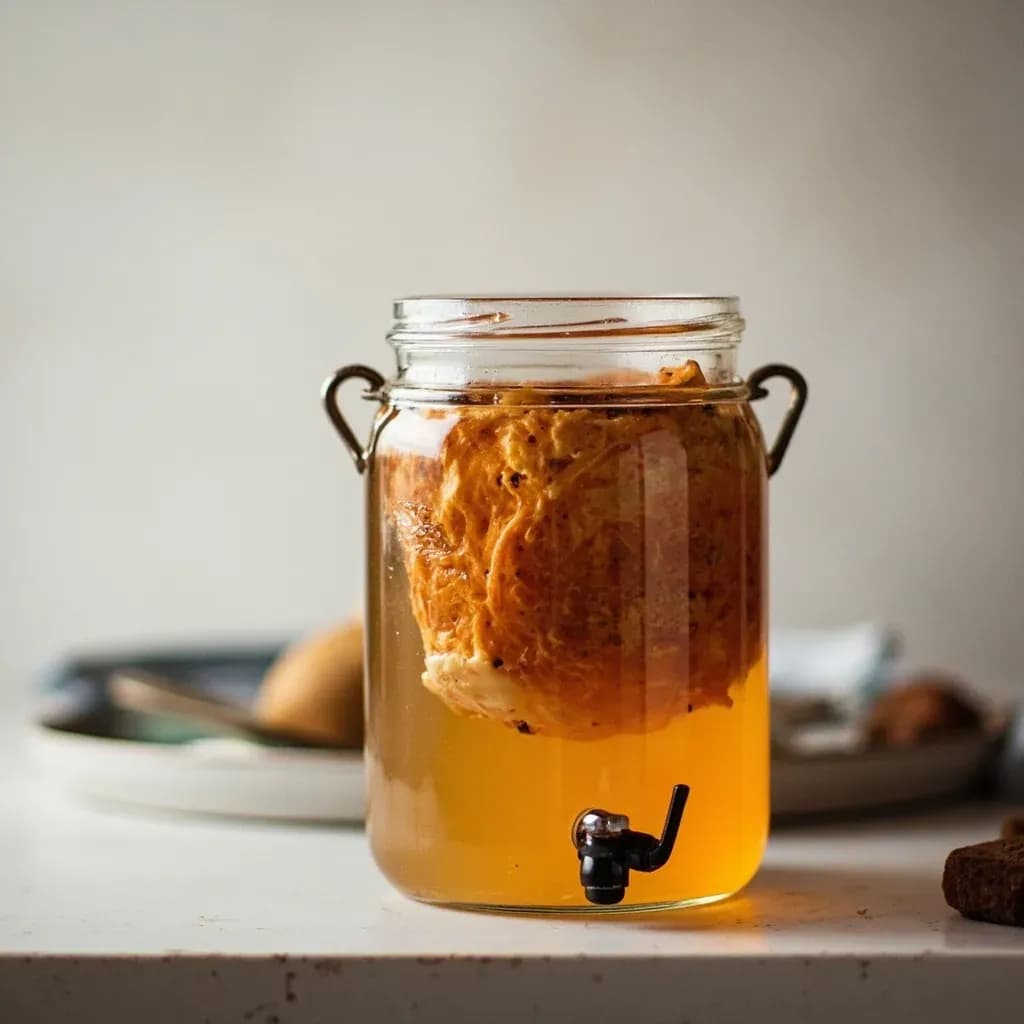
Continuous brewing keeps a fermentation vessel perpetually active by removing a portion of finished product and replacing it with fresh substrate, rather than batching. It's common for kombucha and vinegar, where a resident culture stays in place and works continuously. This sustains the microbial population, shortens turnaround, and yields steadier results than repeated fresh starts.
Continuous brewing is a fermentation management technique in which a single vessel — usually a 1- to 5-gallon food-grade glass or ceramic crock — houses a permanent live culture (a SCOBY, a vinegar mother, or kefir grains) that is never discarded. Instead, the brewer draws off a portion of finished, acidic liquid at intervals and refills the vessel with fresh substrate: sweet tea for kombucha and jun, sugar water for water kefir, sugared ginger wort for ginger beer plant, or a new charge of wine, cider, or malt for vinegar. The existing culture and the residual starter liquid it lives in do the rest, dropping the pH of the new feed fast enough to suppress stray microbes. It is the same draw-and-refill logic that French and American vinegar houses have run for centuries under the name Orleans process.
The payoff is consistency. Because the culture, the temperature, and the vessel stay the same week to week, flavor, acidity, and carbonation potential settle into a stable profile that batch brewing struggles to match. The cost is vigilance: the system only stays healthy as long as pH stays low, fresh substrate keeps arriving on a regular schedule, and the vessel is shielded from contamination. Skip a refill, let pH climb above 3.5, or top up with chlorinated water and the culture can be overwhelmed. A continuous brew is forgiving day-to-day but unforgiving on hygiene.
At home the technique is most often associated with kombucha, but the same logic applies to jun, water kefir, ginger beer plant, and the perpetual mother of a vinegar barrel. In each case the brewer is essentially keeping a small domesticated ecosystem alive on a fixed feed schedule, and the reward is an unbroken supply of finished ferment without re-pitching a fresh culture each round.
- Difficulty
- Medium
Types & varieties
The most common form; black or green tea plus cane sugar, maintained around a SCOBY in a single vessel that is drawn and refilled indefinitely.
Same perpetual setup but with green tea and raw honey as the substrate and a thinner, jellyfish-like culture distinct from the standard kombucha SCOBY.
Sugar water plus dried fruit (often figs or raisins) and water-kefir grains in a perpetual vessel, typically refed every 24–48 hours.
A long-standing continuous fermentation in which wine, cider, or malt is repeatedly added to a wooden barrel containing a vinegar mother of Acetobacter; finished vinegar is drawn off as new alcohol feedstock is added.
A symbiotic culture of yeast and bacteria kept alive in sugared-ginger wort and refreshed on a regular cycle.
Grains are strained from finished kefir and re-pitched into fresh milk on a roughly 24-hour cycle; not a single-vessel perpetual, but the same draw-and-refill logic.
How to do it
- 1
Sanitize and set up the vessel
Wash a food-grade glass or ceramic crock (1–5 gal) with hot water and a neutral cleanser, rinse thoroughly, and air-dry. Avoid soap residue and reactive metals. Set the vessel in a stable spot away from direct sunlight where the temperature holds between 68 and 85°F (20–29°C).
- 2
Prepare the initial batch
Brew 4–8 tea bags (or about ¼–½ oz loose black or green tea) per gallon of filtered water for 10–15 minutes, remove the tea, and dissolve in roughly 1 cup (200 g) cane sugar per gallon. Cool completely to room temperature before adding to the vessel — heat will damage the culture.
- 3
Inoculate with SCOBY and starter
Pour the cooled sweet tea over a healthy SCOBY and add at least 1–2 cups (240–480 mL) of mature starter liquid per gallon, or enough unpasteurized store-bought kombucha to bring the starter fraction to 10–20% of total volume. This acidic buffer is what drives pH down quickly and outcompetes contaminants.
- 4
First fermentation (7–14 days)
Cover the vessel with a breathable cloth secured by a rubber band. Leave undisturbed for 7–14 days, tasting at day 7 and onward. Fermentation is ready when the liquid is pleasantly tart, slightly sweet, and reads below pH 3.5 on a strip or meter.
- 5
Draw off finished kombucha
Using a clean plastic or stainless ladle or siphon, draw off 10–25% of the vessel volume into bottles or a secondary fermentation vessel. Leave the SCOBY and at least 10–20% of the volume as starter liquid in place.
- 6
Refill with fresh sweet tea
Brew a new batch of tea-and-sugar, cool it to room temperature (or chill it in an ice bath), and gently pour it into the vessel to bring it back to working volume. Do not exceed the working volume; the SCOBY needs to stay submerged or floating at the surface.
- 7
Repeat the cycle
Cover, ferment for 3–14 days depending on temperature and taste, then draw and refill again. Keep a simple log of draw dates, pH readings, and tasting notes so flavor stays consistent.
- 8
Maintain the culture long-term
Every 1–3 months, remove excess SCOBY layers and inspect the vessel for residue. Once or twice a year, empty the vessel, rinse SCOBYs with starter liquid, scrub the crock with hot water, and rebuild the brew from healthy culture and fresh starter.
The Orleans process: continuous brewing's oldest form
Long before the word kombucha reached American kitchens, French and American vinegar houses were running a continuous ferment very similar in logic. A wooden barrel is charged once with a vinegar mother — a leathery mat of Acetobacter — and a starter charge of finished vinegar. New wine, cider, or malt liquor is trickled in at the top, and finished vinegar is drawn from a spigot near the bottom, where the oldest, most fully oxidized liquid sits. The mother never leaves the barrel, sometimes for decades. The same principle that protects a kombucha SCOBY — a low-pH starter buffer and a stable resident culture — protects a vinegar mother, and the same risks apply: let the barrel go dry, top it up with chlorinated water, or add a charge that is too sweet or too low in alcohol, and the culture can stall or be invaded by spoilage organisms. Home kombucha brewers are essentially running a small Orleans process on tea.
- The Orleans method prefers wood because Acetobacter colonizes the staves and continues to work even when the visible mother is removed.
- Finished vinegar is drawn from the bottom, where oxidation is most complete; new feedstock is added at the top, where fermentation begins.
- The same 10–20% starter principle applies: never empty the vessel completely, because the residual acidity is what protects each new charge from contamination.
Common uses
Tips & pitfalls
- Reserve at least 10–20% of the vessel as finished starter liquid; the existing acidity is what protects incoming fresh tea from contamination, so never draw the vessel dry.
- Top up with sweet tea that has cooled to room temperature — never hot liquid — or you will kill the culture and denature the SCOBY's cellulose matrix.
- Use only non-reactive vessels: food-grade glass, stainless steel, or lead-free glazed ceramic crocks. Avoid reactive metals and scratched plastic, which can harbor biofilm.
- Test pH with strips or a meter before each draw; if the reading climbs above 3.5, shorten the cycle or use less replacement tea, because a higher pH invites spoilage organisms.
- Distinguish normal SCOBY growth (smooth, rubbery, wet, tan-to-cream) from mold (fuzzy, dry, blue, green, black, or powdery). Mold means discard the batch — do not try to skim and save it.
- Refeed the vessel on a schedule, not only when empty; letting the SCOBY sit in depleted liquid for days invites dysbiosis and mold growth.
- Avoid flavored or oily teas (Earl Grey bergamot, chai with coconut oil, herbal teas with no tannins) as the base, because they suppress or starve the culture and produce off-flavors.
- For carbonated finished kombucha, bottle the draw-off in swing-top or thick PET bottles with 10–20% headspace and a few days of secondary fermentation at room temperature, then refrigerate to halt fermentation.
Good to know
- Also called
- Continuous-culture brewing, perpetual brew, perpetual kombucha
- Most common application
- Kombucha; also jun, water kefir, ginger beer plant, and vinegar
- Typical home vessel size
- 1–5 gallons (3.8–19 L), food-grade glass or lead-free glazed ceramic
- Ideal fermentation temperature
- 68–85°F (20–29°C)
- Target pH (kombucha)
- 2.5–3.5; never above 4.6
- Cycle length
- 3–14 days between draws, depending on temperature and desired tartness
- Reservable starter liquid
- 10–20% of total volume left in the vessel at all times
- Draw-off volume
- Roughly 10–25% of vessel volume per cycle
- Cover
- Breathable cotton cloth, paper towel, or tight-woven muslin — never airtight
- Equipment to avoid
- Reactive metals (aluminum, raw copper, cast iron) and lead-glazed ceramic
- Difficulty
- Intermediate — easy to maintain, unforgiving if pH or hygiene is neglected
Also called
continuous fermentation
Related

Confit
Cook slowly submerged in fat for silky tenderness and keeping

Cure
Draw out moisture with salt and time to preserve and concentrate

Pickle
Steep in acidic brine for bright, tangy, crunchy preservation

Ferment
Let friendly microbes transform food into tangy, complex flavor

Marinate
Soak in a seasoned mix to flavor and tenderize before cooking

Brine
Soak in salt water so meat stays juicy and seasoned throughout

Dehydrate
Slowly dry out moisture to concentrate flavor and extend shelf life

Cold-Smoke
Perfume cured food with smoke without cooking it through