Transform & Preserve
Secondary Fermentation (Carbonation)
A second ferment that builds natural carbonation and deeper flavor.
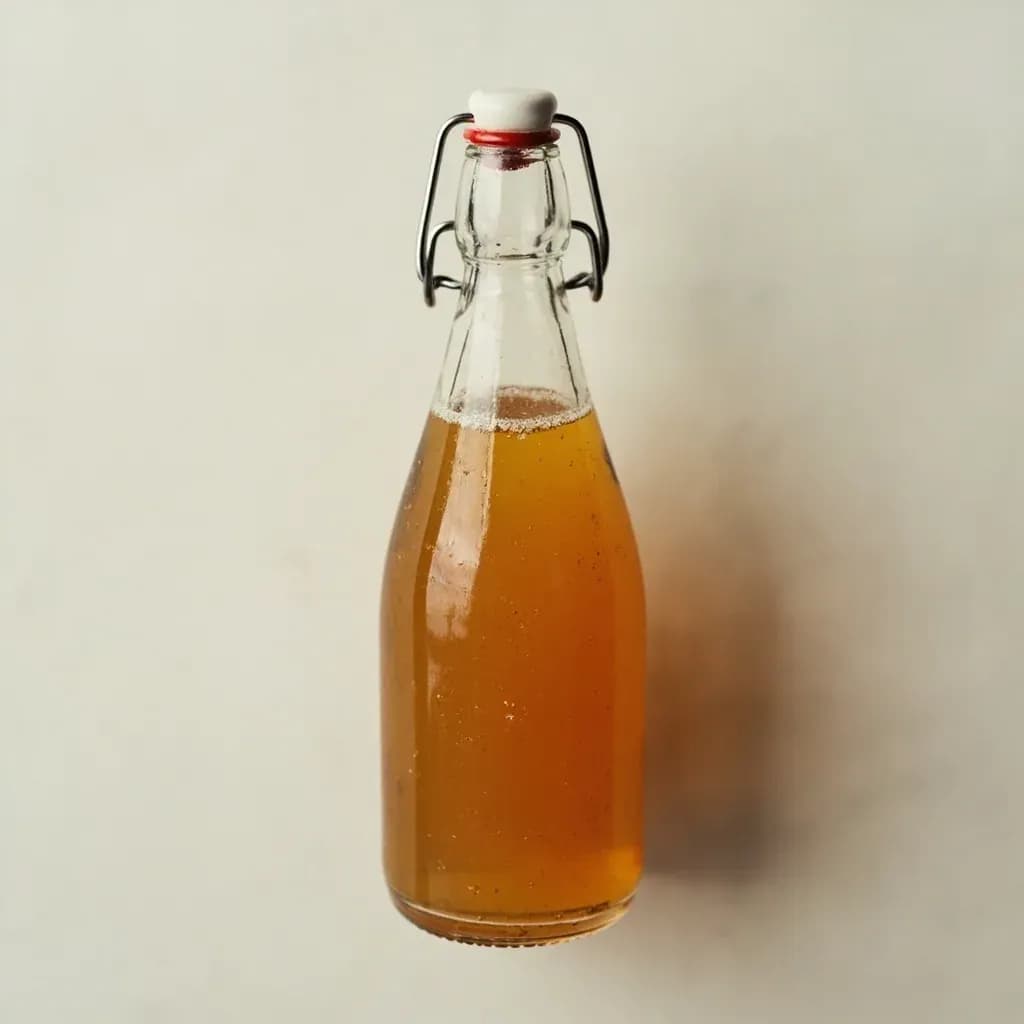
Secondary fermentation continues fermenting an already-fermented beverage, often in a sealed vessel where the trapped carbon dioxide carbonates the drink. It is used to give natural fizz to beer, cider, kombucha, and sparkling wine and to mature flavor. Controlling the residual sugar and seal is important, since excess pressure can over-carbonate or burst the container.
Secondary fermentation for carbonation is the same biological engine as primary fermentation, pointed in a different direction: instead of letting CO2 escape, you trap the yeast in a sealed vessel with a small dose of sugar and let the gas it produces dissolve under pressure into the liquid. The result is naturally carbonated kombucha, bottle-conditioned beer, sparkling cider, and mead, finished without a CO2 tank, regulator, or keg. It is the oldest carbonation method on Earth and remains the standard for traditional-method sparkling wines, farmhouse ales, and most home-brewed beer, cider, and kombucha.
What makes the technique valuable beyond simple fizz is that the conditioning window is also a flavor window. While the yeast works, the liquid sits on whatever you have added — fruit, honey, herbs, hops, ginger, oolong — and those flavors integrate more deeply than they would in an open vessel. Bottle conditioning is how traditional méthode champenoise ciders get their fine mousse, how farmhouse ales like saison and lambic develop their layered character, and how kombucha brewers build the tart, fruity second notes that distinguish a finished bottle from a jar of unfinished tea.
The chief constraint is pressure. Home conditioning typically reaches 1.7–3.5 bar (25–50 psi), well beyond what most kitchen glassware is rated for. Vessel choice — thick swing-tops, champagne bottles, crown-cap beer bottles, or PET soda bottles for testing — is the single most important decision a brewer makes before bottling day, because a single over-pressurized bottle can do real damage.
- Difficulty
- Medium
Types & varieties
Sucrose or dextrose (corn sugar) dosed per bottle; the standard for bottle-conditioned beer and a quick, neutral option for kombucha.
Fresh or thawed fruit — berries, stone fruit, ginger, citrus — added to kombucha, cider, or mead; contributes sugar, flavor, color, and tannin.
Pomegranate, white grape, or apple juice used in place of dry sugar for kombucha and cider; clean flavor and easy, accurate dosing.
Common in mead and some farmhouse ales; dissolves slowly so carbonation builds gradually and aromas integrate over weeks.
Beer-specific: adding a small portion of actively fermenting wort to finished beer produces a softer, more integrated carbonation and helps scrub staling compounds for a fresher profile.
Sealing the fermenter while fermentation is still active and venting at a set pressure; yields very fine effervescence, favored in modern lagers and hazy IPAs.
Classic cider and mead technique with secondary fermentation in the bottle, often followed by riddling and disgorgement to remove the yeast lees.
Adding a live ginger bug culture plus fresh ginger to sweetened water creates a sharp, probiotic soda with lively natural carbonation.
How to do it
- 1
1. Confirm primary fermentation is complete
Kombucha, water kefir, or jun should taste balanced and only mildly sweet, with a pH around 2.8–3.5 or a stable hydrometer reading. For beer, ciders, and mead, confirm the gravity has held steady for 2–3 consecutive days and is at or near the expected final gravity before bottling.
- 2
2. Choose and sanitize pressure-safe vessels
Use thick-walled swing-top bottles, champagne bottles, crown-cap beer bottles, or PET soda bottles. Wash, then sanitize with a no-rinse sanitizer such as Star San. Drain and let air-dry on a rack.
- 3
3. Dose the carbonation sugar
Add priming sugar to each bottle, or stir it into the batch just before bottling. Common doses: kombucha 4–8 g of table sugar or 60–100 mL of fruit juice per 500 mL bottle; beer 3–5 g of dextrose per litre, calculated for the full batch volume; cider 6–10 g of cane sugar or apple juice concentrate per litre. Honey and dark sugars dissolve best if pre-diluted in a small amount of warm finished beverage.
- 4
4. Bottle and seal
Siphon or pour the beverage into each bottle using a bottling wand or funnel, leaving 3–4 cm (about 1.5 inches) of headspace. Cap or seal immediately. If adding whole fruit, fill only to about 70% of the bottle to leave room for the slurry.
- 5
5. Condition at a stable, cool temperature
Store bottles out of direct sunlight at 18–24°C (65–75°F) for kombucha, water kefir, and ginger bug drinks, or 18–22°C (65–72°F) for beer and cider. Keep them upright on a surface you can easily clean in case of leaks.
- 6
6. Monitor pressure and burp if needed
From day 2, check daily. With PET bottles, squeeze gently — they should feel firm like a basketball, not rock-hard. With swing-tops, briefly crack the seal to release excess pressure, especially in warm rooms, then reseal.
- 7
7. Test a bottle to dial in timing
Chill one bottle for 12–24 hours, then open it over a sink. If the carbonation is too soft, let the rest condition another 1–3 days. If it gushes, move every bottle to the fridge immediately to stop further carbonation.
- 8
8. Refrigerate to lock in carbonation
Once the desired fizz is reached, transfer all bottles to 1–4°C (34–40°F). Cold temperatures stop the yeast, so carbonation is preserved. Kombucha and kefir sodas keep 1–3 months refrigerated; bottle-conditioned beer and cider keep 6–12+ months.
Flavor integration during conditioning
Anything you add at bottling time conditions in contact with the working yeast and the dissolved CO2, which changes how those flavors come through compared with post-bottle additions. Tannins from fruit skins soften, hop aromatics round off and integrate, and honey-derived esters settle in rather than read as raw sweetness. The trade-off is timing: ingredients are sealed in with no second chance to adjust.
- Berries (raspberry, blackberry, blueberry) at 100–200 g per 4 L are a reliable kombucha and cider choice — they crash to the bottom and clarify the bottle naturally.
- Stone fruit and pineapple benefit from being frozen before use: freezing ruptures cell walls for better sugar and juice release, and reduces surface wild yeast and mold. Add them thawed.
- Fresh ginger (20–40 g per 4 L, sliced or grated) drives a sharper carbonation and pairs well with kombucha, water kefir, and ginger bug sodas.
- Dry hops added at conditioning (10–25 g per 20 L for beer) contribute aroma without the vegetal bite of long contact in primary.
- Honey and dark sugars must be pre-diluted in warm finished beverage before dosing, or they sink to the bottom and ferment unevenly.
Pressure safety
Every sealed fermenting bottle is a small pressure vessel. The 25–50 psi produced by home conditioning is several times the rating of decorative glass, second-hand soda bottles, and most jars not explicitly made for carbonation. Treat each bottle as if it could fail.
- Use only bottles you can verify are rated for carbonation: new crown-cap beer bottles, thick swing-tops with intact gaskets, champagne bottles, or PET soda bottles for testing.
- Never reuse commercial glass bottles with screw caps or thin walls; they are rated for still beverages, not internal pressure.
- Pressure rises with temperature; a bottle that feels firm at 18°C can become over-pressurized at 28°C within hours.
- Always store conditioning bottles in a closed bin or cardboard case so that, if one fails, glass and foam stay contained.
- Test carbonation in a PET bottle first when developing a new recipe — squeeze it daily to learn timing before committing glass.
Common uses
Tips & pitfalls
- Use PET plastic bottles for your first few batches; squeeze them daily — when rock-hard, move them to the fridge. This is the safest way to learn timing without risking glass.
- Never bottle in thin soda glass, decorative bottles, or secondhand beer bottles you have not pressure-rated; a single bottle bomb can destroy a kitchen.
- Leave 3–4 cm of headspace; less builds excessive pressure, more leaves the bottle under-carbonated and oxidation-prone.
- Burp swing-top bottles every 12–24 hours once warm fermentation is active to prevent over-pressurization, then reseal.
- Temperature is the main dial: at 30°C (86°F) kombucha can carbonate in 24–36 hours; at 18°C (64°F) it may need 5–7 days. Move bottles to the fridge the moment you like the fizz.
- Sanitize bottles and caps with a no-rinse sanitizer. Residual soap ruins carbonation head retention in beer and leaves off-flavors in kombucha.
- For beer, weigh priming sugar by volume of the full batch, not per bottle — small dosing errors compound across the run. Use a priming calculator calibrated to beer temperature.
- Chill finished bottles for 24–48 hours before opening; CO2 is more soluble cold, so carbonation locks in and foam stays controlled.
- Open over a sink with the cap pointed away from your face, and twist the cap slowly — even fully cold bottles can geyser if over-carbonated.
- If kombucha smells yeasty or harshly acidic after bottling, secondary fermentation has stalled; pitch a pinch of brewer's yeast (about 1 g per 4 L) to restart.
Good to know
- Also called
- Bottle conditioning; natural carbonation; spunding or in-tank natural carbonation (when done in a sealed fermenter or keg)
- Typical temperature
- 18–24°C (65–75°F) for kombucha and water kefir; 18–22°C (65–72°F) for beer; 15–20°C (60–68°F) for cider and mead
- Typical duration
- 1–4 days for kombucha, water kefir, and ginger bug drinks; 2–4 weeks for bottle-conditioned beer; 1–2 weeks for cider
- Pressure range
- 1.7–3.5 bar (25–50 psi) for kombucha and soda-style drinks; 1.0–2.0 bar (15–30 psi) for most beer styles
- Priming sugar dose
- Kombucha 4–8 g/L; beer 3–5 g/L for ~2.5 volumes of CO2; cider 6–10 g/L for sparkling
- Required vessels
- Pressure-rated: swing-top (Grolsch-style), thick-walled champagne bottles, crown-cap beer bottles, or PET soda bottles for safe testing
- ABV effect
- Adds roughly 0.2–0.6% in kombucha and 0.3–0.5% in bottle-conditioned beer
- Storage after carbonation
- Refrigerate at 1–4°C (34–40°F); cold halts yeast activity and locks in CO2
Also called
carbonation conditioning · second ferment
Related

Confit
Cook slowly submerged in fat for silky tenderness and keeping

Cure
Draw out moisture with salt and time to preserve and concentrate

Pickle
Steep in acidic brine for bright, tangy, crunchy preservation

Ferment
Let friendly microbes transform food into tangy, complex flavor

Marinate
Soak in a seasoned mix to flavor and tenderize before cooking

Brine
Soak in salt water so meat stays juicy and seasoned throughout

Dehydrate
Slowly dry out moisture to concentrate flavor and extend shelf life

Cold-Smoke
Perfume cured food with smoke without cooking it through