Prep & Assembly
Coquito Blending
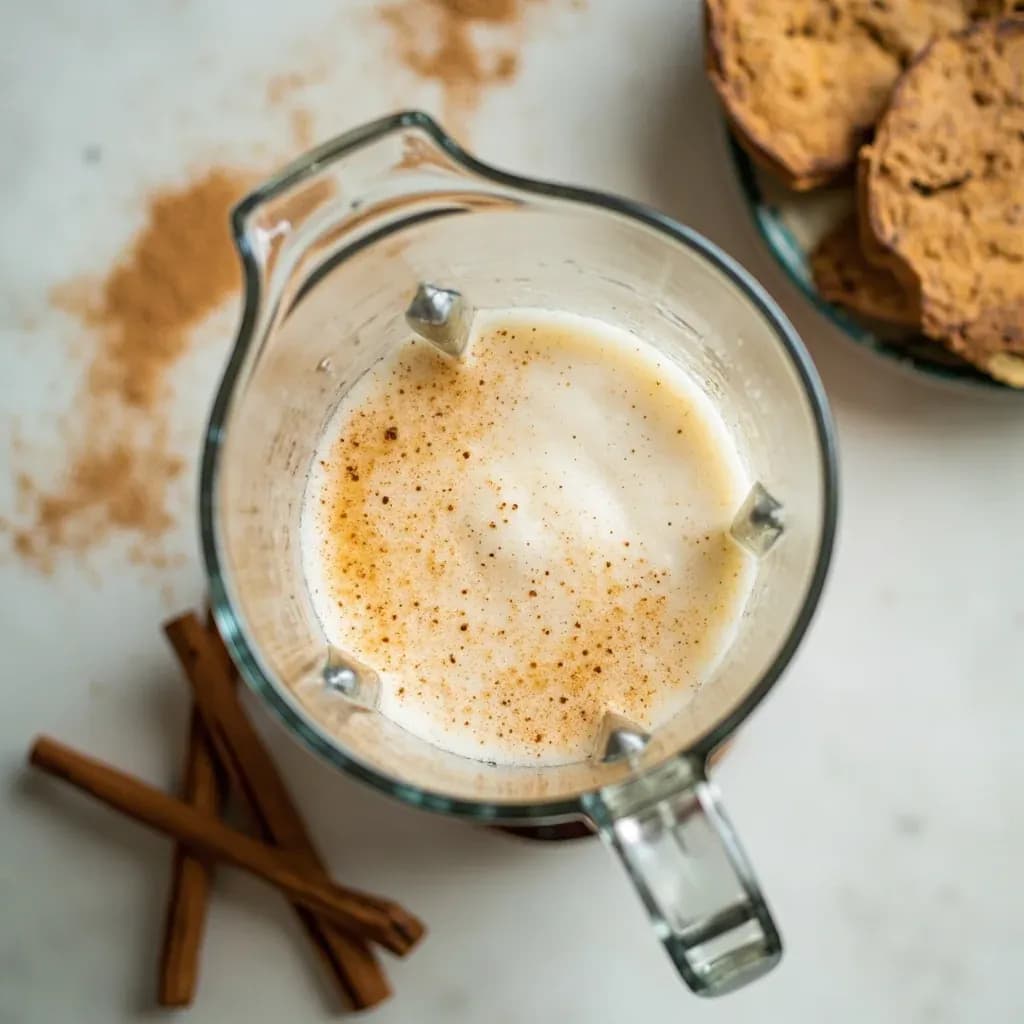
Blending coconut milk, cream, condensed milk, rum, and spices into Puerto Rico's holiday coconog.
Coquito blending combines coconut milk, cream of coconut, sweetened condensed milk, evaporated milk, rum, and warm spices like cinnamon and nutmeg into a smooth, rich holiday drink. The mixture is whirred in a blender until fully emulsified, then chilled so the flavors meld. It is Puerto Rico's festive answer to eggnog, traditionally bottled and shared at Christmas.
Coquito blending is the technique of emulsifying coconut milk, cream of coconut, sweetened condensed milk, evaporated milk, Puerto Rican rum, and warm spices into the silky, pourable holiday drink that defines a Puerto Rican Christmas. Unlike American eggnog, traditional coquito is egg-free; all of its body and viscosity come from the high fat content of coconut products combined with dairy proteins. The result is a cream that pours like a loose custard, just coats the back of a spoon, and carries cinnamon, clove, and vanilla in every sip.
The real work of coquito blending is not high-speed processing — it is cold-temperature emulsion management. Coconut fat, condensed-milk sugars, evaporated-milk proteins, and alcohol behave very differently when warm, when agitated, and when they sit together. A good blend is built from thoroughly chilled ingredients, brief and gentle blending, rum added last on low speed, and a deliberate stop before the mixture aerates. From there, the refrigerator does the finishing: 24 to 48 hours of rest lets the cinnamon soften, the rum mellow, and the coconut fat fully integrate with the dairy.
- Difficulty
- Easy
Types & varieties
The classic: white rum with coconut milk, cream of coconut, condensed milk, evaporated milk, vanilla, cinnamon, and cloves.
The same recipe with the rum omitted or swapped for extra evaporated milk or coconut water; served to children and at sober gatherings.
Made with aged or dark Puerto Rican rum (such as Don Q Añejo or Bacardi Gran Reserva) for a deeper, molasses-tinged profile.
Adds unsweetened cocoa powder or melted dark chocolate; especially common in western Puerto Rico.
Stirs in strongly brewed Puerto Rican coffee or a shot of espresso; sometimes finished with a splash of coffee liqueur.
Uses almond extract or almond milk alongside coconut for a marzipan-leaning variation.
Adds fresh pineapple juice or pineapple-infused rum, pushing the drink toward a piña colada direction.
Egg-yolk-enriched custard version closer to classic eggnog; requires careful tempering over gentle heat, not just blending.
Replaces evaporated and condensed milk with full-fat coconut milk and a coconut-based vegan condensed substitute.
How to do it
- 1
Chill everything
Refrigerate the coconut milk, cream of coconut, evaporated milk, condensed milk, and rum for at least 4 hours, ideally overnight. Cold ingredients are the single biggest factor in a stable coquito emulsion.
- 2
Prep the spices
If using whole spices, add 2–3 cinnamon sticks and 4–5 whole cloves to the rum up to 24 hours ahead so the alcohol extracts their essential oils. Strain them out before blending, or leave them in for visual drama.
- 3
Combine the dairy and coconut base
In a blender pitcher, add 1 can (12 oz) evaporated milk, 1 can (14 oz) sweetened condensed milk, 1 can (15 oz) full-fat coconut milk, and 1 can (15 oz) cream of coconut. Blend on low for 10 seconds just to combine.
- 4
Add the spices and vanilla
Add 1 tablespoon pure vanilla extract, 1 teaspoon ground cinnamon, ¼ teaspoon freshly grated nutmeg, and a pinch of ground cloves. Pulse 3–4 times to distribute without aerating.
- 5
Add the rum last
Pour in 1 to 1½ cups of Puerto Rican white rum on low speed, just until incorporated — about 5 seconds. Do not blend on high with the alcohol in the pitcher; the fat can break.
- 6
Blend to silk, not to foam
Blend on medium for 30–45 seconds total. Stop as soon as the surface looks glossy and smooth. Any longer and you will incorporate air, which accelerates separation in the bottle.
- 7
Taste and adjust
Dip a clean spoon: it should taste balanced — sweet, spiced, boozy but not harsh, with coconut prominent. Add a splash more rum for strength, more condensed milk for sweetness, or a touch more evaporated milk to loosen the body.
- 8
Strain (optional)
For a perfectly smooth pour, pass the blend through a fine-mesh sieve into a large pitcher or directly into sterilized glass bottles. This catches any undissolved spice clumps or coconut solids.
- 9
Bottle and refrigerate
Pour into clean glass bottles (grolsch-style swing-tops or repurposed liquor bottles work well), leaving about an inch of headspace. Seal and refrigerate at least 4 hours; 24–48 hours is the sweet spot for flavor melding.
- 10
Shake before every pour
Natural coconut-fat separation is normal and even desirable. Shake each bottle hard for 10 seconds before serving, pour into small chilled cordial glasses, and dust the surface with ground cinnamon or freshly grated nutmeg.
The Cold-Emulsion Principle
Coquito is a temporary emulsion of coconut fat, dairy proteins, sugar syrup, and alcohol. Each component wants to separate at a different temperature and under different agitation. Keeping every liquid thoroughly chilled — 4 hours in the refrigerator at minimum — keeps the coconut fat solid enough to stay suspended while the dairy proteins unfold around it. Warm ingredients, by contrast, let the fat melt out of suspension the moment the blender stops, and the bottle shows a clear watery layer within an hour.
- Cold fats stay suspended; warm fats rise. The single biggest variable is ingredient temperature, not blender speed.
- Add the rum last, on low speed. Alcohol thins the fat film around each droplet and high-speed agitation can shear it apart.
- Stop the blender while the surface is still glossy, not foamy. Foam means incorporated air, and air accelerates separation in the bottle.
- If the mixture breaks (looks greasy or curdled), a 30-second rest in the refrigerator and a slow re-pulse on low usually brings it back.
Storage, Separation, and Gifting
Natural separation in the refrigerator is not a flaw — it is the coconut fat re-solidifying against the cold glass. Every bottle gets a hard 10-second shake before pouring, which restores the silky pour. Sterilized glass bottles (a dishwasher cycle or boiling-water bath is enough) extend refrigerated life and turn the batch into food-safe holiday gifts. Reused rum bottles are the traditional choice; grolsch-style swing-tops are the practical modern upgrade.
- Leave about an inch of headspace in each bottle; expansion during cold storage can push seals loose.
- Label bottles with the blend date — peak flavor sits between 24 hours and 2 weeks of refrigeration.
- For long freezes, leave 1.5 inches of headspace in rigid containers to allow for expansion; thaw in the refrigerator and shake well before serving.
- Glass is the best long-term vessel; long storage in plastic can mute the spice and coconut aromatics.
Common uses
Tips & pitfalls
- Use full-fat coconut milk and cream of coconut (Coco López or Goya); light coconut milk produces a thin, watery result that will not emulsify properly.
- Chill every liquid — including the rum — for at least 4 hours before blending. Warm liquids break the fat emulsion and cause immediate separation in the bottle.
- Add the rum last and on low speed only. High-speed blending with alcohol in the pitcher can shear the dairy fats and turn the batch greasy.
- Pulse first, then blend on medium for 30–60 seconds. Over-blending aerates the mixture, which speeds up separation and gives a foamy, unstable pour.
- Expect natural separation in the fridge — that is normal coconut-fat behavior. A vigorous 10-second shake before pouring restores the silky cream.
- Macerate cinnamon sticks and whole cloves in the rum for 24 hours before blending; the result is a rounder, less sharp spice profile than dropping ground spice straight into cold milk.
- Taste before bottling: condensed-milk brands vary in sweetness, and rum proofs differ. Adjust with a splash of evaporated milk to loosen or another shot of rum to strengthen.
- If using egg yolks for a cremoso-style coquito, temper them with a warm portion of the milk blend over low heat first; never add raw yolks straight into cold dairy, and keep the finished mixture under 170°F.
Good to know
- Origin
- Puerto Rico
- Traditional season
- Christmas and New Year, peaking from late November through early January
- Base ingredients
- Coconut milk, cream of coconut, sweetened condensed milk, evaporated milk, white rum, vanilla, and warm spices
- Egg content
- Traditional recipes are egg-free; modern custard-style riffs temper in egg yolks for a richer, nog-like body
- Texture target
- Silky, lightly viscous, pourable cream that just coats the back of a spoon
- Chill time before serving
- Minimum 4 hours; ideally 24–48 hours for full flavor melding
- Shelf life
- 2–4 weeks refrigerated in sealed glass bottles; up to 3 months if frozen
- Standard spirit
- Puerto Rican white rum; Bacardi and Don Q are the most historically associated brands
Also called
Coquito · Puerto Rican Coconog
Related

Whisk
Beat ingredients smooth and aerated with a looping wire motion

Sift
Pass dry ingredients through mesh to aerate and remove lumps

Strain
Pour through mesh to separate solids from liquid for a smooth result

Filter
Pass liquid through fine material to clarify out the smallest particles

Rice
Press cooked potatoes through small holes for fluffy, lump-free texture

Mash
Crush soft cooked food into a rustic, creamy purée

Grind
Crush food into a coarse to fine texture, from spices to meat

Grate
Shred food into fine bits against a sharp-toothed surface