
Transform & Preserve
Custard Making
Cook eggs and dairy gently to a silky, spoon-coating set
Custard making thickens a mixture of eggs and dairy with gentle, patient heat until it coats a spoon, the basis of crème anglaise, pastry cream, and flan. The danger is overheating into scrambled eggs. Cook low and stir constantly, pulling it the moment it thickens.
Custard making is the gentle art of thickening a mixture of eggs and dairy with patient, controlled heat until it sets to a silky, spoon-coating richness. It underpins crème anglaise, pastry cream, ice cream bases, flan, and quiche. The challenge is the narrow window between perfectly thickened and curdled into sweet scrambled eggs — eggs set just above the temperature where custard becomes lush, so low heat, constant stirring, and a watchful eye (or a thermometer) are everything. Stirred custards thicken on the stovetop; baked custards set gently in a water bath in the oven.
- Difficulty
- Advanced
Types & varieties
A thin pourable stirred custard of yolks, milk/cream, and sugar — the classic dessert sauce and ice-cream base.
A thick, pipeable custard set with cornstarch so it can boil; for éclairs and tarts.
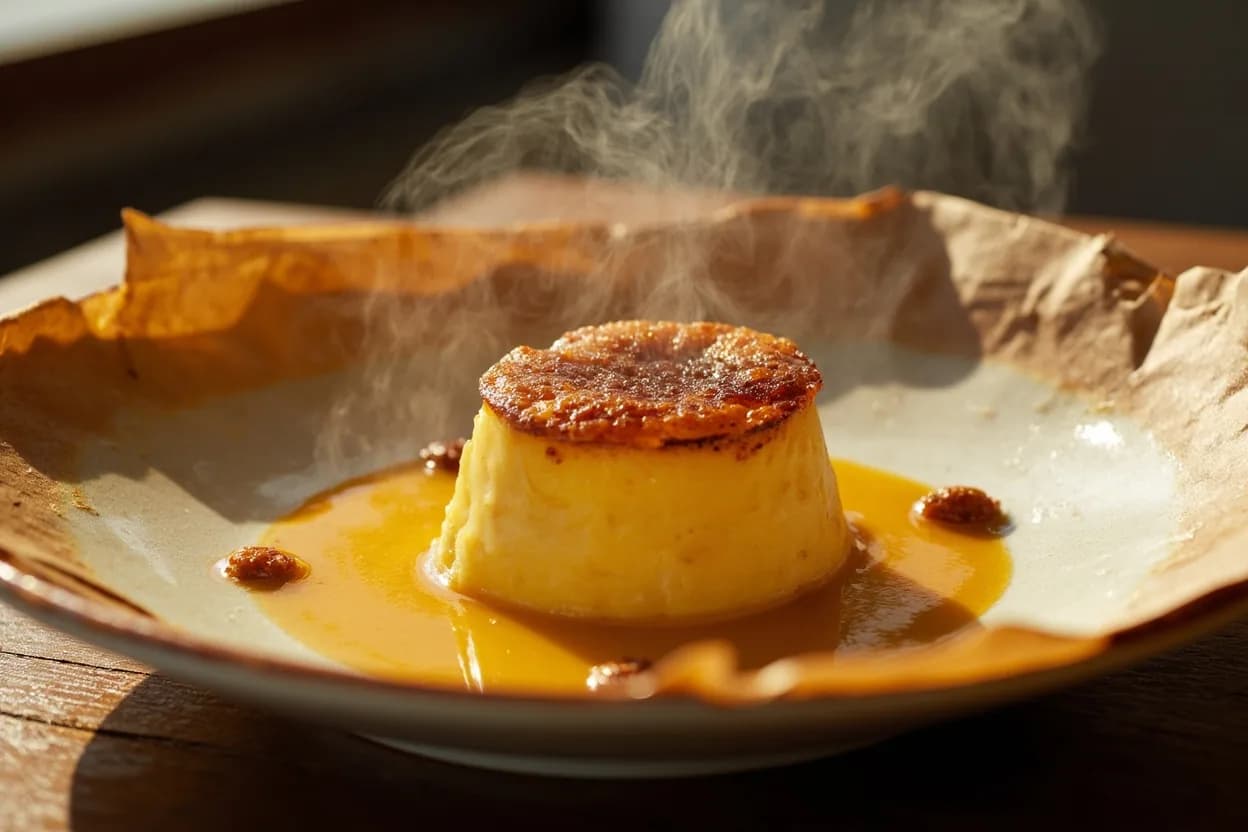
Eggs and dairy baked in a water bath until just set.
Eggs and cream baked into a tender savory set in a crust.
How to do it
- 1
Warm the dairy
Heat the milk or cream (often with vanilla or other aromatics) until steaming but not boiling.
- 2
Whisk the eggs and sugar
Beat yolks (and any starch) with sugar until pale and smooth.
- 3
Temper the eggs
Slowly whisk the hot dairy into the eggs to warm them gradually without scrambling.
- 4
Cook gently
Return everything to low heat and stir constantly, scraping the bottom, until it thickens.
- 5
Test the nappe
Pull it the moment it coats the spoon's back and a finger leaves a clear line — that's set, not scrambled.
- 6
Strain and cool
Strain through a sieve to catch any stray curds, then cool with the surface covered to prevent a skin.
The science
Egg proteins unfold and link together as they heat, building the network that thickens custard. That network sets into silkiness in a narrow band of temperature; push just past it and the proteins bond too tightly, squeezing out liquid and scrambling. Sugar raises the set point and buffers the eggs, giving a little more grace. Starch (in pastry cream) changes the rules entirely — it interferes with the proteins, so a starch-set custard can be boiled without curdling and thickens more firmly.
Rescuing and avoiding curdles
Custard is the classic test of patience at the stove.
- Keep the heat low and stir constantly, scraping the bottom where it sets first.
- Temper the eggs with hot dairy before combining — never dump cold eggs into hot liquid.
- Use a thermometer and pull stirred custard at 82–84 °C to be safe.
- If it starts to curdle, immediately strain it or blitz with an immersion blender to smooth it out.
Common uses
Tips & pitfalls
- A heatproof spatula scraping the bottom prevents hot spots and curdling.
- Strain every stirred custard for guaranteed silkiness.
- Cover the surface with plastic touching it to stop a skin forming.
- Bake custards in a water bath so the edges don't set before the center.
- Pastry cream can and should reach a boil to cook out the starch.
Good to know
- Set temperature
- Stirred custard thickens ~80–84 °C (175–185 °F); curdles by ~85+ °C
- Heat
- Low and gentle, stirring constantly for stirred custards
- Doneness (nappe)
- Coats the back of a spoon; a finger leaves a clean line
- Starch helps
- Pastry cream's cornstarch lets it safely boil and thicken further
- Baked custards
- Set in a water bath (bain-marie) for even, gentle heat
Also called
custard · crème anglaise
Dishes that rely on it
Related

Confit
Cook slowly submerged in fat for silky tenderness and keeping

Cure
Draw out moisture with salt and time to preserve and concentrate

Pickle
Steep in acidic brine for bright, tangy, crunchy preservation

Ferment
Let friendly microbes transform food into tangy, complex flavor

Marinate
Soak in a seasoned mix to flavor and tenderize before cooking

Brine
Soak in salt water so meat stays juicy and seasoned throughout

Dehydrate
Slowly dry out moisture to concentrate flavor and extend shelf life

Cold-Smoke
Perfume cured food with smoke without cooking it through