Prep & Assembly
Desalting Salt Cod
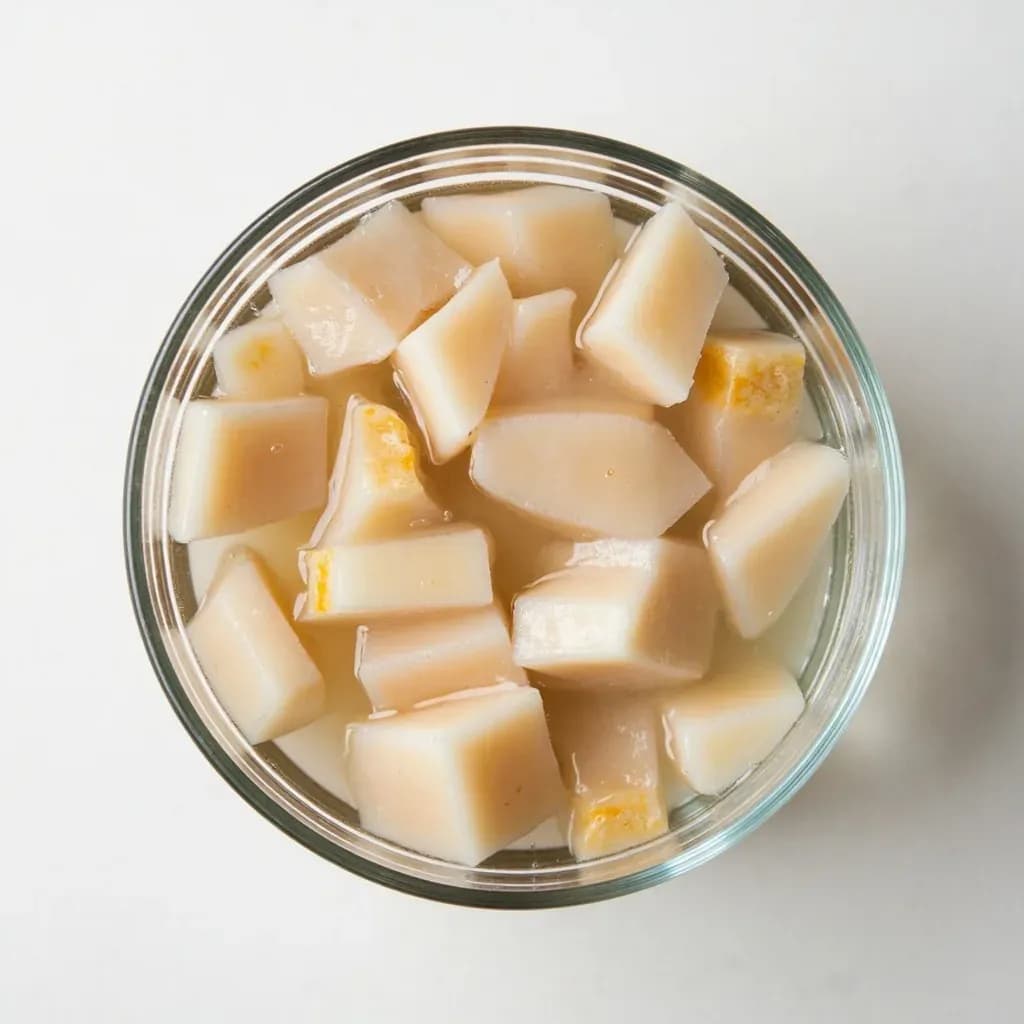
Soaking salt-cured cod in changes of cold water to draw out salt and rehydrate it.
Desalting salt cod rehydrates heavily salt-preserved fish by soaking it in cold water for up to a day or more, changing the water several times to leach out the salt. Properly desalted cod becomes plump and pleasantly seasoned rather than overpoweringly salty, ready to flake into stews, fritters, and salads. Tasting and adjusting soak time keeps the fish from ending up too salty or washed out.
Desalting is the long, cold soak that turns a stiff, leathery slab of salt-cured cod into the supple, milky-white fish you cook with. The cod arrives from the cure carrying roughly 15–25% of its weight in salt, far more than any dish can absorb; the soak both washes that salt out and pushes water back into the dehydrated flesh so the fish behaves, and tastes, like fresh cod.
The process is largely passive work — there is no scrubbing, no boiling, no chemistry to manage — but it rewards attention to three variables: temperature, water volume, and time. Water must stay cold (below 40°F / 4°C) to discourage bacterial growth on the cured-but-not-sterile surface, the fish must be fully submerged with room to spare, and the water has to be refreshed several times because the soak becomes saturated with salt and proteins within hours. Get those three things right and the cod will arrive at the right point: seasoned rather than briny, and flexible rather than rubbery.
The other thing the cook is doing during the soak is reclaiming texture. Salt-cured cod's signature feature — those long, firm flakes that survive rough handling in a gratin, a brandade, or a Portuguese fisherman's stew — only emerge once the muscle fibers have rehydrated evenly. Cut corners on the soak and the center of a thick piece stays chalky and oversalted; oversoak and the same fibers turn to mush.
- Difficulty
- Easy
Types & varieties
Skin-on, bone-in halves; longest desalting time, often 36–48 hours.
Thicker center cuts; 24–36 hours depending on thickness.
Smaller, thinner pieces; 12–18 hours, easily oversoaked.
Cheaper cousin of true cod; same method but rehydrates faster and is more delicate.
Salt-cured, then pressed and air-dried; high surface salt, benefits from an extra long initial rinse and a longer soak.
How to do it
- 1
Rinse off surface salt
Unwrap the salt cod and rinse it under cold running water, rubbing gently to dissolve the visible salt crystals on the skin and flesh. A 1–2 minute rinse is enough; the real work happens in the soak.
- 2
Set up the soak
Place the cod in a non-reactive container (glass, stainless, or food-grade plastic). Cover with at least 2 inches / 5 cm of cold water — a 1:3 ratio of fish to water is a safe minimum. Position the pieces skin-side up so any remaining crystals fall away from the flesh.
- 3
Refrigerate and change the water
Move the container to the refrigerator (40°F / 4°C or below). Change the water every 4–8 hours, refreshing with cold water each time. Discard the soak water; do not reuse it.
- 4
Adjust for thickness
Thin tail pieces (under 1 cm) may be ready in 12–18 hours. Standard fillets take 24–36 hours. Thick whole sides (1.5 inches / 4 cm or more) can take 36–48 hours. If a side is very thick, split it lengthwise so the center rehydrates at the same rate as the surface.
- 5
Test for doneness
At the low end of the time range, lift the thickest piece and bend it. Properly desalted cod should flex like a thick rubber band without cracking. Pull a small flake from the thickest part, pat it dry, and taste it — the goal is clean, mild cod flavor with light seasoning, not briny salt.
- 6
Optional milk finish
For puréed preparations such as brandade, transfer the cod to fresh whole milk for the final 1–2 hours of soaking. The milk softens the texture and rounds out the salt.
- 7
Drain and dry
Drain the fish and pat it dry with a clean towel. If the recipe calls for it, remove the skin and pull out any pin bones running down the centerline. The cod is now ready to cook and should be used the same day.
Salt cod vs. stockfish
These are two different products and the language around them slips easily, with consequences in the kitchen. True salt cod is preserved by salt (often with a drying stage as well); it must be desalted before cooking. Stockfish — Italian stoccafisso, Norwegian tørrfisk — is air-dried without any salt at all and is simply rehydrated by soaking in water, because there is nothing to draw out. Treat stockfish as if it were salt cod and the fish will emerge flat and vaguely fishy; treat salt cod as if it were stockfish and the dish will be inedible from salt.
Reading the fish during the soak
A few visual cues tell you the soak is progressing normally. The water goes cloudy and slightly frothy within the first hour as dissolved salt and surface proteins leave the fish — that is normal, not spoilage. The flesh will gradually whiten and soften as water re-enters the cells. A persistent sour or ammonia smell, on the other hand, signals the soak has gone on too long or the water was not cold enough; the fish should be discarded.
Adjusting for the dish ahead
How long you soak, and in what, depends on what you are about to cook. A gratin or stew that braises the fish in a seasoned liquid can tolerate a slightly firmer, mildly seasoned piece of cod; pull it at the low end of the time range. Brandade, fish cakes, and other puréed or finely flaked preparations want the fish fully hydrated and as mild as possible — soak to the high end, then finish in milk. For salads where the cod is dressed cold, aim for the middle: fully rehydrated but still holding its flake.
Common uses
Tips & pitfalls
- Rinse the fish briefly under cold running water before soaking to wash off the surface crust of salt — this shortens the soak and keeps the first soak water from going briny immediately.
- Soak skin-side up so any undissolved salt crystals drop away from the flesh rather than settling back onto it.
- Keep the container in the refrigerator for the entire soak, especially in warm kitchens; salt cod is cured but the surface is not sterile, and lukewarm water invites bacterial growth.
- Change the water every 4–8 hours. A darker, frothy water is normal; what matters is replacing it before it gets stale.
- Cut very thick sides (over 1.5 inches / 4 cm) in half crosswise so the center rehydrates at the same rate as the edges.
- Test for doneness by bending the thickest part: it should flex like a thick rubber band. If it cracks cleanly, it still needs more time.
- Do a taste test on a small flake from the thickest part. Properly desalted cod tastes of the sea with mild seasoning; oversalted cod is inedible; undersalted cod will taste flat in the finished dish.
- Do not oversoak. Past 48 hours, the flesh turns mushy, loses its signature flake, and the surface can go sour.
- For brandade and other puréed dishes, an hour-long final soak in whole milk produces a noticeably milder, more tender result.
- Cook the desalted fish the same day; once rehydrated, it keeps only 1–2 days refrigerated and is more vulnerable to spoilage than the cured form.
- A piece of raw potato or a slice of bread dropped into the soak is an old folk test — it will taste salty while the water is still over-saturated. It is not a substitute for tasting the fish.
Good to know
- Also called
- Desalting, freshening, rehydrating salt cod; in Portuguese, dessalgar bacalhau
- Primary purpose
- Remove excess curing salt and rehydrate the flesh so the fish can be cooked as fresh cod
- Typical time
- 24–48 hours, depending on thickness of the cut
- Water temperature
- Cold — keep below 40°F / 4°C; refrigerate the soaking vessel in warm weather
- Water change interval
- Every 4–8 hours, with at least 3–4 changes over the soak
- Cod-to-water ratio
- Cover by at least 2 inches / 5 cm; a 1:3 ratio of fish to water is a safe minimum
- Salt content of cured fish
- Roughly 15–25% salt by weight before desalting
- Difficulty
- Easy but time-consuming; the work is mostly waiting
- Doneness test
- Flesh should bend like a thick rubber band without snapping; a sliver tasted should be seasoned, not briny
- Storage during soak
- Keep submerged and refrigerated; cook the same day once desalted
- Origin of the cure
- Developed by Viking and later Basque, Portuguese, and Norwegian fisheries as a way to preserve cod without ice
- Related dry-cured cod
- Italian stoccafisso and Norwegian tørrfisk are air-dried (not salted) and rehydrate differently — they do NOT need desalting
Also called
Dessalar · Soaking Saltfish · Salt-Cod Desalting · Flaking Salt Cod · Desfiar · Soaking Dried Fish
Dishes that rely on it


Related

Whisk
Beat ingredients smooth and aerated with a looping wire motion

Sift
Pass dry ingredients through mesh to aerate and remove lumps

Strain
Pour through mesh to separate solids from liquid for a smooth result

Filter
Pass liquid through fine material to clarify out the smallest particles

Rice
Press cooked potatoes through small holes for fluffy, lump-free texture

Mash
Crush soft cooked food into a rustic, creamy purée

Grind
Crush food into a coarse to fine texture, from spices to meat

Grate
Shred food into fine bits against a sharp-toothed surface