Prep & Assembly
Dump-Cake Method
An easy dessert made by layering canned fruit and dry cake mix in one dish, then baking — no mixing.
The dump-cake method layers fruit (often canned pie filling) with dry boxed cake mix and pats of butter directly in a baking dish, with no stirring, then bakes until the top is crisp and the bottom is saucy. It is a deliberately low-effort American dessert that produces a cobbler-like result. The butter and fruit moisture cook the dry mix from below as it sits.
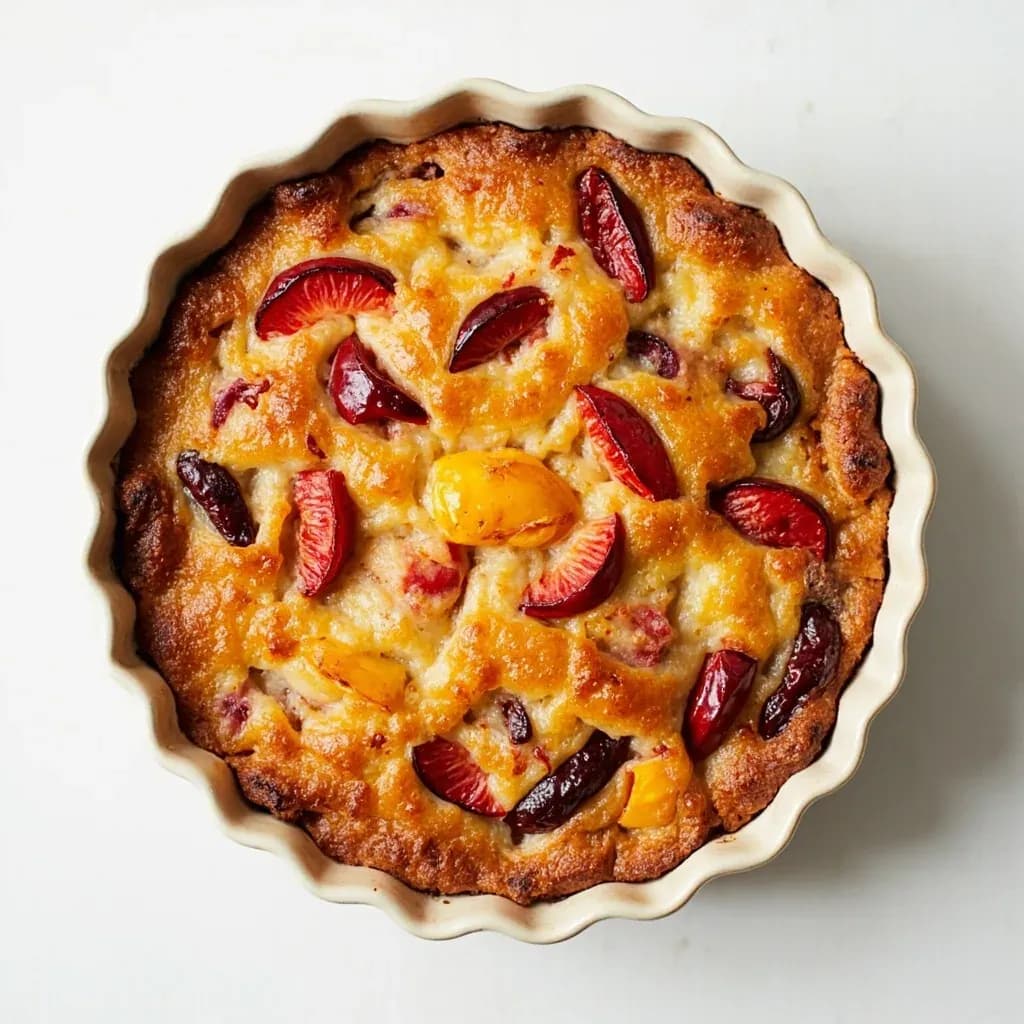
The dump-cake method is a one-dish assembly technique in which canned fruit (or pie filling), a full box of dry cake mix, and pats of butter are layered in a baking dish and baked as-is — nothing is stirred, folded, or beaten. The cake mix is meant to remain powdery going into the oven; the melting butter seeps through the dry layer and hydrates it from above, while steam and syrup from the fruit rise from below. The result is a two-texture dessert: a crisp, buttery, almost shortbread-like topping over a glossy, cobbler-style fruit base, with no mixing bowls, no stand mixer, and no real technique to learn. It is, in effect, a cobbler built backward, where the batter is never mixed and the topping forms itself in the heat of the oven.
Dump cake matters because it is one of the most forgiving desserts a cook can make. There is no creaming stage, no folding, no worry about overmixing, and almost no opportunity to fail — the oven does the assembling. It is also a true pantry technique, designed around shelf-stable staples (boxed mix, canned fruit) and butter from the fridge that can be assembled on short notice, making it a go-to for last-minute guests, weeknight desserts, and potlucks. The trade-off is that the finished dish leans heavily on processed ingredients, and most of the texture and flavor comes from how generously and evenly the butter is distributed across the top.
The defining rule of a true dump cake is that the layers stay distinct going into the oven. Stir the cake mix into the fruit and you have made a different dessert — closer to a dense, simple cake than a dump cake. Leave the layers alone, dot the dry surface edge-to-edge with cold butter, and the oven will produce the characteristic crackly, golden crust that gives the method its name.
- Difficulty
- Easy
Types & varieties
The most iconic version: canned cherry pie filling, yellow or white cake mix, butter, and often chopped pecans on top.
Crushed pineapple in juice as the base; sometimes built 'upside-down' with brown sugar and maraschino cherries.
Canned or spiced apple pie filling, commonly paired with yellow cake mix and a sprinkle of cinnamon.
Canned peach pie filling or sliced peaches in syrup; frequently served warm with vanilla ice cream.
Berry pie filling or canned fruit in light syrup with yellow or white cake mix.
Pumpkin pie filling or spiced pumpkin base with yellow or spice cake mix; a popular fall variation for Thanksgiving.
Lemon-lime soda (Sprite or 7-Up) poured over the cake mix in place of butter to create a lighter, cakier topping.
Same layering method cooked on LOW for 2–3 hours; convenient for keeping dessert warm at a potluck or buffet.
Chocolate cake mix with cherry pie filling for a Black Forest-leaning result, sometimes topped with chocolate chips.
How to do it
- 1
Heat the oven and prep the dish
Preheat the oven to 350°F (175°C). Lightly grease a 9 x 13 inch baking dish with butter or nonstick spray; glass and metal both work, though metal produces a slightly crisper bottom crust.
- 2
Dump the fruit
Pour 21–30 oz of canned fruit or pie filling into the dish and spread it into an even layer that reaches the corners. If the fruit is very juicy — crushed pineapple in heavy syrup, for example — drain off a few tablespoons of liquid first to keep the bottom from turning soupy.
- 3
Add the dry cake mix
Sprinkle one 15.25 oz box of dry cake mix (yellow, white, butter, spice, or chocolate) evenly over the fruit. Do not stir. Pat gently with a spatula only to level the surface; the goal is a uniform dry blanket, not a compacted layer.
- 4
Cover with butter
Slice 1 cup (2 sticks / 227 g) of cold butter into thin pats about 1/8 inch (3 mm) thick. Distribute them across the entire surface of the cake mix, edge to edge, so there are no visible dry spots. The butter will melt and bind the topping into a single crust; gaps in coverage leave powdery patches.
- 5
Add an optional topping
Sprinkle 1/2 to 1 cup of chopped pecans or walnuts over the butter for crunch and to slow browning, or dust lightly with cinnamon and sugar. Other options: shredded coconut, rolled oats, or chocolate chips.
- 6
Bake
Bake uncovered for 45–60 minutes, until the top is golden brown and crisp and the fruit is bubbling vigorously at the edges. If the top darkens before the fruit is bubbling, tent loosely with foil for the last 10–15 minutes.
- 7
Rest and serve
Let the cake rest 10–15 minutes on a rack so the fruit syrup thickens and the crust firms up enough to scoop cleanly. Spoon into bowls and serve warm with vanilla ice cream, whipped cream, or a pour of cold heavy cream.
How the no-stir layering actually works
The physics of a dump cake are easy to understand once you see the layers in motion. Cold butter pats melt slowly on top of the dry mix and begin to seep downward by gravity, hydrating the cake mix in patches. Meanwhile, water vapor escaping from the warming fruit below moves upward through the dry layer, hydrating it from the other side. The two streams meet somewhere in the middle, and that hydrated zone sets into the crisp golden crust you see on top. Wherever the butter does not reach, the mix stays powdery; wherever the steam cannot rise, the bottom stays dry. A perfect dump cake is really a problem of even coverage — both the butter on top and the fruit heat at the bottom.
- Cold (not melted) butter is critical: thin pats melt slowly enough to seep through the mix rather than pool on top.
- Dry cake mix is hydrating from two directions at once — melted butter above, fruit steam below — and the meeting zone becomes the crust.
- Any dry patch left uncovered by butter will remain powdery after baking, no matter how long the dish cooks.
Pantry variations and from-scratch upgrades
Most of the criticism leveled at dump cake is really criticism of the ingredients, not the method. The technique itself is neutral and accepts substitutions readily. Canned pie filling can be replaced with fresh or frozen fruit tossed with sugar, cornstarch, and lemon juice; boxed cake mix can be swapped for a homemade equivalent of flour, sugar, leavening, and salt; and butter can be browned first for a nuttier topping. Bourbon, vanilla, or almond extract stirred into the fruit, a sprinkle of oats over the butter, or a final drizzle of salted caramel can all push the dessert toward something a cook would be proud to serve after dinner rather than at a covered-dish supper.
- Substitute 4–5 cups of fresh or frozen fruit tossed with 1/2 cup sugar, 2 tablespoons cornstarch, and a squeeze of lemon for canned filling.
- Brown the butter before dotting the top for a deeper, nuttier flavor; chill it just enough to slice into pats.
- Add 1–2 tablespoons bourbon, dark rum, or vanilla to the fruit layer for an adult version.
- Stir 1/2 cup old-fashioned oats into the cake mix for a streusel-like crunch.
- Finish with flaky salt, a dusting of powdered sugar, or a drizzle of warm caramel just before serving.
Common uses
Tips & pitfalls
- Use real butter, not margarine or buttery spreads — the flavor and fat content drive the crust, and substitutes often leave a greasy or powdery result.
- Slice the cold butter into thin pats (about 1/8 inch / 3 mm) and distribute them edge-to-edge so the entire surface of the cake mix is covered; any dry patch will stay powdery no matter how long you bake.
- Do not stir the layers. The whole point of a dump cake is that the fruit, dry mix, and butter form their own layers in the oven — stirring turns it into a different dessert.
- Drain very watery fruits (crushed pineapple in heavy syrup, fruit in extra juice) by a few tablespoons, or the bottom layer can turn soupy and the crust will not set.
- Sprinkle 1/2 to 1 cup of chopped pecans or walnuts over the butter for a buttery crunch that also protects the topping from over-browning.
- Tent loosely with foil if the top darkens before the fruit is bubbling at the edges — the top can scorch in the last 15 minutes, especially in metal pans.
- Rest the cake 10–15 minutes after baking so the fruit syrup thickens and the crust firms up enough to scoop cleanly; serving it piping hot produces a flood of thin juice.
- Serve warm rather than hot — the fruit layer needs a few minutes to behave more like a sauce and less like a flood, and the crust sets up further as it cools.
Good to know
- Category
- Prep & Assembly / Dessert technique
- Difficulty
- Very easy (beginner-friendly)
- Active prep time
- 5–10 minutes
- Bake time
- 45–60 minutes
- Oven temperature
- 350°F (175°C); some recipes go to 375°F (190°C)
- Standard pan
- 9 x 13 inch (23 x 33 cm) baking dish, glass or metal
- Yield
- 8–12 servings
- Standard ratios
- 1 box (15.25 oz / ~432 g) cake mix; 1 cup (2 sticks / 227 g) butter; 21–30 oz fruit or pie filling
- Core components
- Canned fruit or pie filling, dry boxed cake mix, butter
- Origin
- United States, mid-20th century home cooking
- Defining rule
- Nothing is stirred; ingredients are layered and baked as-is
Also called
dump cake
Related

Whisk
Beat ingredients smooth and aerated with a looping wire motion

Sift
Pass dry ingredients through mesh to aerate and remove lumps

Strain
Pour through mesh to separate solids from liquid for a smooth result

Filter
Pass liquid through fine material to clarify out the smallest particles

Rice
Press cooked potatoes through small holes for fluffy, lump-free texture

Mash
Crush soft cooked food into a rustic, creamy purée

Grind
Crush food into a coarse to fine texture, from spices to meat

Grate
Shred food into fine bits against a sharp-toothed surface