Transform & Preserve
Flavor Encapsulation
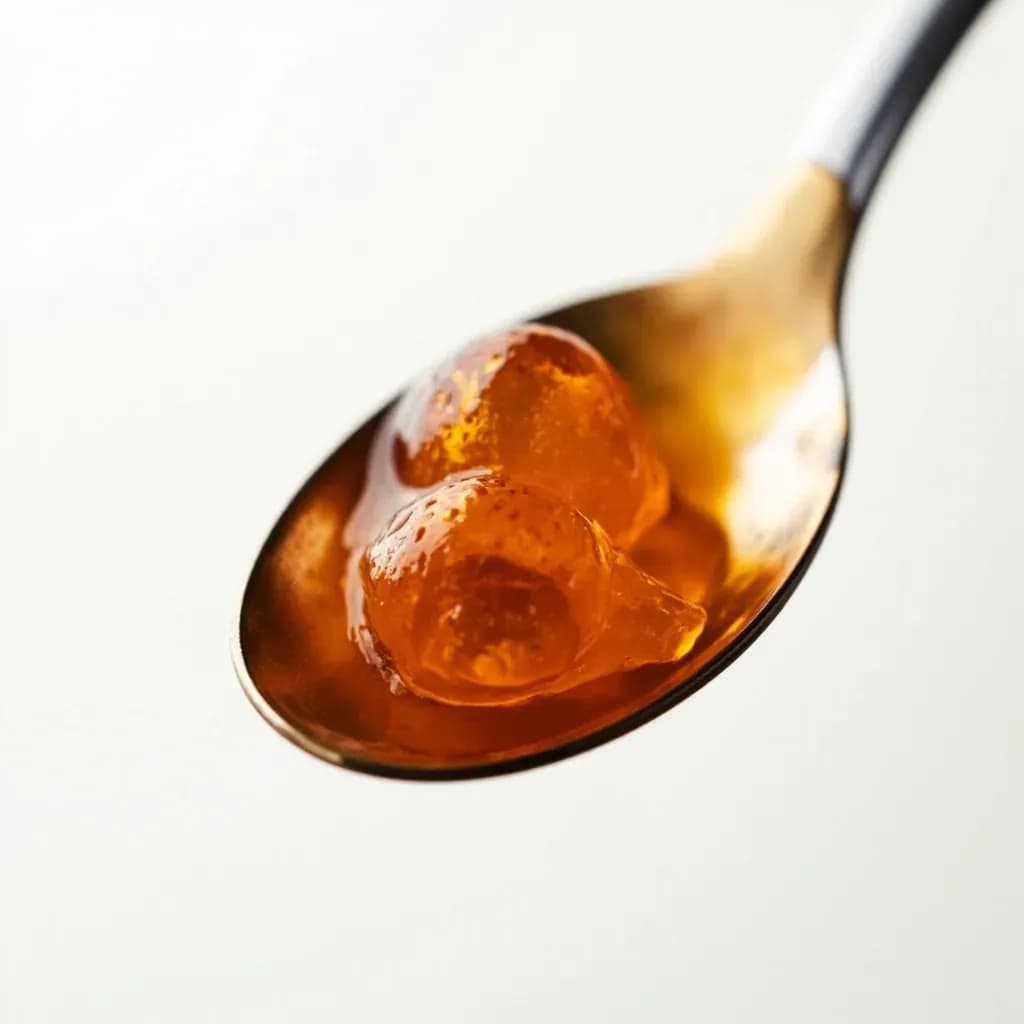
Trapping a liquid flavor inside a thin gel skin to create bursting spheres or pearls.
Flavor encapsulation, central to spherification, surrounds a flavored liquid in a delicate gel membrane so it bursts in the mouth releasing a liquid center. It is done with sodium alginate and a calcium bath, either dripping the flavored liquid into calcium or reversing the two for larger spheres. Modernist kitchens use it for caviar-like pearls and ravioli-style bursts of juice or stock.
Flavor encapsulation is the deliberate trapping of a flavored liquid inside a thin, edible membrane so that the core stays fluid until the diner bites, releasing a controlled burst of flavor. The membrane — usually only a fraction of a millimeter thick — is firm enough to hold its shape on the spoon or plate, yet soft enough to collapse between the teeth. The result is a sphere, pearl, or molded shape that behaves like a liquid-filled capsule: visually intact, texturally surprising, and intensely flavorful at the moment of release.
In the kitchen, encapsulation is valued less as a novelty than as a precision tool. It lets a cook deliver a pure hit of acid, fruit, alcohol, or savory essence without diluting the surrounding dish, and it turns plating into a small piece of theater, with the diner choosing the moment of release. It also solves a practical problem: many flavors (citrus oils, vinegars, spirits, infused purées) are too aggressive to serve loose on a composed plate, but work beautifully when metered out as pearls.
The technique relies on an alginate–calcium reaction. Sodium alginate, a gelling polysaccharide extracted from brown seaweed, is dissolved into either the flavored liquid or a water bath. When that liquid meets calcium ions — from calcium chloride or calcium lactate — the calcium cross-links the alginate chains into a hydrogel film almost instantly on contact. Because the cross-linking only happens where the two liquids meet, a thin skin forms around the drop and the interior stays liquid. The membrane keeps forming as long as calcium is present, which is why finished spheres must be rinsed and held in plain water; left too long in either bath, they will gel all the way through and the burst is lost.
- Difficulty
- Hard
Types & varieties
Flavored liquid is blended with sodium alginate, then dripped into a calcium chloride or calcium lactate bath. Best for non-dairy, low-calcium liquids with pH above 3.6.
Flavored liquid is enriched with calcium (usually calcium lactate), then dripped into a sodium alginate bath. Required for dairy and any liquid that already contains calcium, because they would otherwise gel the entire batch.
Tiny ~3 mm spheres made by squeezing the liquid through a syringe or fine-tipped squeeze bottle into the cross-bath. Used as garnishes and cocktail pearls.
Hollow 3–4 cm spheres or hemispheres formed in silicone molds, often built up in layers for visual effect or dropped into the bath mold-side down to skin the surface.
Finished spheres are rinsed, then passed through a second flavored alginate bath to add an outer colored or flavored skin, allowing two-tone or layered effects.
A less common kitchen variant in which a hydrocolloid-rich phase separates and coats a liquid, producing softer, less elastic membranes than alginate–calcium.
How to do it
- 1
Choose your spherification type
Use basic spherification for non-dairy, low-calcium liquids such as fruit juices, vinegars, or wine-based flavors with pH above 3.6. Use reverse spherification for dairy (yogurt, cream, milk), alcohol-rich liquids, and anything already containing calcium (some stocks, juices, or purées), because those would otherwise gel the entire batch.
- 2
Prepare the bath
For basic spherification, dissolve 0.5–1% calcium chloride (or 1–2% calcium lactate) in soft, cold water. For reverse spherification, dissolve 0.5% sodium alginate in soft, cold water, then refrigerate for at least an hour to de-bubble. Keep the bath shallow (3–5 cm) in a wide, flat container so drops have room to fall cleanly.
- 3
Prepare the flavored liquid
Basic: blend 0.5–1% sodium alginate into the flavored liquid with an immersion blender, then rest in the fridge for at least an hour to de-bubble. Reverse: blend 1–2% calcium lactate (sometimes with 0.1–0.3% sodium alginate to firm the membrane) into the flavored liquid. If the liquid is acidic, add sodium citrate a pinch at a time until the pH is above ~3.6.
- 4
Form the spheres
For pearls, load the flavored liquid into a squeeze bottle or syringe and drip it from about 5–10 cm into the cross-bath. For larger spheres, pour the liquid into hemispherical silicone molds; once set, drop the filled mold into the bath mold-side down to skin the exposed surface, then unmold.
- 5
Set and rinse
Leave small pearls in the bath for 30–60 seconds, larger spheres for 2–3 minutes, until a thin membrane forms. Scoop them out with a slotted spoon without stirring the bath, then rinse gently in a bowl of clean, cool water for 30–60 seconds to remove the surface calcium or alginate taste.
- 6
Hold and serve
Store finished spheres in plain water in the refrigerator and use within a few hours for best texture. Plate at the last moment — the membrane keeps reacting with any residual calcium, and the longer it sits, the thicker the skin becomes, until eventually the core fully gels and the burst is lost.
What encapsulates well — and what fights you
Not every flavor is a good candidate. The reaction is governed by pH, calcium content, and dissolved minerals, so the easiest batches are non-dairy liquids with pH above 3.6 and no added calcium. Liquids that contain calcium (milk, cream, yogurt) or that are strongly acidic (lemon, lime, many vinegars) require reverse spherification and pH adjustment. Pulpy or fibrous purées should be strained first so the membrane forms cleanly.
- Easy candidates: filtered fruit juices (apple, white grape, mango), wine, sake, simple syrups, tea or coffee infusions, and neutral stocks.
- Use reverse spherification for: milk, cream, yogurt, buttermilk, coconut milk, and condensed milk.
- Buffer with sodium citrate before trying: citrus juices, wine vinegars, balsamic, sherry, sour beers, and most anything below pH 3.6.
- Strain through a fine sieve: pulpy juices, herb purées, very starchy liquids, and anything with visible solids that would pierce the membrane.
- Avoid as the core: liquids already rich in calcium (some prepared stocks, hard-cheese suspensions) unless reverse spherified; carbonated liquids (CO2 disrupts the membrane); very hot liquids (heat degrades alginate).
Common uses
Tips & pitfalls
- Hydrate sodium alginate with an immersion blender rather than a whisk: it clumps badly if poured dry into water, and the blender pulls the powder into a vortex before it can seize up.
- Rest the hydrated alginate mixture in the refrigerator for at least an hour (overnight is better) so trapped air bubbles rise and escape; bubbles rising through the forming membrane leave dimples and tails on the finished spheres.
- Use distilled or filtered water for both the bath and any dilution; hard tap water contains calcium that will trigger premature, lumpy gelling the moment the alginate hits it.
- Choose calcium lactate over calcium chloride whenever the flavor is dairy- or alcohol-based; chloride reads as bitter and soapy where lactate tastes clean.
- Buffer acidic liquids (pH below ~3.6) with sodium citrate before adding alginate; the membrane will not form properly in a strongly acidic environment, and no amount of patience will fix it.
- Add 0.1–0.3% xanthan gum to very thin or watery liquids to slow their fall and help them round up rather than splash flat on impact with the bath.
- Rinse finished spheres in a bowl of clean water for 30–60 seconds to wash off the surface calcium taste that can otherwise read as bitter or chalky, especially on larger spheres.
- Do not stir the bath during the reaction: turbulence deforms the forming membrane and leaves lopsided, teardrop shapes. Drop the liquid in, wait, then scoop with a slotted spoon.
Good to know
- Origin
- Popularized in molecular gastronomy kitchens in the early 2000s, most famously at El Bulli in Catalonia, Spain, by Ferran Adrià and his team, with scientific input from figures such as Pere Castells.
- Primary reagents
- Sodium alginate and a calcium salt — usually calcium chloride or calcium lactate.
- Chemistry
- Calcium ions cross-link alginate polymer chains on contact, forming a thin gel membrane around a liquid core; the interior stays fluid because no calcium reaches it.
- Typical sphere size
- 1–2 cm for classic pearls, ~3 mm for caviar-style pearls, up to 3–4 cm for hemispheres or molded spheres.
- Setting time
- 30 seconds to 3 minutes in the bath, depending on sphere size and bath concentration.
- pH tolerance
- Acidic liquids (below pH ~3.6) prevent gel formation; buffer with sodium citrate to bring pH into range.
- Water requirement
- Soft, low-mineral water (filtered or distilled) is strongly recommended for the alginate bath; hard tap water causes premature, lumpy gelling.
- Shelf life
- Best used within 2–4 hours of forming, held in plain water in the refrigerator.
Also called
Spherification · Flavor Pearls
Related

Confit
Cook slowly submerged in fat for silky tenderness and keeping

Cure
Draw out moisture with salt and time to preserve and concentrate

Pickle
Steep in acidic brine for bright, tangy, crunchy preservation

Ferment
Let friendly microbes transform food into tangy, complex flavor

Marinate
Soak in a seasoned mix to flavor and tenderize before cooking

Brine
Soak in salt water so meat stays juicy and seasoned throughout

Dehydrate
Slowly dry out moisture to concentrate flavor and extend shelf life

Cold-Smoke
Perfume cured food with smoke without cooking it through