Transform & Preserve
Ethylene Management
Controlling ethylene gas to speed up or slow down the ripening of fruits and vegetables.
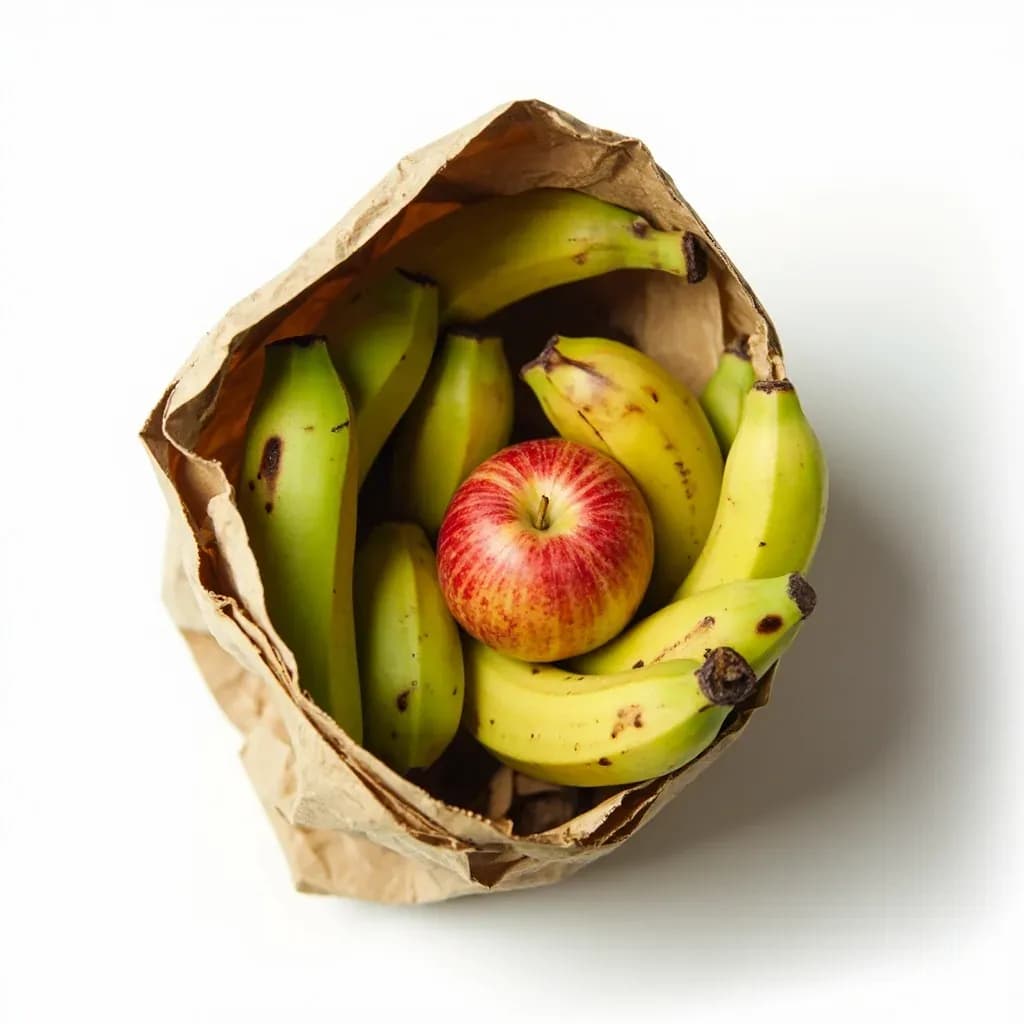
Ethylene management uses the ripening hormone that fruits release to time produce, either bagging fruit with an ethylene producer like a banana to ripen it faster, or separating sensitive items to keep them firm. Cooks and grocers store ethylene producers away from leafy greens and other quick-spoiling items to extend shelf life. Understanding which produce emits versus reacts to ethylene is key to reducing waste.
Ethylene (C₂H₄) is a colorless, odorless plant hormone that every living fruit and vegetable produces as it respires. It is the single most consequential molecule in kitchen produce management because it controls ripening, and ripening is the difference between a tomato that tastes like a tomato and one that tastes like cardboard. The gas acts as a signal, not a clock: once it reaches a threshold — as low as 0.1 ppm for sensitive fruit — it triggers a self-amplifying cascade called the climacteric response, in which the fruit itself begins generating more ethylene, softens, sweetens, develops aroma, and finally collapses into rot. Because the gas drifts freely from fruit to fruit, a ripe apple in a paper bag can ripen an avocado in a day and a half, and a single banana on the counter will quietly turn nearby lettuce into brown slime within forty-eight hours.
The technique runs in two opposite directions. You push ripening forward by concentrating ethylene around climacteric fruit (apples, bananas, tomatoes, avocados, pears, mangoes, peaches, plums, kiwis, melons, and papaya), or you push it backward by removing the gas, lowering temperature, or — commercially — blocking the ethylene receptors entirely. Cold slows both production and receptor response, which is why refrigeration buys time for ripe fruit, but it also damages the enzymes responsible for flavor development in unripe climacteric fruit, and that damage is permanent.
Non-climacteric produce (citrus, grapes, cherries, pineapple, berries, pomegranate, watermelon, peppers, cucumbers) does not respond to ethylene treatment the same way — it will soften and discolor but will not develop sugar or aroma after picking. Knowing which fruit belongs in which category is the first move in any ethylene strategy, because no amount of bag-trickery will rescue a strawberry or a lemon.
- Difficulty
- Medium
Types & varieties
Commercial use of bottled ethylene gas in sealed ripening rooms. Standard for bananas, tomatoes, avocados, and mangoes shipped green from the tropics.
Home method that traps ethylene from a ripe apple, banana, or pear around the target fruit. Takes 1–4 days for most climacteric fruit at room temperature.
Keeping ethylene producers (apples, bananas, avocados, pears) physically apart from ethylene-sensitive produce (leafy greens, cucumbers, berries, broccoli, herbs, peppers, cut flowers).
Cold temperatures slow both ethylene production and receptor sensitivity; used to extend life of already-ripe fruit but ruin unripe climacteric fruit.
Potassium permanganate or activated charcoal filters oxidize and absorb ambient ethylene in walk-ins, shipping containers, and home storage bins.
1-methylcyclopropene binds irreversibly to ethylene receptors and blocks the ripening signal. Used commercially on apples, pears, tomatoes, kiwis, plums, and melons; treated fruit can hold for months.
Lowers O₂ to 2–3% and raises CO₂ to 2–5% in sealed rooms, dramatically slowing respiration and ethylene response. Standard for long-term apple and kiwifruit storage.
How to do it
- 1
Classify the produce
Decide whether the item is climacteric (continues to ripen after picking: apples, bananas, tomatoes, avocados, pears, mangoes, peaches, plums, kiwis, cantaloupe, papaya) or non-climacteric (will not improve after picking: citrus, grapes, cherries, pineapple, strawberries, raspberries, blueberries, pomegranate, watermelon, peppers, cucumbers). Ethylene management only moves the needle on climacteric fruit.
- 2
Set the goal
Choose ripening (you want the fruit edible soon), holding (you want it firm and green for later), or extending life (it is ripe and you want to keep it that way). The technique you pick depends entirely on this — pushing ethylene on a non-climacteric fruit will soften it without improving flavor.
- 3
Build a ripening environment
For home ripening, place unripe fruit in a paper bag with a ripe apple, banana, or pear. Fold the bag loosely so ethylene accumulates but oxygen still flows. An apple ripens an avocado in 1–2 days; a banana does the same in about a day; the fruit alone in the bag takes 3–5 days. For commercial work, dose a sealed room with 100–150 ppm ethylene for 24–48 hours at 15–20°C and 90–95% relative humidity, then ventilate.
- 4
Build a preservation environment
Move ripe climacteric fruit into the refrigerator to slow further ripening. Move all ethylene producers out of contact with leafy greens, berries, broccoli, cauliflower, cucumbers, peppers, herbs, and cut flowers — use dedicated crisper drawers, vented containers, or a separate counter zone. Commercially, lower O₂ to 2–3% and apply 1-MCP before the climacteric peak to hold fruit for months.
- 5
Monitor daily
Check firmness, color, and aroma once a day. The window between ripe and overripe is short — often less than 24 hours at room temperature once the cascade starts. Sniff for fermentation, press gently for give, and watch the stem end for color change as your cues.
- 6
Stop the process when needed
Lower the temperature (refrigerate at 1–4°C for most ripe fruit; 10–13°C for ripe bananas to avoid chill damage), cut off the ethylene source (remove the apple or banana from the bag, or move the fruit out of contact with sensitive produce), or — commercially — apply 1-methylcyclopropene to block the receptors. Potassium permanganate or activated charcoal scrubbers in walk-ins absorb ambient ethylene and slow aging of stored produce.
Climacteric vs. Non-Climacteric Produce
This is the foundational distinction. Climacteric fruit continues to ripen after harvest, and ethylene management can move it forward or backward. Non-climacteric fruit does not ripen after picking; pushing ethylene at it will soften the texture but will not develop sugar or aroma, so separation matters more than concentration.
- Climacteric (improves after picking): apples, bananas, tomatoes, avocados, pears, mangoes, peaches, nectarines, plums, kiwis, cantaloupe, papaya, figs
- Non-climacteric (no improvement after picking): citrus (lemons, limes, oranges, grapefruits), grapes, cherries, pineapple, strawberries, raspberries, blueberries, pomegranate, watermelon, peppers, cucumbers
Home vs. Commercial Toolkit
Home cooks have three tools: the paper bag, the refrigerator, and physical separation. Commercial operations layer four more on top.
- Home: paper bag with a ripe apple or banana, refrigeration once ripe, dedicated drawers or counter zones for sensitive produce
- Commercial: sealed ripening rooms dosed with 100–150 ppm ethylene for 24–48 hours at 15–20°C and 90–95% humidity
- Commercial: controlled atmosphere storage at 2–3% O₂ and 2–5% CO₂ for months-long holding of apples and kiwifruit
- Commercial: 1-MCP (SmartFresh, TruPick) applied before the climacteric peak to block receptors
- Commercial: potassium permanganate or activated charcoal scrubbers in walk-ins, ripening rooms, and shipping containers to absorb ambient ethylene
Common uses
Tips & pitfalls
- Never refrigerate unripe tomatoes, avocados, stone fruit, pears, kiwis, or bananas. Chilling damages the enzymes responsible for flavor development, and the damage is permanent — a refrigerated unripe tomato will not recover its aroma.
- Once bananas are ripe, the fridge is your friend. The skin blackens within hours but the pulp inside holds for several extra days.
- Use a paper bag, not plastic. Plastic traps moisture and accelerates rot; paper concentrates ethylene while letting oxygen through, which the fruit needs to convert starch to sugar.
- Store apples, pears, and bananas in a separate drawer or counter from lettuce, herbs, broccoli, cauliflower, cucumbers, peppers, and berries. A single ripe apple can ruin a head of lettuce in 48 hours.
- Check ripening fruit daily. The climacteric cascade accelerates once it starts, and overripe fruit produces massive amounts of ethylene that will ruin every neighbor on the counter.
- Onions and potatoes should never share a bin. Potato sprouting is driven by ethylene from onions, and onions absorb moisture and rot in potato storage conditions.
- Cut ethylene-sensitive produce only when you are ready to use it. Once cell walls are broken, both ethylene production and damage rates climb sharply.
- Stone fruit (peaches, nectarines, plums) ripens best stem-down in a single layer on the counter, out of direct sun. They are ethylene-sensitive once ripe and bruise easily.
Good to know
- Type
- Colorless, odorless plant hormone gas (C₂H₄)
- Commercial banana ripening dose
- 100–150 ppm ethylene gas for 24–48 hours
- Ripening room conditions
- 15–20°C (59–68°F) at 90–95% relative humidity
- Detection threshold
- As low as 0.1 ppm triggers the climacteric response in sensitive fruit
- Commercial ripening blocker
- 1-methylcyclopropene (1-MCP), sold as SmartFresh and TruPick, binds irreversibly to ethylene receptors
- Refrigeration effect
- Slows both ethylene production and receptor sensitivity; chilling injury permanently damages flavor in unripe climacteric fruit
- Scrubber media
- Potassium permanganate (Eco-Breathe, Green Keeper) and activated charcoal oxidize or adsorb ambient ethylene in walk-ins and storage
- Discovered
- Effect on plants noted by Dimitry Neljubov in 1901; proven to be plant-produced by Richard Gane in 1934
Also called
Ripening Control · Ethylene Control
Related

Confit
Cook slowly submerged in fat for silky tenderness and keeping

Cure
Draw out moisture with salt and time to preserve and concentrate

Pickle
Steep in acidic brine for bright, tangy, crunchy preservation

Ferment
Let friendly microbes transform food into tangy, complex flavor

Marinate
Soak in a seasoned mix to flavor and tenderize before cooking

Brine
Soak in salt water so meat stays juicy and seasoned throughout

Dehydrate
Slowly dry out moisture to concentrate flavor and extend shelf life

Cold-Smoke
Perfume cured food with smoke without cooking it through