Transform & Preserve
Sprouting
Germinating seeds, grains, or legumes to grow tender shoots and boost their nutrition.
Sprouting soaks then rinses seeds, beans, or grains over several days until they germinate and push out tender shoots. Germination softens the food, makes it more digestible, and increases vitamins and available nutrients while neutralizing some anti-nutrients. Bean sprouts and sprouted lentils are eaten raw or cooked, and sprouted grains are used in breads.
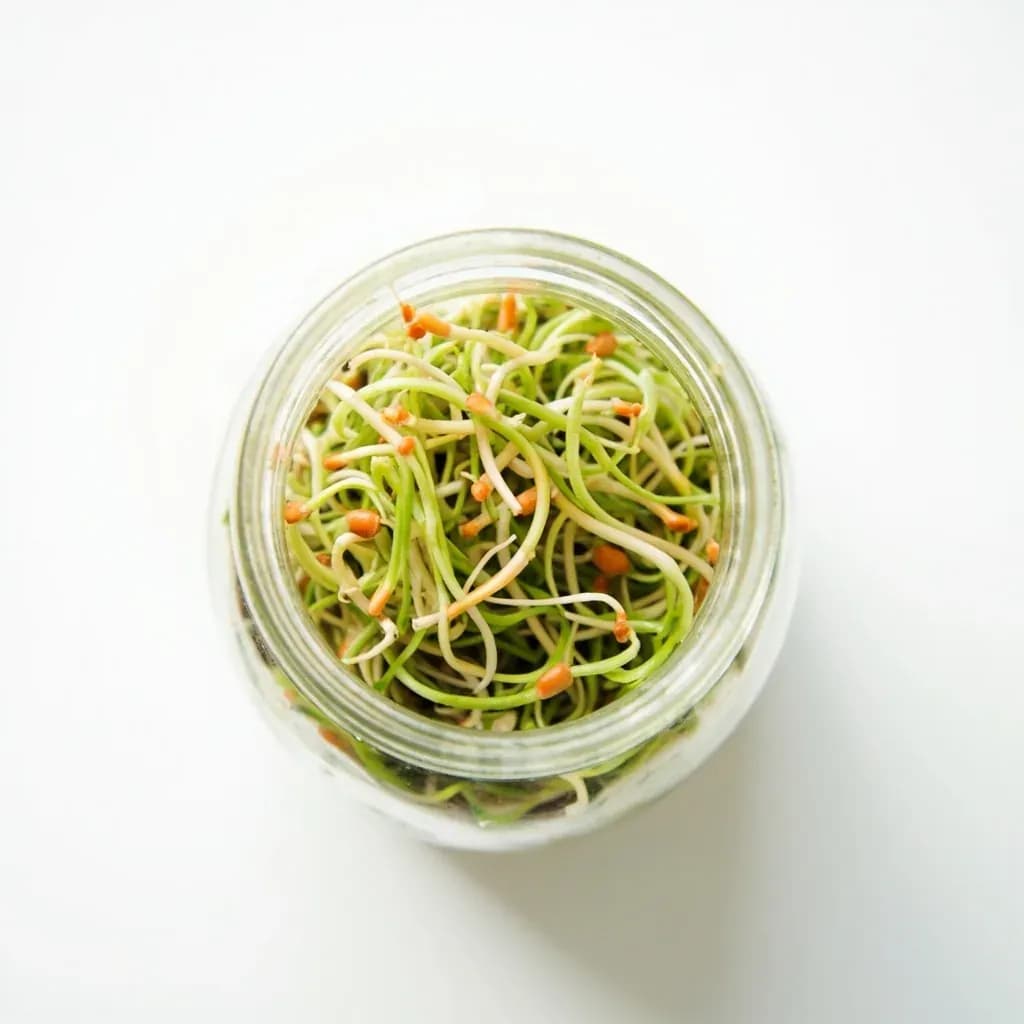
Sprouting is the controlled germination of seeds, grains, or legumes in plain water until a pale radicle and, with light, a set of cotyledon leaves emerge. The seed's stored starches begin converting to simple sugars, proteins break into amino acids, and enzymes mobilize the minerals locked inside — all in a matter of days, with nothing more than water, a jar, and a rinse schedule. The result is a tender, often crunchy ingredient that eats raw or cooks in seconds, with a flavor profile that is usually fresher and sweeter than the unsprouted seed.
The practice is ancient: Chinese medical texts from roughly 5,000 years ago already mention mung bean and soybean sprouts, and Captain Cook kept sprouted peas and wheat aboard HMS Resolution in the 1770s to ward off scurvy. Home cooks today sprout for three reasons — flavor, nutrition, and economy. Sprouting reduces phytic acid and lectins, freeing iron, zinc, and magnesium for absorption, and concentrates certain phytochemicals, notably sulforaphane in broccoli sprouts. It also costs pennies per cup and turns dormant pantry seeds into a fresh, living ingredient in under a week.
In the kitchen, sprouts behave less like a vegetable and more like a textural accent. Mung and soybean sprouts are the signature crunch of chow mein, banh mi, and Korean kongnamul japchae; alfalfa and clover sprouts lend a grassy note to sandwiches and salads; sunflower and pea shoots carry the substantial chew of microgreens. The cardinal rule: legume sprouts (mung, soy, chickpea, kidney) must be cooked because raw legume sprouts carry lectins and a higher bacterial load, while small seed sprouts (alfalfa, broccoli, radish, clover) are traditionally eaten raw. The FDA advises pregnant women, young children, the elderly, and the immunocompromised to cook all sprouts, period.
- Difficulty
- Easy
Types & varieties
The classic Chinese-restaurant sprout; crisp, mild, 1.5–2 inches at peak; always cooked.
Larger than mung with yellow cotyledons; traditional in Korean kongnamul and Japanese moyashi; cook before eating.
Ready in 2–3 days, sweet and slightly peppery; fine raw or lightly cooked.
Threadlike with tiny green leaves; the original sandwich and salad sprout; eaten raw.
3–4 day sprout with exceptionally high sulforaphane content; mild radish note; raw.
Spicy, fast-growing; used raw as a peppery garnish.
Slightly sweeter than alfalfa; often blended with it.
Greened with light, nutty and substantial; remove hulls, then eat raw.
Tender tendrils with sweet pea flavor; raw in salads or briefly wilted.
Bitter, maple-like aroma; component of curry mixes and Ayurvedic dishes.
Grown 7–10 days to 6–8 inches; juiced rather than eaten; intensely grassy.
Wheat, spelt, kamut, rye sprouted just until the tail is 1/8 inch; used raw in bread or cooked as porridge.
Nutty; must be cooked thoroughly to neutralize hemagglutinin-like compounds.
How to do it
- 1
Select and measure
Start with 2 tablespoons of small seeds (alfalfa, broccoli, radish, clover) or 1/4 cup of beans or grains. Inspect and discard broken, discolored, or shriveled pieces. Use only seed specifically sold for sprouting — never garden-packet seed, which is routinely fungicide-treated.
- 2
Initial soak
Place the seed in a clean wide-mouth jar and cover with 2–3 times its volume of cool filtered water. Soak small seeds 4–6 hours, grains 6–8 hours, and beans 8–12 hours. A teaspoon of apple cider vinegar in the soak water helps suppress mold, especially in warm, humid kitchens.
- 3
Drain and rinse
Pour off the soak water through a mesh sprouting lid. Refill with fresh cool water, swirl vigorously to dislodge any clinging seed coats, and drain completely. Drainage is the single most important step — residual water is what breeds bacteria and sour smells.
- 4
Set up for germination
Lay the jar on its side or prop it at a 45° angle in a bowl or dish rack so air circulates and any remaining water drains off. Place in indirect light at 60–75°F. A kitchen cupboard works well for the first stage.
- 5
Rinse on a schedule
Rinse and drain 2–3 times per day, roughly every 8–12 hours — morning and evening is the minimum. Always drain thoroughly between rinses; the jar should look dry within a minute of pouring off water. Skipping the schedule is the fastest path to a smelly, slimy batch.
- 6
Add light for green sprouts
If growing alfalfa, broccoli, clover, or sunflower sprouts, move the jar to indirect sunlight or under a fluorescent lamp for the final 24–48 hours. The cotyledons will turn bright green, vitamin A precursors rise, and the flavor loses its raw-beany edge.
- 7
Harvest at the right stage
Mung bean sprouts: 1.5–2 inches with a visible white tail. Alfalfa and clover: 1.5–2 inches with open cotyledon leaves. Broccoli: 1–2 inches with leaves just opening. Lentils and peas: tail 1/4–1/2 inch, still sweet. Sunflower: hulls shed, first true leaves emerging. Overgrown sprouts turn woody and develop off-flavors.
- 8
Final clean and de-hull
Give sprouts a final cold rinse. For fine sprouts, drop them into a deep bowl of water — empty hulls float and can be skimmed off the surface. Spin dry in a salad spinner or pat gently with paper towels. Bone-dry sprouts keep far longer than wet ones.
- 9
Cook or store
Eat immediately, or store bone-dry in a paper-towel-lined container in the refrigerator for up to a week. Cook all legume sprouts (mung, soy, chickpea, kidney) for at least 1–2 minutes before eating to eliminate surface bacteria and neutralize lectins.
Which sprouts must be cooked
Not all sprouts are equal at the table. The line follows the legume line: any sprout from a bean — mung, soybean, chickpea, kidney, adzuki, black bean — carries measurable lectins and a heavier natural bacterial load, and should be blanched, stir-fried, or boiled for at least 1–2 minutes before serving. Seed sprouts from the brassica and legume-leaf families (alfalfa, broccoli, clover, radish, sunflower, pea) are the ones traditionally eaten raw, though even these should be cooked for the vulnerable groups listed in the FDA advisory. If in doubt, give the batch a 30-second dip in boiling water — it kills surface pathogens while leaving the crunch almost intact.
Why sprout at home
Store-bought sprouts are convenient but they travel a long way and have already lost days of life by the time they reach the refrigerator. Home sprouting takes 5 minutes of active work spread over a week, and the difference in flavor and vitality is immediate: a just-picked mung sprout tastes sweeter, more green, and snaps cleaner than anything from a plastic clamshell. The economics favor the home grower too — a modest amount of dry seed expands many times over in volume, making home sprouting considerably cheaper per cup than retail clamshells. Finally, home sprouting gives access to varieties (fenugreek, broccoli, sunflower, wheatgrass) that almost never appear at retail.
Common uses
Tips & pitfalls
- Buy seed labeled 'for sprouting' from a trusted supplier; never use garden-packet seed, which is routinely treated with fungicide.
- Drainage matters more than rinsing — standing water is what breeds mold and sour smells. The jar should look dry within a minute of every pour-off.
- Discard any batch that develops a rotten or fishy odor, sliminess, or pink or grey fuzz. There is no saving a contaminated sprout culture.
- Soak mung beans in cool water only — hot water splits the skins and turns the finished sprouts mushy.
- Add a teaspoon of apple cider vinegar to the final rinse on humid days to suppress mold without affecting flavor or germination.
- Keep the jar in a dark cupboard for the first 3 days, then move to indirect light for the final 1–2 days if you want chlorophyll-rich, sweet green sprouts.
- Cook all legume sprouts (mung, soybean, chickpea, kidney) — raw legume sprouts carry lectins and a higher pathogen load than seed sprouts.
- Harvest mung bean sprouts at 1.5–2 inches; beyond 3 inches they turn woody and lose their clean, sweet flavor.
- Use filtered water if your tap is hard or heavily chlorinated — both can slow germination and produce weaker tails.
Good to know
- Optimal temperature
- 60–75°F (15–24°C); below 50°F germination stalls, above 80°F mold risk rises sharply.
- Rinse frequency
- 2–3 times per day with cool water; sprouts must be thoroughly drained between rinses.
- Time to harvest
- 2–3 days for mung bean and lentil sprouts; 4–6 days for alfalfa, broccoli, and clover; 5–7 days for sunflower and pea shoots; 7–10 days for wheatgrass.
- Yield
- 1/4 cup dry mung beans yields roughly 2 cups of sprouts; 1 tablespoon alfalfa seed yields 4–5 cups.
- Shelf life
- 5–7 days refrigerated in a ventilated container lined with paper towel, stored bone-dry.
- Antinutrient effect
- Sprouting reduces phytic acid by 25–75% and lectins substantially, increasing bioavailability of iron, zinc, and magnesium.
- Seed sourcing
- Use only seed labeled 'for sprouting' — garden or agricultural seed is routinely fungicide-treated and unsafe to eat.
- Food safety
- The FDA advises immunocompromised people, pregnant women, young children, and the elderly to cook all sprouts; raw sprouts have caused Salmonella, E. coli, and Listeria outbreaks.
Also called
Bean Sprouting · Germinating
Dishes that rely on it
Related

Confit
Cook slowly submerged in fat for silky tenderness and keeping

Cure
Draw out moisture with salt and time to preserve and concentrate

Pickle
Steep in acidic brine for bright, tangy, crunchy preservation

Ferment
Let friendly microbes transform food into tangy, complex flavor

Marinate
Soak in a seasoned mix to flavor and tenderize before cooking

Brine
Soak in salt water so meat stays juicy and seasoned throughout

Dehydrate
Slowly dry out moisture to concentrate flavor and extend shelf life

Cold-Smoke
Perfume cured food with smoke without cooking it through