Prep & Assembly
Filé Finishing (Off-Heat Thickening)
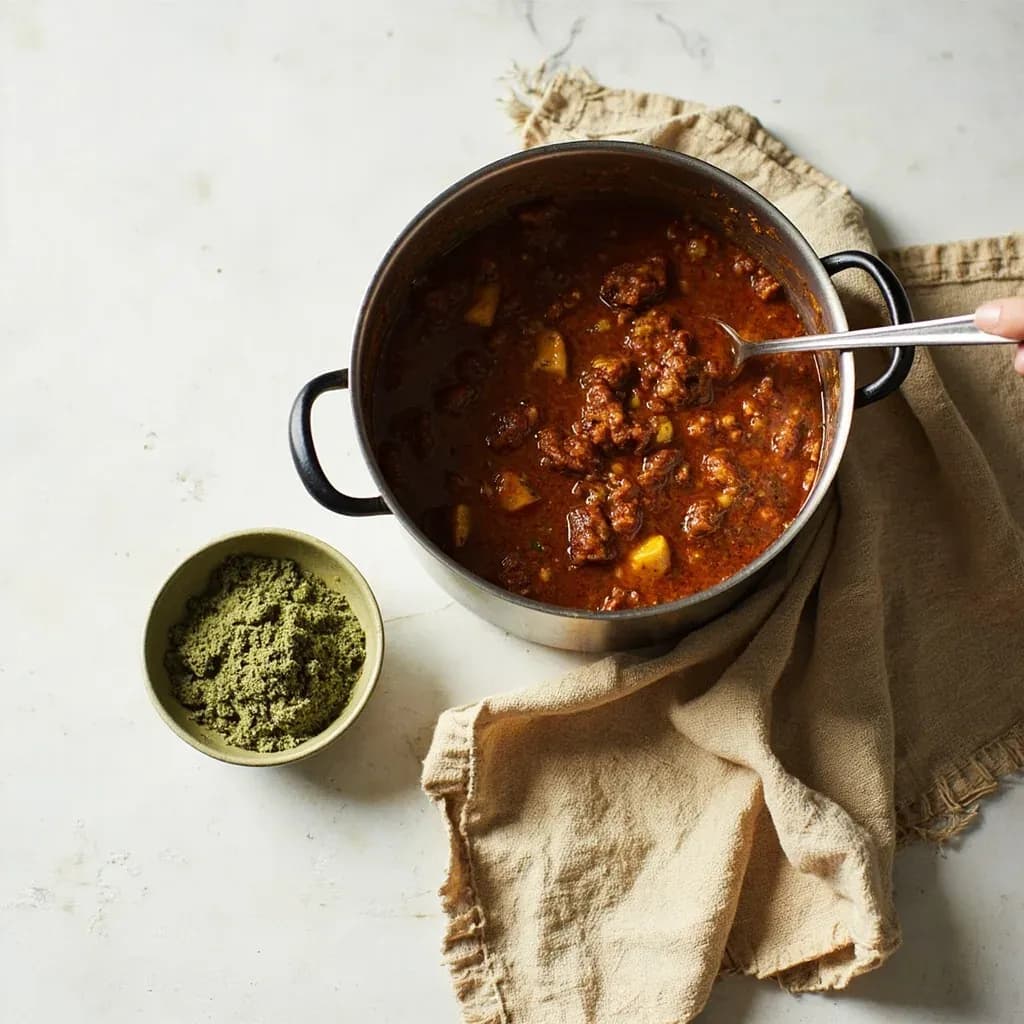
Stirring ground sassafras (filé powder) into gumbo off the heat to thicken and flavor it.
Filé finishing thickens Louisiana gumbo by stirring in filé powder, made from dried ground sassafras leaves, after the pot is off the heat and just before serving. Added while boiling, filé turns stringy and gummy, so it must go in off-heat. It lends a subtle earthy, root-beer-like flavor and a silky body to the gumbo.
Filé finishing is the off-heat addition of ground dried sassafras leaves — filé powder — to gumbo, where the leaf's natural mucilage hydrates in hot liquid and tightens the body while contributing an earthy, faintly peppery, root-beer-like aroma. The technique exists because sassafras mucilage behaves unlike a roux or a starch slurry: it swells readily in hot broth but, if boiled, denatures into visible strings and a ropey, almost slimy texture that no amount of cooling or stirring will rescue. That single rule — never bring the pot back to a simmer once filé goes in — defines the entire practice and is what separates a silken, filé-set gumbo from a pot of brown broth laced with threads.
Filé is best understood as the gumbo cook's last-mile correction. The roux has set the base, the proteins are cooked, and filé is the final textural and aromatic pass before the pot reaches the table. Because the thickening continues for several minutes after the powder is stirred in, cooks time the addition so the gumbo reaches ideal body during the brief rest before service. The same property makes filé an ideal table-side finisher: diners adjust their own bowl's thickness and aroma to taste, and latecomers receive a portion whose sassafras note is still bright rather than boiled flat.
The technique carries deep cultural weight in Louisiana cooking. It was adopted from the Choctaw, who used whole sassafras leaves to flavor and body their stews; Creole cooks in and around New Orleans later ground the leaf into a powder and adapted the practice to the lighter seafood gumbos of the city. Modern commercial filé is made from sassafras varieties selected or processed to be low in safrole, the compound at the center of long-standing FDA concerns about pure sassafras oil.
- Difficulty
- Easy
Types & varieties
Classic method: filé is sprinkled into the pot after it leaves the burner, stirred gently, and rested 5–10 minutes to set before service.
Powder is passed in a small dish or shaker so each diner sprinkles it into their own bowl — controlling both thickness and aroma intensity.
A small pinch is whisked into a ladle of hot gumbo just before pouring into the bowl, producing a smoother integration and a more uniform body.
How to do it
- 1
Pull the gumbo off the heat
Remove the pot from the burner once the proteins are fully cooked and the roux-thickened base has rested briefly. The liquid should still be hot but no longer simmering.
- 2
Let the surface calm, 1–2 minutes
Wait until the surface stops actively steaming. Adding filé to violently bubbling liquid accelerates stringiness; a calm, hot liquid incorporates it cleanly.
- 3
Sprinkle, do not dump
Shake filé powder across the surface from a few inches up so it disperses as a fine dust rather than landing in a single clump. A starting point is about 1 teaspoon per gallon (roughly ¼ teaspoon per quart).
- 4
Stir gently in one direction
Use a wooden spoon or flat spatula and fold rather than whisk. Aggressive agitation encourages the mucilage to form visible threads.
- 5
Rest 5–10 minutes
Cover loosely and let stand. The polysaccharides continue to hydrate during this window, and the gumbo tightens noticeably without further stirring.
- 6
Taste and adjust
Check body and aroma. If looser than you want, dust in another small pinch and rest again. If the sassafras note is too forward, thin with hot stock added off the heat.
- 7
Pass filé at the table
Ladle gumbo into bowls and set out a small dish or shaker of filé so each diner can finish their own portion — both for personal thickness preference and to preserve aroma.
The Science of Sassafras Mucilage
Filé works because sassafras leaves contain long-chain polysaccharides that absorb water and form a viscous gel. In a calm, hot liquid — well below a simmer — those polymers hydrate smoothly and the gumbo tightens over a few minutes of standing. If the liquid is at a rolling boil, the same polymers are agitated and partially denatured; they tangle into visible threads and the texture turns ropey. Cooling does not undo this. The practical consequence is that the gumbo must be hot enough to hydrate the powder but quiet enough to incorporate it, and once filé is in, the pot stays off the burner. Reheating a filé-thickened gumbo is a common pitfall: if it must be warmed, do so gently and never let it simmer.
Filé and Roux: Two Thickeners, Two Jobs
Most classic gumbo recipes use both a roux and filé, but they do different work. The roux — flour cooked in fat until it reaches a dark, chocolate-brown color — sets the base body of the gumbo, contributes color, and gives the dish its nutty depth. Filé is layered on at the end for a final tightening and for its aromatic signature. Skipping the roux and relying on filé alone produces a thinner, more delicate body that is traditional in some Creole seafood gumbos but is not a substitute for a properly cooked roux. Conversely, adding filé to a roux-thickened gumbo in the final minutes lifts the body and adds the characteristic sassafras note without competing with the roux.
Buying and Storing Filé
Filé is fragile. The volatile oils responsible for the powder's aroma begin to fade within a few months of grinding, and a tired filé smells dusty and grassy rather than bright and sassafrassy. Buy from a supplier with high turnover, in the smallest container you can use in two to three months, and decant into a small jar that you open only briefly. Keep it sealed, cool, and dark, and store it away from strong spices — black pepper, cumin, smoked paprika — whose own volatiles will bleed into the powder and muddy its aroma.
Common uses
Tips & pitfalls
- Never boil after adding filé; sustained heat turns the gumbo stringy and ropey, and cooling will not undo the damage.
- Add in small increments — you can always add more, but you cannot take it out once it has hydrated.
- Stir gently in one direction with a wooden spoon or flat spatula; a balloon whisk whips air into the gumbo and encourages the mucilage to tangle.
- Let the pot rest off the heat for at least 5 minutes after adding filé; thickening continues well after the last stir.
- Pass filé at the table so latecomers get a fresher aroma and diners can set their own bowl to their preferred body.
- Buy filé in small quantities and keep it tightly sealed — the aroma fades within a few months, and a tired filé smells dusty rather than bright.
- Store filé away from spices with strong volatile oils (black pepper, cumin, smoked paprika) to prevent aroma bleed.
- If the gumbo loosens on standing, a small additional pinch of filé stirred in off the heat will re-thicken it without reboiling.
Good to know
- Origin
- Louisiana Creole and Choctaw culinary tradition; the practice of thickening stews with sassafras leaves was adopted into Creole cooking in and around New Orleans.
- Primary ingredient
- Filé powder — dried sassafras leaves, ground to a fine green powder.
- Critical rule
- Filé must be added off the heat; sustained boiling after addition turns the gumbo stringy and ropey.
- Thickening mechanism
- Mucilaginous polysaccharides in sassafras leaves swell in hot liquid and continue to hydrate during a standing rest.
- Typical amount
- About 1–2 teaspoons per gallon of gumbo, adjusted to taste and to the desired body.
- Flavor profile
- Earthy, slightly peppery, with a distinctive root-beer-like note from the sassafras leaf.
- Compatibility with roux
- Works alongside a roux rather than replacing it; filé is the finishing pass, not the base thickener.
- Storage of filé
- Airtight, cool, and dark; aroma and potency fade within a few months, so buy in small quantities.
Also called
filé powder thickening · gumbo filé
Related

Whisk
Beat ingredients smooth and aerated with a looping wire motion

Sift
Pass dry ingredients through mesh to aerate and remove lumps

Strain
Pour through mesh to separate solids from liquid for a smooth result

Filter
Pass liquid through fine material to clarify out the smallest particles

Rice
Press cooked potatoes through small holes for fluffy, lump-free texture

Mash
Crush soft cooked food into a rustic, creamy purée

Grind
Crush food into a coarse to fine texture, from spices to meat

Grate
Shred food into fine bits against a sharp-toothed surface